A short coat can make summer grooming easier, but it does not always give your dog enough protection from sunshine. Thin fur, pale skin, a pink nose, and sparsely covered ears or belly can leave sensitive areas exposed. The right sunscreen should fit those areas and the way your dog tolerates being handled, whether you need a spray for broader coverage or a small balm for the nose.
Choosing the best dog sunscreen for short-haired dogs also means looking beyond attractive packaging. This guide compares four dog-specific options using manufacturer information, ingredient lists, and practical application differences. These are research-based recommendations, not claims of personal testing. Protection claims vary between products, and a convenient applicator is not proof of equal UV performance. Use sunscreen alongside shade and sensible outdoor timing, and ask your veterinarian which formula suits your dog if skin is sensitive, damaged, or already sunburned.
As an Amazon Associate, I earn from qualifying purchases.
Quick Picks: Best Dog Sunscreen for Short-Haired Dogs
| Product | Best For | Key Advantage | Buy | |
|---|---|---|---|---|
| Epi-Pet K-9 Care Sunscreen, 3.5 oz Two-Pack | Broader exposed-area coverage | Water-resistant spray formula | View on Amazon | Jump to Review |
| Petkin Doggy Sunstick, 0.5 oz | Small exposed patches | Direct rub-on application | View on Amazon | Jump to Review |
| Warren London Dog Sunscreen Spray, 4 oz | Owners who prefer a moisturizing spray | Aloe-containing formula | View on Amazon | Jump to Review |
| My Dog Nose It Sun Protection Balm, 0.5 oz | Targeted nose-area care | Small balm applicator format | View on Amazon | Jump to Review |
How We Chose These Products
We compared manufacturer documentation, application or fit requirements, and meaningful differences between the products. Our recommendations are editorial judgments from that research. We have not assigned hands-on test scores or treated unexamined customer reviews as evidence. The shortlist is deliberately limited to distinct, supportable choices rather than padded with similar listings.
Epi-Pet K-9 Care Sunscreen, 3.5 oz Two-Pack — Broader exposed-area coverage

What We Like
- Water-resistant formula
- SPF 30+ equivalent claim
- Dogs-and-horses labeling
- Two 3.5 oz containers
What We Don’t Like
- Contains fragrance and alcohol
- Care needed around the face
For a short-haired dog with several exposed areas, Epi-Pet offers a spray format that is more practical than working across the body with a tiny stick. The manufacturer describes its K-9 Care Sunscreen as water-resistant and gives an SPF 30+ equivalent claim. That wording matters: it is a manufacturer protection claim, not a guarantee that your dog can remain outside indefinitely. The verified Amazon option here is a two-pack of 3.5-ounce containers, which makes the quantity clear before you compare it with single-bottle listings. Epi-Pet labels the formula for dogs and horses and specifically excludes cats. Its ingredient list includes UV filters, vitamin E, denatured alcohol, and vanilla fragrance. Those details give you more to evaluate than an unspecified promise of natural protection, particularly when your dog has known ingredient sensitivities.
The strongest reason to consider this option is the combination of a body-friendly application format and a stated protection level. I would favor that clarity when planning sunny outings for a dog with a thin, light coat, while still treating shade as the main safeguard. Application needs attention, however. A spray is easy to distribute too close to the eyes or nose if your dog suddenly turns, so follow the container directions and handle facial areas carefully. Keep the dog from licking freshly applied product while it settles. The presence of alcohol and fragrance is also a reason to review the formula with your veterinarian rather than assume it suits every sensitive dog. A two-pack is useful only if you will use and store it according to the label; buying more does not improve the protection of a poorly applied coat.
My Recommendation
My first choice for broader coverage would be Epi-Pet, provided your veterinarian considers the formula appropriate. Its water-resistance and stated SPF-equivalent claim are useful distinctions. Choose a targeted applicator instead if your dog cannot tolerate sprays, and keep this product away from cats.
Petkin Doggy Sunstick, 0.5 oz — Small exposed patches
What We Like
- Compact 0.5 oz stick
- Controlled spot application
- No airborne spray
- Manufacturer-listed UV filter
What We Don’t Like
- SPF 15 comparison claim
- Vanilla coconut scent
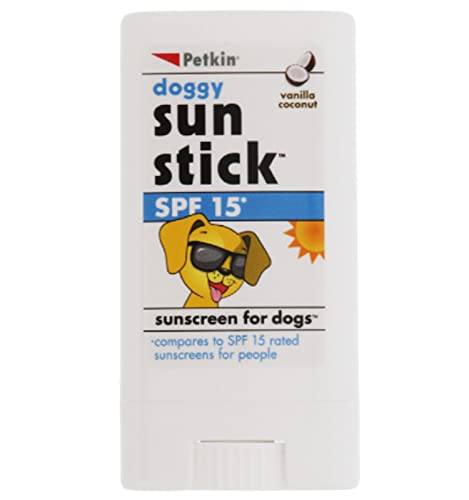
A pocket-sized stick is appealing when the main task is covering a few small areas rather than an entire thin-coated body. Petkin Doggy Sunstick is a 0.5-ounce rub-on product made for dogs. Petkin says the formula compares with SPF 15 sunscreen for people, so it should not be presented as equivalent to the stronger stated protection of Epi-Pet. The manufacturer lists titanium dioxide as the active sunscreen ingredient and includes fragrance in the formula. The verified listing identifies a vanilla coconut scent. Direct application lets you work on a chosen patch without releasing a mist around the face, although you still need to keep the product out of eyes, nostrils, and the mouth. Its modest size makes it easy to pack for a walk or keep with other summer supplies.
The practical advantage is control. If your dog stands calmly for gentle handling, you can focus on exposed ear areas or another veterinarian-approved application site without coating more fur than necessary. That is different from saying every short-haired dog needs only a stick: a dog with a broad, sparsely covered belly may be better served by a different format and protective clothing. I would compare the amount of skin that needs attention before choosing this small container. The lower stated SPF comparison is another limitation for longer sunny outings, and shade remains essential. Scented products may also be unsuitable for some dogs even when they are formulated for pets. Test a small amount as directed, watch for irritation, and use the current label for reapplication instructions. A convenient stick helps you apply sunscreen; it does not replace checking whether the coverage and formula fit your dog’s actual sun exposure.
My Recommendation
I would choose Petkin for convenient spot application on a dog that accepts gentle contact. Its small size and controlled format are the attractions. For broader coverage or a higher stated protection level, Epi-Pet deserves the closer look.
Warren London Dog Sunscreen Spray, 4 oz — Owners who prefer a moisturizing spray

What We Like
- Aloe-containing blend
- 4 oz spray bottle
- Manufacturer-listed ingredients
- Hand application for the face
What We Don’t Like
- No SPF number verified
- Contains citrus oils
Owners who want a liquid sunscreen with a moisturizing ingredient may find Warren London worth comparing. The manufacturer identifies aloe vera in this 4-ounce spray and provides a full ingredient list, including citrus oils and benzophenone-4. Its directions distinguish body application from facial application: for the face, spray onto your hand first and massage into the appropriate areas rather than spraying toward the eyes. That is a useful practical detail for a short-haired dog with a sparsely covered muzzle or ears. Warren London markets the product for different coat types, but that does not establish identical protection on every dog. We did not verify a numerical SPF for this formula, so it would be misleading to place it on the same protection scale as a product with a stated SPF-equivalent claim.
My view is that the application format is easier to assess than the precise level of UV protection. A spray bottle can fit a regular pre-walk routine, and using your hands around the face gives you more control than directing the nozzle at a moving dog. However, aloe does not prove that a sunscreen will suit irritated skin, and citrus oils are an ingredient consideration for dogs with sensitivities. I would ask a veterinarian before selecting this formula for a dog that has reacted to scented grooming products. It also should not be used as a reason to extend an outing into stronger sunshine. Compare the current label with your dog’s needs, apply it only as directed, and continue using shade or suitable protective clothing. The bottle size is a straightforward benefit for people who dislike tiny sticks, but a larger bottle alone tells you nothing about how long protection lasts or how much product your particular dog will need.
My Recommendation
Warren London is a reasonable spray-format alternative for dogs that tolerate its listed ingredients. I would choose it for application preferences rather than claim it matches Epi-Pet’s stated protection. For a particularly sun-sensitive dog, discuss the UV-protection uncertainty with your veterinarian first.
My Dog Nose It Sun Protection Balm, 0.5 oz — Targeted nose-area care

What We Like
- Nose-focused balm
- 0.5 oz jar
- Listed UV-absorbing ingredients
- Wax-based texture
What We Don’t Like
- Small-area application focus
- Jar requires clean handling
When the nose is the main concern, My Dog Nose It offers a different approach from a body spray. The verified option is a 0.5-ounce moisturizing sun-protection balm. Its manufacturer lists octinoxate and oxybenzone as UV-absorbing active ingredients, alongside waxes and emollient ingredients that create the balm texture. The product is marketed for the nose, ears, and other unprotected areas. This focused format can be easier to place precisely when your dog accepts facial handling, although it still belongs outside the nostrils and away from the eyes and mouth. A small jar is also easier to understand as a spot-care product than as an efficient way to cover a large dog’s entire body. The manufacturer’s protection claims should not be mistaken for a promise that a dog will never sunburn.
I would approach this balm as one part of a targeted sun-care plan, especially for a dog whose coat covers most of the body but leaves a pale nose exposed. Clean fingers and calm handling matter because the application area is small and close to sensitive facial structures. A dog that pulls away from nose contact may need a different approach rather than repeated restraint. The jar also means you must manage cleanliness during outdoor use; putting muddy fingers into a shared container is an avoidable problem. Do not rely on a balm to resolve unexplained crusting, bleeding, or a changing nose lesion. Those concerns deserve veterinary assessment. For broader exposed skin, compare a body-oriented product and protective clothing instead. The main purchase decision is therefore about the location you need to cover and the handling your dog accepts, not whether a nose-specific name makes this automatically better than every other dog sunscreen.
My Recommendation
I would pick this balm when precise nose-area application is the priority and your veterinarian approves the formula. It is less convenient for extensive body coverage. A spray or protective shirt may fit that broader task better.
How to Choose Sunscreen for a Short-Haired Dog
Start with exposed skin rather than breed labels. A dog with a short, dense, dark coat may have different needs from a thin-coated dog with pale skin and pink ears. Look at the belly, ear tips, bridge of the nose, and any areas where fur is sparse. If there is a medical reason for hair loss, ask your veterinarian about protection and the underlying problem.
Check the current ingredient list. The American Kennel Club advises choosing dog-specific sunscreen and avoiding zinc oxide and PABA because dogs may ingest product while licking. Dog-specific labeling still does not mean a formula is suitable for every animal. Known sensitivities, damaged skin, and use around other pets all change the decision.
Match the format to the job. A spray is more convenient for several exposed areas, a stick suits small patches, and a balm can work for targeted nose care. A dog that dislikes spray noise may accept careful hand application; another may dislike facial contact altogether. Choose the method you can use calmly and consistently.
Treat UV claims carefully. Epi-Pet states an SPF 30+ equivalent, while Petkin describes an SPF 15 comparison. Warren London has no numerical SPF verified in this research. These are not interchangeable levels of evidence, and none makes unlimited sun exposure sensible. Our product choices reflect those differences instead of assigning unsupported protection scores.
Applying Dog Sunscreen Without Making It a Struggle
Read the container before the first application and follow its timing, quantity, and reapplication directions. Start with a small test area as directed. Introduce handling in a quiet setting instead of trying a new product for the first time at a busy beach.
Work carefully around the face, avoiding eyes, nostrils, and the mouth. Do not aim a spray at your dog’s face. Where the product instructions permit hand application, that gives better control. Allow the product to settle while supervising your dog so it is not immediately licked away.
Reassess coverage after water activities and follow the label for reapplication. Water-resistant does not mean waterproof forever. Drying, rubbing against a towel, and vigorous activity can all make a simple once-and-forget routine inappropriate.
Keep outings manageable. Sunscreen protects against UV exposure; it does not make hot weather comfortable or prevent heat illness. Plan shade, drinking water, and breaks independently. For another summer comfort decision, compare our dog cooling mat guide, while keeping cool rest areas separate from sun protection.
When Shade or Clothing Is the Better Choice
If your dog needs extensive coverage, a suitable sun-protective garment may reduce the amount of skin that requires topical product. Fit, coverage, and comfort still matter. Avoid using a garment that traps excessive heat, and do not assume ordinary clothing has a verified UV-protection rating.
Shade is especially useful when product application is difficult or your dog has reacted to a formula. Move outdoor activities away from strong midday sunshine where practical. A quiet shaded break is often a better decision than repeated applications during a long exposed outing.
Red, painful, peeling, or blistered skin deserves veterinary advice. Sunscreen is a preventive purchase, not a treatment plan for an existing burn. Stop using a product that causes a reaction and ask your veterinarian about the next step.
Frequently Asked Questions
Do all short-haired dogs need sunscreen?
Not necessarily in the same way. Thin fur, pale skin, exposed areas, outdoor time, and individual health matter. Ask your veterinarian which areas need protection rather than covering your dog automatically.
Can I use my own sunscreen on my dog?
Choose a dog-specific product recommended for your dog. Human formulas can contain ingredients unsuitable for pets, and licking changes the risk. Avoid zinc oxide and PABA in products used on dogs.
Is a sunscreen balm enough for a white dog?
A nose balm only covers the areas where you apply it. A thin-coated white dog may have other exposed skin, so consider broader coverage, suitable clothing, shade, and veterinary guidance.
Does water-resistant sunscreen need reapplication?
Yes. Follow the current label, especially after swimming or other activity that can remove product. Water-resistance is not a promise of all-day protection.
Does sunscreen stop my dog overheating?
No. Manage temperature exposure separately with shade, fresh water, sensible timing, and appropriate breaks. A UV product does not make a hot environment safe.
Final Verdict
For broader exposed-area coverage, Epi-Pet is my leading research-based choice because its manufacturer states water-resistance and an SPF 30+ equivalent. Petkin suits small-patch convenience, Warren London offers an aloe-containing spray alternative, and My Dog Nose It suits targeted balm application. Choose by exposure, ingredients, and handling tolerance, with shade as the foundation of the routine.
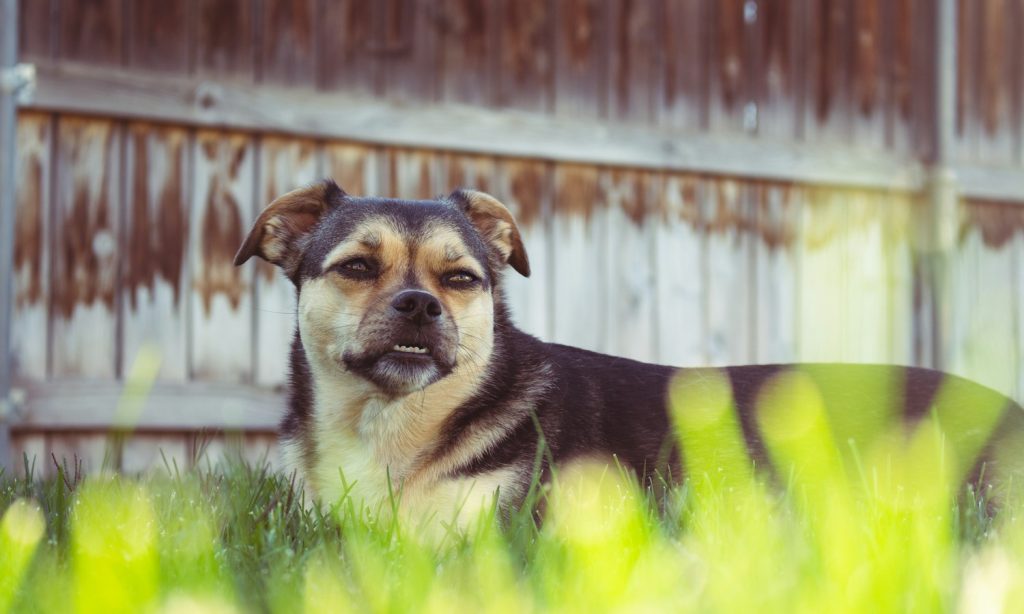
Feature photo: Dallas Reedy / Unsplash. Illustrative lifestyle photo.