Finding an attached tick on your dog can be stressful, especially when your dog is wiggly or the tick is hidden in fur. The best tick removal tool for dogs is the one you can place close to the skin, use steadily, and handle without squeezing the tick’s body. A hook, fine-tip tweezer, scoop, or flat card can each suit a different owner and coat. Below, we compare seven verified options and explain how to choose and use one carefully. Tick removal tools do not prevent bites; ask your veterinarian about year-round parasite prevention suited to your dog.
Quick Picks
| Tool | Best for | Amazon | Jump to Review | |
|---|---|---|---|---|
| TickCheck Premium Tick Remover Kit | Best Overall for Versatility | View on Amazon | Jump to Review | |
| ZenPet Tick Tornado Tick Remover | Best Hook-Style Tool | View on Amazon | Jump to Review | |
| Pirosim TickEase Tick Remover | Best Dual-Ended Alternative | View on Amazon | Jump to Review | |
| The Original Tick Key | Best Keychain-Ready Tool | View on Amazon | Jump to Review | |
| Ticked Off Original Tick Remover | Best for a Low-Contact Scoop | View on Amazon | Jump to Review | |
| Coghlan’s Tick Remover Tool | Best Lightweight Outdoor Option | View on Amazon | Jump to Review | |
| TickCheck Tick Remover Card | Best Wallet-Sized Backup | View on Amazon | Jump to Review |
How We Chose These Tick Removal Tools
We prioritized products whose identity and Amazon detail pages were checked through the site’s authorized product-verification workflow, then compared documented shape, materials, included pieces, portability, and manufacturer instructions. This is a feature-based comparison, not a laboratory test or a claim that one tool prevents tick-borne illness. We included different removal styles so owners can compare a fine point, fork, hook, scoop, key-shaped slot, and wallet card. Product availability and prices can change; check the current Amazon listing for details.
No tool replaces a careful tick check after time outdoors or a veterinarian’s parasite-prevention advice. A separate PetAdvisorPro guide compares oral flea and tick treatments for dogs; this article focuses on removing a tick that is already attached.
Best Tick Removal Tools for Dogs
TickCheck Premium Tick Remover Kit — Best Overall for Versatility

What We Like
- Two stainless tools cover different tick sizes
- Fine tips help target a small tick near the skin
- Case and identification card keep the kit organized
- Contains a fork-style remover and fine-tip tweezers
What We Don’t Like
- More pieces to track than a single hook
- Still requires calm, close handling of a moving dog
The TickCheck Premium kit is the most versatile pick in this roundup because it pairs two stainless-steel removal tools with a carrying case and a pocket tick-identification card. The manufacturer describes the forked tool as useful for larger attached ticks and the fine-tip tweezers as an option for smaller ticks, including nymphs. That gives a dog owner a choice of grip style and tip size in one kit, rather than asking one shape to handle every situation. A broad hook can be easier to position around a larger tick, while fine-point tweezers can reach close to the attachment point when the tick is small or tucked among hair. The kit is intended for people and pets, so it can also live in a household first-aid pouch used for outdoor trips. The case helps keep the tools together between checks, and the included identification card is a reminder that recognizing a tick may matter after removal. It does not diagnose a bite or replace veterinary advice, and the tools do not prevent ticks from attaching. Think of the set as a compact removal kit for the moment a careful inspection finds a tick, not as a substitute for routine prevention. The manufacturer’s instructions should guide use, and the dog should be steady enough that the tool can be placed accurately without pinching surrounding skin. Keep the set somewhere easy to reach, check its contents before a trip, learn the difference between the tips before you need them, and store it with your dog’s first-aid supplies.
The added choice comes with a small tradeoff: owners need to select the correct tool and keep both pieces from getting separated. Before an outing, check that the case is in the pack and that the tips are clean and undamaged. During removal, part the coat, identify the tick’s attachment point, and work as close to the skin as the tool design allows. Veterinary guidance from Cornell and the Companion Animal Parasite Council emphasizes close placement and steady traction when removing a tick from a pet. Avoid squeezing the tick’s body or making a sudden jerk; the goal is controlled removal rather than a fast tug. Afterward, inspect the area and clean it according to your veterinarian’s guidance. The card may help with identification, but any tick that looks unfamiliar or any concerning skin change is a reason to seek professional advice. Long, dense, curly, or dark coats can make it harder to see what the tool is doing, so good lighting and a helper to gently hold the dog may be useful. If a dog is painful, frightened, or likely to snap, stop and ask a veterinary professional for help rather than forcing a close inspection. This two-tool kit is a sensible choice for households that want a fine-point option and a hook-style option together, especially if they regularly travel with their dog. For owners who prefer the simplest possible tool, a one-piece hook or card may be easier to carry and use. The extra pieces are most helpful when the owner knows why each end is included.
My Recommendation
Choose the Premium kit if you want two different removal shapes in one organized case and like having a fine-tip option for smaller ticks. It is a strong all-around household choice because the tools address different sizes without requiring separate purchases. The tradeoff is that you must keep track of more than one piece and select the right one for the tick you find. If you usually encounter larger ticks and want a single hook, the Tick Tornado may be simpler. For tiny ticks hidden in coat, this kit’s fine-tip tweezers may be the more flexible starting point.
ZenPet Tick Tornado — Best Hook-Style Tool

What We Like
- Hook shape avoids tweezer-style pinching
- Two hook sizes in the value pack
- Compact, purpose-built design
- Includes two hook sizes for different visible ticks
What We Don’t Like
- Placement is harder in dense fur
- Less precise than fine-tip tweezers for very small ticks
The Tick Tornado is a hook-style remover for owners who want a simple tool built around sliding a notch around an attached tick. ZenPet’s instructions describe positioning the hook at the skin, engaging the tick in the slot, and turning or lifting the tool to release it. The product is offered as a double-hook value pack, giving the owner two sizes to choose from. This shape may feel more approachable than narrow tweezers for someone uncomfortable gripping a tick directly. Instead of closing tweezer arms around the tick, the hook is moved into place around it. That can help avoid crushing the body when the device is used as directed, though careful positioning still matters. A tick tool cannot compensate for poor visibility or a dog that will not stay still. Before using it, spread the coat and locate the attachment point so the hook can sit as close to the skin as the design allows. The device is intended for tick removal and does not serve as a grooming comb, parasite treatment, or diagnostic tool. Keep it with walking or camping supplies and inspect it periodically for cracks or residue. Its compact format makes it convenient for a day bag, but owners should become familiar with its motion before relying on it in a stressful moment. Practice the positioning motion on the tool itself, not on a dog with an attached tick, and read the maker’s directions before first use. The two sizes provide a useful choice for different visible ticks.
Hook-style removal depends on matching the slot to the tick and coat, then following the product instructions with controlled movement. Thick fur can obscure the opening, and a tiny nymph may be harder to engage than a larger visible tick. Use bright light and part the hair in small sections; if you cannot see the skin clearly, do not blindly sweep the hook through the coat. The safest approach is to work slowly, hold the skin steady when practical, and avoid pulling at an angle that drags the tool across the dog. Veterinary sources recommend placing a removal device close to the skin and applying steady traction. They do not support home remedies such as burning, petroleum jelly, or nail polish as removal methods. After the tick is off, check whether the tool and tick are intact, then clean the tool according to its instructions. Monitor the bite area and contact your veterinarian if the dog develops illness or if you are uncertain whether the tick was fully removed. Dogs that resist handling may need another adult to gently stabilize them; do not put your fingers near a distressed dog’s mouth. The Tick Tornado suits owners who prefer a hook over a tweezer and want a small, purpose-built tool with two hook sizes. If your main challenge is a tiny tick close to skin or a very dense coat, fine-point tweezers may provide more controlled access. For a travel wallet, a tick card is flatter and easier to store. Match the tool to the tick you can actually see.
My Recommendation
Pick the Tick Tornado if a hook-and-slot approach feels easier to position than squeezing tweezers, and you want two hook sizes in the pack. It offers a straightforward form for visible ticks on a cooperative dog. Its limitation is visibility: dense coat or a very small tick can make the slot hard to place accurately. If you need a fine point for close inspection, consider the TickCheck Premium kit. If you prefer a wallet-sized backup, the TickCheck card is flatter.
Pirosim TickEase — Best Dual-Ended Alternative

What We Like
- Two ends offer different contact shapes
- Made for tick removal on people and pets
- Compact reusable format
- Offers two working shapes in one compact tool
What We Don’t Like
- Requires learning which end fits the tick
- A small single tool can be misplaced
TickEase is a compact, dual-ended tick remover positioned as a tool for people, dogs, and cats. Current official product information describes two working ends with different shapes: a fine, narrow tip and a slotted scoop. That design gives an owner two ways to approach removal without carrying a separate tweezer and hook. The narrow side can be useful when a tick is small and the skin is visible; the slotted side is intended to engage around a tick rather than pinch its body. The maker presents the tool as stainless steel, a practical material for a reusable item that needs cleaning after use. As with any remover, the shape only helps if it can be placed correctly. Part the dog’s fur, bring the working end close to the attachment point, and follow the device directions instead of pulling from the visible portion of the tick’s body. Its dual-ended layout is attractive to households that want an adaptable pocket tool, especially for walks, hikes, or travel where bringing a full kit is inconvenient. It can live in a pet first-aid pouch, but should be stored so the ends do not collect dirt or catch on other supplies. The tool is not a tick repellent or a replacement for veterinarian-recommended prevention. It is used after an attached tick is discovered, while prevention aims to reduce the chance of attachment. Owners should keep those separate jobs clear when deciding what belongs in their dog’s care kit. Its format gives a choice without adding separate pieces.
A two-ended tool trades extra choice for a little more decision-making at the moment of use. Before touching the tick, identify which side best fits its size and where the tip will sit against the dog’s skin. If the tick is buried in hair, first clear the view with your fingers or ask someone to hold the coat aside. Do not press the tool blindly or squeeze the tick’s body; deliberate placement is more important than speed. Cornell’s veterinary guidance and CAPC advise working close to the skin with steady traction. If the dog moves, pause and reset rather than scraping the tool over the bite. After removal, follow your veterinarian’s advice for cleaning the bite area and observe the dog for any change in health. A tool cannot tell whether a tick carried a pathogen, and a photo or identification result is not a diagnosis. Seek veterinary advice if you are concerned about the tick, the bite, or your dog’s condition. TickEase may suit an owner who wants a compact metal tool with two contact shapes, but dedicated fine-tip tweezers can be easier to understand for some users. Conversely, someone who dislikes tweezer arms may prefer a single hook tool such as the Tick Tornado. Keep the tool clean, check it for damage, and store it where the dog cannot chew it. A ready-to-find kit is useful only if the owner can locate it and stay calm enough to use it carefully. Read the maker’s instructions before carrying it on a trip.
My Recommendation
TickEase is worth considering if you want two contact shapes in one compact stainless-steel tool and expect to remove ticks from more than one kind of pet. The dual-ended format provides options without a separate kit. It does ask you to choose the correct side and place it accurately, so read the manufacturer’s directions before an outing. For a household that prefers dedicated pieces with a carry case, TickCheck Premium is clearer; for a hook-only technique, the Tick Tornado is simpler.
The Original Tick Key — Best Keychain-Ready Tool
What We Like
- Small key-shaped body is easy to carry
- Simple slot-based positioning
- Designed for people and pets
- Key-shaped body is easy to keep with walking keys
What We Don’t Like
- Metal slot may be awkward on very small ticks
- Needs clear access through the coat
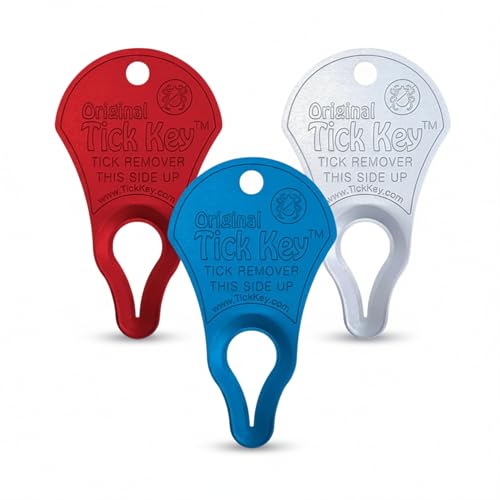
The Original Tick Key is a small key-shaped remover made from anodized aluminum and designed for use on people and pets. Its keyhole opening is the defining feature: the owner places the wider part over the tick, slides the narrow portion toward the attachment point, and draws the tool along the skin according to the maker’s instructions. That compact design makes it suited to a key ring, leash pouch, or travel first-aid kit. It is a good choice for owners who value availability: when a tick is discovered after a walk, a tool already on the leash or in a pocket may be easier to find than supplies stored at home. The Tick Key also differs from a tweezer because it does not rely on closing two arms around the tick. A slot can feel less intimidating for owners who prefer to avoid touching the tick directly, although the tool must still be positioned accurately and the dog must remain steady. The product is intended for removal, not prevention. It will not repel ticks, protect a dog from exposure, or determine whether a tick might transmit disease. Its key-like shape is simple, but owners should review the manufacturer’s visual directions before using it on a real bite so they understand which part of the slot to use. Keep the tool attached securely and make sure the opening remains clean and free of debris. If you want a dedicated kit with different size options, another product may provide more flexibility. For a small one-piece item that is easy to bring along, the Tick Key has a clear use case. Its portability can help make a remover accessible after outdoor activity.
The strength of a key-shaped remover is also its main limitation: it is a single shape, so the user has less choice when the tick is unusually small, partly hidden, or located in a difficult spot. Long or dense hair can cover the bite and make it hard to slide the narrow opening close to the skin. Use good light, part the coat, and make sure you can see where the tool is going. Do not force the key against the skin or scrape it through fur. Follow the maker’s instructions and use controlled, steady movement. Veterinary advice emphasizes close placement and steady traction, while avoiding crushing or abrupt pulling. If the tick is difficult to access, if the dog is highly anxious, or if the area is sensitive, a veterinarian can advise you or remove it safely. Afterward, inspect the dog and the tool, clean the bite area as directed by your veterinarian, and keep the tick for identification only if your veterinarian recommends doing so. The Tick Key’s compact carry format may help active owners keep a remover close at hand, but carrying the tool does not replace post-walk tick checks or veterinarian-recommended parasite prevention. This product is a convenient backup for a dog-walking kit, not necessarily the best sole tool for a home that routinely finds tiny ticks. Consider pairing it with a fine-point option if the dog’s coat makes tick checks challenging, and make sure everyone who may use it knows the technique. A tool should reduce friction during careful removal, never encourage a rushed attempt. Store it securely so it remains easy to find.
My Recommendation
Choose the Tick Key if your priority is a small, simple remover that can stay on a key ring or leash pouch. Its portability is its main advantage, and the slot-based design avoids direct tweezer-style gripping. It has fewer options for unusual tick sizes and fur conditions than a kit with multiple ends. For a more adaptable home first-aid set, TickCheck Premium offers two tools; for a wallet-sized backup, choose the tick card.
Ticked Off Original — Best for a Low-Contact Scoop
What We Like
- Scoop approach limits direct finger contact
- Made for crawling or attached ticks
- Three-pack keeps spares available
- Three pieces can be placed in separate care kits
What We Don’t Like
- Scoop can be hard to maneuver in a long coat
- One shape may not suit every tick size
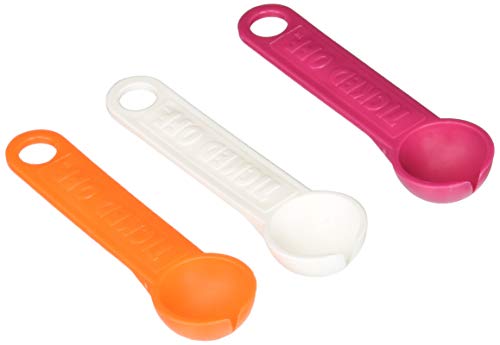
Ticked Off Original uses a scoop-style remover intended for crawling or attached ticks on animals and people. The manufacturer describes a low-contact method: place the tool around the tick and use the scoop and slot to remove it without grasping the tick with bare fingers. This can appeal to an owner who wants a simple barrier between hand and parasite. It is supplied as a three-pack, which makes it possible to keep one in a home pet-care drawer, one in a walking pouch, and a spare in a travel kit. The tool is intended for removal, so it does not require batteries or assembly. Its scoop shape is a different option from thin tweezers and keyhole tools. Some owners may find a shallow surface easier to guide around a visible tick, while the narrow opening helps direct where the tick sits. The manufacturer provides directions for crawling and attached ticks; follow those rather than improvising a motion. The tool does not guarantee every tick can be removed in one pass, and no removal device makes a tick check unnecessary. Before use, part the dog’s coat and inspect the attachment point so the scoop can be placed close to the skin. If the dog is uncomfortable, pause and have a second person gently steady them. The low-contact design can make handling feel less unpleasant, but it still requires visibility, accurate placement, and a calm dog. Keep spare pieces clean and stored away from children and pets that might chew them. The pack format can make one tool available in more than one location.
The three-pack is useful for keeping a remover accessible, but the owner should become comfortable with the scoop’s shape and movement before needing it. Read the product directions and check whether the tick is crawling or attached, since the approach can differ. A crawling tick can be collected without searching for a bite, while an attached tick requires the tool to reach the skin around the point of attachment. In either case, avoid sweeping blindly across the coat or pressing down on the tick’s body. Cornell veterinary advice and CAPC recommend removal close to the skin using steady traction. Bright light and a parted coat help you see if the scoop is aligned. If the opening cannot reach the skin because the fur is dense or the tick is in a fold, switch to a more appropriate tool or ask a veterinary professional rather than forcing it. After removal, inspect the bite and clean the scoop in line with the maker’s instructions. A dog that is painful, fearful, or wiggling may make the scoop difficult to control; stop and get help if you cannot safely hold the tool. Ticked Off may suit owners who want a scoop and low-contact technique, particularly those who like having spare tools placed in multiple kits. Its single general shape offers less flexibility than a kit that includes fine-point tweezers and a forked remover. It is best thought of as a convenient option for visible ticks rather than an all-purpose answer for every coat or tick size. Keep one in a location you can access calmly.
My Recommendation
Consider Ticked Off if you want a scoop-style tool that keeps fingers away from the tick and appreciate having three pieces to distribute among home and travel kits. It offers a distinct low-contact approach. Its one general shape may be less adaptable for ticks hidden in thick fur or very small nymphs. If precision is the priority, TickCheck Premium adds fine-tip tweezers; if you want a compact key-shaped backup, the Tick Key is easier to carry.
Coghlan’s Tick Remover — Best Lightweight Outdoor Option

What We Like
- Lightweight plastic tool for outdoor kits
- Turning action limits finger contact
- Simple single-piece format
- Lightweight plastic format suits an outdoor pouch
What We Don’t Like
- Single shape provides fewer options
- May be harder on tiny ticks or dense coat
Coghlan’s Tick Remover is a lightweight plastic tool intended for tick removal on people and animals. The brand describes a gentle turning action that helps remove a tick while limiting direct finger contact. For campers and hikers, a small, simple plastic tool has a useful place in a dog’s outdoor first-aid pouch: it takes little room and can be stored with the supplies used after trail walks. Unlike a multi-piece set, this is a single tool, so there is no separate case or second tip to manage. Its main appeal is uncomplicated portability and a turning method that differs from straight-pull tweezers. Owners should still read the instructions before use and place the tool as close to the dog’s skin as possible. The design does not make removal automatic; the tick must be visible and the dog must be still enough to guide the opening correctly. The tool is not a medication, repellent, or treatment for tick-borne disease. It is an aid for removing an attached tick once one is found. Store it clean and check that the plastic has not cracked or become rough at the contact edge. A damaged tool may be more difficult to position smoothly. If you keep supplies in a hot vehicle or damp pack, inspect the tool before a trip. The lightweight format is convenient for outdoor carry, but an owner who often encounters tiny ticks may prefer a fine-tip tweezer or a kit with more than one contact shape. Keep this remover available as part of a broader routine that includes checking your dog after outdoor exposure and discussing preventive care with a veterinarian. Its simple shape suits owners who value a compact pack.
The turning action is distinctive, so take time to understand the maker’s motion and avoid replacing it with a hard yank. The goal is careful engagement at the skin, not twisting the dog’s skin or pulling the tool across the coat. Part the fur and use a bright light to see where the tick attaches. If the tool cannot reach the skin because hair is in the way, pause to clear the view instead of pushing harder. Veterinary guidance from Cornell and CAPC emphasizes working close to the skin and using steady traction; that general safety principle should inform how owners use any removal aid. Do not crush the tick with fingers or apply a hot match, oil, or household chemical. Afterward, follow your veterinarian’s advice about cleaning the site and watch for changes in your dog’s health. If the tick is in a sensitive area, if part appears to remain, or if your dog is distressed, contact a veterinary clinic for guidance. Coghlan’s can be a reasonable outdoor-kit choice for owners who want a light, single-piece plastic tool with a contact-limiting design. Its simplicity may be a downside when the tick is very small or the coat is difficult. A more adaptable kit provides different shapes, and a flat card travels especially easily in a wallet. Choose based on the ticks and coat conditions you are likely to face, then practice identifying the tool’s working end before a real tick check. A clear instruction sheet alongside the tool can make the process easier to remember.
My Recommendation
Coghlan’s makes sense for a hiker or camper who wants a lightweight single-piece remover stored with outdoor supplies. Its turning-style, low-contact approach is its distinguishing feature. Because it has one shape, it may be less flexible for tiny ticks or dense coats than a multi-tool kit. If you want multiple working ends, TickEase or TickCheck Premium is a better fit; if pack space is the main concern, the TickCheck card is flatter.
TickCheck Tick Remover Card — Best Wallet-Sized Backup

What We Like
- Flat wallet-sized format is easy to carry
- Two notches address different tick sizes
- Built-in magnifier and identification information
- Two removal notches accommodate different tick sizes
What We Don’t Like
- Flat shape can be awkward on a moving dog
- Less ergonomic than a handled tool
The TickCheck Tick Remover Card is the most portable style in this group: a flat plastic card designed to fit in a wallet, pocket, or small first-aid pouch. TickCheck describes two notches for different tick sizes, along with a 3X magnifier and tick-identification information. The card is made for use on people and pets, and its flat profile is useful for owners who want a remover close by without carrying a separate handle or case. The notches give the user a way to position the edge around the tick, while the magnifier can help with a closer look at a small specimen. That visual aid is not a medical identification or disease test, but it can make a tick easier to inspect after removal. A card also packs naturally with trail maps, wallet items, or dog-walking essentials. Its slim shape is not as easy to grip as a tool with a handle, especially if the dog is moving or the tick is in a hard-to-reach area. Before use, read the instructions and choose the notch that suits the visible tick; then part the fur so the working edge can reach the skin. Keep the card clean and flat so the notches remain smooth. If you want a remover that feels more secure in the hand, a dedicated hook or tweezer set may be preferable. If your aim is a just-in-case backup for hikes and travel, the card’s small footprint is its strongest feature. Its information is a useful prompt to inspect what you find.
A flat card can be ready when you need it, but it can require more careful hand positioning than a handled tool. You need enough room to angle the notch at the attachment point and maintain control while the dog is still. Use the magnifier only when conditions allow a steady view; do not let it slow removal if the tick is clearly attached and can be removed safely. Cornell and CAPC veterinary guidance supports getting close to the skin and using controlled, steady traction. Work in bright light and keep the dog calm. If the notch cannot be positioned because of long hair, a skin fold, or the dog’s movement, switch to another tool or ask a veterinarian for help. Do not rely on the card’s identification information to decide whether a bite is harmless. After removal, inspect the site and contact your veterinarian if the dog seems unwell or you have concerns about the tick. The card’s flat format is appealing as a backup in a wallet or travel kit, and the paired notches plus magnifier offer more than a plain edge. Its drawbacks are the same as its form: no grip or handle, and less leverage than a purpose-built remover. Owners can pair the card with a more ergonomic home tool, especially if their dog has a thick coat or resists handling. A practical kit starts with a tool you can use confidently, access to good light, and a plan to get veterinary help when removal is difficult. Think about whether you can hold the edge steady before choosing it as your primary tool.
My Recommendation
The TickCheck card is a strong backup for owners who want a remover that can stay in a wallet, travel pack, or hiking kit. Its two notches and magnifier add practical features to the flat format. It is less ergonomic than a handled hook or tweezer, so it may not be the easiest primary tool for a moving dog or dense coat. For a home kit, pair it with TickCheck Premium or another handled option.
How to Choose a Tick Remover for Your Dog
Match the tool to the tick and coat. Fine-tip tweezers offer a narrow grip for a small tick when you can see the skin. Hooks and slots are designed to engage around a tick without squeezing its body. Cards pack flat, while handled tools may be easier to control. Long, dense, or curly fur can make any device harder to position, so use good light and part the hair before choosing a tool.
Choose a design you can operate calmly. Read the maker’s directions before you need the tool. Consider whether you can keep your dog steady, reach the tick, and maintain a controlled motion. A multipiece kit offers options but must stay organized; a single tool is simpler to carry but has one shape. If your dog is painful, frightened, or difficult to hold, stop and ask your veterinary team for help.
How to Remove a Tick from a Dog
Wear gloves if available, part the fur, and use bright light to see the attachment point. Follow the tool manufacturer’s directions, placing the remover as close to the skin as possible and using steady, controlled traction. Avoid squeezing the tick’s body, twisting the dog’s skin, or making a sudden jerk. Cornell College of Veterinary Medicine and the Companion Animal Parasite Council describe close placement and steady removal as key principles. Do not use petroleum jelly, nail polish, heat, or other home remedies to try to make a tick detach.
After removal, inspect the site and clean it as your veterinarian recommends. Wash your hands and clean the tool according to its instructions. If the tick breaks, the bite is in a sensitive location, your dog reacts strongly, or you are unsure what to do, contact a veterinarian rather than digging at the skin. Watch your dog for changes in health and ask your veterinarian what signs matter in your area. Removing a tick promptly is useful, but a remover cannot determine whether a tick carried an infection.
FAQs
What is the safest way to remove a tick from a dog?
Use a tick remover or fine-point tweezers as directed, engage the tick close to the skin, and use steady controlled traction. Avoid crushing the body or using heat, oils, or chemicals. Ask a veterinarian for help if removal is difficult.
Are tick hooks better than tweezers for dogs?
Neither is best for every dog. Hooks may suit owners who prefer a slot-based tool; fine-point tweezers can offer precise access when the tick is small and visible. Coat type, tick size, and your ability to hold the dog steady all matter.
Can I use a human tick remover on my dog?
Some tools are explicitly designed for people and pets, but always check the product directions and use a tool that can reach the tick safely. If the location or your dog’s behavior makes removal hard, consult your veterinary clinic.
What should I do if part of the tick remains?
Do not dig aggressively into your dog’s skin. Contact your veterinarian for advice, especially if you cannot tell what remains or the area becomes irritated. Follow their guidance on cleaning and monitoring the site.
Does removing a tick mean my dog does not need tick prevention?
No. Removal tools address an attached tick; preventive products are a separate part of parasite control. Ask your veterinarian which prevention plan fits your dog’s age, health, lifestyle, and local tick risks.
Final Verdict
For an adaptable home kit, TickCheck Premium stands out for pairing fine-tip tweezers with a fork-style remover. The Tick Tornado is a practical hook-style pick, while the TickCheck card is a convenient travel backup. Choose the shape you can place calmly and accurately, keep it accessible, and contact your veterinarian when a tick is difficult to remove or your dog seems unwell.
Affiliate disclosure: As an Amazon Associate, PetAdvisorPro earns from qualifying purchases.