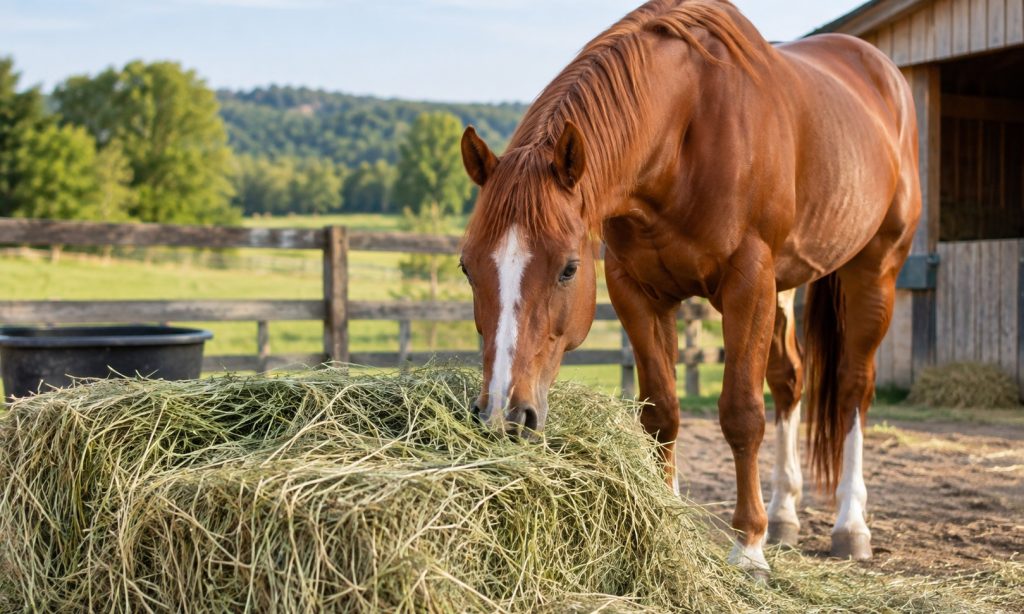
Digestive supplements can make broad promises, but probiotic evidence in horses is limited and product labels vary. A probiotic for horses should be considered only in the context of the whole diet and the horse’s health. This guide explains what probiotics are, which label details matter, and when to involve your veterinarian. It does not diagnose digestive disease or recommend a treatment. A horse with diarrhea, colic signs, weight loss, fever, or poor appetite needs veterinary attention. How to choose the right probiotic for horses begins with asking whether there is a clear reason to use one and what evidence supports the intended use. Because digestive signs have many possible causes, a supplement choice should begin with careful observation and veterinary context.
What probiotics are
Probiotics are live microorganisms intended to provide a health benefit when given in adequate amounts. Products may contain bacteria, yeast, or a combination. Prebiotics are different: they are substrates that can be used by microbes. A product may combine both, but a label should identify each ingredient and amount clearly.
A horse’s hindgut contains a complex microbial community that helps process forage. That does not mean every supplement changes the gut in a predictable or beneficial way. Veterinary references note that the ideal probiotic supplementation for horses remains uncertain, and evidence for many uses is limited. How to choose the right probiotic for horses should therefore involve realistic expectations, not claims of guaranteed prevention or cure.
How to choose the right probiotic for horses
Start with the reason and a veterinary conversation
Ask what you hope the supplement will address. A general wellness goal is different from persistent diarrhea, colic, weight loss, or a diagnosed gastrointestinal condition. A probiotic should not delay examination or replace an established care plan. Before choosing a probiotic for horses, discuss the horse’s signs, current ration, medications, and history with a veterinarian.
This is especially important for foals, older horses, horses with chronic illness, and horses receiving medication. The veterinarian can help decide whether a supplement has a plausible role, whether testing is needed, and how to monitor the horse. Do not stop prescribed treatment or change several parts of the diet at once without guidance.
Read the organism and amount on the label
Look for the genus, species, and strain when provided, along with the amount per serving and a clear feeding direction. A vague “probiotic blend” makes it difficult to compare what is supplied. A label should also identify storage needs and expiration information. Live cultures can lose viability if handled or stored incorrectly, so follow the instructions exactly.
How to choose the right probiotic for horses also depends on whether the product provides details you can review with your veterinarian. Do not assume that a higher colony-forming unit number is automatically better. A large count does not prove that a particular strain benefits horses for the intended purpose.
Look for equine-specific evidence and transparent quality information
Evidence from people or other animal species cannot automatically be applied to horses. Ask whether the specific organism and intended use have been studied in horses. Check whether the evidence comes from controlled research or only a general ingredient claim. How to choose the right probiotic for horses means evaluating the exact formulation, not just a familiar ingredient name.
Consider whether the label identifies the manufacturer, lot, expiration date, storage instructions, and a way to ask technical questions. Avoid products that promise to cure disease, prevent colic, or replace veterinary care. Regulatory oversight and quality assurance can differ by product type, so discuss uncertainty with your veterinarian rather than relying on marketing language.
Consider the whole ration and feeding routine
Forage, water access, gradual feed changes, and regular management are central parts of digestive care. A supplement cannot correct poor-quality forage, an abrupt ration change, or inadequate water. Review the entire ration with a veterinarian or qualified equine nutrition professional. How to choose the right probiotic for horses should include considering whether a simpler management change is more appropriate.
If a veterinarian recommends a trial, record the reason, start date, amount, and any observed changes. Introduce changes as directed. Stop and contact the veterinarian if signs worsen or a new reaction appears. Avoid stacking multiple gut supplements, since combined ingredients can complicate the diet and make it harder to tell what is helping.
When a horse needs veterinary care
Call a veterinarian promptly for signs of colic, repeated diarrhea, fever, marked lethargy, dehydration, refusal to eat, or rapid weight loss. A probiotic is not an emergency treatment. Follow your veterinarian’s instructions and do not attempt to manage serious symptoms with a supplement alone.
For related reading, see our horse gut-health supplement guide and our article about equine nutrition supplements. These are separate informational or review pages; discuss a specific health concern with your veterinarian.
Questions to ask before adding a probiotic
Write down the goal before comparing labels. Are you responding to a veterinarian’s recommendation, or looking for general digestive support? How to choose the right probiotic for horses starts with a defined question, because broad “gut health” language does not identify a condition or expected outcome. Ask what improvement you should monitor, how long a trial should last, and when to stop. Keep the answer tied to your horse’s history and care plan.
Ask the veterinarian to review every supplement and feed additive the horse already receives. How to choose the right probiotic for horses includes avoiding duplicate ingredients and unnecessary stacking. A product with a prebiotic, yeast, or multiple organisms may overlap with another part of the ration. Bring photographs of the complete label, including directions and storage information. This makes it easier to discuss the actual formulation rather than a marketing summary.
How to assess label quality
Look for a clear ingredient list, strain identification where available, amount per serving, and directions for the horse’s size or life stage. How to choose the right probiotic for horses also includes checking the lot number and expiration date. Ask whether the stated culture count applies through the expiration date or only when manufactured. Follow refrigeration or temperature instructions. Improper storage may affect live organisms, even when the container remains sealed.
A label should identify the manufacturer and provide a way to ask technical questions. How to choose the right probiotic for horses means asking for evidence about the exact organism and use. Research on one strain does not prove that a different blend produces the same effect. A study in another species is not direct evidence for horses. Be cautious when a seller cannot explain those distinctions or promises a guaranteed result.
Set expectations and monitor carefully
If your veterinarian recommends a trial, keep the rest of the routine as stable as practical. Record appetite, manure consistency, feed changes, and any new signs. How to choose the right probiotic for horses includes deciding in advance what would count as a useful change. This record may help your veterinarian judge whether to continue, stop, or investigate another cause. Do not use a supplement trial to postpone diagnosis.
Horses can develop digestive signs for many reasons. A probiotic cannot correct every diet, management, or medical problem. How to choose the right probiotic for horses includes knowing the warning signs that need prompt veterinary attention. Repeated diarrhea, signs of colic, fever, reduced appetite, dehydration, or sudden lethargy need professional assessment. Do not change a prescribed plan without speaking with the veterinarian responsible for the horse.
Comparing formulation and feeding directions
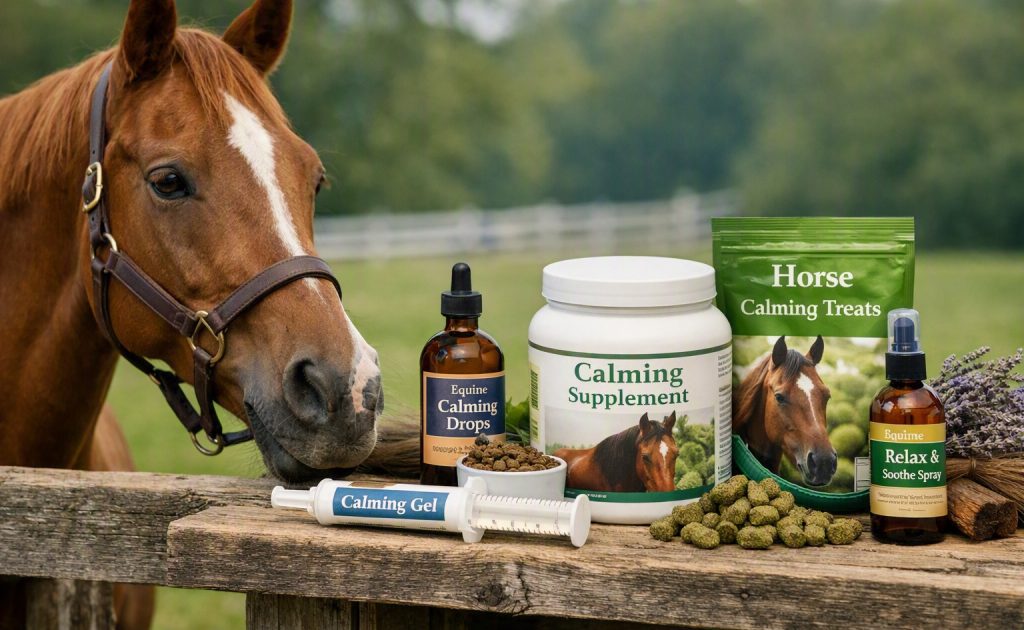
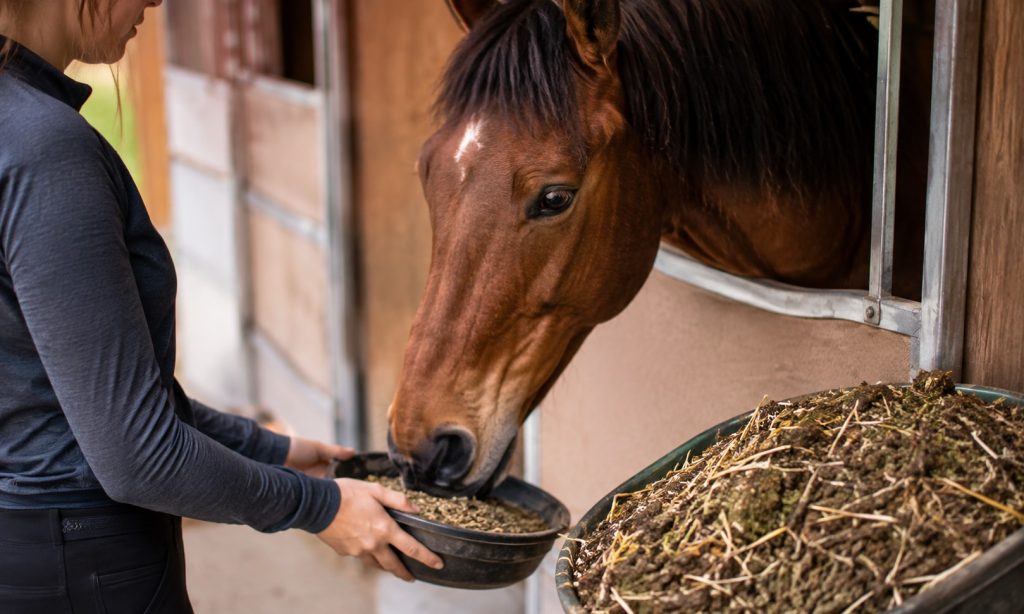
Products come as powders, pastes, pellets, or liquids. The form may affect how conveniently you can give it, but it does not prove that it works. How to choose the right probiotic for horses includes checking whether the horse will reliably consume the serving. Avoid hiding a supplement in a full meal if the horse may leave some behind; ask your veterinarian how to deliver a consistent amount.
Check whether the feeding directions change for foals, pregnant mares, or horses with special needs. How to choose the right probiotic for horses should include confirming that the label is appropriate for the individual animal. Do not extrapolate a general adult feeding direction to a foal. Contact the veterinarian if your horse is under medical care or receiving antimicrobials.
Understand the limits of a supplement trial
A change in manure or appetite may reflect feed, water, travel, stress, or illness. How to choose the right probiotic for horses includes keeping a simple record of those factors. Do not conclude that a supplement caused improvement when several changes happened at once. Your notes can help a veterinarian distinguish normal variation from a pattern that needs examination.
If a supplement is recommended, store it as directed and keep the container closed. How to choose the right probiotic for horses also includes checking the expiration date and discarding product that has become wet, contaminated, or improperly stored. Ask the manufacturer or veterinarian about a damaged container. Do not increase the serving after a missed dose unless the label or veterinarian tells you to do so.
Using a Probiotic as Part of a Wider Gut-Health Plan
A probiotic for horses should not distract from basic management. Consistent forage, clean water, gradual feed changes, and a predictable routine support digestive health. These steps cannot prevent every problem, but they give a veterinarian useful context when a horse develops loose manure, appetite changes, or recurring discomfort.
Before starting a supplement, write down what the horse eats, including pasture, hay, concentrates, treats, and other supplements. Note when symptoms began and whether anything changed shortly beforehand. This record can help a veterinarian decide whether the issue relates to diet, parasites, infection, dental trouble, medication, or another cause. A supplement should not delay an examination when signs are persistent or worsening.
Ask how long a trial should last and what outcome would count as meaningful. Avoid starting several new products at once, because you will not know which change helped or caused a problem. Follow storage directions and check the expiration date. Some products may require refrigeration or careful handling after opening.
Seek prompt veterinary advice for colic signs, marked depression, fever, dehydration, blood in manure, or a sudden loss of appetite. A probiotic is not an emergency treatment. It also cannot replace prescribed care. The safest choice is an evidence-aware discussion with the veterinarian who knows the horse’s history.
Frequently Asked Questions
Do all horses need a probiotic?
No. Whether one is appropriate depends on the horse, the product, and the reason for use. Ask your veterinarian.
Can a probiotic treat diarrhea?
Do not rely on a supplement to treat diarrhea. Contact a veterinarian, especially if it is persistent or accompanied by other signs.
Are probiotics and prebiotics the same?
No. Probiotics are live microorganisms; prebiotics are substances that can be used by microbes.
Should I choose the product with the highest culture count?
Not automatically. Strain, evidence, quality, intended use, and veterinary advice matter.
How long should a horse receive a probiotic?
There is no single schedule for every horse. Follow your veterinarian’s guidance and the product’s directions.
Final Words
Choose a supplement only after defining the goal and reviewing the horse’s diet and health with a veterinarian. Look for strain-level details, clear amounts, storage directions, and evidence relevant to horses. Avoid cure claims and do not delay care for serious signs. If you are considering a probiotic for horses, let the veterinarian help decide whether it fits the situation.