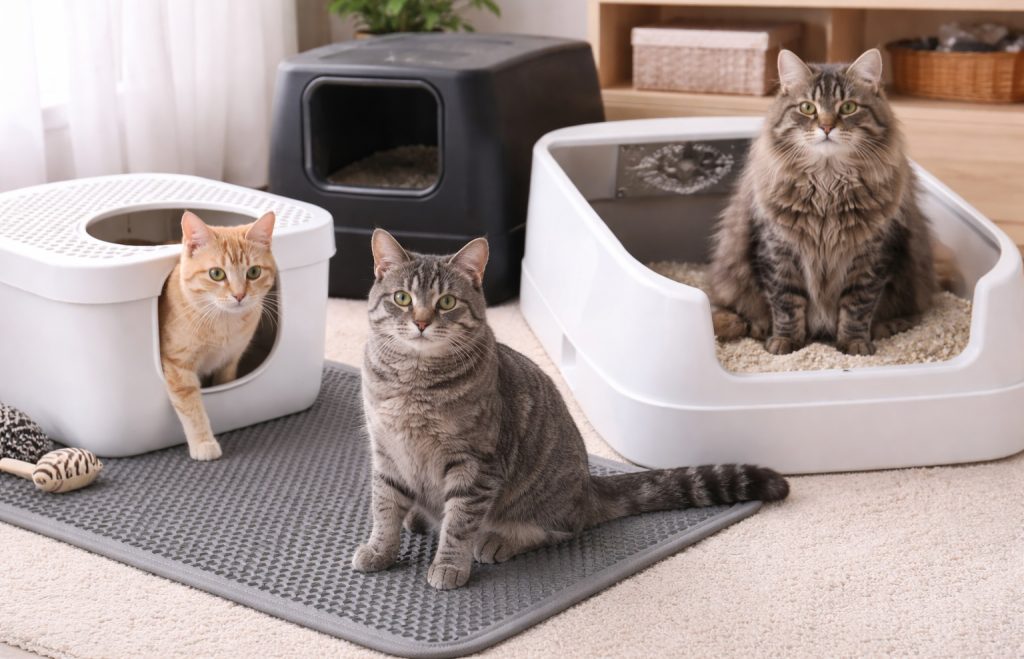
A scoop that works well with clumping litter should lift waste without sending half the clean granules into the trash. The right mesh size, basket depth, handle length, and grip can make the daily routine quicker and less messy. In this guide to the best litter scoop for clumping litter, we compare seven verified options, from fine mesh to coarser baskets and two-piece sets. The useful choice depends on how large your clumps are and how deep your litter box is. If you manage several boxes, compare your cleaning setup with our guide to cat litter options for multi-cat homes, too. Look for a scoop that releases clumps cleanly without tearing the liner, and consider how the handle feels during daily use. The right opening size depends on the litter and box depth.
Quick Picks
| Product | Best For | Key Advantage | Buy | |
|---|---|---|---|---|
| Firsal Stainless Steel Mesh Litter Scoop | everyday clumping clay cleanup | 3.8 mm mesh openings listed | View on Amazon | Jump to Review |
| itPlus Stainless Steel Mesh Litter Scoop | a long-handled metal scoop | 3.8 mm mesh and hanging hole listed | View on Amazon | Jump to Review |
| XBX Stainless Steel Scoop with Holder | organized storage and mixed litter sizes | Fine and wide slit zones plus holder | View on Amazon | Jump to Review |
| Apidgrowth Compact Stainless Steel Litter Scoop | smaller boxes and close control | 10-inch scoop with rubber-wrapped grip | View on Amazon | Jump to Review |
| DHXYZZB 304 Stainless Steel Litter Scoop | a metal scoop with a wood handle | Dual-sifting design listed | View on Amazon | Jump to Review |
| Stainless Steel Litter Scoop 2-Pack with Dual Mesh | two boxes or more than one litter texture | 3.8 mm and 5 mm mesh options in one set | View on Amazon | Jump to Review |
| Sand Dipper 15-Inch Metal Cat Litter Scoop | a longer handle and coarse sifting | 15-inch handle and 1/4-inch mesh listed | View on Amazon | Jump to Review |
1. Firsal Stainless Steel Mesh Litter Scoop

What We Like
- 3.8 mm mesh option
- Stainless steel scoop
- Long handle and grip
- Also offered with finer mesh
What We Don’t Like
- Listing has conflicting mesh variants
- Mesh can be slower on very large clumps
Firsal’s scoop is a stainless-steel mesh design with a regular cat-litter version listed at 3.8 by 3.8 millimeters. The listing also refers to a finer 2-millimeter option, so check that the selected variation matches the product title before ordering. For clumping litter, the smaller openings can help retain smaller broken clumps while allowing more usable granules to sift through. The long handle and coated grip are intended to make routine scooping easier to hold. The open mesh shape is also simple to rinse after use. Since the listing mentions other animal habitats, confirm that the option you select is the cat-litter scoop rather than a different mesh variant.
This model may suit a standard litter box where you want to separate waste without lifting large amounts of clean litter each time. A mesh scoop generally rewards a slower lift-and-shake motion: give a clump a moment to settle, then let the unaffected granules fall back into the pan. The tool is not a substitute for replacing litter or washing the box on your normal schedule. Check the mesh after use for clay residue, and let the scoop dry before storing it. The listed openings are a useful point of comparison, but litter brands vary in granule size and clump firmness. If your litter produces large clumps, a wider or deeper scoop may be more comfortable; if it breaks into small pieces, consider the finer option only after confirming availability and fit.
My Recommendation
Choose the Firsal scoop if you want a metal mesh tool and a stated 3.8 mm opening for routine clumping-litter cleanup. Check which mesh variation is actually in your cart. A deeper, wider scoop may be more convenient for oversized boxes or cats that bury waste in deep litter. Before ordering, check that the scoop’s openings match your litter granule size and that the handle feels comfortable for repeated daily use. A well-chosen scoop should separate clumps while leaving clean litter in the box, and should be easy to rinse and dry. Choose the design that suits your box and routine.
2. itPlus Stainless Steel Mesh Litter Scoop

What We Like
- 3.8 mm mesh openings
- Stainless steel mesh body
- Non-slip handle listed
- Handle hole for hanging
What We Don’t Like
- Product details do not state scoop dimensions
- Mesh style may need extra shaking
The itPlus scoop pairs a stainless-steel mesh head with a long handle and a 3.8-millimeter opening, according to its listing. That opening can be a practical middle ground for many clumping litters: it is smaller than coarse mesh but still gives loose granules a path back into the pan. The product description also mentions a non-slip grip and a hole for hanging storage. Those details may make it easier to keep the tool off a counter or floor between cleanings. The listing describes a deep, wide shovel, but it does not provide exact head dimensions, so compare the product photos and ask for measurements if you use an unusually large or narrow box.
A stainless mesh head can be rinsed after scooping, which is useful when sticky clumps leave residue around the openings. Make sure the head dries before it is stored in a closed holder or drawer. The long handle keeps your hand farther from the litter and can be helpful with deeper pans, though handle length should still feel controlled in a small box. When sifting, lift the clump gently and pause so clean granules can drop through; vigorous shaking can scatter litter. For households using very fine or pellet litter, the 3.8-millimeter holes may not behave the same way. Check the litter manufacturer’s guidance and test the scoop over the box before deciding whether the opening size works for your routine.
My Recommendation
The itPlus scoop is a straightforward option if a long handle, metal mesh, and 3.8 mm openings match your litter. Its exact head size is not listed, so owners of extra-large pans should verify coverage. Consider a solid shovel if clumps tend to break during sifting. Before ordering, check that the scoop’s openings match your litter granule size and that the handle feels comfortable for repeated daily use. A well-chosen scoop should separate clumps while leaving clean litter in the box, and should be easy to rinse and dry. Choose the design that suits your box and routine.
3. XBX Stainless Steel Scoop with Holder
What We Like
- Two sifting zones listed
- Stainless steel scoop head
- Beechwood grip
- Washable stand included
What We Don’t Like
- Holder uses extra counter or floor space
- Opening dimensions are not listed
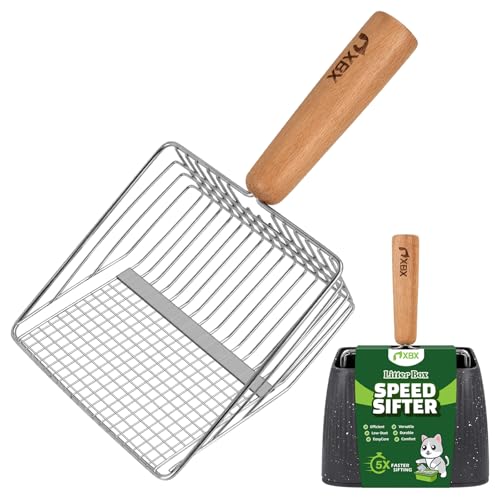
XBX combines a stainless-steel scoop head with two sifting patterns: the product listing describes a fine grid at the front and wider slits toward the back. The intent is to retain smaller waste pieces while letting clean litter pass through broader openings. A beechwood grip and washable stand are included, giving the set a more finished storage setup than a bare scoop. That holder can be useful when you want the tool to have a designated place, although it takes up room beside the litter station. The listing says the scoop can be used with clumping or crystal litter. Check the product dimensions and care notes, especially if the wooden grip needs to stay dry during rinsing.
The two-zone design may appeal if your litter forms clumps of different sizes or you prefer not to switch scoops between pans. It still relies on a careful lift and small shake; very soft or freshly formed clumps can break apart regardless of the slot pattern. Let clumps firm up according to your litter’s instructions, then remove them gently. The stand adds convenience, but keep it on a washable surface and clean it as needed so it does not collect dust. The manufacturer does not give exact slot widths in the listing details returned here, so do not assume the fine grid will catch every small fragment. If precise mesh size is essential, consider a scoop with a stated opening measurement instead.
My Recommendation
XBX is a good fit when built-in storage and two sifting zones matter as much as the scoop itself. Its slot measurements are not stated, so it is less useful for buyers who need a precise opening size. Keep the wooden grip and holder clean and dry between rinses. Before ordering, check that the scoop’s openings match your litter granule size and that the handle feels comfortable for repeated daily use. A well-chosen scoop should separate clumps while leaving clean litter in the box, and should be easy to rinse and dry. Choose the design that suits your box and routine.
4. Apidgrowth Compact Stainless Steel Litter Scoop

What We Like
- 10-inch length listed
- 4.21-inch width listed
- Stainless steel body
- Rubber-wrapped short handle
What We Don’t Like
- Shallow 1.1-inch head
- Short handle brings hand closer to litter
Apidgrowth lists a compact scoop measuring 10 inches long, 4.21 inches wide, and 1.1 inches high. Its short handle is wrapped for grip, while the head is made of stainless steel. These proportions can suit a smaller litter tray or a user who wants more direct control while working around corners. The shallower basket may be less comfortable for deep litter or large clumps, so compare its depth with the amount of litter you use. The product page identifies this as a compact-size scoop and warns shoppers to check the dimensions. That measurement-first approach is useful: a scoop can be sturdy and still be too small for a large box or a household with several cats.
The compact head is easier to maneuver in narrow trays than an extra-wide shovel, but it may take more passes to clean a broad pan. Its 1.1-inch depth also means that a loose clump can roll out if you lift too quickly. Use a shallow, steady motion and avoid pressing the edge against delicate or coated box surfaces. The listing does not specify the mesh opening size, so you cannot predict exactly how fine the sifting will be. If you are choosing mainly for clumping litter, that missing detail is worth considering alongside the head dimensions. The stainless body should be rinsed and dried after use, and the rubber-wrapped handle needs a quick check for residue at its seams.
My Recommendation
Pick Apidgrowth when a short, compact head matters more than covering a large litter bed in fewer scoops. Its listed measurements make fit easier to judge, but the shallow design may not hold larger clumps securely. Look for stated mesh dimensions if small fragments are your main concern. Before ordering, check that the scoop’s openings match your litter granule size and that the handle feels comfortable for repeated daily use. A well-chosen scoop should separate clumps while leaving clean litter in the box, and should be easy to rinse and dry. Choose the design that suits your box and routine.
5. DHXYZZB 304 Stainless Steel Litter Scoop

What We Like
- 304 stainless steel listed
- Dual-sifting design
- Wooden handle
- Smooth surface intended for rinsing
What We Don’t Like
- Exact hole size not listed
- Wooden grip needs careful drying
DHXYZZB describes its scoop as 304 stainless steel with a wooden handle and a dual-sifting pattern. The listing positions the holes to separate clean litter from clumps, but it does not provide a specific hole diameter. That makes this product harder to compare with scoops that publish a mesh measurement. If you prefer a metal tool with a wood grip, it offers a different feel from all-steel or plastic options. The listing also describes a smooth surface that rinses clean. Treat durability language as the seller’s claim rather than a guarantee, and check the current product photos and dimensions to confirm the head shape suits your pan.
For clumping litter, the right scoop depends on both the opening size and how firmly your litter holds together. Since the hole dimensions are not stated here, buyers with fine-grained litter may want to ask for details before purchase. Rinse the metal head after use, then dry the wooden handle thoroughly rather than leaving it damp in a covered holder. A wood grip can feel comfortable, but it adds a care step compared with a one-piece stainless scoop. The design may be useful for an owner who values a familiar handle and a washable metal head, though a plastic scoop can be lighter for repeated daily use. If you need a scoop for deep litter, confirm the basket depth; the listing’s available facts do not establish it.
My Recommendation
Consider DHXYZZB if you want a stainless head with a wooden grip and do not need a published mesh measurement. The dual-sifting claim may sound useful, but confirm the hole pattern and head depth before buying. A one-piece scoop is simpler to rinse and dry. Before ordering, check that the scoop’s openings match your litter granule size and that the handle feels comfortable for repeated daily use. A well-chosen scoop should separate clumps while leaving clean litter in the box, and should be easy to rinse and dry. Choose the design that suits your box and routine.
6. Stainless Steel Litter Scoop 2-Pack with Dual Mesh

What We Like
- Two scoop heads in one pack
- 3.8 mm and 5 mm mesh listed
- Stainless steel handles
- Different openings for different clumps
What We Don’t Like
- Two tools need more storage space
- Product claims about odor resistance are unverified
This two-piece set provides separate 3.8-millimeter and 5-millimeter mesh scoops, according to the listing. That gives you a choice between finer sifting and faster handling of larger clumps, instead of using one opening for every litter. The stainless-steel handles are described as nonporous and easy to rinse. A pair can also be useful when you maintain two litter boxes or keep a spare near another floor of the home. The product listing emphasizes odor resistance, but regular washing and complete drying still matter for any scoop. Confirm the delivered set includes both sizes and check the head dimensions, since hole size alone does not tell you how much litter each scoop can hold.
The finer head may be a better match when your litter is small-grained or breaks into fragments; the wider mesh can move through larger, firm clumps with less shaking. Those are starting points rather than universal rules, because brands differ in granule size and clumping behavior. Try the scoop gently over the litter box and see whether clean granules fall through without losing pieces you want to retain. Keep the two tools labeled or stored separately if you use different litter types. Their extra flexibility comes with a storage tradeoff, and two scoop heads mean two surfaces to rinse and dry. If you only maintain one box with consistent litter, a single well-sized scoop may take less space and be simpler.
My Recommendation
This set is a flexible choice if you want two published mesh sizes or maintain separate litter stations. Match the smaller openings to finer litter and the wider ones to larger, firm clumps, then judge by the litter you use. Buy one scoop instead if storage is tight. Before ordering, check that the scoop’s openings match your litter granule size and that the handle feels comfortable for repeated daily use. A well-chosen scoop should separate clumps while leaving clean litter in the box, and should be easy to rinse and dry. Choose the design that suits your box and routine.
7. Sand Dipper 15-Inch Metal Cat Litter Scoop

What We Like
- 15-inch length listed
- Stainless steel mesh basket
- 1/4-inch mesh for fast sifting
- Longer reach than compact scoops
What We Don’t Like
- Coarse mesh can pass small clump fragments
- May feel oversized in a small pan
Sand Dipper’s metal scoop is listed at 15 inches long and uses a quarter-inch mesh basket. That coarser opening can make sifting faster when clumps are large and hold together, while loose litter drops through. It is a useful comparison for owners who prefer a longer handle and a basket rather than a flat shovel. The stainless-steel construction is described as heavy duty, and the product is intended for daily litter-box cleanup. A quarter-inch opening is wider than the measured mesh on several other options in this guide, so it may allow small broken clump pieces through. Consider your litter’s texture and how firmly it forms waste before choosing it as your only scoop.
The longer handle can keep your hand farther from the litter and give you more reach in a deep or large box. It may feel less precise in a narrow pan, especially when you are working near corners or a low-sided tray. Lift clumps slowly and avoid shaking so hard that pieces fragment into the mesh. If you want to catch smaller bits, a finer screen may be preferable; some owners keep a second scoop for different textures. Rinse and dry the basket after use, checking the wire attachment points as part of normal upkeep. The 15-inch measurement is useful, but verify that the full length and basket shape work with your storage space and box depth.
My Recommendation
Sand Dipper suits owners who value a longer reach and faster sifting through larger, firm clumps. Its quarter-inch mesh is comparatively coarse, so it may not retain small fragments. Choose a finer mesh scoop if your clumps crumble or your litter granules are especially small. Before ordering, check that the scoop’s openings match your litter granule size and that the handle feels comfortable for repeated daily use. A well-chosen scoop should separate clumps while leaving clean litter in the box, and should be easy to rinse and dry. Choose the design that suits your box and routine.
How to Choose a Litter Scoop for Clumping Litter
Start with the size and firmness of the clumps your litter makes. Then match the scoop’s openings, depth, and handle to your box and cleaning style. A good fit lets you remove waste while returning most clean litter to the pan.
Match mesh size to your litter
Small openings can hold on to smaller pieces of waste, while wider mesh generally lets litter pass through more quickly. The tradeoff is straightforward: coarse openings may let broken clump fragments escape, and fine openings can sift slowly or retain more clean granules. Compare the stated hole size with the granule size and clump firmness of your litter. A 3.8 mm screen is a common middle option in this roundup; a 5 mm or quarter-inch opening is more suited to larger clumps. Some products offer more than one head so you can adjust if you change litter. For another angle on litter choice and box setup, see our guide to litter for automatic boxes.
Consider basket depth, width, and handle
A wide, deeper head can gather a large clump in fewer passes, but it may be awkward in a compact tray. A short handle gives close control around corners; a longer handle reaches into deeper boxes and keeps your hand farther from the litter. If your box is low-sided, a bulky scoop can bump against its rim. Measure the tray opening and compare it with the scoop head, especially when the product listing includes exact dimensions. Also consider how the grip feels after repeated daily use and whether a wooden or wrapped handle needs extra drying care.
Make cleaning and storage manageable
Clumping litter can stick to mesh, so look for a head that rinses clean and dries fully. Stainless steel and aluminum are common metal choices, but the material alone does not tell you how the handle joins the head or how easy the tool is to sanitize. A stand or holder keeps a scoop contained, while a hanging hole takes less floor space. If you use more than one litter type, a separate scoop can prevent the wrong mesh from becoming a daily annoyance. Our guide to litter-box setups for multiple cats can help you plan how often to clean each station.
Frequently Asked Questions
What mesh size is best for clumping litter?
It depends on the granule size and clump firmness. Smaller holes can catch fragments; wider holes sift faster through large, firm clumps. Check your litter’s behavior and compare the listed opening size.
Is a metal litter scoop better than plastic?
Metal scoops are often more rigid and rinse easily, while plastic models can be lighter and less expensive. Choose a material and handle that feel comfortable and can be cleaned thoroughly.
Should I wait before scooping a fresh clump?
Follow the litter manufacturer’s instructions. Some clumping formulas need time to firm up; removing waste too soon can cause it to break apart and leave residue.
Can one scoop work with every type of litter?
Not always. Pellet, crystal, clay, and fine-grain litters behave differently in a mesh scoop. Check compatibility notes and match the opening size to the litter you use.
How should I clean a litter scoop?
Remove visible residue, wash the scoop using the product’s care directions, and let it dry fully before storage. Keep it separate from food-preparation surfaces and replace it if the head or handle becomes damaged.
Can clumping litter stick to a scoop?
Yes. A nonstick surface or easy-rinse material may help, but litter formulation and moisture also affect residue. Clean the scoop as directed.
Final Verdict
For everyday clumping litter, a mid-size mesh opening around 3.8 mm is a sensible starting point. The dual-mesh set adds flexibility, while XBX includes a stand and Apidgrowth publishes compact dimensions. Choose by your litter’s granule size and clump strength, then check the head and handle against your box.
For Related Reading
- Cat litter picks for multi-cat homes
- Cat litter that works with automatic boxes
- Litter-box setups for several cats
Affiliate disclosure: This article contains Amazon affiliate links. If you purchase through them, PetAdvisorPro may earn a commission. As an Amazon Associate I earn from qualifying purchases.