Introduction
Before adding a calmer to a horse’s diet, pause to identify what behavior you want to change and what may be causing it. A horse that calls, paces, or becomes difficult to handle when a companion leaves may be responding to social separation, pain, fear, a feeding change, or another source of stress. A supplement cannot diagnose those causes, and research on many calming ingredients in horses is limited. Review the full ingredient list, your horse’s current ration and medications, and any competition rules before introducing anything. If you are researching a calmer for horse separation anxiety, treat that as one part of a broader welfare question, not a quick fix. This guide explains what to assess, what to ask your veterinarian, and how to make any diet change more thoughtfully.
Start by understanding the behavior
Write down what happens, when it happens, how long it lasts, and what helps it settle. Note whether signs occur only when a horse is separated, during feeding, in a trailer, at the farrier, or in a new environment. Vocalizing, pacing, fence running, sweating, tense posture, or attempts to follow a herd mate can reflect distress, but the same behavior may have different causes in different horses.
A veterinarian can help rule out pain, illness, medication effects, and other physical factors. A qualified equine behavior professional may help assess training, handling, and the environment. If the behavior is new, intense, escalating, or puts the horse or handler at risk, seek professional advice before trying a supplement.
What calming supplements may contain
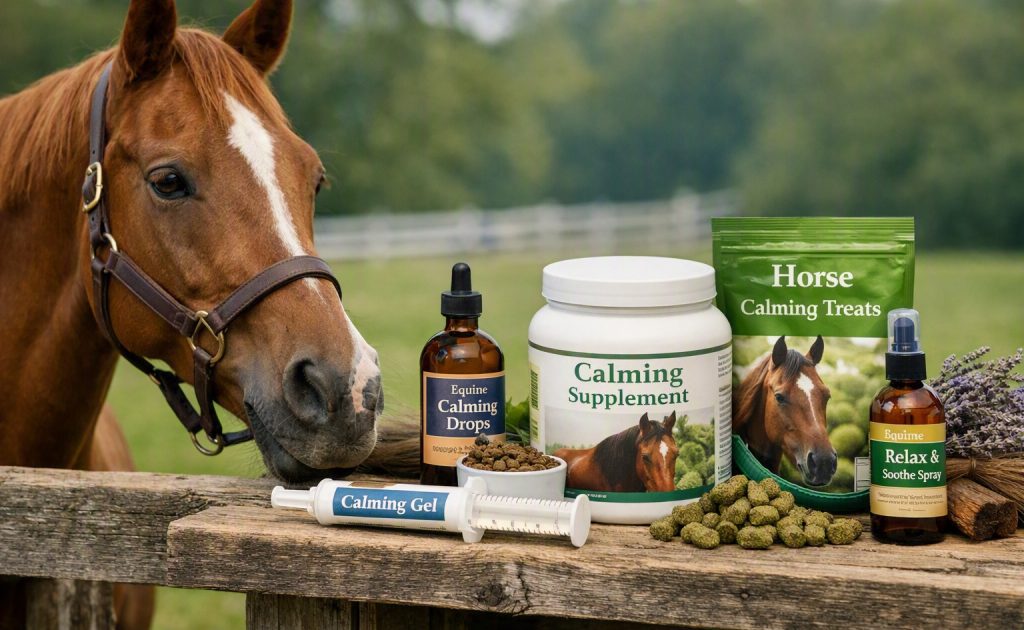
Products marketed for calm behavior may contain minerals, amino acids, vitamins, herbs, yeast products, or combinations of ingredients. Formulas and serving directions vary. The presence of a nutrient does not mean the horse is deficient in it, and a larger amount is not automatically more effective or safer. Adding overlapping products can raise total intake of particular nutrients or create interactions with medication.
Evidence for calming effects is mixed or limited for many ingredients. Research in other species does not establish that an ingredient will change behavior in horses. Product labels also make it important to distinguish nutritional claims from drug-like claims. Avoid relying on testimonials as proof that an ingredient will help your horse.
Check the whole diet before adding anything
Review forage, feed, and existing supplements
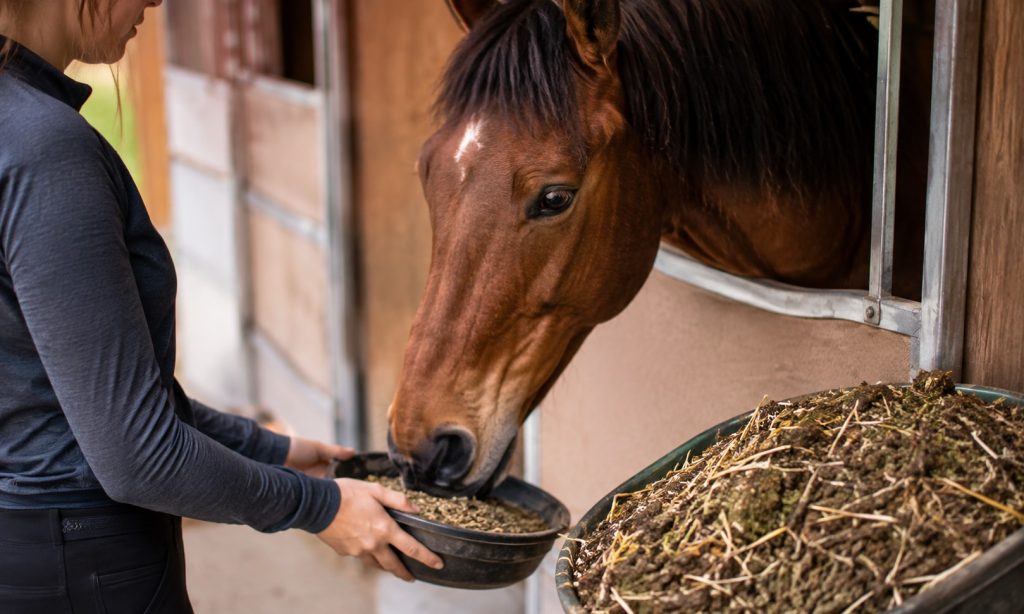
List the forage, concentrates, balancers, treats, salt, and every supplement the horse receives. Include approximate amounts and feeding times. If several products supply the same minerals or vitamins, the combined ration may already provide them. A veterinarian or qualified equine nutritionist can review whether a supplement addresses a real nutritional gap or simply duplicates the current diet.
Consider health conditions and medication
Share the horse’s medical history and medication list with the veterinarian before introducing a calming formula. Herbal ingredients and concentrated nutrients can matter for horses with health conditions, and interactions are not always obvious from a product name. Do not stop prescribed medication or use a supplement in place of treatment.
Check competition rules
If the horse competes, check the current rules of the relevant organization before feeding any product. Ingredients, thresholds, and withdrawal requirements can change. Keep the package, label, lot number, and purchase record, and ask the governing body or veterinarian when the status is uncertain. Do not assume that a product sold as a supplement is automatically permitted in competition.
Questions to ask before choosing a product
-
What is the specific behavior we are addressing? A vague goal such as “more relaxed” is hard to measure. Define an observable change, such as fewer fence runs during short separations or quicker recovery after a known trigger.
-
Has a professional checked for other causes? Pain, discomfort, fear, management, and training should be considered before attributing behavior to a dietary need.
-
What is every ingredient and amount? Read the complete label, not just the front claims. Ask about proprietary blends, duplicate nutrients, serving size, directions, warnings, and how the amount fits the horse’s total ration.
-
Is there credible equine evidence for the intended use? Ask the veterinarian what evidence exists for the ingredient and whether it applies to horses and to the behavior you observe.
-
Could it affect another treatment or competition eligibility? Confirm with the veterinarian and, when relevant, the rule-making organization before the first feeding.
How to introduce a diet change carefully
If your veterinarian agrees that a specific supplement is reasonable, follow the label and professional instructions exactly. Make only one change at a time so you can tell what affects appetite, manure, skin, behavior, or other signs. Record the start date, amount, feeding method, and any changes. Do not increase the amount because you do not see an immediate effect; some products have no demonstrated benefit, and a higher serving may create risk.
Keep the rest of the routine as consistent as possible while you observe the horse. Track the defined behavior under comparable conditions and note any unwanted effects. Stop and call the veterinarian if the horse develops a concerning reaction, stops eating, becomes unusually dull or agitated, or shows a sudden change in health. Do not conduct a deliberate separation or stress test that could injure the horse.
Management can matter more than a feed additive
Horses are social animals, and daily access to safe social contact, forage, movement, and predictable handling supports welfare. For separation-related behavior, gradual, professionally planned practice may be more appropriate than relying on a supplement. Avoid sudden isolation, punishment, or restraints that suppress a visible behavior without addressing fear or distress. Make changes with guidance when the horse has a history of dangerous reactions.
A calm routine does not mean ignoring distress. If the horse is panicking, repeatedly striking a fence, sweating heavily, or threatening people, manage immediate safety and call for veterinary or behavior support. Keep people outside the horse’s path and do not attempt an unsafe separation to prove whether a product works.
Frequently Asked Questions
Do calming supplements work for every horse?
No. Ingredients and evidence vary, and a response in one horse does not predict a response in another. Many marketed calming effects have limited equine evidence, so discuss the specific formula and goal with your veterinarian.
Can a calmer solve separation anxiety?
A supplement should not be expected to resolve a social or behavioral problem. First assess health, environment, social needs, and training with appropriate professionals. Any dietary addition is only a possible adjunct if your veterinarian agrees.
Should I combine two calming supplements?
Do not combine them without reviewing the full ingredient lists with a veterinarian or nutritionist. Duplicate nutrients or active ingredients can raise total intake and complicate evaluation of effects.
How long should I try a supplement?
There is no universal trial period. Ask your veterinarian whether the ingredient has evidence, how long an observation period makes sense, what outcome to track, and when to stop if there is no benefit or an adverse effect.
Are calming supplements allowed in horse shows?
Rules depend on the organization and can change. Check the current governing rules for every ingredient and ask the relevant organization or your veterinarian before competition use.
Final Words
Before adding a calmer to a horse’s diet, define the behavior, consider health and management causes, and review the full ration, ingredient list, medications, and competition rules. Evidence for many calming ingredients is limited, so avoid treating a supplement as a guaranteed fix. If you are considering a calmer for horse separation anxiety, involve your veterinarian and track a clear, safe outcome rather than experimenting with multiple products. Social needs, pain assessment, and thoughtful behavior support may be central to the plan.
Reference
- AAEP Position on Therapeutic Medication for the Competition Horse, American Association of Equine Practitioners.
- Are You ‘Stressing Out’ Your Horse?, Rutgers Cooperative Extension.
- The Importance of Understanding Horse Behavior, University of Florida IFAS.
- Drugs & Medications, US Equestrian.