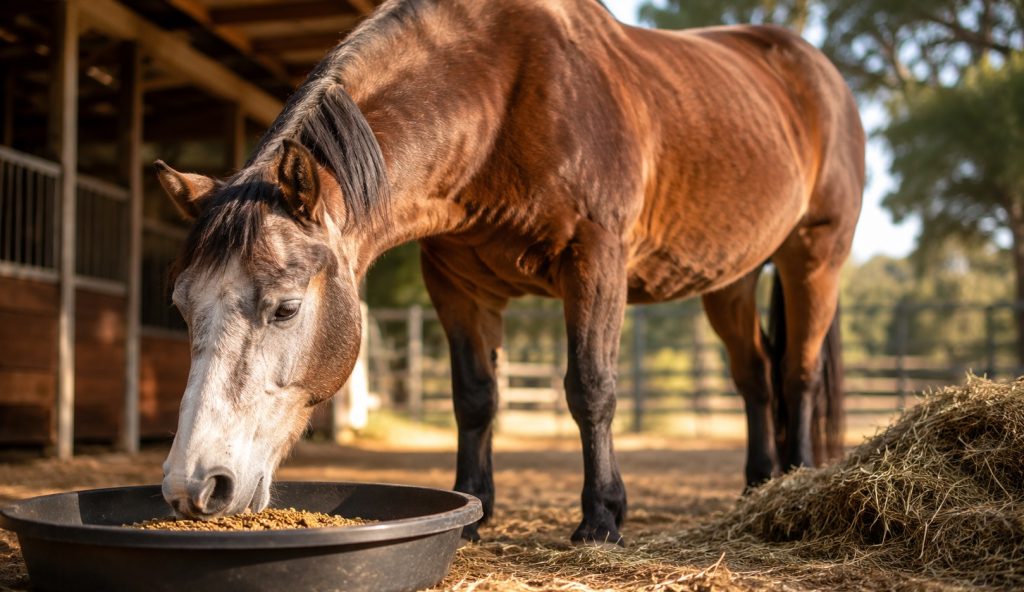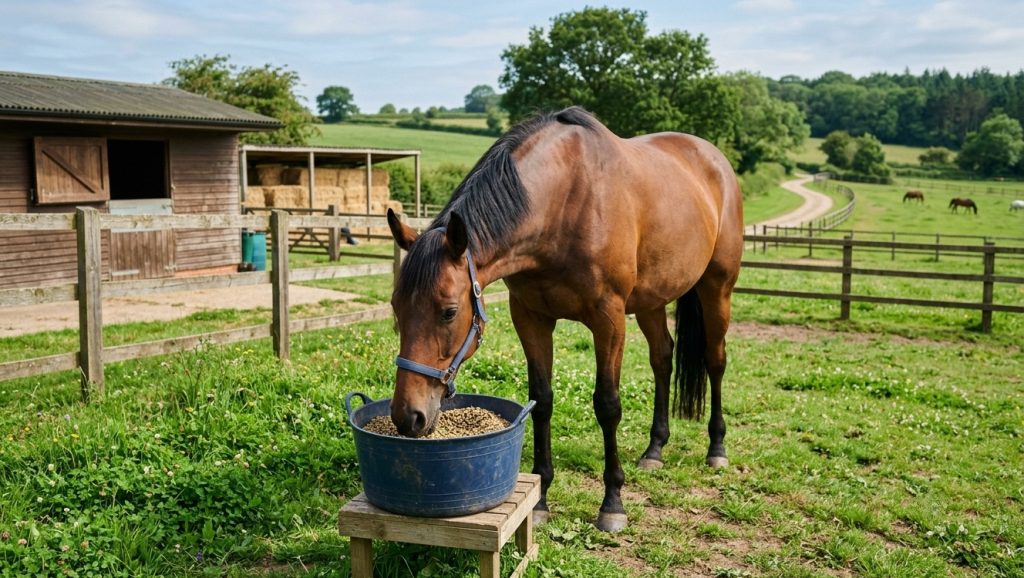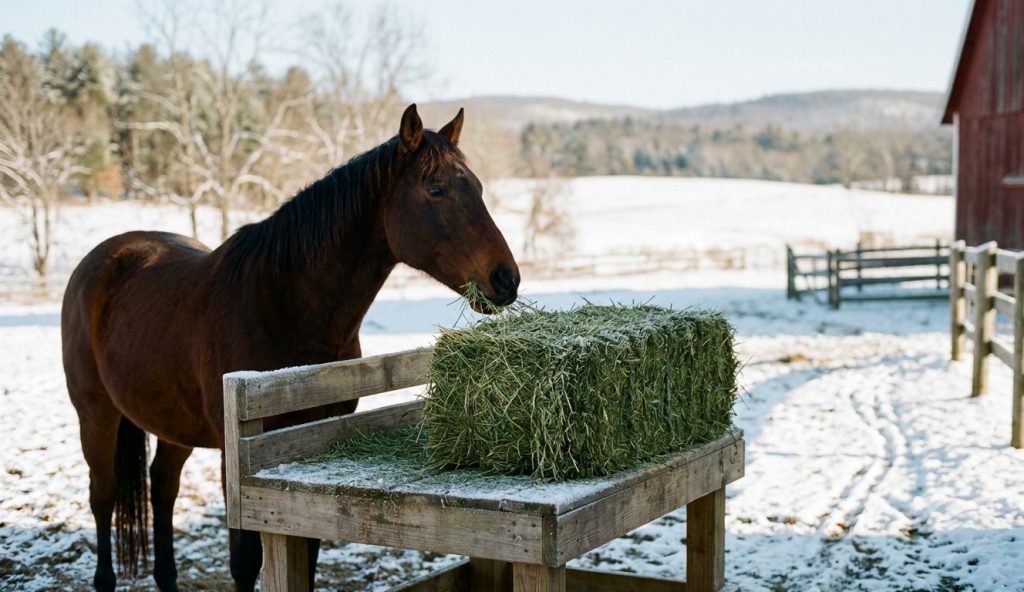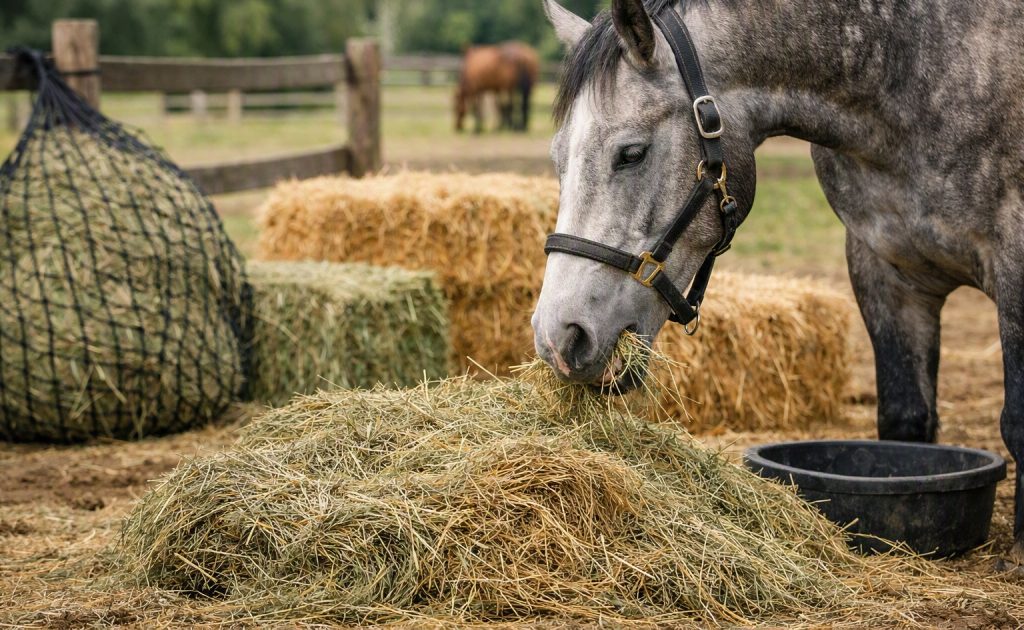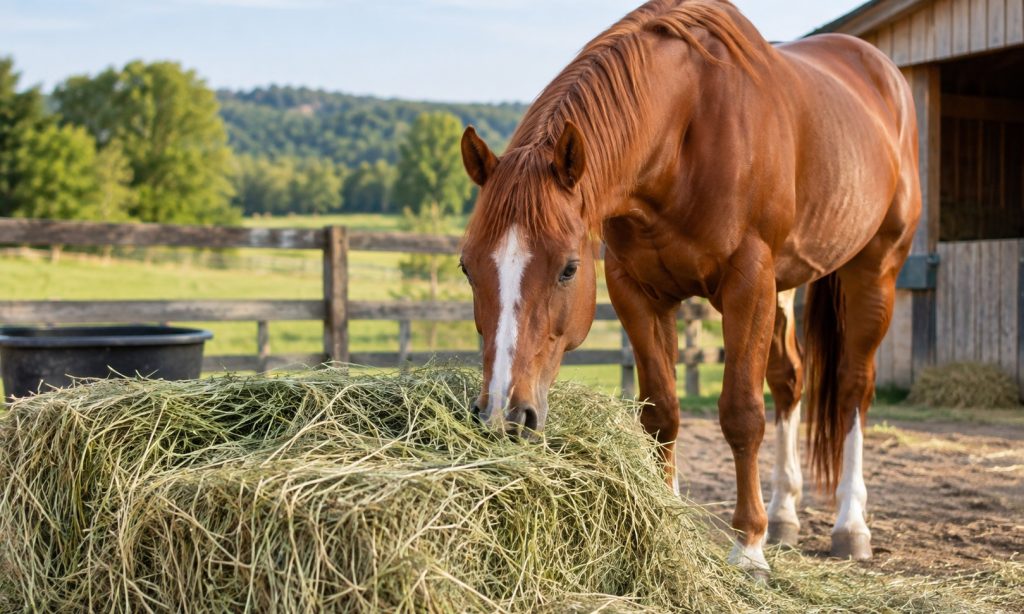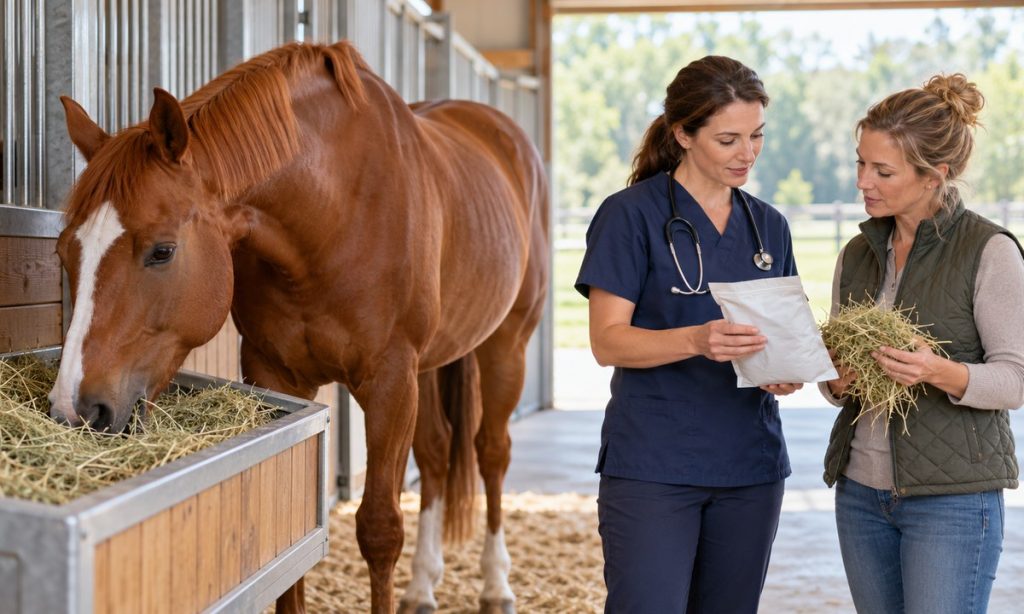
When a horse has gastric ulcers, feeding questions often come up alongside diagnosis and veterinary treatment. The right plan depends on the type and location of the disease, the horse’s body condition, work schedule, forage, and other health needs. Ask your veterinarian how the examination or gastroscopy findings affect feeding, and whether the goal is supporting treatment, reducing risk factors, maintaining weight, or all three. Bring a complete list of hay, pasture, concentrates, treats, supplements, and medications, including how much and when each is offered. A discussion about feed for horses with ulcers can help you prepare, but a product page cannot determine what is appropriate for an individual horse. Use these questions to build a practical plan with your veterinarian.
Clarify the diagnosis and treatment goal
Ask which part of the stomach is affected and how the diagnosis was confirmed. Equine gastric disease includes different conditions, and visible signs such as girthiness, poor performance, appetite changes, or weight loss do not identify the cause on their own. Ask whether the findings point to squamous disease, glandular disease, or another problem, and what follow-up is recommended.
Then ask what feeding can reasonably contribute. Management may help reduce some risk factors, but it does not replace a diagnostic workup or prescribed treatment. Ask how long treatment is expected to last, whether a recheck is needed, and which changes should prompt a call sooner. This keeps diet changes tied to a specific veterinary goal rather than trial-and-error supplementation.
Questions about forage and meal timing
How much forage should my horse receive?
Ask your veterinarian to set a forage target based on current weight, body condition, workload, dental health, and any metabolic concerns. Many horses benefit from frequent forage access, but an overweight horse or one with insulin dysregulation may need an individualized plan. Do not sharply restrict forage without veterinary guidance; long gaps without forage can be undesirable for gastric health and can affect behavior.
Share the actual amount fed and the length of time it takes the horse to finish it. If the horse is stalled for part of the day, discuss whether slow feeders, additional small hay meals, or turnout can safely reduce long empty periods. Check that nets and feeders are appropriate, securely installed, and do not create an entanglement risk.
Should I change the hay or add alfalfa?
Ask whether the current forage is suitable and whether a hay analysis would be useful. Hay varies in energy, protein, minerals, and carbohydrate content. If alfalfa is being considered, ask how much fits the whole ration and whether the horse has other risks, such as a history of enteroliths. Alfalfa may be included in some veterinary feeding plans, but it is not a universal treatment or a substitute for medication.
Bring a representative sample or the hay analysis if available. Include pasture access, seasonal changes, and whether the horse can graze freely. If forage needs to be soaked for a separate metabolic reason, ask how to manage soaking time, water changes, feed hygiene, and nutrient balance.
What should happen before exercise?
Ask whether a small forage meal before work could fit the plan and how close to exercise it should be offered. The answer depends on the horse’s workload and stomach condition. Discuss whether fasting before travel, competition, or veterinary procedures is required; do not assume that withholding hay is harmless or necessary. Clarify any instructions for medications that must be given around feeding or exercise.
Review concentrates, treats, and the full ration
Does my horse need a concentrate feed?
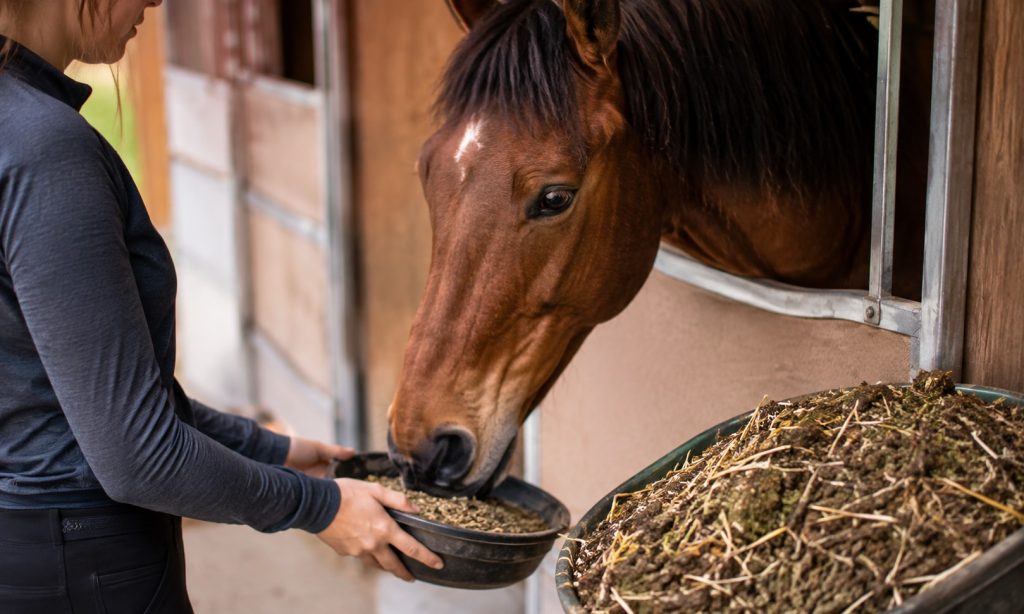
Ask whether forage alone meets energy and nutrient needs. If the horse needs a concentrate, review the product’s feeding directions and the actual amount offered. Some horses do better when larger grain meals are avoided or divided into smaller portions, but the right approach depends on body condition and workload. Ask whether a ration balancer or fortified feed is needed to cover vitamins and minerals when calories are restricted.
Make a written inventory of everything that contributes calories or nutrients: grain, mash, oil, treats, salt, electrolyte products, and supplements. A veterinarian or qualified equine nutritionist can look for overlapping ingredients and help keep the ration consistent. Bring product labels or clear photos of them to the appointment.
Are any treats or supplements a concern?
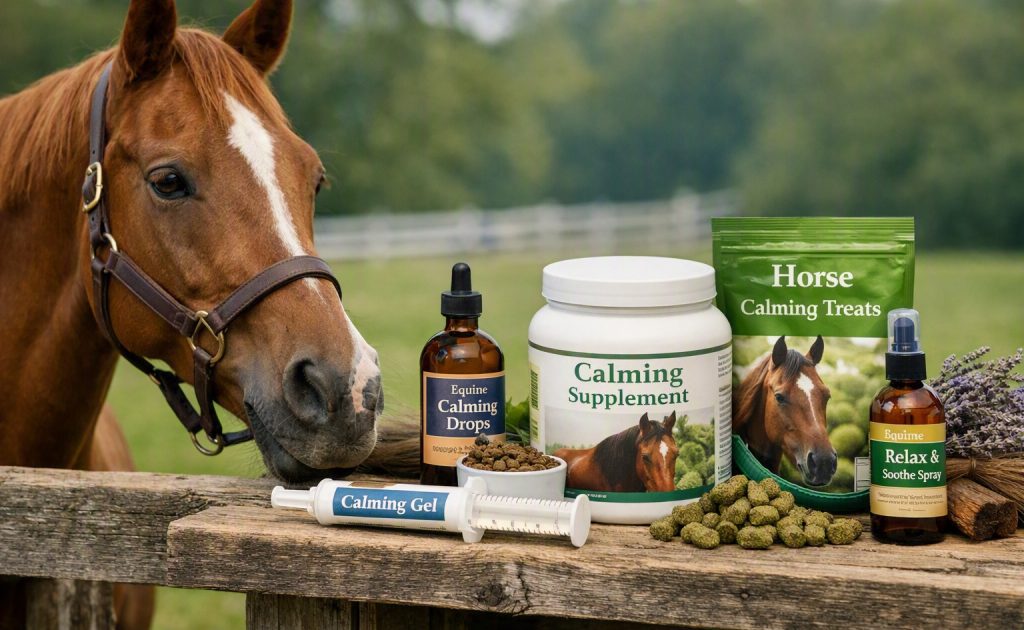
Ask whether each supplement has evidence for the specific purpose being considered, whether it duplicates nutrients in the base ration, and whether it could affect medication or competition eligibility. Labels such as “ulcer support” do not prove that a product treats gastric disease. Avoid stopping prescribed therapy or substituting a supplement without speaking to the veterinarian.
Tell the veterinarian about all products, even those given only occasionally. If the horse is a picky eater, ask whether a supplement should be mixed into feed and how to avoid reducing intake of the complete ration. Never force-feed a product when the horse is painful or refusing food; a sudden appetite change merits a veterinary call.
Plan for weight, routine, and monitoring
Ask what body condition and weight range are appropriate and how often to record them. If weight loss or gain is needed, request a gradual plan and a way to measure progress. A weight tape can help track trends, while body condition scoring and muscle condition give additional context. Ask how dental problems, pain, workload, or herd dynamics could affect eating.
Discuss changes to turnout and social contact. Horses are adapted to spend much of the day eating and moving, but management options vary by property and by medical need. Ask what is realistic for this horse and how to make changes safely. If multiple horses share hay, consider how you can confirm that the horse actually consumes its portion.
Agree on what to monitor and when to follow up. Useful notes may include appetite, manure, time without forage, feed intake, behavior, body condition, work, medication timing, and signs the veterinarian wants reported. A simple daily log can show whether a change helped, caused refusal, or coincided with another management adjustment.
Frequently Asked Questions
Can feed alone cure ulcers in horses?
No. Feeding and management can address some risk factors, but diagnosis and treatment should be directed by a veterinarian. Ask what role diet has in your horse’s specific care plan.
Should I feed alfalfa to every horse with ulcers?
No. Alfalfa may be appropriate in some plans, but the amount and suitability depend on the whole ration and the horse’s other risks. Ask your veterinarian before making a major forage change.
Should I stop grain immediately?
Do not make an abrupt change without considering the horse’s energy and nutrient needs. Ask whether the current feed should be reduced, replaced, or divided into smaller meals, and how to transition safely.
Are ulcer supplements a replacement for prescribed medication?
No. Supplements should not replace prescribed treatment. Review ingredients and claims with your veterinarian before adding a product or changing medication.
What information should I bring to the appointment?
Bring feed and supplement labels, hay analysis if available, amounts and feeding times, medication details, turnout and exercise routines, and notes about appetite or weight changes. Photos of labels are helpful.
Final Words
Before changing the ration for a horse with ulcers, ask your veterinarian to explain the diagnosis, define the feeding goal, and review forage, meal timing, concentrates, supplements, and daily routine together. Keep prescribed care central, make changes deliberately, and monitor the horse’s intake and condition. If you are comparing feed for horses with ulcers, use that research to prepare questions about your horse’s needs rather than choosing by a label alone.