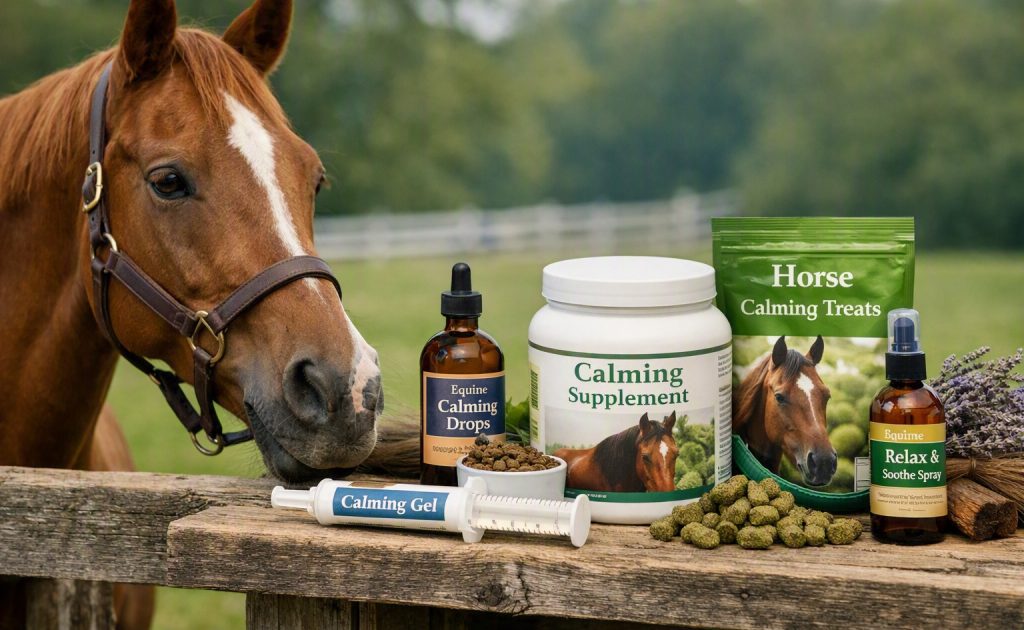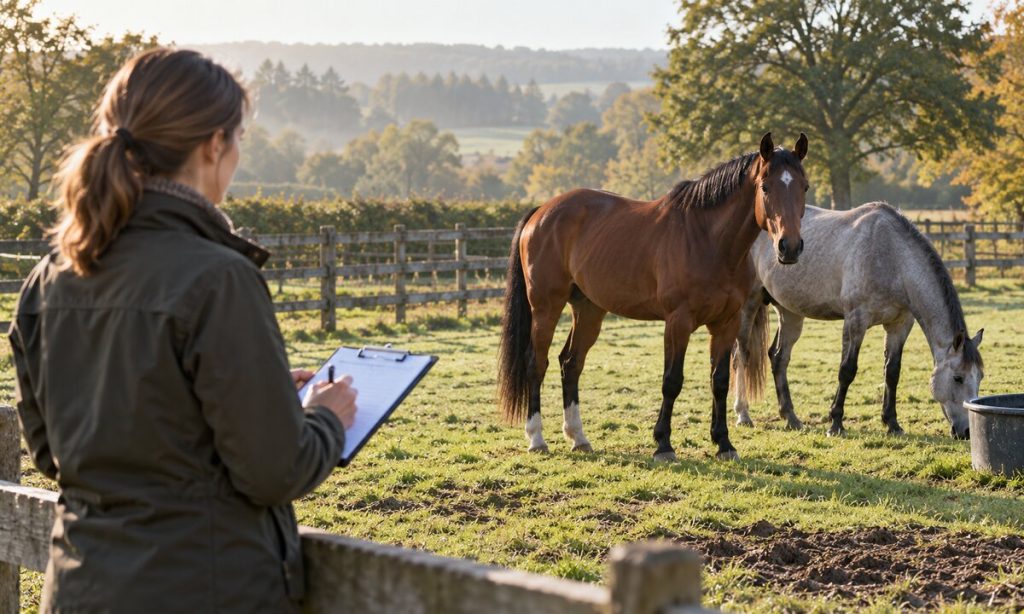
When a horse becomes anxious as a companion leaves, it is tempting to look for a quick sign that a calmer is working. A useful assessment takes more than noticing whether the horse seems quiet on one day. Before introducing a supplement, discuss the behavior, the horse’s health, and the whole feeding plan with your veterinarian. Then agree on a baseline and a consistent way to record changes. Tracking can show whether separation-related behavior, recovery time, appetite, or safety is improving, worsening, or staying the same. It can also reveal that the problem depends on a particular trigger or routine. If you are considering a calmer for horse separation anxiety, use your veterinarian’s guidance to decide what to measure and when to reassess rather than judging the supplement by one isolated moment.
Agree on a plan before the first serving
Ask the veterinarian what behavior you hope to change and what else might explain it. Calling, pacing, sweating, fence running, or attempts to follow a herd mate can reflect distress, but pain, illness, changes in routine, and unsafe handling may also contribute. A behavior history and physical assessment can help identify possible causes. A supplement should not replace that assessment or a behavior plan.
Review the full label with the veterinarian. Share the horse’s complete ration, forage, treats, medications, and other supplements. Ask whether ingredients overlap or could affect an existing condition or treatment. Confirm the serving amount, how to introduce it, and how long to observe before reviewing the response. Do not increase the amount or add another calming product because early results are unclear.
Choose one primary outcome together. It might be fewer attempts to run a fence, less time calling after separation, or a safer return to normal behavior. Define what counts as a meaningful change and when to contact the veterinarian. If separation behavior creates an immediate risk of injury to the horse or a handler, discuss a safer management plan before testing a supplement.
Record a baseline that reflects ordinary days
Before starting, record the horse’s usual behavior during the same type of separation that concerns you. Note the trigger, time of day, companion, location, distance, and how long the horse remains unsettled. Describe observable actions rather than labels such as “calm” or “bad.” For example, note the number of calls in the first ten minutes, whether the horse paces, and how long it takes to resume grazing.
Keep the baseline notes for several comparable situations if safe and practical. A single event may be affected by weather, routine changes, or an unusual disturbance. Do not deliberately provoke severe anxiety just to collect data. Use normal, low-risk routines and stop if the horse or people are in danger.
Also note appetite, water intake, manure, sleep or rest patterns, general energy, and any physical signs that concern you. These details can help the veterinarian see whether a behavior change coincides with a broader change in health or daily routine.
Track the same measures after the calmer is introduced
Use the same observation period and simple measures you chose for the baseline. A notebook or spreadsheet can record date, dose time, the separation trigger, behavior, recovery time, appetite, and anything unusual. A short video may help show body language, but film only from a safe position and do not leave a horse unattended to record it.
Follow the veterinarian’s and label’s instructions consistently. Record each serving, missed dose, change in feed, new medication, turnout change, or unusual event. Do not alter several parts of the routine at once if you want to understand what changed. If the plan also includes management or training adjustments, record those separately so the veterinarian can interpret the pattern.
Look for repeated trends across comparable situations, not a perfect outcome every time. A horse may still call briefly but recover sooner, or show less fence running while remaining tense. Describe exactly what changed. Reduced movement alone does not prove that anxiety has improved; the horse’s posture, attention, appetite, and ability to return to normal behavior also matter.
Separate supplement effects from other changes
The environment can strongly affect the result. Record whether the companion was visible, how far away the horse was, whether another horse remained nearby, and whether feeding or turnout changed. A calmer barn, familiar handler, or shorter separation may explain an improvement. A storm, new neighbor, illness, or disrupted schedule may explain a worse day.
Research on calming supplements does not establish one reliable response for every horse or every ingredient. Studies may examine particular formulas, settings, and groups of horses. Their results do not prove that a product will address an individual horse’s separation behavior. Your notes help the veterinarian decide whether the observed change is consistent, useful, and safe for this horse.
If the horse seems quieter but also dull, eats less, appears uncoordinated, or reacts differently in other settings, report that promptly. The goal is not to suppress behavior at any cost. The veterinarian should help determine whether the horse is more comfortable and safer, or whether another problem needs attention.
Know when to pause and call the veterinarian
Contact the veterinarian if behavior worsens, new physical signs appear, appetite changes, or the horse shows an unexpected reaction after the supplement starts. Seek urgent help for severe distress, injury, dangerous escape attempts, collapse, breathing difficulty, or other emergency signs. Do not wait until the planned review date when safety or health has changed.
At the planned follow-up, bring the label and your log. Ask whether the pattern supports continuing the plan, changing management, seeking an equine behavior consultation, or investigating a medical cause. Do not stop, increase, or combine products without discussing the change. A veterinarian may recommend a broader behavior and welfare plan instead of relying on a supplement alone.
Frequently Asked Questions
How long should I track behavior after introducing a calmer?
Ask your veterinarian to set the review period for the specific product and situation. Record changes from the first day and contact them sooner if the horse worsens.
What is the most useful sign to track?
Choose a measurable behavior tied to the problem, such as recovery time or repeated fence-running attempts. Include body language and safety as well.
Should I change the dose if nothing changes?
No. Do not increase or combine products without veterinary direction. Ask whether the plan or diagnosis needs review.
Can a supplement alone resolve separation anxiety?
Do not assume so. The cause, environment, behavior plan, and health of the horse all matter. Ask the veterinarian what additional support is appropriate.
What if the horse looks quieter but eats less?
Contact your veterinarian and report the appetite change. A quieter appearance does not by itself show that the horse is comfortable or responding safely.
Final Words
A useful tracking plan starts with a clear baseline, a defined outcome, and consistent notes about the trigger, behavior, recovery, appetite, and routine. Keep the dose and other conditions consistent unless your veterinarian advises a change. Share concerning reactions or safety problems promptly. If you are discussing a calmer for horse separation anxiety, bring the full record to your veterinarian so the decision reflects repeated observations and the horse’s overall welfare. The aim is to learn whether the horse is more comfortable and safe, then adjust the plan with professional guidance.
Reference
- Cornell University College of Veterinary Medicine: Behavior
- American Association of Equine Practitioners: Principles of Equine Welfare
- University of Pennsylvania: Understanding and Implementing Equine Behavior Principles
- Journal study: Oral supplement and behavioral responses of young horses exposed to stressors