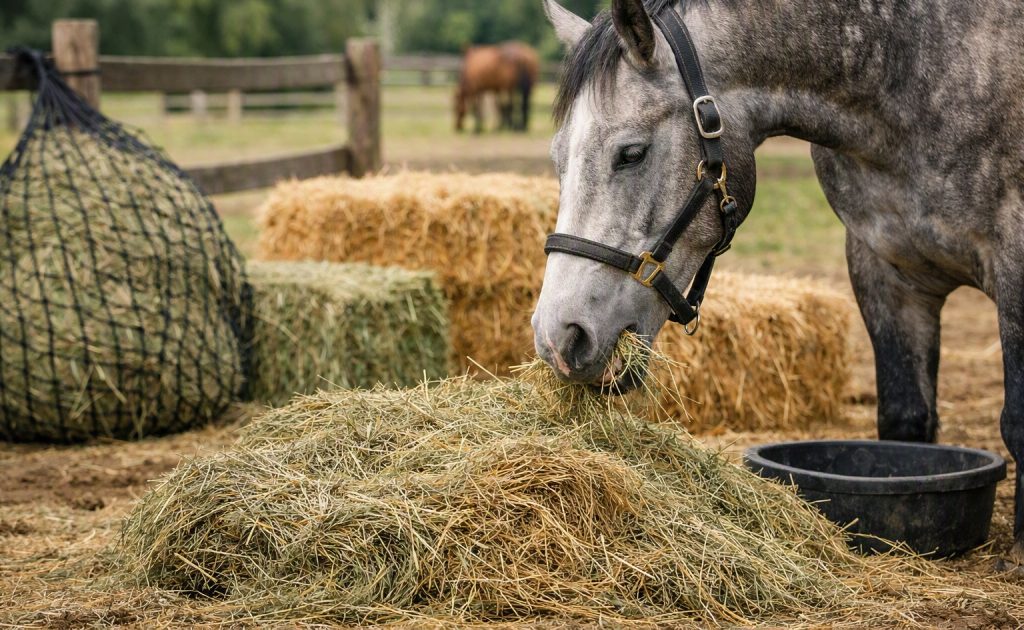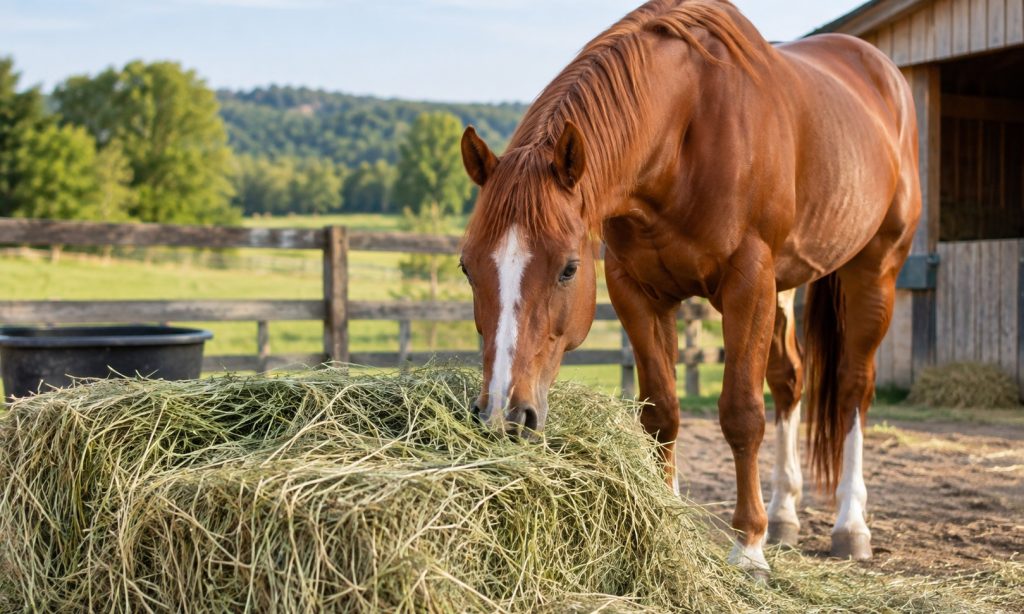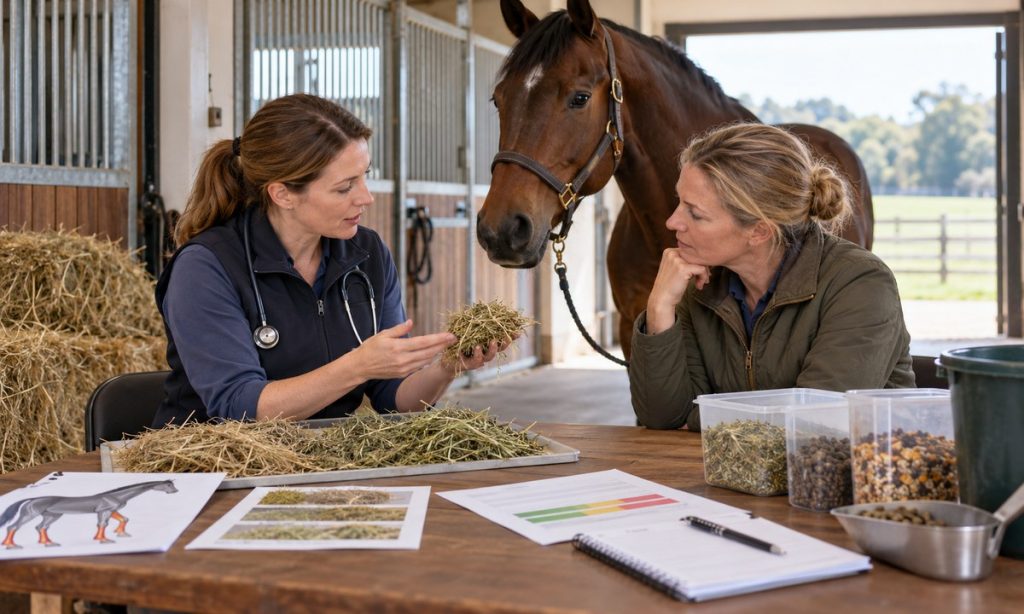
Feeding a horse with laminitis requires a plan built around the cause, current hoof status, body condition, and any endocrine or metabolic findings. Hay and pasture are central to that conversation, but “low sugar” on a label is not enough to determine whether a forage suits one horse. Ask your veterinarian how the diagnosis affects the ration, when a nutritionist should be involved, and what changes are safe while the feet are painful. Bring hay analyses, feed and supplement labels, measured portions, turnout details, and recent weight or hoof notes. If you are comparing hay for horses with laminitis, use it to prepare questions about testing and total diet, not to replace veterinary guidance.
Clarify the cause and immediate priorities
Ask what the veterinarian believes triggered or contributed to laminitis. Diet may be only one part of the picture. Insulin dysregulation, PPID, excess weight, pasture exposure, systemic illness, and other factors can change feeding priorities. Ask which test results matter, whether more testing is needed, and who should coordinate care between the veterinarian and nutritionist.
If the horse is newly lame, reluctant to move, or has hot feet or a strong digital pulse, call the veterinarian promptly. Ask what movement, footing, and feeding instructions to follow while waiting. Do not transport, exercise, or make a large ration change without veterinary direction. Dietary planning supports care, but it does not treat an acute laminitis episode by itself.
Questions about forage and hay testing
Should we analyze the current hay?
Ask whether a lab analysis would help identify nonstructural carbohydrates, fiber, energy, protein, minerals, and moisture. These values can vary between loads and harvests. Make sure the sample represents the hay being fed, and ask how to read results on a dry-matter basis. A prior analysis from a different bale or field may not describe the current batch.
Ask the veterinarian or nutritionist what results would lead to a change. A single carbohydrate figure does not answer every feeding question, and appropriate targets can depend on the horse’s diagnosis and body condition. If there is a history of insulin dysregulation, ask how the analysis should inform pasture and concentrate decisions as well as hay selection.
How much forage should my horse receive?
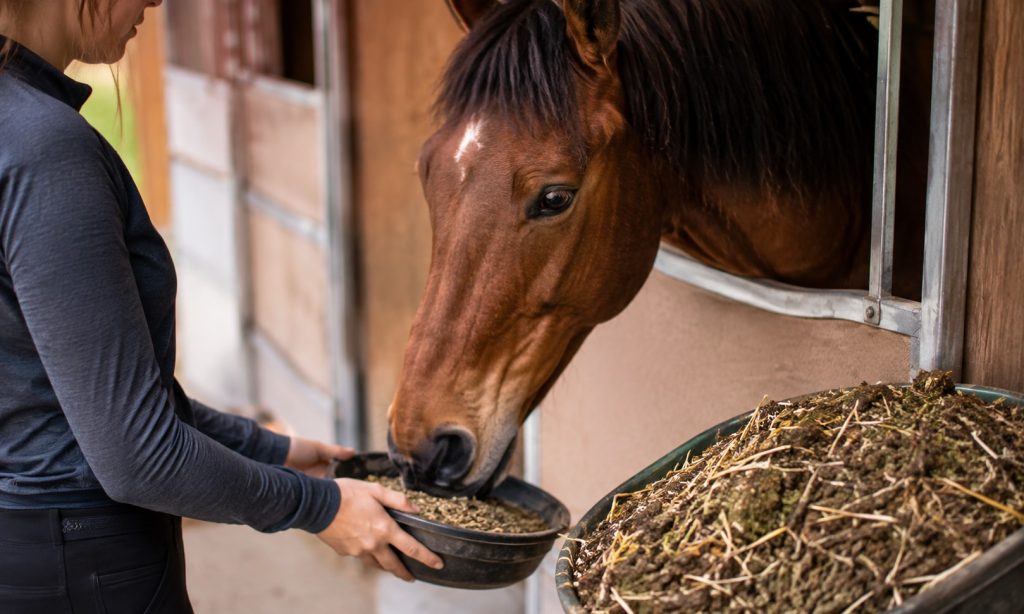
Request a daily target based on current and ideal body weight, body condition, dental health, and whether the horse can move comfortably. Weigh hay rather than counting flakes, because flake weights vary. Include pasture, hay cubes, pellets, and forage-based complete feeds in the calculation. If weight loss is needed, ask for a safe gradual plan that still supplies adequate forage and avoids long gaps without something suitable to eat.
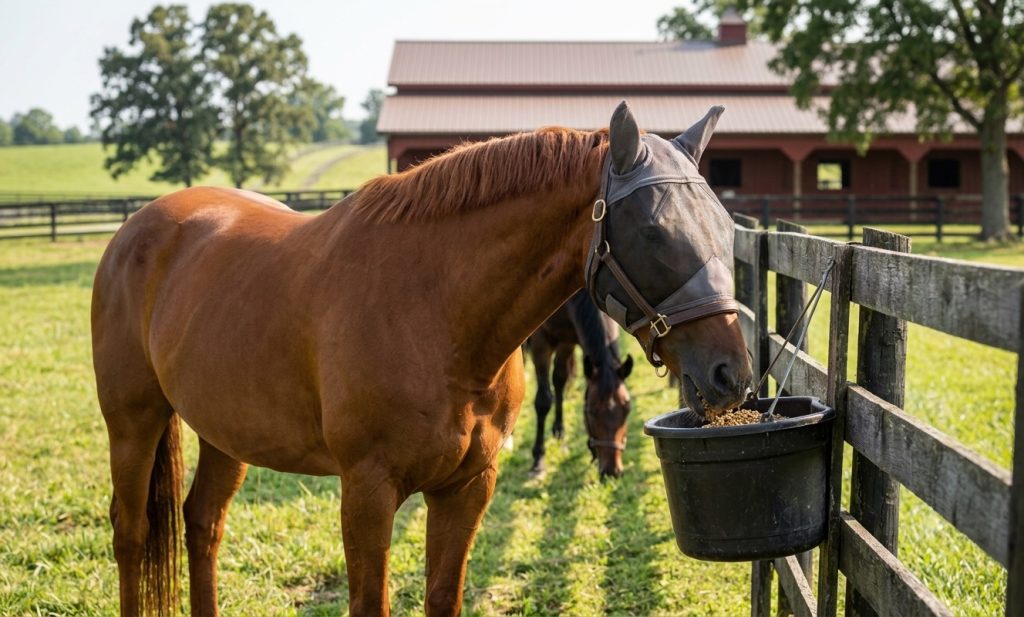
Discuss how to manage intake if horses share a feeder or if the horse is on stall rest. Ask whether slow feeding, separate feeding, or a different turnout setup is appropriate. Any hay net or feeder should be safe for a horse and used as directed, especially if mobility is limited.
Would soaking hay help?
Ask whether soaking is appropriate for this hay and the horse’s condition. Soaking can lower some water-soluble carbohydrates, but results vary and other nutrients can leach out. The hay may need to be rebalanced, and wet hay can spoil quickly in warm weather. Ask how to soak it, how long it can safely sit, how to handle the water, and whether a forage test before and after soaking would be useful.
If soaking is not practical, discuss tested forage or other options with the nutrition professional. Do not feed moldy hay or rely on appearance alone to judge sugar content. If the horse refuses soaked or replacement forage, contact the veterinarian for help maintaining safe intake.
Pasture, concentrates, and supplements
Should pasture access change?
Ask whether the horse should be off pasture, on limited turnout, or managed in another way. Grass carbohydrate content changes with plant growth, weather, and time of day, so generic advice may not fit a specific paddock or season. Discuss movement, social contact, muzzle use, dry-lot footing, and how to prevent the horse from consuming another animal’s ration.
What should we do about grain, treats, and supplements?
Bring ingredient panels and serving sizes for all concentrates, treats, supplements, and medications given with feed. Ask which products contribute starch, sugar, or extra calories and whether any ingredients overlap. If the horse receives a mostly forage-based ration, ask whether a low-calorie ration balancer or targeted nutrient source is needed. Avoid adding a supplement based on a marketing claim alone.
Do not change prescribed medication or use a supplement as a replacement for treatment. If the horse is on medication for PPID or insulin-related disease, ask whether timing with feed matters. Confirm any changes with the veterinarian and keep a written list for barn staff.
Set a monitoring and transition plan
Agree on how to track weight, body condition, appetite, manure, pasture time, hoof comfort, and medication. Ask when to recheck the horse and which changes should prompt an earlier call. Take periodic photos and keep the hay lot and feeding amounts in a simple log. Share the plan with everyone who feeds or handles the horse so a second meal or treat does not undo the measured ration.
Ask how quickly to transition to new hay or feed. A gradual change helps you observe acceptance and makes it easier to identify what caused a problem. If the horse eats less, loses weight too quickly, becomes more painful, or develops new signs, contact the veterinarian rather than making another adjustment on your own.
Keep hydration and routine in view
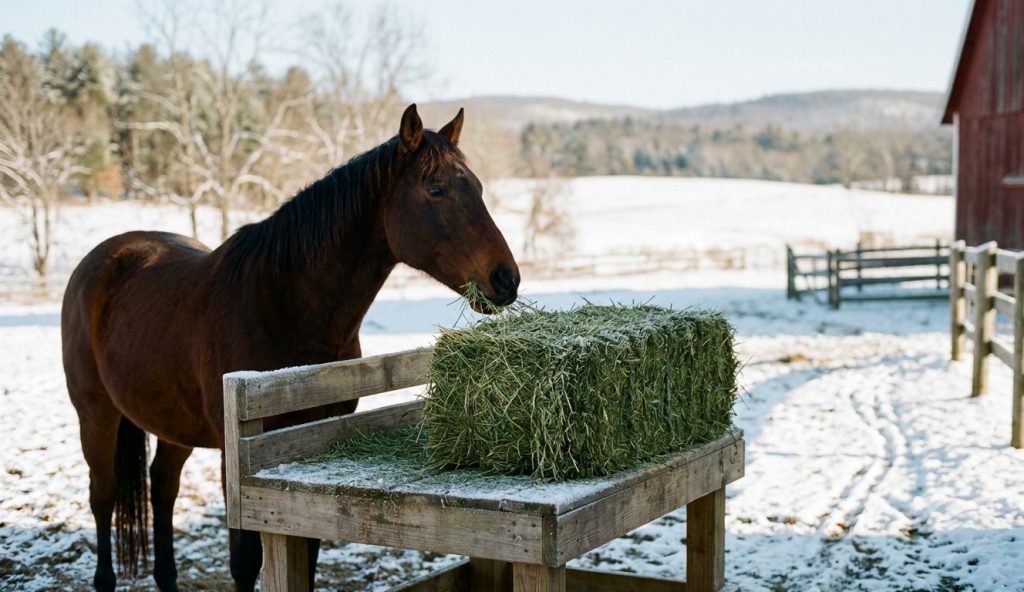
Ask how winter weather, water intake, and stall time affect the feeding plan. Hay contains less moisture than fresh grass, so the horse still needs access to clean water that has not frozen. If water consumption drops, appetite or manure changes, or the horse seems uncomfortable, let the veterinarian know. Ask whether adding soaked forage, a mash, or another water source makes sense for this horse and whether it changes the ration.
Discuss how the barn will handle hay changes consistently. Label each hay lot, keep a scoop or scale nearby, and write down measured portions and soaking instructions where feeders can see them. If the horse is boarded, agree on who will check leftovers, monitor turnout, and report a refusal or hoof change. A routine that can be followed by every caregiver is more useful than a technically precise plan that is applied inconsistently.
Frequently Asked Questions
Can a low-sugar hay cure laminitis?
No. Hay selection can be part of management, but laminitis care depends on diagnosis and veterinary treatment. Ask what role the forage plan plays in your horse’s case.
Should every horse with laminitis be taken off pasture?
Pasture guidance depends on the cause, insulin status, severity, and current veterinary plan. Ask before changing turnout, and follow urgent instructions for a painful horse.
Does soaking hay always make it safe?
No. Soaking can reduce some soluble carbohydrates, but results vary and nutrients can be lost. Ask whether it is suitable and how to manage it hygienically.
Can I feed less hay so my horse loses weight faster?
Do not sharply restrict forage without professional guidance. Ask for a gradual calorie plan that accounts for weight, health, and time spent eating.
What information helps the veterinarian or nutritionist?
Bring hay and feed analyses, labels, measured amounts, pasture and exercise details, test results, medications, and notes or photos about body condition and hoof comfort.
Final Words
Ask your veterinarian to explain the laminitis diagnosis and set feeding priorities before changing hay, pasture, concentrates, or supplements. Use forage testing and measured portions when helpful, coordinate the plan with a qualified nutritionist, and monitor weight and hoof comfort closely. If you review hay for horses with laminitis, compare its information with the horse’s test results, current condition, and veterinarian’s instructions.