The best no-chew spray for dogs can make selected surfaces less appealing, but it works best alongside supervision and training. I compared seven bitter sprays by their listed ingredients, intended surfaces, and application details. Taste deterrents do not work for every dog, and persistent chewing can have several causes. Check the product label, test a hidden area first, and offer an appropriate chew toy while you manage access to tempting items. Read active and inactive ingredients, approved surfaces, reapplication directions, and warnings before use. Test a small hidden area where the label allows it, keep spray off your dog unless directed, and pair deterrent use with supervision and training.
For related enrichment ideas, see our guides to chew toys for persistent chewers, toys that keep dogs busy, and chew toys for teething puppies.
Quick Picks
| Product | Best For | Key Advantage | Buy | |
|---|---|---|---|---|
| Grannick’s Bitter Apple No Chew Spray | Owners using bitter taste with training | Bitter-apple deterrent format | View on Amazon | Jump to Review |
| Bodhi Dog Bitter Apple No Chew Spray | Indoor and outdoor surface use, as labeled | Indoor and outdoor surface positioning | View on Amazon | Jump to Review |
| Fooey! Ultra Bitter No Chew Spray | Owners comparing extra-bitter formulas | Fragrance- and dye-free listing | View on Amazon | Jump to Review |
| NaturVet Bitter Yuck! No Chew Training Spray | Owners seeking a water-based spray | Water-based, alcohol-free formula | View on Amazon | Jump to Review |
| Woyamay Bitter Apple Spray | Homes wanting a 200 ml bottle | 200 ml bottle format | View on Amazon | Jump to Review |
| TachengMc Two-Pack No Chew Spray | Owners needing a two-bottle pack | Two-bottle pack | View on Amazon | Jump to Review |
| Meelna Bitter Apple Spray | Owners comparing plant-derived ingredients | Plant-based ingredients listed | View on Amazon | Jump to Review |
1. Grannick’s Bitter Apple No Chew Spray

- Well-known bitter-apple format
- Can pair with supervision and reward-based training
- Bitter-taste deterrent spray intended to make selected objects
- 8-ounce bitter-apple spray
- Grannick’s Bitter Apple No Chew Spray is a bitter-taste deterrent
- Some dogs ignore bitter flavors
Grannick’s Bitter Apple No Chew Spray is a bitter-taste deterrent spray intended to make selected objects less appealing to chew. The listing highlights an 8-ounce bitter-apple spray; its listing says it can be used on home furnishings and to protect bandaged injuries. This type of product is best treated as one small part of a behavior plan, not a stand-alone fix for chewing. A dog may ignore an unpleasant taste, and chewing can come from teething, boredom, stress, or access to an attractive object.
Identify what the dog is chewing and offer a safe alternative that fits its size and chewing style. The product’s instructions and ingredients matter as much as the deterrent claim. The product page describes it as non-irritating. Follow the bottle directions and ask a vet before applying it to skin or a wound. Before a first full application, read the label for approved surfaces, test a hidden area for discoloration or damage, and let it dry if the directions require that. Keep the bottle away from food, water bowls, and children.
Do not apply a deterrent to your dog or to a wound unless the label specifically allows it and your veterinarian approves. Stop using it if irritation occurs. Use the spray consistently only as directed, while supervising your dog and rewarding calm choices. Block access to tempting items when unsupervised, and redirect chewing to an appropriate toy. If your dog swallows a non-food item or persistently chews despite management, contact a veterinarian; chewing can create a safety or health concern. This product may suit an owner seeking a surface deterrent, if the dog accepts it and the surface is compatible.
My Recommendation
Grannick’s Bitter Apple No Chew Spray stands out for an 8-ounce bitter-apple spray; its listing says it can be used on home furnishings and to protect bandaged injuries. I like the specific surface or training-use information in its listing, which helps you compare it with other bitter sprays.
2. Bodhi Dog Bitter Apple No Chew Spray

- Indoor and outdoor surface positioning
- Bitter-apple training aid listed for furniture
- Dog may ignore an unpleasant taste
- Identify what the dog is chewing and offer a safe alternative that
- Bodhi Dog Bitter Apple No Chew Spray is a bitter-taste deterrent
- Surface compatibility should be checked before use
Bodhi Dog Bitter Apple No Chew Spray is a bitter-taste deterrent spray intended to make selected objects less appealing to chew. The listing highlights a bitter-apple training aid listed for furniture, shoes, plants, and other indoor or outdoor surfaces. This type of product is best treated as one small part of a behavior plan, not a stand-alone fix for chewing. A dog may ignore an unpleasant taste, and chewing can come from teething, boredom, stress, or access to an attractive object.
Identify what the dog is chewing and offer a safe alternative that fits its size and chewing style. The product’s instructions and ingredients matter as much as the deterrent claim. The listing says responses vary and recommends consistent use alongside training. Test a small hidden surface area first. Before a first full application, read the label for approved surfaces, test a hidden area for discoloration or damage, and let it dry if the directions require that. Keep the bottle away from food, water bowls, and children.
Do not apply a deterrent to your dog or to a wound unless the label specifically allows it and your veterinarian approves. Stop using it if irritation occurs. Use the spray consistently only as directed, while supervising your dog and rewarding calm choices. Block access to tempting items when unsupervised, and redirect chewing to an appropriate toy. If your dog swallows a non-food item or persistently chews despite management, contact a veterinarian; chewing can create a safety or health concern. This product may suit an owner seeking a surface deterrent, if the dog accepts it and the surface is compatible.
My Recommendation
Bodhi Dog Bitter Apple No Chew Spray stands out for a bitter-apple training aid listed for furniture, shoes, plants, and other indoor or outdoor surfaces. I like the specific surface or training-use information in its listing, which helps you compare it with other bitter sprays.
3. Fooey! Ultra Bitter No Chew Spray

- Fragrance- and dye-free listing
- Ultra Bitter No Chew Spray is a bitter-taste deterrent spray
- 8-ounce formula whose listing describes grapefruit-skin extract
- Seller lists multiple animal uses
- Bitter taste does not address the cause of chewing
Fooey! Ultra Bitter No Chew Spray is a bitter-taste deterrent spray intended to make selected objects less appealing to chew. The listing highlights an 8-ounce formula whose listing describes grapefruit-skin extract and bitter herbs, with no alcohol, fragrance, odor, or dye. This type of product is best treated as one small part of a behavior plan, not a stand-alone fix for chewing. A dog may ignore an unpleasant taste, and chewing can come from teething, boredom, stress, or access to an attractive object.
Identify what the dog is chewing and offer a safe alternative that fits its size and chewing style. The product’s instructions and ingredients matter as much as the deterrent claim. The seller lists multiple animal uses and says to pair it with training. Check that the label permits use on the surface you plan to treat. Before a first full application, read the label for approved surfaces, test a hidden area for discoloration or damage, and let it dry if the directions require that. Keep the bottle away from food, water bowls, and children.
Do not apply a deterrent to your dog or to a wound unless the label specifically allows it and your veterinarian approves. Stop using it if irritation occurs. Use the spray consistently only as directed, while supervising your dog and rewarding calm choices. Block access to tempting items when unsupervised, and redirect chewing to an appropriate toy. If your dog swallows a non-food item or persistently chews despite management, contact a veterinarian; chewing can create a safety or health concern. This product may suit an owner seeking a surface deterrent, if the dog accepts it and the surface is compatible.
My Recommendation
Fooey! Ultra Bitter No Chew Spray stands out for an 8-ounce formula whose listing describes grapefruit-skin extract and bitter herbs, with no alcohol, fragrance, odor, or dye. I like the specific surface or training-use information in its listing, which helps you compare it with other bitter sprays.
4. NaturVet Bitter Yuck! No Chew Training Spray
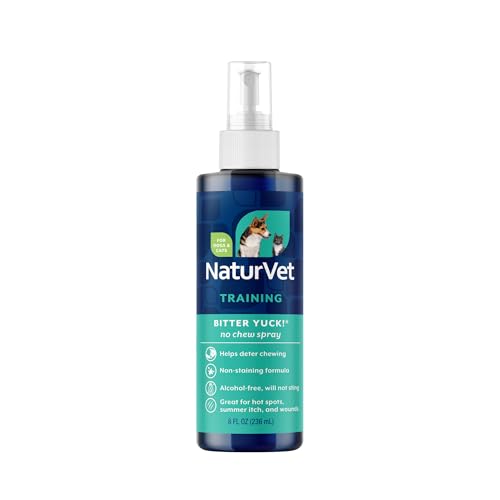
- NaturVet Bitter Yuck
- No Chew Training Spray is a bitter-taste deterrent spray intended
- 8-ounce water-based
- It can be used over topical medications
- Water-based formula still needs surface testing
NaturVet Bitter Yuck! No Chew Training Spray is a bitter-taste deterrent spray intended to make selected objects less appealing to chew. The listing highlights an 8-ounce water-based, alcohol-free spray listed for dogs, cats, and horses, including on furniture or around plants. This type of product is best treated as one small part of a behavior plan, not a stand-alone fix for chewing. A dog may ignore an unpleasant taste, and chewing can come from teething, boredom, stress, or access to an attractive object.
Identify what the dog is chewing and offer a safe alternative that fits its size and chewing style. The product’s instructions and ingredients matter as much as the deterrent claim. The listing says it can be used over topical medications, but consult your veterinarian before spraying near a treated or injured area. Before a first full application, read the label for approved surfaces, test a hidden area for discoloration or damage, and let it dry if the directions require that. Keep the bottle away from food, water bowls, and children.
Do not apply a deterrent to your dog or to a wound unless the label specifically allows it and your veterinarian approves. Stop using it if irritation occurs. Use the spray consistently only as directed, while supervising your dog and rewarding calm choices. Block access to tempting items when unsupervised, and redirect chewing to an appropriate toy. If your dog swallows a non-food item or persistently chews despite management, contact a veterinarian; chewing can create a safety or health concern. This product may suit an owner seeking a surface deterrent, if the dog accepts it and the surface is compatible.
My Recommendation
NaturVet Bitter Yuck! No Chew Training Spray stands out for an 8-ounce water-based, alcohol-free spray listed for dogs, cats, and horses, including on furniture or around plants. I like the specific surface or training-use information in its listing, which helps you compare it with other bitter sprays.
5. Woyamay Bitter Apple Spray

- Large 200 ml bottle
- 200 ml bitter-apple spray listed for furniture
- Instructions say to shake before use and repeat application
- Before a first full application
- Woyamay Bitter Apple Spray is a bitter-taste deterrent spray
- Repeated applications may be needed
Woyamay Bitter Apple Spray is a bitter-taste deterrent spray intended to make selected objects less appealing to chew. The listing highlights a 200 ml bitter-apple spray listed for furniture, clothes, gardens, and other indoor or outdoor areas. This type of product is best treated as one small part of a behavior plan, not a stand-alone fix for chewing. A dog may ignore an unpleasant taste, and chewing can come from teething, boredom, stress, or access to an attractive object.
Identify what the dog is chewing and offer a safe alternative that fits its size and chewing style. The product’s instructions and ingredients matter as much as the deterrent claim. The instructions say to shake before use and repeat application. Follow its surface directions and keep it away from your dog’s eyes. Before a first full application, read the label for approved surfaces, test a hidden area for discoloration or damage, and let it dry if the directions require that. Keep the bottle away from food, water bowls, and children.
Do not apply a deterrent to your dog or to a wound unless the label specifically allows it and your veterinarian approves. Stop using it if irritation occurs. Use the spray consistently only as directed, while supervising your dog and rewarding calm choices. Block access to tempting items when unsupervised, and redirect chewing to an appropriate toy. If your dog swallows a non-food item or persistently chews despite management, contact a veterinarian; chewing can create a safety or health concern. This product may suit an owner seeking a surface deterrent, if the dog accepts it and the surface is compatible.
My Recommendation
Woyamay Bitter Apple Spray stands out for a 200 ml bitter-apple spray listed for furniture, clothes, gardens, and other indoor or outdoor areas. I like the specific surface or training-use information in its listing, which helps you compare it with other bitter sprays.
6. TachengMc Two-Pack No Chew Spray

- Two-bottle travel-friendly pack
- Two 100 ml bottles of alcohol-free bitter-apple spray
- Listing emphasizes a portable two-bottle format
- TachengMc Two-Pack No Chew Spray is a bitter-taste deterrent
- Two small bottles may need frequent refills
TachengMc Two-Pack No Chew Spray is a bitter-taste deterrent spray intended to make selected objects less appealing to chew. The listing highlights two 100 ml bottles of alcohol-free bitter-apple spray, listed for indoor and outdoor training use. This type of product is best treated as one small part of a behavior plan, not a stand-alone fix for chewing. A dog may ignore an unpleasant taste, and chewing can come from teething, boredom, stress, or access to an attractive object.
Identify what the dog is chewing and offer a safe alternative that fits its size and chewing style. The product’s instructions and ingredients matter as much as the deterrent claim. The listing emphasizes a portable two-bottle format. Check the ingredients and test treated materials before applying broadly. Before a first full application, read the label for approved surfaces, test a hidden area for discoloration or damage, and let it dry if the directions require that. Keep the bottle away from food, water bowls, and children.
Do not apply a deterrent to your dog or to a wound unless the label specifically allows it and your veterinarian approves. Stop using it if irritation occurs. Use the spray consistently only as directed, while supervising your dog and rewarding calm choices. Block access to tempting items when unsupervised, and redirect chewing to an appropriate toy. If your dog swallows a non-food item or persistently chews despite management, contact a veterinarian; chewing can create a safety or health concern. This product may suit an owner seeking a surface deterrent, if the dog accepts it and the surface is compatible.
My Recommendation
TachengMc Two-Pack No Chew Spray stands out for two 100 ml bottles of alcohol-free bitter-apple spray, listed for indoor and outdoor training use. I like the specific surface or training-use information in its listing, which helps you compare it with other bitter sprays.
7. Meelna Bitter Apple Spray

- Plant-based ingredients listed
- Bitter-apple training aid listing plant-based extracts and
- Seller recommends rewarding the dog for choosing not to chew
- Verify the exact label and never assume ‘natural’ means safe to
- Meelna Bitter Apple Spray is a bitter-taste deterrent spray
- Plant-based ingredients are not a reason to allow ingestion
Meelna Bitter Apple Spray is a bitter-taste deterrent spray intended to make selected objects less appealing to chew. The listing highlights a bitter-apple training aid listing plant-based extracts and suggested use on furniture, shoes, rugs, cords, and garden items. This type of product is best treated as one small part of a behavior plan, not a stand-alone fix for chewing. A dog may ignore an unpleasant taste, and chewing can come from teething, boredom, stress, or access to an attractive object.
Identify what the dog is chewing and offer a safe alternative that fits its size and chewing style. The product’s instructions and ingredients matter as much as the deterrent claim. The seller recommends rewarding the dog for choosing not to chew. Verify the exact label and never assume ‘natural’ means safe to ingest. Before a first full application, read the label for approved surfaces, test a hidden area for discoloration or damage, and let it dry if the directions require that. Keep the bottle away from food, water bowls, and children.
Do not apply a deterrent to your dog or to a wound unless the label specifically allows it and your veterinarian approves. Stop using it if irritation occurs. Use the spray consistently only as directed, while supervising your dog and rewarding calm choices. Block access to tempting items when unsupervised, and redirect chewing to an appropriate toy. If your dog swallows a non-food item or persistently chews despite management, contact a veterinarian; chewing can create a safety or health concern. This product may suit an owner seeking a surface deterrent, if the dog accepts it and the surface is compatible.
My Recommendation
Meelna Bitter Apple Spray stands out for a bitter-apple training aid listing plant-based extracts and suggested use on furniture, shoes, rugs, cords, and garden items. I like the specific surface or training-use information in its listing, which helps you compare it with other bitter sprays.
How to choose best no chew spray for dogs
No-chew sprays are training aids, not substitutes for supervision, exercise, or addressing the reason a dog is chewing. Compare the label’s intended surfaces, ingredients, application directions, and safety precautions, and prevent access to treated items until the spray dries as directed.
Check the label and test the surface
Test it on a small hidden area and let it dry as directed before allowing your dog near it. Follow warnings about eyes, food, water bowls, and direct application to pets. A bitter taste may deter some dogs but will not reliably change every chewing behavior. Avoid spraying an injury or medicated area unless the exact label permits it and your veterinarian approves.
Read the full ingredient list and directions before buying. Confirm whether the product is intended for furniture, fabric, plants, or other specific surfaces; do not assume a spray safe for one material is safe for every material.
Pair deterrent use with management
Chewing is normal dog behavior, but access to cords, plants, shoes, or small swallowable objects can create hazards. Put tempting items away when you cannot supervise, block access to unsafe areas, and offer a suitable chew toy. Reward your dog for choosing that alternative. Use a spray only as one part of this plan, and reapply only as the label directs. If the taste does not deter your dog, do not keep increasing the amount or spraying unrelated surfaces; change the management approach instead.
Consider why the chewing happens. Puppies may chew while exploring or teething, while an adult dog may need more enrichment, supervision, or a veterinary assessment. If chewing is sudden, persistent, accompanied by distress, or involves eating non-food objects, talk with your veterinarian. Keep product bottles stored safely and clean any overspray promptly. A good choice is a clearly labeled formula that suits the surface and fits a consistent training routine, not simply the strongest bitter claim.
Consider the dog’s age, chewing style, and likely trigger before choosing a spray. A teething puppy may need safe, supervised chew items and frequent redirection, while an adult dog left alone may need a different management plan. Bitter products can also have a noticeable smell or taste for people, so check household preferences and ventilate the area if the label recommends it. Keep the spray away from children, food preparation surfaces, and pet supplies. If your dog licks a treated area repeatedly or shows irritation, stop use and ask your veterinarian for guidance.
Frequently Asked Questions
Does no-chew spray stop every dog from chewing?
No. Dogs respond differently to bitter tastes. Use a spray only as directed and pair it with supervision, access management, and appropriate chew items.
Can I spray no-chew deterrent directly on my dog?
Only if the exact product label specifically allows direct use. Do not apply it to an injury or treated area without veterinary approval.
Will bitter spray damage furniture?
Surface compatibility varies. Test a small hidden area first and follow the bottle directions before applying it broadly.
How often should I reapply a no-chew spray?
Follow the instructions for the specific product and surface. Do not apply more often than directed if the dog continues chewing.
What if my dog keeps chewing unsafe objects?
Remove access and contact your veterinarian for persistent chewing, distress, or ingestion of non-food items. A spray is not a substitute for care.
Final Verdict
A no-chew spray is best viewed as a surface deterrent that may help some dogs while you manage access and reinforce appropriate chewing. Compare the product’s ingredients, approved surfaces, and directions; test a hidden spot and never assume every dog will avoid a treated object. If chewing persists or involves unsafe items, ask your veterinarian about the cause and next steps.
Affiliate disclosure: This article contains Amazon affiliate links. If you purchase through them, PetAdvisorPro may earn a commission. As an Amazon Associate I earn from qualifying purchases.