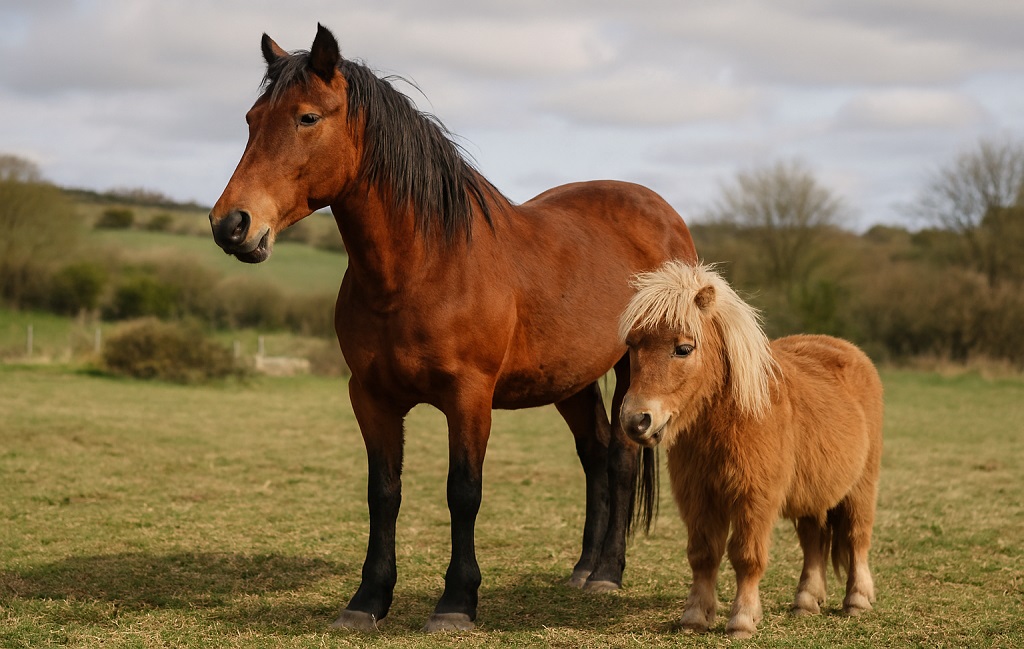
At first glance, a pony may look like a small horse — which is why many people ask, is a pony a baby horse? The short answer is no. A pony is not a baby horse, and the difference between a horse and a pony goes far beyond simple size.
While height is the official classification factor, there are also differences in body structure, temperament, coat, appetite, and even lifespan. In this guide, we’ll clearly explain the difference between a horse and a pony so you can fully understand what sets them apart.
Quick Answer: Horse vs Pony Explained
The primary difference between a horse and a pony is height.
- A pony measures 2 hands (58 inches / 147 cm) or less at the withers.
- A horse measures over 14.2 hands at maturity.
However, ponies also tend to have thicker bodies, shorter legs, heavier coats, and stronger hooves compared to horses. They are often described as intelligent and hardy, while horses are generally taller, leaner, and more athletic in build.
What Is a Pony?
A pony is a fully grown equine that stays under 14.2 hands tall. The word “pony” does not refer to age — it refers to size and physical characteristics.
Ponies typically have:
- Shorter legs
- A stocky, compact body
- A thicker neck
- Dense mane and tail
- Strong hooves
- A heavier winter coat
Because of their sturdy build and efficient metabolism, ponies are often very hardy animals. A famous example is the Shetland Pony, known for its small size, thick coat, and incredible strength despite its height.
How Do You Measure a Horse or Pony’s Height?
Horses and ponies are measured in hands, a traditional unit used for centuries in the equine world.
- 1 hand = 4 inches (10.16 cm)
- Measurement is taken from the ground to the withers (the highest point of the shoulders)
If an equine measures:
- 2 hands or less → It is classified as a pony
- Over 14.2 hands → It is classified as a horse
The “.2” does not mean a decimal. It means 14 hands and 2 inches (not 14.2 inches).
This height rule is the official dividing line — but appearance and build also matter.
Is a Foal a Type of Pony?
No. A foal is simply a baby equine under one year old.
A foal can grow up to become either a horse or a pony, depending on its genetics and mature height.
This clears up a common confusion:
- Pony vs baby horse: A pony is not a baby horse.
- A pony is fully grown but smaller by breed standards.
If a young equine matures above 14.2 hands, it becomes a horse. If it stays under that height, it is a pony.
Pony-Sized Horses
Interestingly, some small equines are technically horses, not ponies. Classification can depend on breed registry standards rather than height alone.
For example, the Arabian Horse is known for being relatively small compared to other horses, yet it is always classified as a horse because of its breed characteristics.
So size alone doesn’t always tell the full story — genetics and breed standards also play a role.
Key Differences Between a Horse and a Pony
Here is a quick comparison:
Feature | Pony | Horse |
Height | 14.2 hands or less | Over 14.2 hands |
Body | Stocky and compact | Leaner and taller |
Legs | Shorter | Longer |
Coat | Thicker, especially in winter | Usually finer |
Lifespan | Often longer | Slightly shorter on average |
Metabolism | Very efficient | Less efficient |
Now let’s explore each difference in more detail.
Size
The most obvious difference is height. Ponies are shorter, which often makes them suitable for children or smaller riders. Horses, being taller, are typically used for sports, racing, and adult riding disciplines.
However, ponies are often surprisingly strong for their size.
Appearance
Ponies generally have:
- Broader foreheads
- Shorter legs relative to body
- Thicker necks
- More rounded barrel-shaped bodies
Horses usually have longer, more refined legs and a sleeker overall look.
Build and Proportions
Ponies are built for durability. They often have:
- Denser bone structure
- Stronger hooves
- A lower center of gravity
Horses tend to have longer limbs and are built more for speed, endurance, or athletic movement depending on breed.
Temperament and Attitude
Ponies are known for being intelligent and sometimes stubborn. Their cleverness can make them excellent companions but also a bit mischievous.
Horses are generally more predictable and easier to train for advanced riding disciplines. However, temperament varies widely by breed and training.
Coat and Mane Thickness
Ponies often develop very thick winter coats. This trait evolved because many pony breeds originated in colder climates with harsh conditions.
For example, the Welsh Pony develops a dense coat to withstand cold weather.
Horses may grow winter coats too, but they are typically less dense than those of ponies.
Lifespan
Ponies often live longer than horses.
- Ponies: 25–35 years (sometimes more)
- Horses: 25–30 years on average
Their hardy genetics and efficient metabolism contribute to their longevity.
Appetite and Digestion
Ponies evolved in environments where food was scarce. As a result, they are very efficient at digesting rough forage.
This means:
- Ponies require fewer calories
- They gain weight easily
- They are more prone to obesity if overfed
Horses generally require more food due to their larger size and higher energy demands.
Breeds and Variety
There are hundreds of horse and pony breeds worldwide.
Common pony breeds include:
- Shetland Pony
- Welsh Pony
Popular horse breeds include:
- Arabian Horse
- Thoroughbred
Each breed has unique traits, uses, and characteristics.
Riding and Use
Ponies are often used for:
- Children’s riding lessons
- Driving carts
- Farm work
- Pony competitions
Horses are commonly used for:
- Racing
- Dressage
- Show jumping
- Trail riding
- Ranch work
However, ponies are not limited to children. Many adults ride ponies in competitive events.
Are Ponies Just for Beginners?
No. While ponies are popular for young riders due to their size, they are not “starter animals.”
Many ponies compete in high-level competitions. Some adult riders prefer ponies for their strength, agility, and personality.
In fact, ponies can sometimes require more experienced handling due to their clever and strong-willed nature.
Popular Pony and Horse Breeds
There are hundreds of pony and horse breeds around the world, each developed for specific climates, work types, and riding disciplines. Below are some of the most well-known examples.
Shetland Pony
The Shetland Pony originated in the harsh Shetland Islands of Scotland. Because of the cold and rugged environment, this pony developed:
- A very thick double coat
- A compact, muscular body
- Exceptional strength for its size
Despite being small (often under 10 hands), Shetland Ponies can pull heavy loads and are known for their intelligence and bold personality.
They are commonly used for:
- Children’s riding
- Driving carts
- Companion animals
Welsh Pony
The Welsh Pony comes from Wales and is admired for its beauty and athletic ability. Compared to the Shetland Pony, it has:
- A more refined head
- Elegant movement
- Strong but balanced build
Welsh Ponies are popular in riding competitions and are often seen in show rings due to their graceful appearance.
Arabian Horse
The Arabian Horse is one of the oldest and most influential horse breeds in the world. Originating from the Middle East, it is known for:
- A distinctive dished face
- High tail carriage
- Incredible endurance
Although Arabians are sometimes smaller than other horse breeds, they are always classified as horses because they exceed the pony height standard and follow horse breed characteristics.
They are widely used in:
- Endurance riding
- Show competitions
- Breeding programs
Thoroughbred
The Thoroughbred is best known for its speed and athletic performance. Developed primarily for racing, Thoroughbreds have:
- Long, lean legs
- Deep chest
- Powerful stride
They are the dominant breed in professional horse racing and are also used in jumping and eventing competitions.
Frequently Asked Questions
Is a pony a baby horse?
No. A pony is a fully grown equine that measures 14.2 hands or less at maturity.
Can a pony grow into a horse?
No. If it remains under 14.2 hands when fully grown, it is classified as a pony.
What is a foal?
A foal is a baby horse or pony under one year old.
Are ponies easier to ride than horses?
Not necessarily. Ponies can be intelligent and strong-willed, which sometimes makes them more challenging than horses.
Final Words
The difference between a horse and a pony comes down primarily to height — 14.2 hands is the official dividing line. But size is only part of the story.
Ponies are stockier, hardier, and often longer-lived, with thick coats and efficient digestion. Horses are taller, leaner, and typically used for athletic disciplines.
Understanding these differences helps you choose the right equine companion and care for them properly.
Whether large or small, both horses and ponies are intelligent, powerful, and remarkable animals.