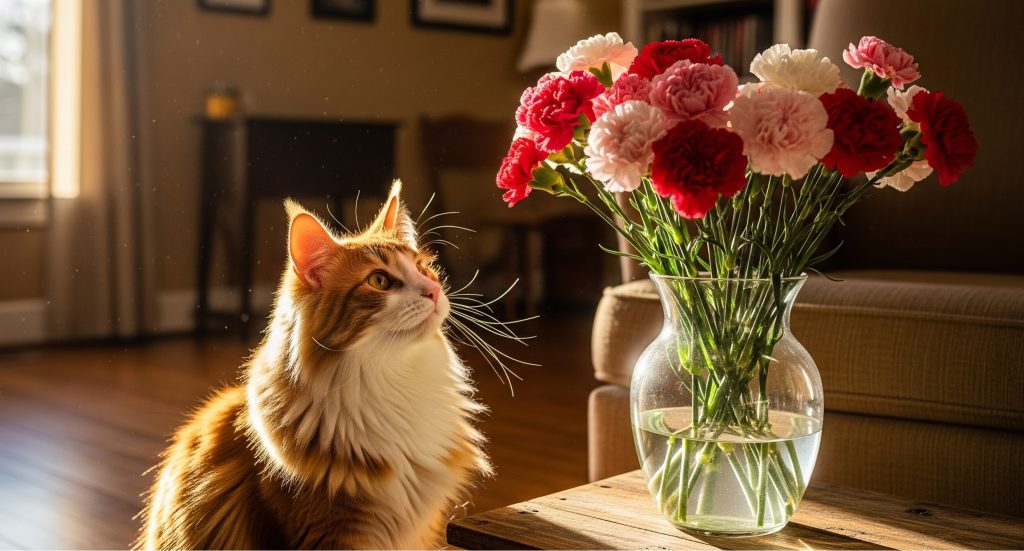
You brought home a gorgeous bouquet of carnations, placed it on your windowsill, and now your cat’s eyeballing it like it’s a gourmet snack. Sound familiar? 😼 If you’re anything like me, you’ve probably Googled “Are carnations toxic to cats?” faster than your feline can leap onto the table. Let’s say, I’ve been there—panicked, confused, and slightly annoyed that my cat thinks everything is edible.
Well, buckle up, fellow cat lover. We’re diving into the nitty-gritty of carnation toxicity, how it affects your furball’s health, and what you can do to keep your home both beautiful and pet-safe. And yes, I’ll throw in a few sarcastic jabs at our cats’ questionable taste in snacks. Let’s roll.
What is Carnation Poisoning?
Carnation poisoning sounds dramatic, right? Like something out of a feline soap opera. But it’s a real thing.
Carnation poisoning occurs when cats ingest parts of the carnation plant—usually the petals or leaves. The plant contains triterpenoid saponins, which can irritate a cat’s digestive system. It’s not usually fatal (thank goodness), but it’s definitely unpleasant.
Symptoms of Carnation poisoning include:
- Drooling like they just saw a tuna steak
- Vomiting (on your favorite rug, of course)
- Diarrhea
- General discomfort
Ever seen a cat look betrayed by a flower? It’s a vibe.
Are Carnations Toxic to Cats?
Yes. Carnations are mildly toxic to cats according to the ASPCA. Ingesting them can cause gastrointestinal upset, skin irritation, or both.
Before you panic, here’s the good news: they’re not usually life-threatening. But — and this is a big but — any poisoning should still be taken seriously. Cats have a knack for hiding illness, so by the time they look sick, it can already be bad.
Are carnations toxic to humans?
While they’re a no-go for your feline friends, carnations are not considered toxic to humans. Indeed, some people use them in salads or as garnishes.
The flower petals are actually edible for us, which is pretty wild. It just goes to show how different our digestive systems are from our pets’. So, while you can safely nibble on a carnation petal, please, for the love of all things fluffy, don’t let your cat.
Impact of Carnations on Feline Health
Here’s the deal: while carnations won’t kill your cat, they can cause digestive upset and skin irritation. Some cats might react more strongly than others—especially if they go full buffet mode.
Carnations can cause:
- Mouth irritation – Think itchy, inflamed gums.
- Upset stomach – Vomiting, diarrhea, or both.
- Mild skin irritation – If your cat brushes against broken stems or chewed flowers.
Long-term exposure? Not ideal. Constant irritation can lead to stress, and we all know how dramatic cats get when they’re stressed. 🙄
9 Flowers That Are Toxic to Cats
If you thought carnations were the only culprits, think again. Mother Nature really didn’t consider cats when designing her floral lineup.
These are the ultimate no-no. Highly toxic and potentially fatal. Even a lick of pollen can cause kidney failure.
Popular in fall arrangements, but they’re toxic to cats. They cause vomiting, diarrhea, and drooling.
Beautiful but deadly. Can lead to neurological issues and even death in severe cases.
The bulbs are the worst offenders. They contain tulipalin A and B, which irritate the mouth and stomach.
Dianthus or Carnations
Yep, our star of the show. Mildly toxic but still worth keeping out of reach.
Often used in bouquets. Causes vomiting and diarrhea in cats.
Smells amazing, but contains eucalyptol, which is toxic to cats and can affect their nervous system.
Looks innocent, but it can cause vomiting and diarrhea.
Also known as buttercups. Causes oral irritation and drooling.
5 Flowers That Are Safe For Cats
Now for the good news! Without endangering your cat’s health, you can still have a home that looks like it belongs on Pinterest.
Roses
In general, roses are thought to be safe for cats. Your cat can sniff and even nibble on them without suffering any negative effects because they are non-toxic. Just be careful with the thorns—they can cause physical injury, of course.
Sunflowers
These bright and cheerful flowers are non-toxic to cats. A lovely bouquet of sunflowers can be safely placed in your house. They’re a great choice for adding a pop of color without the worry.
Stock
This lovely, fragrant flower is safe for cats. You can enjoy its beautiful scent and appearance without any fear of your cat getting sick. It’s a fantastic substitute for some of the less healthy choices.
Orchid moths
For cat owners, moth orchids, or Phalaenopsis, are a fantastic, non-toxic option. They are lovely and sophisticated, and if your cat decides to taste them, they won’t hurt them.
Gerbera daisies
These big, bold daisies are non-toxic to felines. They add a lot of cheer to a room and are a great way to satisfy your desire for flowers without putting your cat in harm’s way.
Symptoms of Carnation Poisoning in Cats
Let’s break it down. If your cat’s been munching on carnations, here’s what to look for:
Drooling
Your cat may be experiencing mouth irritation from the plant if they begin to drool more than normal. This is a common immediate symptom.
Vomiting
This is a big one. A cat’s body will often try to get rid of anything that’s irritating its digestive system. Vomiting is a clear sign of stomach upset.
Diarrhea
Just like vomiting, diarrhea is another way your cat’s body tries to expel the irritants. It’s another sign of a very unhappy digestive system.
Pain
Your cat might seem uncomfortable or restless. They might not want to be touched around their abdomen. This indicates cramping or stomach pain.

Causes of Carnation Poisoning in Cats
Cats love to explore, chew, and knock things over. Carnations smell nice, look pretty, and apparently taste interesting (to cats, anyway).
The main culprit is triterpenoid saponins. These compounds irritate the gastrointestinal tract and sometimes the skin. Cats get exposed by:
- Chewing on flowers or leaves
- Drinking water from a vase containing carnations
- Grooming themselves after rubbing against the plant
Ever notice how cats act like they’re starving even after a full meal? Yeah, same.
Treatment of Carnation Poisoning in Cats
First things first: don’t panic. If symptoms are mild, monitor your cat and offer fresh water.
Steps to take:
- Remove the plant immediately
- Call your vet for advice
- Don’t induce vomiting unless instructed
- Keep your cat calm and hydrated
Is It Safe To Keep Carnations In A Home With Cats?
No, it’s not really safe to keep carnations where your cat can get to them. While the toxicity is mild, why take the risk? You don’t want your cat to feel sick, and you certainly don’t want the stress of wondering if they’re okay. It’s better to just keep them out of the house or in a room your cat can’t access.
Recovery of Carnation Poisoning in Cats
Most cats recover within 24–48 hours with proper care. Just give them space, love, and maybe a treat (not a flower, obviously).
Pro tip: Keep a pet-safe plant list handy. It’ll save you a lot of stress.
Preventing Cat Poisoning from Carnations
Being a proactive cat parent is the key to preventing carnation poisoning. Here are some tips to help you keep your feline out of trouble.
- Steer Clear of Carnations: The easiest way to avoid carnations is to simply avoid purchasing them. Instead, you can pick from a wide variety of lovely, cat-safe flowers.
- Keep Them Out of Reach: If you receive a bouquet of carnations, place it in a location that your cat cannot possibly reach. I’m talking a high shelf, a closed room, or even in a cabinet. Seriously, those little ninjas can get anywhere.
Educate Yourself: Know what plants and flowers are toxic to cats. A little knowledge goes a long way in keeping your cat safe and happy.
How to Deter Cats From Eating Flowers
Sometimes, no matter how careful you are, your cat seems determined to eat your plants. It’s a constant battle, isn’t it? Here are a few tricks I’ve learned to keep those little plant-eaters at bay.
- Use Hanging Pots: Keeps plants far from curious paws.
- Use Natural Deterrents: Citrus peels, coffee grounds, or cat-safe sprays work wonders.
- Use White Vinegar: The smell alone will keep most cats away.
- Make the Soil Unappealing: Add pinecones or decorative stones.
- Offer Alternative: To ensure they have a safe snack, grow cat grass or catnip.
Frequently Asked Questions
How do I keep my pets away from my plants?
Use physical barriers, deterrent sprays, or distraction with cat-safe plants.
What plant is best for cats?
Cat grass and catnip are top picks. They’re safe and entertaining.
How Serious Is Carnation Poisoning?
Usually mild, but still uncomfortable and worth a vet visit.
Are roses toxic to cats?
Nope. Roses are safe. Just watch out for thorns.
What flowers are toxic to cats?
Lilies, tulips, mums, carnations, and more. Always check before buying.
Are carnations toxic to dogs?
Yes, but dogs usually have stronger stomachs. Still, keep them away.
Are sunflowers toxic to cats?
Sunflowers are safe and cheerful—just like your cat (on a good day).
Final Words
So, are carnations toxic to cats? Yes — but not fatally so. Still, your cat’s comfort (and your peace of mind) is worth skipping them in favor of safer blooms. IMO, it’s better to admire carnations at the florist than to risk a midnight emergency vet visit.
If you absolutely must have them, keep them far from kitty reach. Or better yet — stick to cat-safe flowers so you can enjoy a beautiful home without the “uh-oh” moments.
Because honestly? A healthy cat beats a vase of carnations any day.