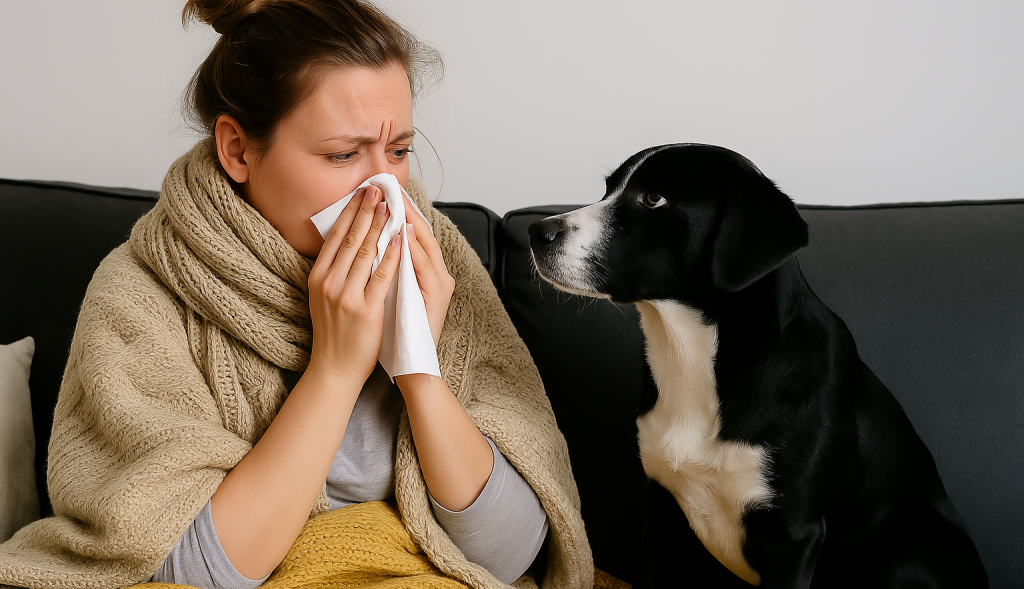
Okay, let’s start with the basics. You’re curled up on the couch, nose running like a faucet, tissues everywhere, and your dog is giving you that “you good, bro?” look. And suddenly, it hits you—
“Wait… can my dog catch this from me?”
Short answer? Not really. But kinda.
Long answer?
Colds? Nah.
Flu? Maybe.
Let’s break it down.
The viruses that cause colds in humans (like rhinoviruses) are species-specific. That means they’re picky eaters—they only infect humans. So your dog won’t catch your cold, even if they’re snuggled up in your blanket burrito.
But flu viruses? They’re a little more adventurous. Some strains, like H1N1 and H3N2, have been known to jump species. It’s rare, but it’s happened.
Dogs can absolutely get the flu—but it’s not the same flu you’re battling. They have their own version, called canine influenza. It’s caused by different strains of the influenza A virus, mainly H3N8 and H3N2. So while your dog won’t catch your exact flu, there’s a teeny-tiny chance of cross-species transmission—but it’s rare and not the norm.

Dog Flu: Symptoms, Causes, and Treatment
Now that we’ve put the human-to-dog transmission myth to bed (at least for our specific cold and flu viruses), let’s chat about what can make your dog sick. We’re talking about the real deal: canine influenza virus, or CIV. It’s essentially dog-specific flu, and trust me, it’s no fun for them.
What Causes Dog Flu?
Dog flu is caused by canine influenza viruses, specifically:
- H3N8: Jumped from horses to dogs in 2004
- H3N2: Originated in birds, first seen in U.S. dogs in 2015
These viruses are highly contagious among dogs. Think daycare, dog parks, boarding kennels—basically, any place where dogs are swapping sniffs.
What Are the Symptoms of Dog Flu?
If your dog gets the flu, you’ll probably notice some pretty familiar symptoms, similar to what we experience. It’s not always super dramatic, but definitely noticeable.
- Coughing: This is a big one. It can be a soft, moist cough or a harsher, dry cough. Sometimes it sounds like they’re trying to clear something from their throat.
- Sneezing: Just like us, they might get the occasional sneeze.
- Nasal discharge: This can be clear at first, but sometimes it gets thick and colored, especially if a secondary bacterial infection sets in. Ew, right?
- Fever: Your dog might feel warm to the touch, and they could be lethargic.
- Lethargy: They’re just not themselves. They might not want to play, or they’re sleeping a lot more than usual.
- Loss of appetite: Food suddenly doesn’t seem appealing, which is always a red flag for a dog, IMO.
Some dogs show no symptoms at all—but they can still spread the virus. Sneaky, right?
Evolving viruses
Here’s the kicker: these viruses can be sneaky. Like human flu, canine influenza viruses can evolve. This means new strains can pop up, or existing ones can change just enough to bypass some immunity. It’s a constant cat-and-mouse game for researchers and vets.

Understanding risk
So who’s most at risk?
- Dogs in crowded environments (kennels, shelters, dog shows)
- Dogs with weakened immune systems
- Puppies and senior dogs
If your dog is a social butterfly, they’re more likely to catch it.
How it spreads
Dog flu spreads through:
- Airborne droplets (coughing, barking, sneezing)
- Contaminated surfaces (bowls, toys, leashes)
- Human hands or clothes (yep, you could be the middleman)
What CDC is doing about dog flu
The CDC monitors outbreaks and mutations of canine influenza. So far, no human cases of dog flu have been reported. But they’re keeping an eye on it—because viruses love to evolve when we’re not looking.
How Do Veterinarians Diagnose Dog Flu?
When your dog is showing those flu-like symptoms, your vet will typically start with a thorough physical examination. They’ll listen to your dog’s lungs, check their temperature, and generally assess their overall health.
Diagnosing Canine Influenza
Vets usually diagnose based on:
- Clinical signs
- PCR testing (swabs from nose/throat)
- Chest X-rays (if pneumonia is suspected)
Treatment of Dog Flu in Dogs
There’s no magic pill, but treatment includes:
- Rest and hydration
- Anti-inflammatories for fever
- Antibiotics (if there’s a secondary bacterial infection)
- Isolation to prevent spreading

Recovery and Management of Dog Flu
Treatment for dog flu is primarily supportive. Your vet will focus on managing symptoms and making your dog as comfortable as possible. This might involve:
- Rest: Absolutely crucial! Your dog needs a lot of rest to recover.
- Hydration: Make sure they have access to plenty of fresh water. Sometimes, adding a little low-sodium chicken broth can encourage them to drink.
- Medication for symptoms: Your vet might prescribe cough suppressants to ease discomfort or antibiotics if a secondary bacterial infection develops. Remember, antibiotics don’t kill viruses, but they help with those secondary invaders.
- Good nutrition: Even if they don’t have a huge appetite, try to offer palatable foods.
Most dogs recover in 2–3 weeks. But here’s the kicker: they can still be contagious for up to 26 days (especially with H3N2). So even if they’re feeling better, keep them away from other dogs for a bit longer.
Prevention
Prevention is always better than cure, right? And the good news is, we do have ways to help protect our pups from dog flu.
- Vaccinate your dog (especially if they’re social)
- Avoid crowded dog spaces during outbreaks
- Wash your hands and change clothes after handling other dogs
- Disinfect bowls, toys, and bedding
- Practice good hygiene
- Quarantine sick pets
Biology
Let’s get a little geeky for a moment, shall we? Understanding the biology of these viruses helps us grasp why they affect dogs and not typically us.
Origins of H3N8 Canine Influenza
The H3N8 canine influenza virus actually originated from an equine (horse) influenza virus. Really! Evidence that this horse flu jumped species and evolved to infect dogs was discovered by scientists back in 2004. It’s a perfect illustration of how viruses can infiltrate new hosts and overcome obstacles. Quite crazy, isn’t it?
Origins of H3N2 Canine Influenza
The origin of the H3N2 canine influenza virus is different. In fact, it leaped from birds to dogs. This one eventually made its way to the US after being discovered for the first time in South Korea in 2006. It emphasizes once more how viruses are dynamic and adaptive. They’re always coming up with new ways to do things!
How Do You Treat Dog Flu?
Like human flu, there is no known “cure” for dog flu, as we have discussed. Supportive care is the mainstay of treatment to help your dog’s immune system fend off the virus. This frequently consists of:
- Fluids (IV or oral)
- Rest (lots of it)
- Nutritional support
- Cough suppressants
- Antibiotics (if needed)
Can Dog Flu Affect Cats?
Surprise! Yes.
In 2016, cats in an Indiana shelter caught H3N2 from dogs. They showed signs like:
- Congestion
- Runny nose
- Lethargy
So if you’ve got a multi-pet household, keep an eye on everyone.
Is It Possible for Humans to Get Dog Flu?
As of now? Nope.
There are zero confirmed cases of humans catching dog flu. But the CDC warns that influenza viruses mutate, so they’re not ruling it out forever.
Frequently Asked Questions (FAQ)
Can dogs get the flu from humans?
Technically yes, but it’s rare.
Dogs are more likely to catch the flu from other dogs than from you. But if you’re sick, it’s still smart to limit snuggles and wash your hands.
Is there an at-home treatment for dog flu?
Yes, if symptoms are mild.
- Use a humidifier
- Offer warm, tasty food
- Keep them hydrated and comfy
- Monitor for worsening symptoms
How long does the flu last in dogs?
Usually 2–3 weeks.
But they can stay contagious for up to 26 days, so don’t rush them back into the dog park.
Is it possible for puppies to contract dog flu?
Rarely.
Pneumonia and other complications can be fatal, but most dogs recover perfectly. Consult your veterinarian at all times.
Does my dog need to be vaccinated?
Yes, if they frequently interact with other dogs.
It will lessen severity and spread, but it won’t ensure immunity.
Final Words
That’s it, people! In summary, canine influenza is a real condition that should be taken seriously, even though human flu won’t make your pet a sniffling mess. We all want our pups to be happy and healthy, frolicking around like the goofballs they are. Staying informed, keeping an eye on their symptoms, and chatting with your vet about prevention (hello, vaccines!) are your best bets. Because let’s be real, a healthy dog means a happy pet parent, and who doesn’t want that? 🙂 Now go give your dog a hug – they probably deserve it.