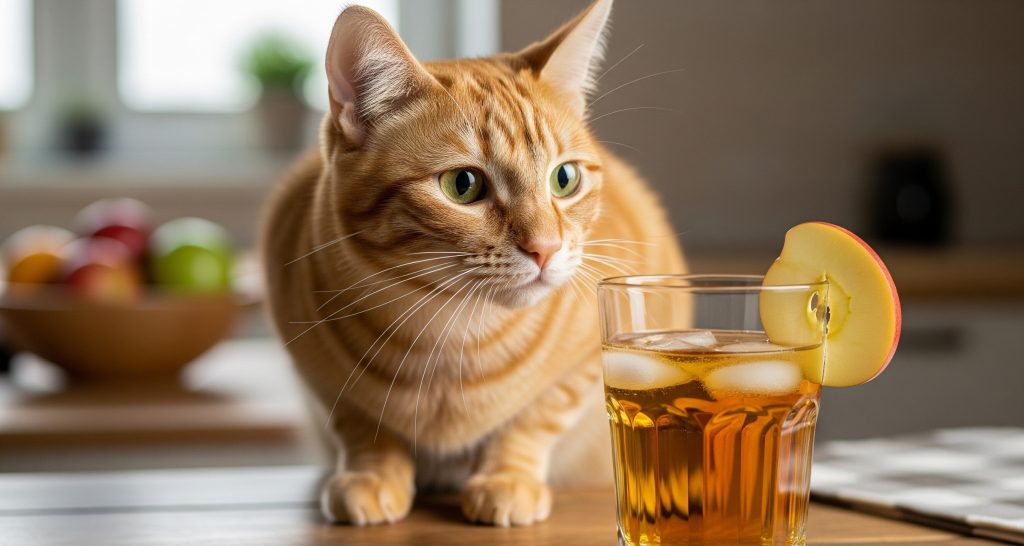
Have you ever noticed your feline sniffing your apple juice as if it were the ultimate beverage? Yes, exactly the same here. One minute you’re enjoying a quiet morning, the next your feline roommate is trying to steal your drink like it’s some gourmet delicacy. But hold up—can cats drink apple juice safely, or are we setting them up for a stomach disaster?
Let’s break it down together. I’ve had my fair share of “oops” moments with my pets (looking at you, Max, who once licked a jalapeño), so I totally get the panic when your cat sips something questionable. This guide will walk you through the risks, safety tips, and healthier alternatives to apple juice for cats—without boring you to tears. Promise. 🙂
What Ingredients Are In Apple Juice?
Let’s examine the ingredients in apple juice before determining whether your cat should consume it.
The majority of store-bought apple juices include:
- Naturally, apples are the primary ingredient, though they aren’t always pure.
- Corn syrup or sugar: occasionally in dangerously high amounts.
- Preservatives: To prolong the shelf life.
- Flavors were added to give it a “fresh” taste although it had been in a carton for months.
It sounds innocent, doesn’t it? However, this mix can be a little dubious for cats. Preservatives can interfere with cats’ small systems, and they don’t process sugar the same way humans do. Their low-carb diet may not be able to handle even the natural sugars found in apples.
Can Cats Drink Apple Juice?
Technically, yes, a cat can sip apple juice without dropping dead on the spot. But should they? Nope.
Cats are obligate carnivores, which means their digestive system thrives on meat, not fruit juice. While a tiny lick probably won’t harm them, letting them lap it up regularly is a recipe for trouble (pun intended).
Think of it this way: just because you can eat a whole tub of ice cream in one sitting doesn’t mean you should. 😉
Is Apple Juice Safe for Cats?
While a tiny lick of apple juice is unlikely to cause immediate harm, apple juice is absolutely not safe or appropriate for cats and should never be offered as a drink. The primary danger lies in its extremely high sugar content. Cats are obligate carnivores, and their digestive systems are not equipped to process large amounts of sugars, which can lead to rapid gastrointestinal upset (diarrhea, vomiting), weight gain, and long-term health issues like diabetes.
Furthermore, the core and seeds of an apple contain trace amounts of cyanide, and while the juice itself is filtered, it is best practice to keep all non-meat, non-water liquids away from your feline companion. Plain, fresh water remains the only recommended beverage for a cat.
Is Apple Juice Bad for Cats? Health Benefits & Risks of Apple Juice for Cats
Let’s be real—apple juice has no health benefits for cats. Unlike us, they don’t need antioxidants from fruit or a vitamin C boost. Their bodies already produce vitamin C naturally. Lucky furballs.
What can go wrong is as follows:
- Digestive disturbance: Consuming too much sugar may result in diarrhea or vomiting.
- Gaining weight: Empty calories quickly mount up.
- Tooth decay: Sugar clings to teeth like a sticky ex.
- Risk of diabetes: Prolonged exposure to sugar isn’t cute.
Bottom line: Apple juice is basically junk food for cats. Tasty? Maybe. Healthy? Nope.
Why Cats Shouldn’t Drink Apple Juice?
Beyond the immediate risks, the bigger picture is that apple juice offers nothing your cat needs. Think of it this way: their bodies are finely tuned machines for processing protein and fat from meat. Giving them sugary juice is like putting diesel fuel in a sports car. It just doesn’t work. The potential harm far outweighs any perceived “treat” value.
What About Organic Apple Juice?
Okay, let’s play devil’s advocate for a second. What if you go all fancy and get organic apple juice? Does that change anything? Nope, not really. While it might lack some of the artificial preservatives and added junk, it’s still packed with natural sugars. Remember, a cat’s body can’t differentiate between refined sugar and natural fruit sugar. To their system, sugar is sugar, and it’s still problematic. So, even the purest, fanciest organic juice is a no-go.
Can Cats Eat Apples? A Nutritious Fruit or a Harmful Treat
Now here’s a twist—cats can eat apples, but only in moderation and only if prepared properly.
Apples contain:
- Fiber
- Vitamin C
- Potassium
But again, cats don’t need these nutrients from fruit. They get everything they need from meat-based diets.

How Many Apples Can Cats Eat?
- A tiny slice (peeled, no seeds) is more than enough.
- Think of apples as a rare snack, not a regular addition.
How to Safely Feed Your Cat Apples
- Wash thoroughly to remove pesticides.
- Peel off the skin (less choking risk).
- Remove the core and seeds.
- Offer a small bite-sized cube.
And don’t freak out if your cat turns up their nose. Most cats won’t even care for apples—they’d rather chase the fruit flies around them.
Why Cats Have Apples But Not Apple Juice?
This is a great question. The difference comes down to concentration and additives. A fresh, raw apple contains fiber, which slows down the absorption of sugar. It’s also mostly water.
Apple juice, on the other hand, is a concentrated shot of sugar with no fiber to slow it down. It’s the difference between eating a grape and drinking a glass of grape juice; one is a small, balanced snack, the other is a sugary liquid bomb.
FYI, grapes are toxic to cats, so don’t give them to your cat, that’s just an analogy.
My Cat Drank Apple Juice, What Should I Do Now?
Well, perhaps this is a bit late for you to read. Your feline just stole a sip from your glass. Do not panic! It is unlikely that a single, tiny sip will result in a significant issue, particularly if it is an isolated incident.
For the next 24 hours, just keep a close eye on your cat. Keep an eye out for symptoms like lethargy, diarrhea, or vomiting. It’s best to contact your veterinarian if you notice any of these or if they consumed more than a small amount of alcohol. I think it’s better safe than sorry.
Are Some Cats Allergic to Apples?
Although it’s uncommon, cats can experience an allergic reaction to apples. Itching, swelling, or trouble breathing are possible symptoms. Contact your veterinarian immediately if your cat seems strange after eating a small piece of apple. For this reason, you should always start new foods gradually and in small quantities.
Safer Alternatives for Apple Juice
Are you looking for a safe and enjoyable activity to do with your feline? Try these instead:
- Fresh water (boring but essential)
- Bone broth (unsalted, homemade is best)
- Cat-safe herbal teas (like chamomile—check with your vet first)
- Wet cat food with gravy (treat-level satisfaction)
Pro tip: Always check the ingredients and avoid anything with onion, garlic, or artificial sweeteners, such as xylitol. That stuff’s basically poison for cats.
Can Cats Drink Apple Cider?
Apple cider sounds fancy, but it’s just apple juice with a rustic vibe. And sometimes, it’s fermented. So yeah—hard pass for cats.
Even non-alcoholic cider contains sugar and spices that can mess with your cat’s stomach. Cinnamon might smell amazing, but it’s not feline-friendly.
Can Cats Eat Apple Seeds?
Nope. Apple seeds contain cyanide. Not enough to kill a human (unless you eat a truckload), but for cats? Even a few seeds can be dangerous.
Always remove the core and seeds before offering apples to your cat. It’s not worth the risk.
Can My Cat Drink Juice?
Short answer: No. Long answer: Also no.
Whether it’s grape, orange, pineapple, or apple, juices are full of sugar and acids that cats can’t handle. Stick to water and pet-approved broths.
Frequently Asked Questions
Can cats have apple juice without sugar?
Even without added sugar, natural fructose in apples can still cause problems. So nope—still not ideal.
Can cats have apple juice in the morning?
Time of day doesn’t matter. Apple juice is a no-go 24/7.
Can apple juice kill cats?
Not instantly, but large amounts can cause serious health issues. Think vomiting, diarrhea, or worse.
Can cats have apple juice for constipation?
Nope. Fiber from actual apples is better. Juice lacks the fiber needed to help with constipation.
Can cats have apple sauce?
Only if it’s homemade and unsweetened. The majority of store-bought versions include preservatives, sugar, or cinnamon.
Final Words
So, can cats drink apple juice? Technically, yes, but realistically—they shouldn’t. It’s sugary, acidic, and unnecessary for their diet. A tiny lick won’t send them to the ER, but regular sips? That’s a recipe for trouble.
Stick to safer treats, keep your juice to yourself, and maybe invest in a cat water fountain to make hydration more exciting. (Mine thinks it’s a spa day every time.)
And hey—next time your cat tries to steal your drink, just hand them a slice of apple instead. Peeled, seedless, and drama-free.
Got a funny story about your cat and forbidden snacks? I’m all ears. 😺