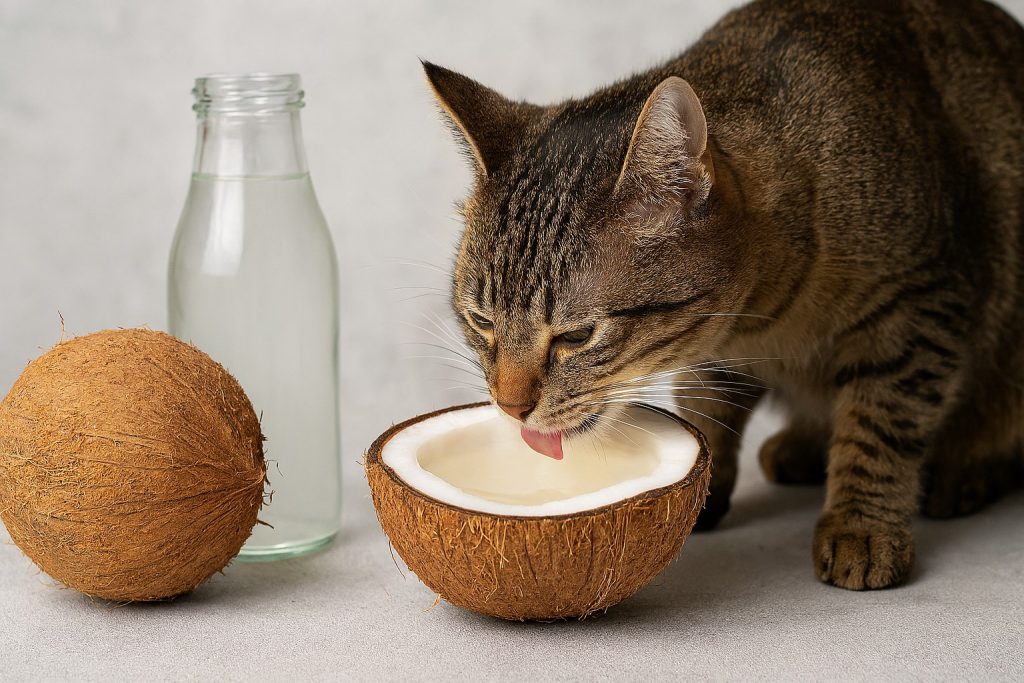
Your cat gives you that look while you’re enjoying your fancy coconut water and feeling hydrated and tropical. Equal parts judgment and curiosity—you know the one. And suddenly you wonder: Can cats drink coconut water? Is it a hydration hack or a recipe for feline disaster?
Well, I’ve been there. My tabby once tried to dunk her paw into my coconut water like it was some exotic spa treatment. That moment sparked a deep dive into the world of coconuts and cats. Spoiler alert: it’s not as straightforward as you’d think.
Let’s break it all down—safety, benefits, risks, and everything in between—with a sprinkle of sarcasm and a whole lot of cat-loving honesty. 🙂
What is Coconut Water?
Okay, let’s first address this. The transparent liquid found inside young, green coconuts is called coconut water. Coconut water is more akin to nature’s sports drink than coconut milk, which is made from grated coconut meat. Electrolytes like potassium, magnesium, and sodium are abundant in it.
Drinking it helps people stay hydrated, recover from physical activity, and, to be honest, it tastes a little fancy and tropical. The catch is that your cat may not always benefit from what is good for you.
So while coconut water is refreshing for humans, it’s complicated for cats.
Health Benefits of Coconut for Cats
Let me clarify before you get too excited: cats do not require coconut water. Their bodies are made to absorb moisture from food, particularly when you feed them wet food. Nevertheless, there are nutrients in coconut water that may be advantageous in theory.
- Electrolytes: Help with hydration and balancing fluids.
- Potassium: Supports muscle and nerve function.
- Magnesium: Plays a role in metabolism and energy.
- Antioxidants: May reduce inflammation.
Sounds great, right? Sure—for humans. But cats process nutrients differently, so they won’t get the same benefits we do. Plus, too much of these nutrients can actually cause issues for cats.
Coconut Products Cats Can Have
Coconut comes in many forms—meat, oil, water, milk, husk (yes, really). Let’s see what works for cats and what doesn’t.
Can Cats Eat Coconut Meat?
Yes, they can, but only in very small, cooked amounts. The meat of the coconut is high in fat and can be hard for a cat’s digestive system to process. A small piece of dried coconut meat, unsweetened and in moderation, probably won’t hurt, but it’s not something you should be regularly giving them.
Can Cats Eat Coconut Oil?
Yep, and it’s actually popular among cat parents. Coconut oil can help with dry skin, hairballs, and even digestion. Just don’t go overboard—a tiny dab will do.
Can Cats Drink Coconut Water?
Here’s the main event. Cats can technically drink coconut water in very small amounts, but it’s not recommended as a regular thing. Why? Because it’s high in potassium and sugar compared to what cats actually need.
Can Cats Eat Coconut Husk?
Absolutely not. The husk is tough, fibrous, and can be a huge choking hazard. It also presents a serious risk of intestinal blockage. Keep the husks far, far away from your feline friend. A cat chewing on a husk is not a sight you want to see.
Can Cats Drink Coconut Milk?
Ah, coconut milk—the creamy cousin of coconut water. Sounds fancy, right? But for cats?
This one trips people up all the time. Coconut milk is not the same as coconut water. Coconut milk comes from grated coconut meat, which means it’s loaded with fat and oils.
And guess what? Cats don’t process fat the same way humans do. Too much fat = stomach upset, vomiting, and potentially pancreatitis. So nope, not a good choice.

Can Cats Eat Fresh Coconut?
Again, yes, but in small amounts and with caution. Fresh coconut meat is high in fat. Cats don’t have the digestive enzymes to break down large amounts of it. A tiny nibble might be okay, but it’s not something to add to their regular diet.
Coconut Milk vs. Coconut Water for Cats
The great coconut debate can be summed up as follows:
- Coconut Water: Usually transparent, it has more natural sugars and electrolytes and less fat. Small, unsweetened amounts are safe. Consider it a mild, infrequent treat.
- Coconut Milk: Creamy, high in fat, and often flavored with additives and sweeteners. It is typically not recommended for dogs due to the potential for gastrointestinal distress and additive toxicity.
Thus, when sharing, always choose unsweetened, plain coconut water. Just the pure, unadulterated liquid from the young green coconut—no fancy flavors or creamy lattes.
How Much Coconut Water Can My Cat Have?
If you’re still thinking, “Can cats drink coconut water?” here’s the golden rule:
Start with a teaspoon. That’s it. No more. Watch for any weird behavior, vomiting, or litter box drama.
If your cat handles it well, you can offer it occasionally—not daily, not weekly, just once in a while.
Is Coconut Oil Safe for Cats?
As I mentioned before, some people use a very small amount of coconut oil for specific purposes, like hairball prevention or to help with a dry coat. But is it truly “safe?”
Yes, in moderation, a tiny amount of high-quality, unrefined, virgin coconut oil is generally considered safe. However, always consult your vet before you start. FYI, the same goes for anything new you introduce to your cat’s diet.
How to Serve Coconut Water to Your Cat
I’m only putting this section in here to humor the folks who are still convinced this is a good idea. My advice is not to. But if you have a cat who is obsessed with it, here are some ways people have tried to use it. Please proceed with extreme caution and remember my warnings.
To Coat Pills
Got a picky cat who hates taking meds? A drop of coconut water can coat the pill and make it more palatable.
As a Food Topper
Drizzle a teaspoon over dry food for a hydration boost. Just don’t soak it like cereal.
Baked in a Cat-Friendly Recipe
Use coconut water in homemade cat treats. It adds moisture without the fat. Pinterest has tons of ideas—some actually work.
Is Coconut a Laxative for Cats?
Funny enough, yes—it kinda is. Both coconut oil and coconut meat can have a mild laxative effect. This might help with constipation, but too much can turn things into the opposite problem.
Additional Considerations for Cats with Health Conditions
This is super important. If your cat has a health condition like pancreatitis or kidney disease, you should avoid all coconut products. The high fat and potassium content can make their condition much worse. For these cats, coconut water could be a real health hazard.
How Much Coconut Can Your Cat Eat Safely?
Tiny, tiny amounts. We’re talking occasional shreds or drops, not snacks. Coconut should never make up a “regular” part of your cat’s diet.
Here’s a cheat sheet:
- Coconut meat: 1–2 small pieces per week
- Coconut oil: ¼ teaspoon max, 2–3 times a week
- Coconut water: 1 teaspoon occasionally
More than that? You’re asking for trouble.
Safety Measures to Take When Giving Cats Coconut
- Start small. If you decide to give your cat a tiny lick of coconut water, monitor them for any signs of stomach upset.
- Use plain products. Never give your cat coconut products with added sugars, preservatives, or flavors.
Consult your vet. This is the most important step. Your vet knows your cat’s health history and can give you the best advice.

What to Do If Your Cat Consumes Too Much Coconut Milk
If your cat gets into your coconut milk and drinks a large amount, you need to call your vet or a pet poison control hotline immediately. Signs of an issue include vomiting, diarrhea, lethargy, or a refusal to eat. Seriously, don’t mess around with this one.
Signs of Coconut Water Illness or Allergic Reactions
Keep an eye out for these signs if your cat has consumed coconut water or any coconut product:
- Itching or rash on the skin;
- Hives;
- Vomiting;
- Diarrhea;
- Abdominal Pain;
- Breathing difficulties (yikes!).
Consult your veterinarian and avoid coconut anything if your dog exhibits any of these symptoms.
Alternatives to Coconut Water for Cats
Your cat doesn’t need coconut water, really. There are so many better options for hydration. Here are a few:
- Plain water (duh)
- Cat broths (low-sodium, pet-safe)
- Wet cat food (hello, built-in hydration)
Should I Use Coconut Water to Hydrate My Cat’s Food?
You can—but only occasionally. A teaspoon mixed into dry food can help with hydration. Just don’t make it a habit.
Pro tip: Try bone broth instead. It’s tastier and safer.
How to Keep Your Cat Hydrated Without Coconut Water
- Offer multiple water bowls in different locations around your house.
- Try a water fountain. Many cats are fascinated by moving water and will drink more from a fountain.
Feed wet food. This is probably the single most effective way to keep your cat hydrated.
Other Fruits Your Cats Can Eat
Looking for healthier, safer “fun” treats? Cats can nibble on:
- Blueberries
- Watermelon (seedless, no rind)
- Strawberries
- Bananas (tiny amounts)
Always remember: cats are obligate carnivores. Fruit should never be more than an occasional snack.
Frequently Asked Questions
Can kittens drink coconut water?
Nope. Their systems are too sensitive. Stick to kitten formula and water.
Is coconut water better than tap water for cats?
Not really. Tap water (filtered) is safer and more consistent.
Can coconut water help with dehydration?
Mildly, yes—but it’s not a replacement for proper hydration methods.
Is flavored coconut water safe for cats?
Hard no. Flavored versions contain sugar and additives.
Can I freeze coconut water into ice cubes for my cat?
Sure, but only if your cat accepts.
Final Words
Finally, can cats consume coconut water? Technically, yes—but only in teeny-tiny amounts, and even then, it’s not necessary. Cats don’t benefit from coconut water the way humans do, and too much can cause more harm than good.
If your cat sneaks a sip, relax—it’s not poison. However, to keep your furball healthy and hydrated, stick with plain water, wet food, or safe cat broths.
Remember, your cat isn’t missing out by skipping coconut water. Trust me—they’d rather chase a laser pointer than sip from your tropical drink anyway. 😉