Ever caught your cat licking the ice cream spoon and thought, “Wait… can cats taste sweet stuff?” Or maybe you’ve seen your little furball go wild sniffing your spicy ramen bowl. Weird, right?
The truth is surprising: cats are wildly different from us when it comes to taste. Their taste buds evolved to suit their meat-loving lifestyles—yeah, they’re born carnivores, no matter how much they beg for whatever you’re eating.
I’ve seen my own cat sniff a jalapeño chip and then dramatically recoil, like I just betrayed her trust 😹. So naturally, I had to dig into this: Can cats taste sweet or spicy? Let’s unravel this whisker-twitching mystery together.
Understanding Cat Taste Buds – Sweet and Spicy- Explained
Cats aren’t just tiny, fluffy versions of us. They experience food very differently, especially when it comes to taste.
Cats have about 470 taste buds. Compare that to humans, who have around 9,000, and you’ll start to see why your kitty might not be impressed with your latest dessert.
Their taste receptors are specifically designed for a meat-based diet (hello, obligate carnivores!). That means their tongues are tuned in to flavors like amino acids and certain fats — not sugar and spice.
Feline Taste Receptors: Why Can’t Cats Taste Sweet?
Cats can’t taste sweet. Yup, you read that right. Not “don’t like it”—they literally can’t taste it.
Here’s the science, served fresh:
- Cats lack the sweet taste receptor gene (called Tas1r2).
- That gene combo helps most mammals detect sugars—but not cats.
- Evolution said “Nah” because cats thrive on meat, not fruits or pastries.
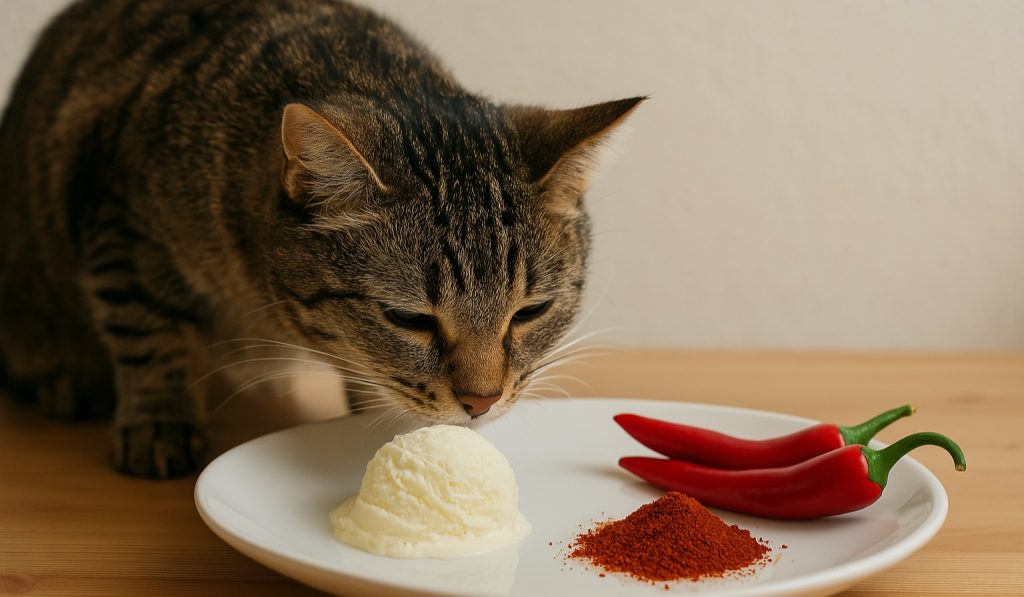
So why do they still lick your ice cream cone? Simple—it’s not the sugar. They’re likely reacting to the fat content and cool texture, not sweetness. (I mean, I get it—ice cream is basically heaven in frozen form, even if you can’t taste the sugar.)
Can Cats Taste Spicy Foods?
Cats can’t taste “spicy” the way we do, but that doesn’t stop them from reacting to it like it’s a personal attack. The sensation of heat in spicy food comes from capsaicin, which stimulates pain and heat receptors—not taste receptors.
And guess what? Cats do have those pain receptors.
So when your cat sniffs your chili or licks spicy curry sauce, they’re not thinking “Mmm, flavorful!” They’re wondering why their tongue feels like it’s melting. 😬
Why Are Certain Foods Spicy?
Let’s nerd out for a sec.
Spiciness in food comes from capsaicin, a compound found in peppers like:
- Jalapeños
- Habaneros
- Chili peppers
Capsaicin binds to TRPV1 receptors in our mouth—which are pain receptors, not taste buds. This causes the fiery sensation we love (or hate)—but to your cat? It’s a whole lotta discomfort with zero flavor.
So yeah, spicy: sensory attack for your cat. FYI, not cool.
The Effect of Spicy Foods on Cats
Your cat’s body reacts to spicy food with full panic mode.
- Mouth irritation kicks in fast.
- Stomach lining gets inflamed.
- Diarrhea and vomiting might follow.
- They may avoid food for a while after.
It’s like their digestive system yells, “WHY have you done this to me?” And you just sit there feeling like the worst pet parent alive 😅.

Why Does Your Cat Beg for Spicy Food?
Yep, cats are weird. Mine once tried to steal a piece of pizza loaded with chili flakes. Like… WHY?! Turns out, there’s more going on than just poor judgment.
Alluring Aromas
Let’s face it — spicy foods smell amazing. To a cat, that strong aroma can be super tempting. Their noses are way more sensitive than ours, so spicy dishes are basically catnip-level exciting (even though they shouldn’t eat it).
Ingredients
Cats might not want the spice, but they’re probably into other stuff in your meal — like the meat, cream, or fat.
Hunger
Sometimes your cat is just hungry or bored. If you’re eating, they assume it must be worth trying. #FoodFOMO
Are There Spices That Are Good for Cats?
Surprisingly, some spices are actually okay — even beneficial — in small amounts. So if you’re feeling fancy, here are a few to sprinkle into their life (with vet approval, duh):
- Catnip – Not just spice, it’s like kitty crack. Stimulates playfulness and chills out stress.
- Parsley – Freshens breath (finally 😅) and has vitamin C & K.
- Turmeric – Anti-inflammatory superstar. Great for older cats with joint issues.
- Ginger – Helps with nausea (but tiny amounts only).
- Chamomile – Calms anxiety and helps with sleep. No tea parties, though.
- Cilantro – Loaded with antioxidants, if your cat doesn’t hate you for offering it.
- Dill – Good for digestion, and it’s safe in moderation.
Always go for organic and tiny amounts — think “a speck” not “a scoop.”
What Spices & Seasonings Are Toxic to Cats?
Warning: This is the no-go zone. These are straight-up toxic to cats.
Cinnamon
In small amounts, it might seem harmless, but too much can cause liver damage, low blood sugar, and even heart arrhythmia.
Nutmeg
Contains myristicin, which is toxic to cats and can cause hallucinations, seizures, and disorientation. Yeah, no thanks.
Garlic
Even a tiny bit can be dangerous. Garlic damages red blood cells, leading to anemia, weakness, and potentially organ failure.
When Spicy Food Turns Toxic
If your cat consumes something spicy + toxic (like curry with garlic or Thai food with chilis), you might notice:
- Drooling or foaming
- Vomiting or diarrhea
- Lethargy
- Difficulty breathing
What should you do? Call your vet immediately. Don’t play the “let’s wait and see” game — it’s not worth the risk.
Also, avoid giving milk (old myth alert 🚨). Many cats are lactose intolerant, and you’ll just swap one digestive problem for another.
Give Your Cat an Alternative Treat
Instead of letting your cat beg for your enchiladas, try these alternatives:
- Freeze-dried meat treats (chicken, turkey, duck — you name it)
- Homemade tuna popsicles (yes, it’s a thing — and cats love it)
- Plain cooked chicken
Keep it simple, bland, and meat-based. Your cat will be just as thrilled, trust me.
Bland But Safe: The Right Diet for Your Cat
Cats thrive on a high-protein, low-carb diet. Here’s what to stick with:
- Commercial cat food (high-quality, vet-approved)
- Occasional plain meats (chicken, turkey, beef — NO seasoning)
- Cat-safe veggies like pumpkin or peas (in moderation)
Avoid human food unless you’re 100% sure it’s cat-safe.

Frequently Asked Questions
If cats can’t taste sweet, why do they like ice cream?
It’s all about the fat content. Ice cream is creamy and fatty — two things cats absolutely love. They’re not there for the sugar, promise.
What do cats taste instead of sweet?
They’re tuned in to amino acids and proteins. Think savory, meaty goodness. Sweet just doesn’t register.
Can cats taste salt?
Yes — but they’re much less sensitive to it than we are. Too much salt can be harmful, so don’t offer your salty snacks.
Can cats taste spice Reddit?
Reddit users often report cats licking spicy food, but science says they’re reacting to the smell or fat, not the spice. Capsaicin causes discomfort, not pleasure.
What to do if my cat ate spicy food?
Don’t panic. Offer water, wipe their mouth, and watch for symptoms. If anything seems off, call your vet.
Why does my cat like spicy food?
They don’t — not really. They like the meat or fat in your spicy food. The spice part? Yeah, not a fan once it hits.
Final Words
So, can cats taste sweet or spicy? Nope — not in the way you and I do. Sweetness is a ghost flavor to them, and spiciness feels like punishment. But that doesn’t stop your furry friend from dipping a paw into your spicy noodles and throwing you side-eyes when you snatch it away.