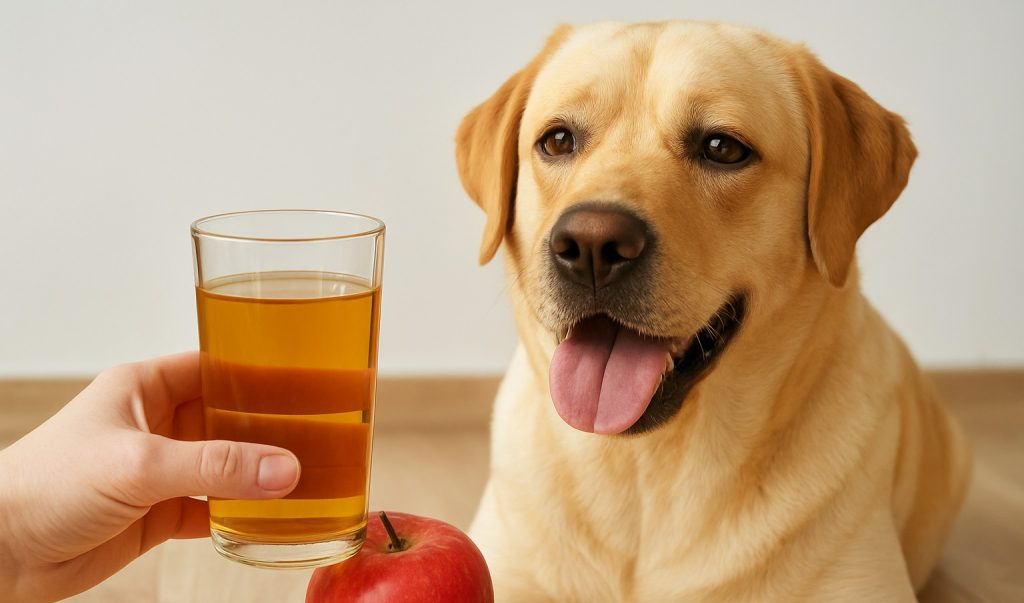
Have you ever had your dog give you the side-eye while you’re drinking apple juice? Yes, exactly the same here. It’s like they’re silently judging you for not sharing. But before you pour a splash into their bowl, let’s talk about whether dogs can drink apple juice—and if they should.
Particularly when it comes to food, I’ve had my share of “oops” moments with my dog. One time, I left a half-empty juice box on the coffee table, and my dog went full ninja mode. Slurped it up like it was the elixir of life. Spoiler alert: it wasn’t. So, let’s break this down together—no judgment, just real talk.
What Ingredients Are In Apple Juice?
Apple juice sounds simple, right? Just apples in liquid form. However, the truth is that most store-bought juices contain a lot more than just apples.
Typical apple juice contains:
- Natural and added sugars – way too much for your dog’s tummy.
- Citric Acid – can upset their stomach.
- Preservatives – not exactly dog-friendly.
- Artificial flavors – because apparently apples weren’t apple-y enough?
Even “100% apple juice” often has concentrated sugar that dogs don’t need. Fresh, homemade juice is slightly better, but it’s still high in sugar and lacks the fiber that makes whole apples so healthy.
Can Dogs Drink Apple Juice?
Technically? Yes. Should they? Not really.
A tiny sip of pure, unsweetened apple juice probably won’t send your dog into a tailspin. But most juices on the market are loaded with sugar and additives that can mess with your dog’s tummy—or worse.
Can Dogs Drink Apple Juice? That’s the million-dollar question. And the answer depends on the type of juice, your dog’s health, and how much they drink.
Is Apple Juice Bad for Dogs? Health Benefits & Risks of Apple Juice for Dogs
Let’s be fair—apples themselves are pretty awesome. They are abundant in fiber, antioxidants, and vitamin C.
However, you lose most of the fiber and gain a lot of sugar when you juice them, especially when you do it commercially. For dogs, that is not a good trade-off.
Risks of apple juice for dogs:
Apple juice risks for dogs include:
- upset stomach (think vomiting or diarrhea);
- weight gain from too much sugar;
- dental problems (sugar = plaque party);
- Sensitive dogs’ pancreatitis.
Advantages? Well, eh. Giving your dog real apple slices would provide them with far more nutrients.
IMO, the risks far outweigh the tiny benefits.
Why Shouldn’t Dogs Drink Apple Juice?
Let’s be blunt—apple juice is basically sugar water with a fruit label.
Dogs don’t require concentrated acids, added sugars, or preservatives. Their digestive systems may be strained by what seems like a harmless drink to us because their bodies process food differently than ours.
Additionally, consider this: dogs did not evolve to drink juice boxes by the pool, but rather to eat raw meat and natural foods.
What About Organic Apple Juice?
Ah, yes, the “but it’s organic!” argument. I’ve used it too—guilty as charged.
Organic apple juice might skip the preservatives and artificial junk, but it’s still high in natural sugars and low in fiber. So while it’s less bad, it’s still not ideal.
IMO, if you’re going organic, just give your dog a slice of the actual fruit. Way safer. Way tastier. Way less drama.
Can Dogs Eat Apples? A Nutritious Fruit or a Harmful Treat
Now here’s the good news—yes, dogs can eat apples. In fact, apples are an awesome treat if served the right way. They’re low in calories, packed with fiber, and loaded with vitamins.
But moderation is key. Don’t turn your dog into an apple junkie.
How Many Apples Can Dogs Eat?
Moderation is key. A few slices a day is plenty.
Small dogs? One or two thin slices. Big dogs? Maybe half an apple, max.
Too much apple means too much sugar, which indicates an unhappy tummy.
How to Safely Feed Your Dog Apples
Before you start tossing your dog a whole apple, there’s a right way to do this. Remember, the core and seeds are a no-go. The seeds contain a small amount of cyanide, which can be toxic if ingested in large quantities over time. So, always follow these rules:
- Wash the apple thoroughly.
- Remove the core and seeds.
- Cut the apple into small, manageable slices or cubes.
Here are some fun, safe ways to give your dog an apple:
- Apple snack: Just a simple slice or two as a treat.
- Frozen into their KONG toy: A frozen piece of apple inside a KONG toy makes a great, long-lasting puzzle.
- Dehydrated apples: Make your own! Slice them thin and dehydrate them for a crunchy, healthy snack. No sugar, no preservatives.
- Fruit smoothie: Blend a few slices with dog-friendly yogurt and a bit of water for a refreshing treat.
- Fruit yogurt: Mix small, diced pieces of apple into plain, unsweetened yogurt.
- Fruit popsicles: Freeze some mashed apples with water or unsalted chicken broth in an ice cube tray.
- Food topper: Sprinkle a few small, finely chopped pieces of apple over their regular food.
- Doggy ice cream: Blend frozen apple slices with a banana and a scoop of plain yogurt for a homemade, healthy “ice cream” they’ll love.

Why Dogs Have Apples But Not Apple Juice?
Excellent query. It all comes down to the balance of sugar and fiber.
Apples provide natural sugar, fiber, and nutrients. Apple juice is primarily sugar with very little fiber.
Fiber slows the absorption of sugar and aids in digestion regulation. Juice completely omits that step, which can result in stomach issues and sugar spikes.
So yeah, apples are the MVP. Juice? Not so much.
My Dog Drank Apple Juice, What Should I Do Now?
Don’t panic! A tiny, accidental sip of apple juice is unlikely to cause a major issue. My dog once licked a few drops from a spill, and he was totally fine. The key is a small amount.
You should contact your veterinarian right away, though, if your dog drank a lot—for example, a full cup—or if they appear ill afterward. Keep an eye out for symptoms such as diarrhea, vomiting, fatigue, or appetite loss. These might indicate a major issue, and only a veterinarian can accurately evaluate the situation.
Are Some Dogs Allergic to Apples?
Apple allergies are rare, but they can happen to some dogs. This holds for any new food you add to your dog’s diet. An allergy can manifest as an itchy rash, hives, difficulty breathing, or swelling. If you notice any of these symptoms, stop feeding them apples and contact your vet right away. The first time I gave my dog a tiny piece of apple, I watched him like a hawk just in case. Better safe than sorry!
Safer Alternatives for Apple Juice
Want to treat your dog to something special without taking any chances? There are many tasty and safe options available.
- Water: Without a doubt, the greatest and safest choice. Add some ice cubes or a little dog-safe broth to make it entertaining.
- Coconut Water: Unsweetened coconut water can be a refreshing treat in very small amounts. Verify that there are no added sugars.
- Dog-Specific “Juices”: Some businesses produce liquids that resemble juices and are safe for dogs. These are frequently made from pureed fruits or vegetables. Always carefully read the ingredients.
- Frozen Fruits: Offer your dog a tiny piece of watermelon, some frozen blueberries, or some strawberries. They’re the ideal summertime treat.
Can Dogs Drink Apple Cider?
Short answer: Nope.
Apple cider—especially the alcoholic kind—is a hard pass. Even non-alcoholic versions contain fermented sugars and spices that can mess with your dog’s gut.
Save the cider for your fall Instagram pics. Your dog’s better off with plain water.
Can Dogs Eat Apple Seeds?
Here’s where things get sketchy. Apple seeds contain amygdalin, which can release cyanide when digested. 😬 A few seeds probably won’t hurt, but why risk it?
Always remove the core and seeds before feeding apples to your dog.
Can My Dog Drink Juice?
Generally, dogs shouldn’t drink juice at all. Most juices are packed with sugar, preservatives, and acidity that can wreck their digestive system.
Stick to water. If you feel fancy, try fruit-infused water with dog-safe fruits like blueberries, watermelon, or cucumber.
Frequently Asked Questions
Can dogs have apple juice without sugar?
Still not recommended. Even “sugar-free” versions may contain harmful sweeteners like xylitol.
Can dogs have apple juice in the morning?
Morning, evening, midnight snack—it doesn’t matter. It’s a bad idea at any time.
Can apple juice kill dogs?
Not directly, unless it contains xylitol. But long-term sugar overload can lead to health issues that shorten their lifespan.
Can dogs have apple juice for constipation?
Some owners try this, but apples themselves work better. The fiber in apples actually helps, unlike the juice.
Can dogs have apple sauce?
Yes—if it’s plain, unsweetened, and homemade. Store-bought versions often have added sugar.
Can dogs drink orange juice?
Nope. The acidity and sugar content can upset their stomachs.
Final Words
So, can dogs drink apple juice? Technically, yes. But should they? Not really.
Stick to fresh apples, skip the juice, and explore healthier alternatives. Your dog’s gut (and your vet bill) will thank you.
And hey—next time your pup gives you the stink eye while you sip your juice, toss them a frozen apple cube instead. It’s a win-win. 🙂
Got a favorite apple-based dog treat? Drop it in the comments or tag me—I’m always up for swapping doggy snack hacks.