Ever leaned in to kiss your cat and wondered, “Do cats like and understand kisses?” Yeah, me too. My tabby once squinted at me like I’d just committed the ultimate betrayal by interrupting her nap. Cats are mysterious little fluffballs, and while they don’t exactly decode kisses the way humans do, they definitely interpret our gestures of love in their own quirky ways. Let’s break it down together—friendly chat style, no boring textbook vibes.
How Do Cats Show Us Their Love?
Cats speak love more subtly than dogs. They don’t jump into your arms screaming “OMG HI!” (kind of wish they did though). They express affection through quiet gestures.
Cats show us love through:
- Slow blinking (yep, it’s basically the feline version of saying “I love you”)
- Head-butting or bunting (their scent glands mark you as theirs — lucky you)
- Purring (is it affection or manipulation? Sometimes both)
- Sitting near you or on your laptop, because apparently that is love
- Following you around like a tiny fluffy shadow
Ever notice how cats randomly rub on your leg then walk away like you don’t exist? That’s them saying “You belong to me.”
The Human-Cat Bond: A Unique Relationship
Our relationship with cats differs significantly from our bond with dogs. Cats basically chose to live with us for mutual benefit, whereas dogs evolved to work alongside us. Because of this history, cats perceive us as big, awkward, but generally kind mothers. They don’t see us as masters, but rather as social companions in their territory.
We often project human emotions onto them, assuming they enjoy the same physical touch we do. However, the feline brain processes social cues through smell and vibration rather than verbal praise or lip-to-skin contact. We must respect this evolutionary gap to build a stronger connection.
Do Cats Understand Kisses?
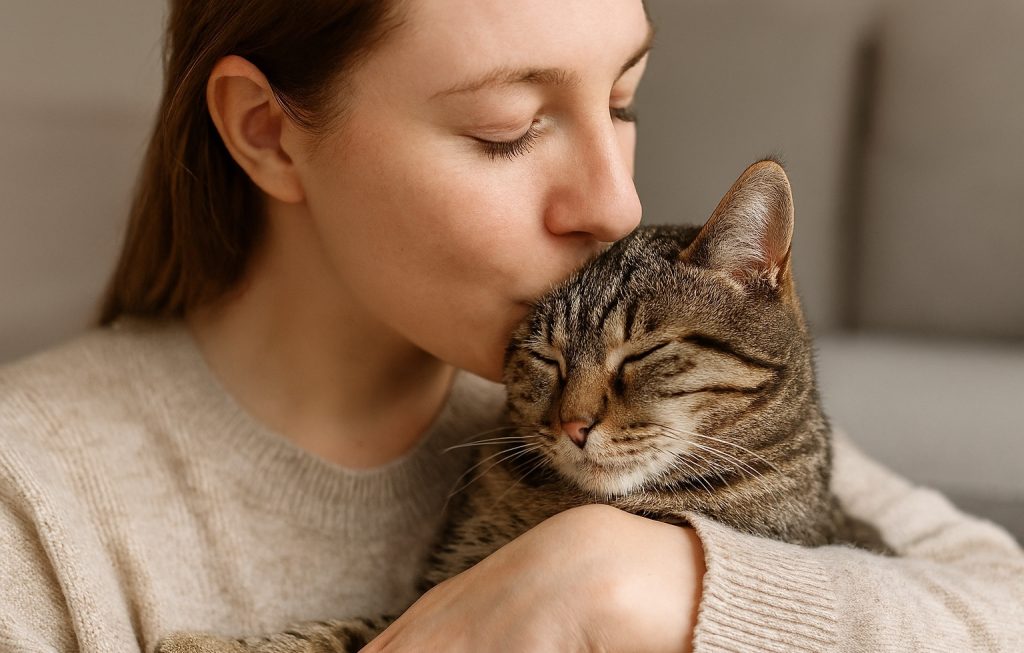
Short answer? Sort of. Cats don’t inherently understand that a kiss = affection. They didn’t evolve smooching each other on the face, so the idea is foreign. However, cats can learn that when you kiss them, it means love, attention, or snack-time bribery.
Your cat understands kisses through:
- Your tone of voice
- Facial expressions
- Body language
- Past experiences (good or bad)
If your cat associates kisses with positive vibes—they get it. If they think kisses mean forced nose invasion—they won’t.
Do Cats Like Kisses?
Whether a cat “likes” a kiss depends entirely on their individual personality. Some “velcro cats” crave every bit of attention you offer and will lean into your face when you go for a smooch. Others value their personal space and might find the physical restraint of a kiss quite annoying. Every cat maintains a different ‘touch’ threshold that you must learn to respect.
I know some cats that will purr the moment your face gets close. Conversely, my neighbor’s cat acts like you are trying to steal his soul if you move your head toward his. Individual temperament dictates their reaction more than any universal feline rule.
Ask yourself: does your cat lean in or pull away? If they pull back, they are politely telling you to back off. IMO, forcing affection on a cat is the fastest way to lose their trust. 🙂
How Cats Interpret Kisses
Since they don’t understand the “kiss” as a human concept, they translate the action into their own feline dialect. They rely on their senses to make sense of what you are doing.
Scent Exchange
Cats rely heavily on scent. When you kiss them, they may interpret it as sharing smells—a bonding ritual.
Grooming
Cats groom each other to bond. Some interpret a gentle kiss as grooming behaviour, especially when paired with soft petting. Luna once licked my nose after I kissed her forehead. Did she groom me or tell me I smelled like cat treats? Honestly, unclear.
Emotional Reading
Cats are masters at sensing human pheromones and heart rates. They recognize the softness in your voice and the relaxed state of your body when you kiss them. They might not understand the lip-to-fur contact, but they absolutely understand the “vibe” of love and safety you are projecting.
Signs Your Cat Likes or Dislikes Being Kissed?
You need to become proficient at reading feline body language to determine if your kisses are welcome. Cats are not subtle if you know what to look for.
Positive Indications
If your cat purrs, which is the most obvious indication of satisfaction, it’s likely that they enjoy your kisses.
- Leaning In: Your cat is requesting more if they press their head against your face.
- Slow Blinking: Being close to you makes them feel secure and at ease.
- Tail Up: Happiness is indicated by a high, straight tail with a small hook at the end.
- Kneading: They are in “kitten mode” and feel completely safe.
Negative Indications
If your cat doesn’t like kisses:
- Flattened Ears: “Airplane ears” indicate irritation or fear.
- Tail Flicking: A lashing tail is an obvious indication that you should stop.
- Dilated Pupils: This suggests fear or overstimulation.
- Growling or hissing: Obviously, if this occurs, stop right away!
- Skin Twitching: They are overstimulated and require space if the skin on their back ripples.
What Makes Kissing a Cat Comfortable?
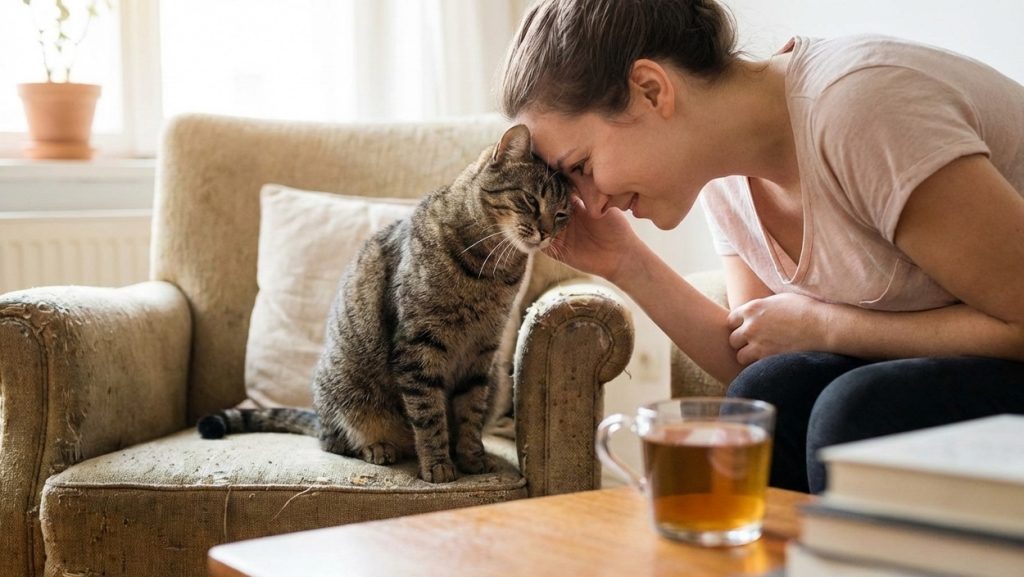
Time, familiarity, and trust all contribute to comfort. Your cat will accept physical proximity more readily if they are familiar with your routine and scent.
A few things are helpful:
- Maintaining a consistent level of affection • Honoring boundaries
- A gentle approach (no unexpected kisses)
Imagine the comfort levels of a stranger and someone you trust hugging you.
How to Show Your Cat You Love Them
If your cat isn’t a fan of kisses, don’t worry! You can speak their language and still get the point across. Communication with cats works best when you use their natural cues.
- The Slow Blink: Focus on your cat, slowly close your eyes, hold them closed for a moment, and then slowly open them.
- Finger Sniffing: Before you pet them, let them sniff your finger. This is the cat equivalent of a “handshake.”
- Playtime: Spending 15 minutes with a wand toy shows you care about their instincts.
- Safe Spaces: Give them places to hide, such as high perches or boxes. Providing “escape routes” demonstrates your consideration for their security needs.
Quality Time: Sometimes just sitting in the same room without touching them is the best way to show love.
Do Cats Like Being Kissed on Specific Body Parts?
The majority of cats can withstand head or forehead kisses. Avoid sensitive areas like the belly or paws.
Cats generally tolerate or like kisses on:
- Top of the head
- Between ears
- Cheeks
Avoid:
- Nose (too intimate)
- Mouth (bacteria central—gross)
- Belly (danger zone unless you want claws)
Your cat might love forehead kisses like a rom-com heroine, or stare at you like “Ma’am… why?”
Safety and Best Practices
Kissing your cat is generally safe, but you should keep a few things in mind. Hygiene and boundaries protect both you and your pet.
Avoid the Lips
Never kiss a cat directly on the mouth. Cats carry bacteria in their mouths that can cause infections in humans. Similarly, humans carry germs that aren’t great for cats. Stick to the fur on the top of the head to stay safe.
Known Cats Only
Don’t kiss stranger cats. They don’t get consent culture. Plus, random feral Tomcats have opinions and claws.
Socialization
If you want kisses to be part of your routine:
- Start slow.
- Pair kisses with calm voice and petting.
- Stop if they look stressed.
Cats remember negative experiences. Always protect trust.
How Can You Show Affection to Your Cat Without Kissing?
If you prefer a non-face-based love language, try:
- Petting
- Grooming sessions
- Talking softly
- Playtime bonding
Sometimes the best affection is letting them sit on your keyboard while you Type Like This.
Do Cats Like Being Hugged and Carried?
Most cats actually dislike being hugged or carried for long periods. Restraint triggers a “fight or flight” response in many felines. They prefer to have all four paws on the ground or to be the ones choosing when to jump into your lap.
If you must pick them up, always support their hind legs. A dangling cat feels insecure and stressed. If your cat starts struggling or looking for an exit, put them down immediately. Respecting their autonomy makes them more likely to seek you out for affection later.
Do Cats Kiss One Another?
Cats don’t kiss. But they bump noses, lick each other’s heads, and rub faces. That counts as feline kissing.
When cats lick each other’s ears or foreheads, they build trust and family bonding. It isn’t romantic—it’s community grooming.
Frequently Asked Questions
Do cats understand affection from humans?
Yes, they recognize gentle touch and tone as affection.
Do cats understand kisses and hugs?
Not literally, but they interpret them as positive attention.
Do cats understand words?
They recognize tone and repetition, not full sentences.
Do cats understand kisses on the head?
Yes, many see it as gentle grooming.
Do cats understand mirrors?
Most don’t—they think it’s another cat or ignore it.
Do cats understand their name?
Yes, particularly when combined with incentives or attention.
Final Words
Do cats enjoy and comprehend kisses, then? They see them as affection, but not in the human sense. While some cats roll their eyes, others lean in. Finding your pet’s preferred love language and honoring their boundaries are crucial.
Observe your cat’s response the next time you lean in to give them a kiss. Congratulations! You are now a member of their inner circle if they purr. Maybe stick to treats if they glare.