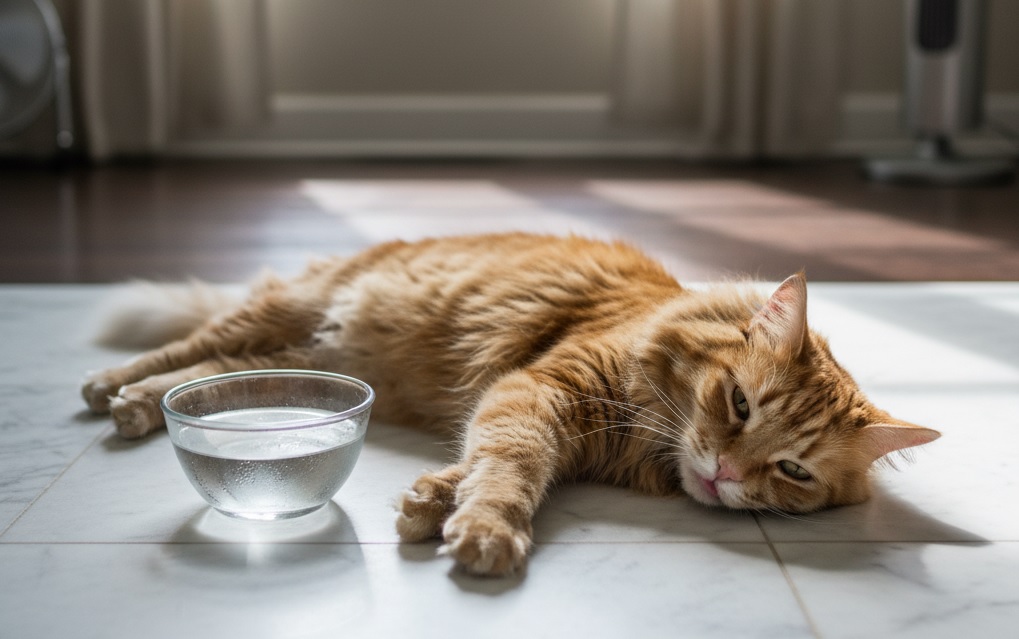
Okay, let’s cut to the chase: you’re worried your cat might be roasting like a marshmallow in the summer heat, right? 😼 I’ve been there too—watching my cat flop dramatically across the floor like she’s in the final act of a Shakespearean play, only to realise she’s just too warm. It’s not just about comfort either; cats can actually overheat, and it’s dangerous.
How hot is too hot for cats, then? Together, we will precisely determine that. I’ll go over the warning signs, potential dangers, and life-saving advice for keeping your feline companion comfortable and cool. Additionally, I swear to keep it informal—no dull textbook vibes here.
Do Cats Get Overheated?
Yes, absolutely. Cats can and do get overheated. They’re not magical desert creatures immune to the sun’s wrath. Even though they’re quite adept at finding cool places to chill (literally), they can still get sunburned, dehydrated, and suffer from heatstroke.
Unlike dogs, cats don’t sweat all over. They only sweat through their paws, which isn’t exactly efficient when it’s 100°F outside. So yeah, they need help.
How Hot Is Too Hot for Cats?
Here’s the deal: temperatures above 100°F (37.7°C) are officially too hot for cats. Even if your cat seems chill, they’re not built for extreme heat. Anything above that can lead to overheating, and if it hits 106°F, you’re in dangerous territory—think organ failure, seizures, and worse.
Pro tip: If you wouldn’t sit in a parked car with the windows up, don’t let your cat do it either.
What Is the Ideal Temperature for Cats?
Cats thrive in the thermoneutral zone, which is fancy speak for their comfort range: 86°F to 101°F (30°C to 38°C). But most homes are cooler than that, so they often seek out warm spots like sunbeams or your laptop keyboard (because why not?).
Ideal indoor temp: Keep it between 75°F and 80°F. That’s their sweet spot.
Do Cats Like Hot Weather?
They like warmth, not scorching heat. Ever seen your cat sunbathe like they’re on a tropical vacation? That’s normal. However, they will move to cooler areas if it becomes too hot. They run the risk of overheating if they don’t.
Fun fact: In part, cats groom themselves to stay cool. Their saliva helps control body temperature by evaporating. In essence, they created do-it-yourself air conditioning.
Can Cats Survive the Heat?
Yes, but with limits. Cats are survivors, but prolonged exposure to high temperatures can lead to overheating, dehydration, and even heatstroke.
Risks of high temperatures
When you push a cat’s heat tolerance, you push them straight into medical danger. We’re talking about more than just being a little warm; we’re talking organ damage. The main risks are:
- Dehydration: They lose precious moisture panting or just existing in the heat, and cats are already notoriously bad at drinking enough water.
- Heat Exhaustion: This is the precursor to the worst-case scenario. It’s when their body struggles to regulate temperature but hasn’t fully broken down yet.
- Heatstroke (Hyperthermia): This is the big one. Their internal temperature hits 104°F (40°C) or higher, and they can’t recover on their own. This causes irreversible damage to the brain, liver, and kidneys, and can be fatal very quickly.
Factors Influencing Cats’ Heat Tolerance
Not all cats handle heat the same. Some act like little desert warriors, while others are basically furry marshmallows.
Breed and Coat Length
Some breeds handle heat better than others. Sphynx cats (the bald ones) don’t have fur trapping heat, but they’re prone to sunburn. Persians and other long-haired breeds? They’re basically wearing a winter coat in July.
Age
Senior cats and kittens are particularly at risk. They overheat more quickly because their bodies are less able to regulate their temperature.
Health
Cats who are obese, have respiratory problems, or have heart disease are more vulnerable. Be especially careful if your cat has a chronic illness.
What Makes Cats Overheat More Easily?
· Inadequate ventilation: Heat is trapped in cramped, small areas.
· Direct sunlight: They can be cooked like potatoes while sitting in a window.
· High humidity: This hinders their bodies’ ability to cool down.
· Exhaustion: Playing in the sweltering summer heat? A bad idea.

How to Tell if Your Cat Is Too Hot
This is the emergency preparedness section. You must learn to read your cat’s subtle signals, because by the time they are clearly distressed, they are already in danger.
Look for a combination of these early, subtle signs. They start with behavioural changes and escalate quickly:
- Lying spread out on cool surfaces
- Seeking shade
- Panting (yes, cats pant when hot)
- Lethargy
- Warm ears and paws
If your cat looks like they’re auditioning for a “melting kitty” meme, it’s time to step in.
What Happens When Cats Get Too Hot?
Panting
Cats don’t pant like dogs. If yours is panting, it’s a red flag. Move them to a cooler spot ASAP.
Overheating
This is the term for hyperthermia that isn’t yet full-blown heatstroke. Their body temperature is elevated above ∘F, but may not have hit the critical ∘F mark yet.
Signs of overheating in cats
- Drooling
- Wobbling when walking
- Restlessness
- Fast breathing
How to prevent overheating in cats
- Keep your cat indoors during peak heat.
- Use fans or AC.
- Always provide cool, fresh water.
Heatstroke
This is a medical emergency. At ∘F and above, protein structures in the body start to break down. This is the stage where brain, kidney, and liver damage occur. You need a vet right now.
Signs of Heatstroke in Cats
- Rapid heartbeat
- Vomiting
- Seizures
- Collapse
How to prevent Heatstroke in cats
- Avoid leaving cats in hot rooms or cars (seriously, never).
- Provide cool resting spots.
- Monitor closely during heatwaves.
Sunburn
Did you know your cat can get sunburn? Yeah, it’s a thing, and it can lead to skin cancer.
Signs of sunburn in cats
- Redness and flaking: These symptoms are most prevalent on parts of the body with thin or sparse fur, such as the belly, nose, eyelids, and tips of the ears.
- Hair Loss: The skin may peel or blister in extreme situations.
How to prevent sunburn in cats
- Block the Sun: Draw curtains or blinds from 10 a.m. to 4 p.m. Additionally, this significantly reduces heat gain indoors.
- Limit Outdoor Time: Bring your outdoor cat inside in the middle of the day if you have one.
Can I put sun cream on my cat?
Yes, but only pet-safe sunscreen. Human sunscreen contains zinc oxide, which is toxic to cats. So don’t slather Banana Boat on your Sphynx, okay?
Heat Exhaustion
This is the prequel to Heatstroke. Your cat might look tired, sluggish, and uninterested in food or play. Don’t ignore it.
Dehydration
Dehydration and overheating go hand-in-hand. A dehydrated cat can’t cool down effectively.
Signs of dehydration in cats
- Dry gums
- Sunken eyes
- Skin tent test: Gently pull skin near their shoulder—if it doesn’t snap back quickly, they’re dehydrated.
How to prevent dehydration in cats
- Provide multiple water bowls.
- Try a cat water fountain (cats love running water).
- Add wet food to their diet.

Which Cats Are Most Sensitive to Heat?
We touched on this, but let’s list the high-risk group clearly, because these are the cats you need to be paranoid about when the forecast is scary.
Cat Type | Why They Are High-Risk |
Brachycephalic Breeds (Persians, Himalayans) | Can’t pant effectively due to a short nose. |
Senior/Geriatric Cats | Underlying health issues (kidneys, heart) and poor circulation. |
Kittens | Undeveloped thermoregulation system. |
Overweight/Obese Cats | Excess body fat acts as heat-trapping insulation. |
Long-Haired Breeds (Maine Coons) | Massive insulation load, slow to shed heat. |
Cats with Chronic Illness | Heart, kidney, or respiratory disease impairs cooling functions. |
Dark-Coated Cats | Dark fur absorbs more solar radiation when exposed to direct sunlight. |
If your cat falls into any of these categories, you should be taking preventative steps whenever the temperature goes above ∘F (∘C). Don’t wait for ∘F.
How to Keep Your Cat Cool in the Summer
You’ve got the knowledge; now let’s talk about actionable steps. Be your cat’s personal, highly competent HVAC technician.
- Ice Bottle Buddy: Freeze a plastic water bottle (make sure the lid is tight), wrap it in a thin towel, and place it in your cat’s favourite bed. They can lean against it for localised cooling.
- The Power of Tile: Make sure they have easy access to the bathroom, laundry room, or kitchen tile floors. That porcelain or stone is an excellent conductor of heat away from their body.
- Elevate the Bed: A cat hammock or an elevated bed allows air to circulate underneath them, which is much cooler than a dense, thick blanket or pillow.
- Grooming Routine: Brush your cat daily. Removing that dead undercoat is like shedding a second sweater. It massively improves their coat’s ability to “breathe” and release heat.
Dampen the Fur: If your cat is truly struggling, you can take a cool, damp (not soaking wet) cloth and gently stroke their fur, focusing on the neck, armpits, and groin. The keyword is gently; you don’t want to stress them out.
When to Contact Your Vet
Don’t wait; if your cat collapses, vomits, pants, or exhibits other symptoms of heatstroke. Give your veterinarian a call right away. Time is of the essence.
Also, if your cat’s behaviour seems off and you’re unsure, it’s better to be safe than sorry. Trust your gut.
Hot Weather Safety
Get a Summer Checkup
Ask your vet if your cat is at risk during hot weather. They’ll give you personalised advice.
Be Aware of Humidity
High humidity makes it harder for cats to cool down. Keep indoor humidity levels in check.
Stay Inside on Hot Days
Seriously, don’t let your cat roast outside. Keep them indoors when temps spike.
Monitor Your Cat Closely
Watch for changes in behaviour, appetite, or energy. Cats are sneaky, so you’ve gotta be Sherlock Holmes sometimes.
Stay Shaded and Hydrated
Create shady nooks and keep water bowls everywhere. Your cat will thank you (probably by ignoring you, but still).
Frequently Asked Questions
How hot is too hot for cats in Celsius?
Anything above 37.7°C is too hot. The danger zone starts at 40°C and up.
Room temperature for cats, Celsius?
Ideal range: 24°C to 27°C. Cozy but not sweaty.
How hot is too hot for cats Reddit?
Reddit cat parents usually agree: once it hits 100°F (37.7°C), it’s risky.
How hot is too hot for cats in summer?
Anything over 100°F (37.7°C) —especially with humidity—can be too hot.
Final Words
If you take only one thing away from this whole conversation, let it be this: Your cat is relying on you to be the smart one. They are programmed to seek heat, but they don’t have the efficient biological tools to shed heat when they overdo it. The difference between a happy, sun-warmed cat and an emergency vet visit comes down to a few degrees and how closely you’re paying attention.
So, keep the cool water flowing, move that long-haired goofball off the dark rug and onto the cool tile, and maybe throw an ice cube in the water bowl as a special summer treat. Stay proactive, look out for those sneaky early signs, and you and your furry friend will make it through the hottest days of the year just fine. Happy summer, and may your AC bills be reasonable. 😉