Recently, your dog has been acting a little differently. She may be more needy, eat like she’s feeding a football team, or take longer naps than normal. “Wait… could she be pregnant?” is what you’re thinking. 🐶
You’re about to embark on one of the most thrilling (and a little nerve-racking) phases of dog parenthood, so congratulations if that’s what you’re thinking.
Let’s face it, though: determining how long a dog’s pregnancy lasts and what precisely occurs during those weeks can be like solving a riddle. But don’t worry. Get a cup of coffee and let’s discuss this in easy-to-understand, dog-loving terms.
Signs a Dog is Pregnant
Let’s start with the basics. You have to rely on good ol’ observation because dogs don’t exactly announce their pregnancies on Instagram.
The following are the main indicators that your dog may be pregnant:
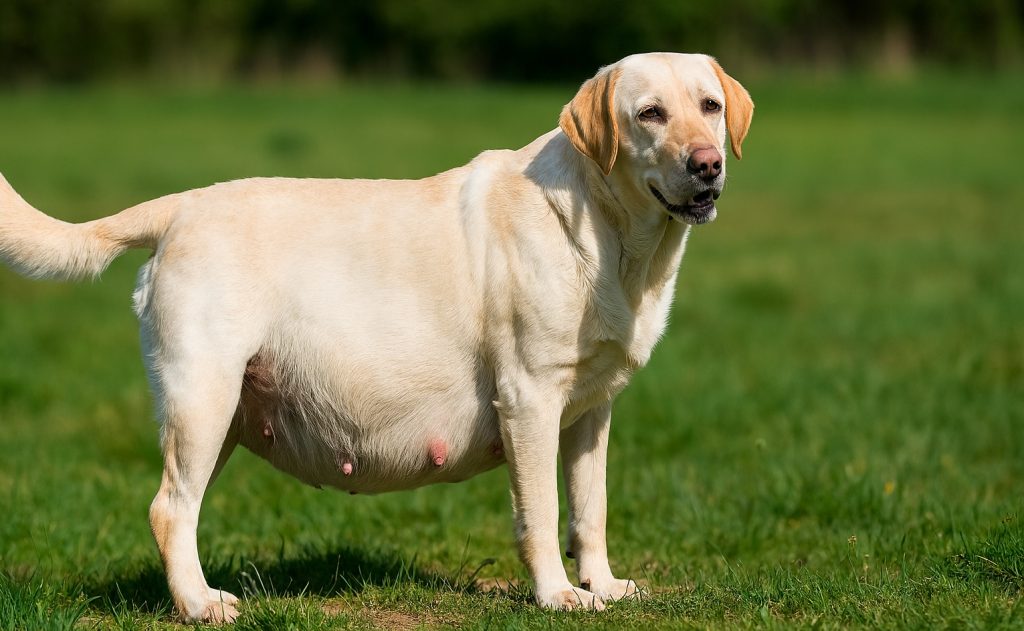
- Swollen nipples: They get pinker and more noticeable.
- A shift in appetite: Certain dogs become pickier, while others eat more.
- Lethargy: She may take more naps than normal because she is jealous.
- Shifts in behaviour: clingy one moment, distant the next.
- Weight gain: She begins to gain weight.
- Nesting behaviour: She may begin moving blankets around as if she were getting ready for HGTV.
Have you ever seen your dog pretending to build a fort? Nesting is what that is. It’s cute, but a little disorganised.
How Long are Dogs Pregnant?
Let’s get right to the reason you came. Dog pregnancies typically last 63 days, or about two months.
But here’s where things get a little complicated: this time frame can actually vary a little bit, from 58 to 68 days. Why is there a ten-day grace period? The duration is usually determined from the first day of mating because it’s frequently hard to determine the precise moment of conception. Sometimes sperm can live inside the female dog for a few days, delaying fertilization.
What’s important to remember is that a pregnancy lasting less than 58 days often results in premature, sometimes non-viable, puppies. On the flip side, if your dog reaches day 70 and still hasn’t delivered, you need to call your vet immediately. Seriously, don’t pass Go; do not collect $200.
What Are the Basics of Dog Reproduction?
Let’s clear up some quick biology (without sounding like a science textbook, promise).
Female dogs go into heat or estrus about twice a year. During this phase, they’re fertile and capable of conceiving. The heat cycle lasts around 2–3 weeks, and ovulation typically happens around day 9–14.
When mating occurs during this fertile window, sperm can survive inside the female for several days — meaning fertilization doesn’t always happen right away. That’s why predicting due dates can be a bit tricky.
If you ever thought, “Why can’t there just be a clear calendar reminder?” — trust me, every breeder has wished for that too.
How to Tell if a Dog Is Pregnant
Early signs that a Dog is pregnant
In the first few weeks, signs are subtle. You might notice:
- Mild nausea (yes, dogs get morning sickness too)
- Slight weight gain
- Mood swings (she’s not mad, she’s hormonal)
Dog behaviour during pregnancy
Pregnant dogs can be a little… dramatic. Expect:
- Clinginess: She might follow you everywhere.
- Restlessness: Especially at night.
- Protectiveness: She might guard her space more.
Should I keep my pregnant Dog indoors?
Yes, please. Pregnant dogs need a calm, safe environment. No rough play, no wild dog park adventures. Think spa vibes, not chaos.
Dog Pregnancy Stages
So what actually happens inside that belly during those 63 days? Let’s go week by week through the three main trimesters.
First Trimester (Weeks 1–3)
During the first three weeks, you might not notice much at all. The fertilized eggs travel to the uterus and start implanting.
Your dog may:
- Seems a bit tired or off her food
- Experience mild nausea
- Act moodier than usual
She’s not just being dramatic — her hormones are shifting big time.
Keep her diet normal during this stage. Overfeeding early on doesn’t help (trust me, I’ve tried spoiling mine early — it just caused belly upset 😬).
Second Trimester (Weeks 4–6)
This is where things get real. Puppies are developing tiny organs, bones, and fur. You’ll notice:
- A clear baby bump is forming
- Increased appetite
- Weight gain (20–50% more than usual by week 6)
- Larger nipples and maybe milk production
This is a good time to switch to high-quality puppy food, which provides more protein and nutrients.
Also, no heavy exercise. Gentle play and short walks only — think prenatal yoga, not CrossFit. 😉
Third Trimester (Weeks 7–9)
The home stretch! Your dog’s belly will be visibly round, and you may even feel little kicks. (Yes, it’s as adorable as it sounds.)
She’ll start nesting — rearranging blankets, digging in her bed, or stealing your laundry to make a “den.”
At this stage:
- Feed smaller, frequent meals
- Keep her calm and cozy
- Prepare a whelping area (more on that soon)
Her temperature will drop about 24 hours before labor — usually below 100°F (37.8°C). That’s your heads-up: puppies incoming!
What happens during a normal Dog birth?
Here’s the play-by-play:
- Stage One: Restlessness, panting, nesting
- Stage Two: Active labor—puppies start arriving!
- Stage Three: Delivery of placenta
Each puppy might take 30–60 minutes to arrive. If it’s longer than 2 hours between pups, call your vet. No heroics—just help.
How do I care for a pregnant Dog?
Your job during your dog’s pregnancy is simple: keep her happy, healthy, and stress-free. Your care routine will need to adjust slightly as her due date approaches.
Diet for a Pregnant Dog
- Feed high-quality puppy food during the last 3–4 weeks.
- Add small, frequent meals as her belly grows.
- Avoid calcium supplements unless prescribed — too much can harm both mom and pups.
Parasite Prevention for Pregnant Dogs
Fleas and worms can cause complications. Always use vet-approved preventatives. Never self-medicate — even “natural” remedies can be risky.
Vaccinations for Pregnant Dogs
Ideally, vaccines should be up to date before breeding.
If she’s due for shots, ask your vet first — some vaccines aren’t safe during pregnancy.
Illness in Pregnant Dogs
Watch for:
- Vomiting or diarrhea that lasts more than a day
- Loss of appetite
- Excessive panting or lethargy
These can signal infection or pregnancy complications — call your vet immediately.
Getting Ready for Labor and Delivery
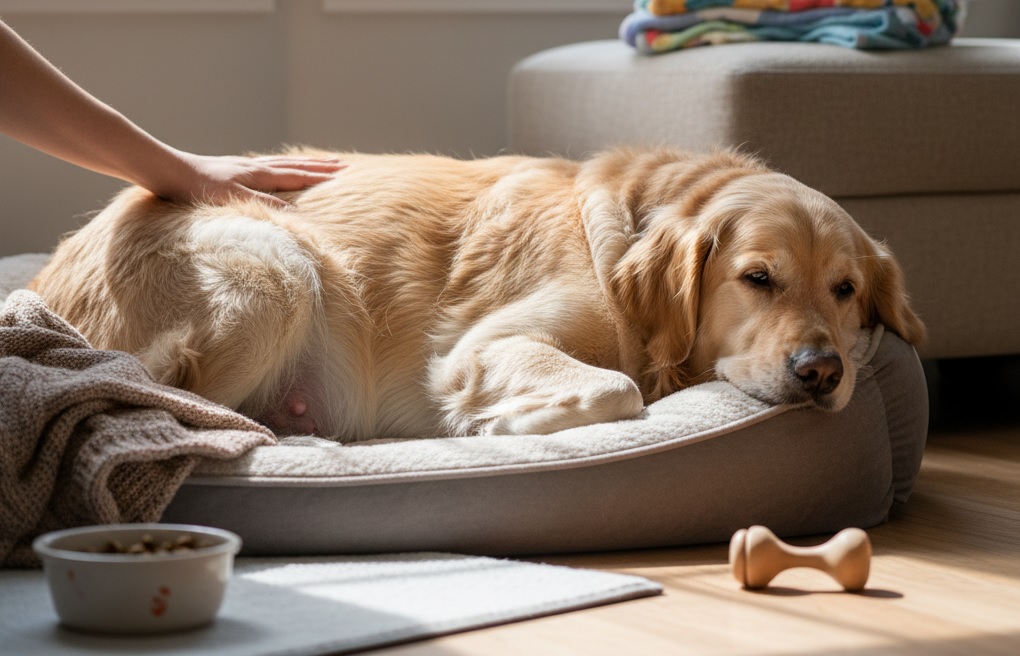
Preparation is key to reducing stress on both you and your dog. You need a designated, quiet space—a whelping box.
What you need in your Whelping Box:
- A Safe, Draft-Free Area: A large cardboard box or a plastic kiddie pool works great.
- Towels and Newspapers: Use plenty of clean, soft bedding. Old towels are great for clean-up.
- Heat Source: A heating pad set on low and placed under a blanket for the puppies (never directly on the floor or the puppies). Puppies can’t regulate their temperature.
Supplies: Keep clean scissors (in case you need to cut a cord), dental floss (to tie a cord), iodine (to dip the puppy’s navel), and a scale (to weigh the newborns) nearby.
Signs Your Dog Is in Labor
Keep an eye out for these classic signs:
- Drop in body temperature below 100°F
- Refusal to eat
- Nesting and restlessness
- Clear discharge
- Visible contractions
Once contractions start, pups usually arrive within a few hours. If no puppy appears after 2 hours of strong labor — call your vet.
Posts navigation
Looking for more info? Bookmark this guide and check out related posts on puppy care, dog nutrition, and post-birth recovery.
Dog giving birth for the first time
First-time moms need extra TLC. Stay calm, stay close, and don’t panic if she looks confused. She’ll figure it out—with your help.
How do I care for newborn kittens?
Once those wriggly pups arrive, it’s go-time.
Here’s what to do:
- Make sure each puppy finds a nipple to nurse.
- Keep them warm — newborns can’t regulate body temperature.
- Replace soiled bedding daily.
- Weigh pups daily for the first week to ensure they’re gaining.
Avoid touching them too much for the first few days. Mom needs bonding time.
How Many Kittens Can a Dog Have?
Again, we’re talking about puppies! The size of a dog litter can vary wildly depending on the breed and size of the mother.
- Small Breeds: Might have only 1 to 4 puppies.
- Large Breeds: Often have 8 to 12 puppies or even more!
- Average: Most medium-sized dogs have an average litter of 5 to 6 puppies. Daisy had seven, which felt like a million, but was right on target for her size.
At What Age Can a Dog Get Pregnant?
Dogs can technically get pregnant as early as 6 months old, but that’s way too young.
It’s best to wait until your female dog is at least 2 years old, when her body is mature enough to handle pregnancy safely.
Think of it like teenage humans — just because it’s possible doesn’t mean it’s smart.
Frequently Asked Questions
How many times can a Dog get pregnant in a year?
Technically? Twice. But that’s not ideal. Give her time to recover between litters.
How long is a Dog’s pregnancy week by week?
Here is a summary:
Fertilization occurs in weeks 1-2; implantation occurs in weeks 3-5; organ development occurs in weeks 5.6–7; and growth and birth preparation occur in weeks 7–9.
Is it possible for dogs to become pregnant while nursing?
Yes, but it’s tiring and dangerous. Before considering another litter, let her rest.
Should I spay my Dog after birth?
Yes, if you’re not planning more litters. It prevents health issues and overpopulation.
Can I touch newborn kittens?
Still puppies, but yes—you can touch them gently. Just wash your hands and avoid strong scents.
What if my Dog rejects her kittens?
It happens. Step in with bottle feeding and warmth. Call your vet for guidance.
Do Dogs need help giving birth?
Usually, no. But stay nearby in case she struggles or a puppy gets stuck.
Can I bathe a pregnant Dog?
Yes, but keep it gentle and warm. No harsh shampoos or slippery tubs.
Final Words
So, how long are dogs pregnant? Just 63 days, but those two months are packed with changes, cuddles, and a whole lot of puppy prep. Whether you’re a seasoned dog parent or a first-timer, this journey is unforgettable.
And hey—if you’re anything like me, you’ll cry a little when those tiny paws arrive. 🐾
Got questions or stories to share? Drop them in the comments or shoot me a message. Let’s