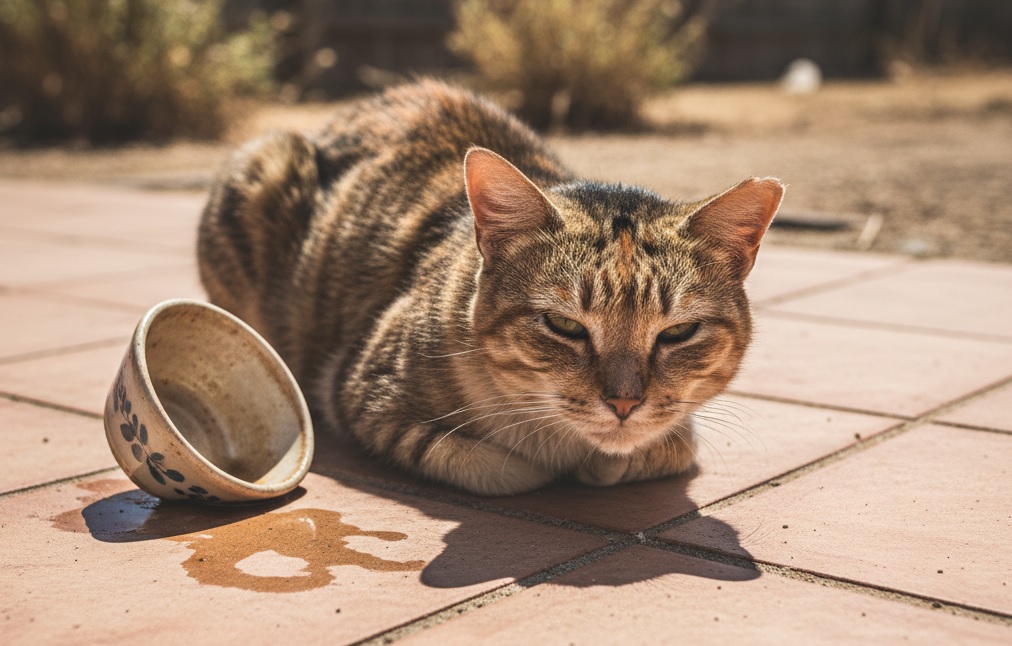
Have you ever noticed that your cat’s water bowl hasn’t been used for, say, two days? “How long can a cat survive without water?” sparked the panic. Believe me, I’ve been there. It can feel like a personal slight to watch your furry master disregard the life-saving solution you kindly supplied. The reality is that cats can live without water for a brief period of time, but things quickly become dangerous.
I’ll go over the frightening dangers of dehydration, how long cats can go without water, and what to do if your cat won’t drink in this guide. Think of this as your no-fluff, friendly cat-parent chat with a mix of facts, tips, and a dash of humour—because stressing over your cat shouldn’t feel like studying for a biology exam.
What is Hydration?
Hydration means having enough water in the body to perform all those vital functions—think digestion, blood flow, temperature control, and even keeping your cat’s coat shiny. Water is obviously a big deal because it makes up around 60% of a cat’s body weight. Systems quickly falter when there is insufficient H2O.
Understanding a Cat’s Water Needs
Cats evolved from desert dwellers, so they’re not natural water-chasers. Domesticated felines often get moisture from their food, but that alone usually isn’t enough.
How Much Water Do Cats Need?
On average, cats need about 3.5–4.5 ounces of water per 5 pounds of body weight every day. That means a 10-pound kitty should drink around 7–9 ounces daily.
But here’s the catch: if your cat eats wet food, they’re already getting a lot of hydration. Dry kibble eaters, on the other hand, need to drink more actual water. So if your cat’s food bowl looks more like a desert than their natural habitat… You see the problem.
What Happens if a Cat Doesn’t Drink?
When a cat skips water, their body starts pulling fluids from tissues and organs to stay alive. Sounds dramatic, right? It is. Dehydration stresses their kidneys, messes with digestion, thickens the blood, and leaves them feeling sluggish. Without water, a cat’s survival clock starts ticking.
How Long Can Cats Go Without Water?
If you guessed a couple of days, you’re in the ballpark. Most healthy adult cats can survive 3–4 days without water, but “survive” doesn’t mean “thrive.” Beyond 48 hours, organ damage starts in earnest, and going past day three is a serious gamble. Ever wondered why dehydration kills faster than starvation? Water’s involved in nearly every chemical reaction inside your cat’s body.
Reasons Your Cat Isn’t Drinking Water
Why would the cutest creature alive risk dehydration? Here are some top offenders:
- Bowl placement: Near the litter box or loud appliances? Nope.
- Water temperature: Too cold or stale can be off-putting.
- Bowl style: Some cats hate plastic; they prefer ceramic or glass.
- Illness: Dental pain, kidney issues, or infections make drinking uncomfortable.
Addressing these can often fix the problem fast—no vet trip required (but see “When to head to the vet” later).
Factors That Influence How Long a Cat Can Go Without Eating and Drinking
Every cat is unique. These six factors tweak survival time:
Age and Life Stage
Kittens dehydrate faster—hello, tiny bodies and big growth spurts. Seniors often have medical issues that sap fluids.
Health Conditions
Kidney disease, diabetes, or urinary tract issues make hydration absolutely critical. If your cat has any of these, even a short water strike can be dangerous.
Diet Composition
Wet food is about 70–80% water, while dry kibble sits around 10%. The more wet food you serve, the less your cat depends on the water bowl.
Environmental Factors
Hot weather, dry air, or heated homes mean more water loss. Ever noticed your cat sprawled on the tiles in summer? Yep, they’re overheating.
Water Quality and Water Presentation
Chlorinated tap water vs. filtered or bottled water can taste wildly different. Some cats prefer running water—FYI, a fountain can skyrocket their intake.
Picky Eaters, Picky Drinkers?
If your cat only drinks out of your glass and not their bowl—congratulations, you own a diva. But hey, at least they’re hydrated!
Signs of Dehydration in Cats
Spotting dehydration early can save your cat’s life. Watch for:
- Sunken eyes and dull coat
- Dry, tacky gums instead of wet and slippery
- Skin “tenting”: gently pinch skin at the scruff—if it stays up, your cat’s dehydrated
- Lethargy and decreased appetite
- Constipation or hard, dry stools
Pro tip: If you’re unsure, trust your gut. Cats hide illness like pros, so visible dehydration is usually a red flag.
What To Do If Your Cat Isn’t Drinking Water
If your cat goes without water for 2–3 days, dehydration hits hard. Their organs start shutting down, toxins build up, and the risk of fatal kidney damage skyrockets. Honestly? Don’t wait that long. You’ve got options:
- Switch bowls: Try ceramic, stainless steel, or even a shallow dish.
- Relocate water stations: Keep them away from food, litter, and noisy appliances.
- Offer wet food: Increase moisture via canned food or water-rich toppers.
- Add flavour: A splash of low-sodium chicken broth can be irresistible.
- Invest in a fountain: The running water entices many cats—IMO, worth every penny.
Keep monitoring. You’ve got this covered if your cat drinks more water and gets perks within a day. Otherwise, refer to the section on “When to head to the vet.”

What Happens if Cats Don’t Drink Water for a Few Days?
By day two, dehydration affects:
- Kidney function: Waste builds up in the bloodstream.
- Electrolyte balance: Sodium and potassium go haywire, risking heart arrhythmias.
- Digestive tract: Reduced secretions cause digestive issues.
By day three or four, multi-organ failure can set in. It’s a grim scenario—so let’s not let it get that far, alright?
When to Visit the Vet
Avoid using DIY solutions and seek professional assistance if your cat exhibits any of these warning signs:
- Severe lethargy or unresponsiveness;
- Blood in the urine or stool;
- Refusing all water for more than 24 hours;
- Rapid breathing or panting
Your veterinarian can perform examinations, give intravenous fluids, and address underlying problems before they become irreparable.
How Long Can a Cat Go Without Food?
Cats handle fasting better than water deprivation. A healthy adult might last 7–10 days without food, thanks to fat stores. But don’t test this at home—extended fasting risks hepatic lipidosis, a dangerous liver condition. Kittens and seniors have fewer reserves, so the clock ticks faster for them.
What to Do If Your Cat Stops Eating or Drinking
When your cat refuses both food and water, it’s a double emergency. You can:
- Warm up wet food to make it smellier.
- Offer baby food (chicken flavour, no onion/garlic).
- Use a syringe with water (vet guidance only).
- Call the vet immediately—don’t play guessing games.
Document intake and behaviours—your vet will thank you for the details.
Form the Perfect Feeding Plan
Consistency and variety keep cats interested and hydrated. This is a basic blueprint:
50% wet food and fresh water in a ceramic bowl in the morning; a small portion of dry kibble and access to a water fountain for an afternoon snack; 50% wet food combined with low-sodium broth in the evening; and, for the night, turning on the fountain or leaving an extra water dish in a peaceful area
Regularly switch up the flavours and give each sip a compliment or a small treat. Good habits are encouraged by positive energy.
Frequently Asked Questions
How long can a cat survive without food and water?
Only 3–4 days without water and about a week or two without food. But both combined? Way less.
Can cats survive without water for 3 days?
Some might, but their health will take a huge hit. Don’t risk it.
How long can a kitten survive without food and water?
Kittens dehydrate fast. 24 hours without water can be life-threatening.
How long can cats go without water in heat?
In hot weather, dehydration can strike within a day. Always provide extra bowls in summer.
Can cats survive without water?
Short answer: No. Every cat needs water to survive. End of story.
Final Words
Although it requires attention, keeping your cat hydrated isn’t difficult. Little adjustments can have a big impact on feeding schedules and bowl style. You’ll know precisely what to do and why the next time you hear that wailing meow from an empty dish. Never undervalue the power of a full water bowl and remain alert and inquisitive. Purrs and cuddles—or at least fewer side-eye comments—will be your cat’s way of saying “thank you.” 😉
Raise a glass of water (for you and your feline companion) and share these tips with other cat lovers if you’ve learned anything new today!