You know that feeling when you’ve been out in the sun too long, mouth dry as the Sahara, and all you want is a giant glass of water? Yeah, your dog feels the same way—but unlike you, they can’t open the fridge or grab a bottle. So, how long can a dog survive without water? Spoiler alert: not very long! 😬
As a fellow dog parent who once panicked because my pup refused to drink for half a day (true story), I can tell you—hydration is no joke. Dogs rely on water for almost every bodily function. Without it, things can go downhill pretty fast.
Let’s review everything you need to know, including what’s safe, what’s not, and what to do if your dog starts drinking excessively.
What is Hydration?
Drinking water isn’t the only way to stay hydrated. It involves keeping the proper fluid balance in your dog’s body to ensure that everything functions properly, including digestion and temperature regulation. Consider it analogous to the oil in an automobile engine. No oil? The grind begins. The same is true for water and dogs.
Understanding a Dog’s Water Needs
Every dog is unique—like snowflakes, but cuter and droolier.
How Much Water Do Dogs Need?
Here’s the general rule of paw:
👉 Dogs need about 1 ounce of water per pound of body weight each day.
So, if your dog weighs 30 pounds, they need roughly 30 ounces (about 4 cups) of water daily.
But that’s just the average. Factors like age, diet, weather, and activity level can double or even triple that number.
Example:
- Lazy indoor pug? Maybe less.
- Hyper Labrador chasing squirrels in 90°F weather? Double it.
Pro tip: Always keep water available—even if your dog’s acting like a diva about drinking it.
What Happens if a Dog Doesn’t Drink?
When a dog stops drinking, the body immediately goes into resource management mode. It starts pulling water from its cells to maintain blood volume, which is vital for organ function. This is where the trouble begins.
The blood thickens, making the heart work much harder to pump it. Kidneys, which are basically the body’s filtration system, can’t properly flush out toxins like urea. These toxins build up, putting immense stress on the entire body. Dehydration is a cascading failure. If not addressed quickly, it leads to kidney failure, shock, and ultimately, organ shutdown.
How Long Can Dogs Go Without Water?
Most healthy adult dogs can survive 3 to 5 days without water, but that’s pushing it. Dehydration symptoms can show up in just 24 hours. Puppies, seniors, and sick dogs? They’re even more vulnerable.
So yeah, don’t test this theory. It’s not a fun science experiment.
How to Check for Dehydration
Skin Elasticity Test
Gently pinch the skin between your dog’s shoulder blades. If it snaps back quickly—yay, they’re hydrated. If it stays tented? Dehydration alert.
Gum Check
Lift their lip and touch the gums. Healthy gums are moist and pink. Dry or sticky gums? Time to act.
Reasons Your Dog Isn’t Drinking Water
If your dog suddenly gives their water bowl the cold shoulder, there’s always a reason:
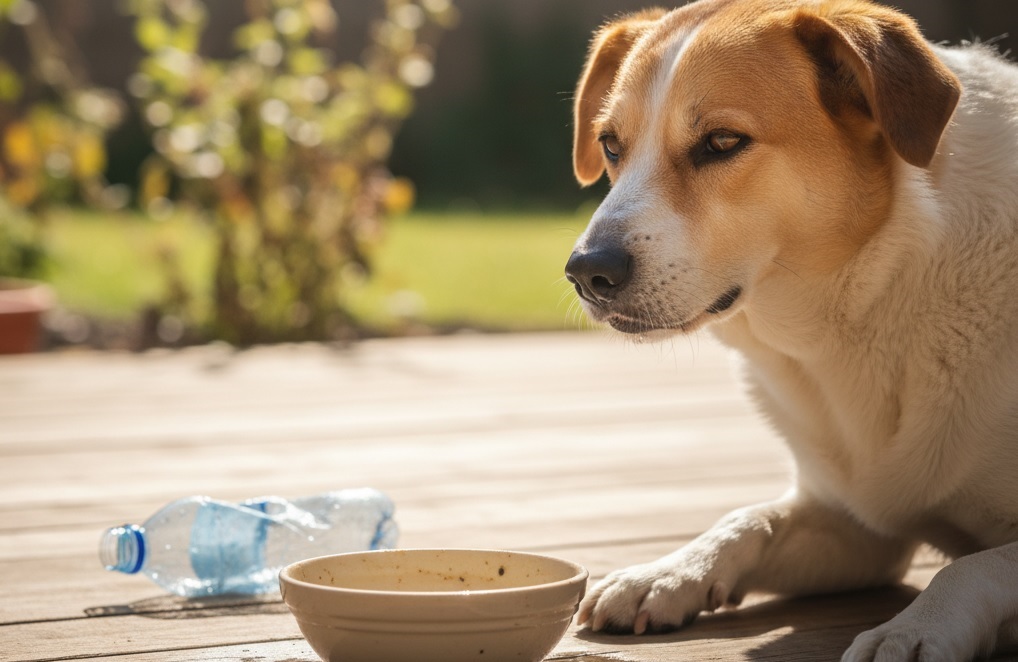
- Dirty bowl – You wouldn’t drink from a slimy cup, right?
- Change in routine – Dogs are creatures of habit; even moving the bowl can confuse them.
- Illness or pain – Mouth sores, tooth pain, or nausea can make drinking uncomfortable.
- Fear or stress – Loud noises or a new environment can freak them out.
- Temperature – Cold weather can lower their thirst drive.
👉 Tip: Try offering fresh, room-temperature water or even ice cubes—many dogs find it irresistible.
Signs and Symptoms of Dehydration
Beyond the simple gum and skin checks, your dog will often exhibit behavioural and physical signs that they are running on empty.
Lethargy and Weakness
Is your dog suddenly acting like a lazy potato? That’s not normal. Dehydrated dogs lack energy and enthusiasm.
Sunken, Dry-Looking Eyes
As the tissues around their eyes lose fluid, their eyes can appear less plump and almost look like they’ve sunk back into the socket. This is a sign of moderately severe dehydration.
Excessive or Heavy Panting
Panting is how dogs cool down. If they are panting heavily without strenuous activity, their body is desperately trying to regulate a high temperature, a common side effect of dehydration.
Loss of Appetite
Dehydrated dogs often lose interest in their kibble. They might feel nauseous, or their dry mouth makes chewing and swallowing uncomfortable.
Dry Nose
A dry nose alone isn’t always serious—but if it’s paired with other symptoms, it’s a red flag.
Thick, Ropy Saliva
Instead of normal, watery drool, their spit might look stringy, thick, and incredibly sticky. This is a clear indicator that the body is conserving every drop of water.
Dark, Concentrated Urine or Decreased Urination
If your dog’s pee is suddenly a dark yellow-orange and they haven’t gone to the bathroom as often, the kidneys are working overtime to conserve water.
Factors That Influence How Long a Dog Can Go Without Eating and Drinking
Each dog has a unique hydration clock. This is the reason:
Age and Life Stage
Elderly people and puppies lose fluids more quickly. They have less robust systems.
Health Conditions
Dehydration can be accelerated by illnesses like diabetes, kidney disease, or vomiting or diarrhea.
Diet Composition
Compared to dogs on wet or raw diets, dogs on dry kibble require more water.
Environmental Factors
Hot, humid days or intense exercise? Double that water intake.
Water Quality and Water Presentation
Would you drink stale tap water from a rusty bowl? Neither would your dog.
Picky Eaters, Picky Drinkers?
Oh, absolutely. Some dogs want “fancy” hydration—try filtered water or a pet fountain. (Yes, they’re bougie, but they work!)
What To Do If Your Dog Isn’t Drinking Water or Dehydrated
You’ve noticed your dog’s dehydrated—now what?
Mild Dehydration
- Offer fresh, clean water.
- Add a splash of chicken broth (unsalted) to tempt them.
- Try ice cubes for dogs who love crunching.
- Use a syringe (without a needle) to gently squirt water into their mouth if needed.
Severe Dehydration
This is an emergency. Take your dog to the vet immediately. They’ll need IV fluids and possibly electrolyte support.
How to Prevent Dehydration
Prevention is truly the easiest medicine. It’s mostly common sense, but a quick checklist never hurt anyone.
- Multiple Water Stations: Keep bowls in several easy-to-access spots, especially for senior dogs.
- Always Carry Water: Never leave the house for a walk without a portable water bottle and bowl for your dog.
- Cleanliness is Key: Wash the water bowl daily. Not just a quick rinse—use soap and scrub away the slime.
- Consider a Fountain: Many dogs love the moving, fresh water of a pet fountain, which can encourage more drinking.
- Wet Food Boost: If your dog is perpetually on the drier side, consider supplementing their kibble with high-quality wet food.
What Happens if Dogs Don’t Drink Water for a Few Days?
If your dog refuses water for more than 24 hours, dehydration sets in fast:
- Organs stop functioning properly.
- Electrolyte balance collapses.
- Blood pressure drops.
- In extreme cases, coma or death can occur.
That’s why the answer to “How long can a dog survive without water?” should never be tested in real life.
When to Visit the Vet
If you’ve done the at-home checks and your dog shows any signs of moderate to severe dehydration, or if they have refused water for more than 12-24 hours, go to the vet now. Don’t mess around. Better to look a little overprotective than to wait and face a serious emergency.
You should also consult the vet if your dog is drinking excessive amounts of water, as this can be a sign of underlying conditions like diabetes or kidney disease.
Form the Perfect Feeding Plan
To ensure your dog is always hydrated and fed, establish a simple routine:
- Schedule Check-Ins: Commit to checking the water bowl at least three times a day.
- The Power of Wet: Incorporate some moisture-rich food into their diet.
Monitor Output: Pay attention to their peeing. Consistent, light-yellow urine is a great sign.
Frequently Asked Questions
How long can a dog survive without food and water?
Most dogs last 2–3 days without water and 3–5 days without food, but survival doesn’t mean healthy. Always intervene early.
Can dogs survive without water for 3 days?
Technically yes, but barely. By day three, your dog’s organs are under serious stress.
How long can a kitten survive without food and water?
Kittens are fragile—12–24 hours tops. After that, it’s life-threatening.
How long can dogs go without water in heat?
In high temperatures, dogs can show dehydration in as little as 6 hours. Always carry water outdoors.
Can dogs survive without water?
Not at all. They may be able to get by for a while without it, but they cannot live for very long.
Final Words
So, how long can a dog survive without water? Not long enough to risk it. Dehydration is sneaky, fast, and dangerous. Whether your pup’s being picky or you just forgot to refill the bowl (been there), staying on top of hydration is key.
And hey, if you’re ever unsure—trust your gut and call the vet. Better to be the overprotective dog parent than the regretful one.
Now go hug your dog and check their water bowl. You know you want to. 😊