Ever caught your dog snoozing for the tenth time today and thought, “Seriously, how much do dogs sleep?” You’re not alone. I’ve asked myself that question countless times while watching my pup snore like a tiny chainsaw. Dogs sleep a lot—sometimes more than we expect—and their sleep needs change depending on age, breed, and lifestyle. Let’s break it down together in a fun, conversational way so you’ll know exactly what’s normal and when to worry.
What is the Connection Between Your Dogs Age and Their Sleep?
Age controls your dog’s sleep schedule more than you might expect. Puppies crash like toddlers after birthday cake. Seniors nap like retired uncles on a Sunday afternoon.
Dogs sleep to support brain development, muscle repair, and emotional balance. Younger dogs burn energy faster, while older dogs need rest to recover. Ever noticed how a puppy passes out mid-play? That’s biology doing its thing.
I always tell new dog parents this: your dog’s sleep changes because their body changes. Ignore age, and you’ll misunderstand their needs.
How Much Do Dogs Sleep?
On average, dogs sleep between 12–14 hours per day. Puppies and seniors often clock in more, sometimes up to 18–20 hours. Breed, size, and lifestyle also matter. Ever noticed how a working dog seems more alert while a giant breed sprawls out like a couch potato? That’s no coincidence.
Sleep by Age
Every stage of life brings a different sleep requirement. If you try to compare a Golden Retriever puppy to a 10-year-old Lab, you’re going to see two very different versions of “tired.”
Puppies (0–12 months)
Puppies sleep a lot. I mean, blink-and-they’re-out kind of sleep.
A puppy typically sleeps 18–20 hours a day. Their brains grow rapidly, and sleep fuels that development. Every nap helps them learn commands, remember routines, and process new experiences.
Puppies also lack stamina. They zoom, crash, repeat. Totally normal. If your puppy naps constantly, relax—you’ve got a healthy pup.
Adult Dogs (1–7 years)
Once a dog hits adulthood, their sleep schedule stabilizes. Most adult dogs settle into that 12 to 14-hour range. They usually mirror your schedule, sleeping when you sleep and taking long naps while you’re at work.
Active adult dogs might sleep less during the day if they have a “job” to do. If I take Barnaby for a five-mile hike, he might log 15 hours of sleep to recover. If we just hang out in the backyard, he stays more alert. Activity levels directly influence sleep depth and duration.
Senior Dogs (7+ years)
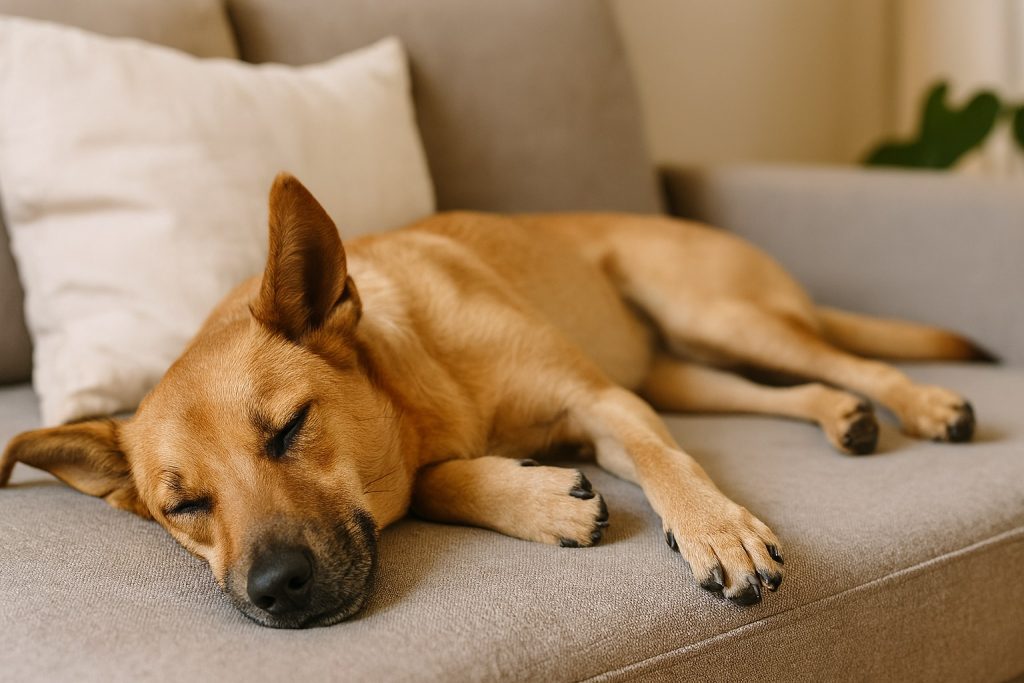
Senior dogs nap like professionals. Aging slows metabolism and stiffens joints, so rest helps them recover.
Older dogs often sleep 14–18 hours per day. They also wake more often at night. My senior dog started pacing at 3 a.m., and yep—that came with age.
Joint pain, vision loss, or anxiety can disrupt senior sleep. Comfort matters more now than ever.
Sleep by Breed and Size
Size matters when it comes to the snooze button. It seems counterintuitive, but the biggest dogs in the world are often the biggest fans of the sofa.
Small/Toy Breeds
Chihuahuas, Pomeranians, and Yorkies are often high-strung and alert. While they still need their 12+ hours, they tend to sleep in shorter, more frequent bursts. They are the “security guards” of the dog world, frequently waking up at the slightest sound of a squirrel sneezing three blocks away.
Medium Breeds
Medium breeds strike a balance. Think Beagles, Border Collies, or Bulldogs. They usually sleep 12–14 hours. Activity level matters here. A bored medium dog naps more. A busy one sleeps deeper.
Large and Giant Breeds
Have you ever met a Great Dane or a Saint Bernard? We affectionately call these “mat dogs.” Because it takes so much energy just to move their massive frames, they sleep significantly more than smaller dogs. Giant breeds often clock 18 hours of sleep even as adults.
I once knew a Mastiff who spent so much time sleeping in the hallway that the family eventually just started walking over him. He didn’t care. To a giant breed, the entire world is just one giant bed with occasional snacks.
Working Breeds
Working breeds like Huskies, German Shepherds, and Malinois sleep less when stimulated. They average 10–12 hours, but boredom pushes that number up fast. These dogs need jobs. Without tasks, they nap out of frustration—or chew your couch :/.
Put Your Puppy on a Sleep Schedule
If you have a puppy, you know that an overtired dog is basically a furry toddler having a meltdown. They get “the zoomies,” start nipping at your ankles, and lose the ability to listen to basic commands. Establishing a strict sleep schedule is the best thing you can do for your sanity.
Try the 1-to-2 rule: for every one hour of play and training, give them two hours of enforced nap time in a crate or a quiet room. This prevents them from becoming overstimulated and helps with potty training.
A sample schedule might look like this:
- 7:00 AM: Wake up and potty.
- 7:30 AM: Breakfast and play.
- 8:30 AM – 10:30 AM: Nap time.
- 10:30 AM: Potty and training.
- 11:30 AM – 1:30 PM: Nap time.
Does this seem like a lot of sleeping? Perhaps. But it ensures your puppy’s brain doesn’t “short circuit” from too much excitement.
How Often Do Dogs Nap During the Day?
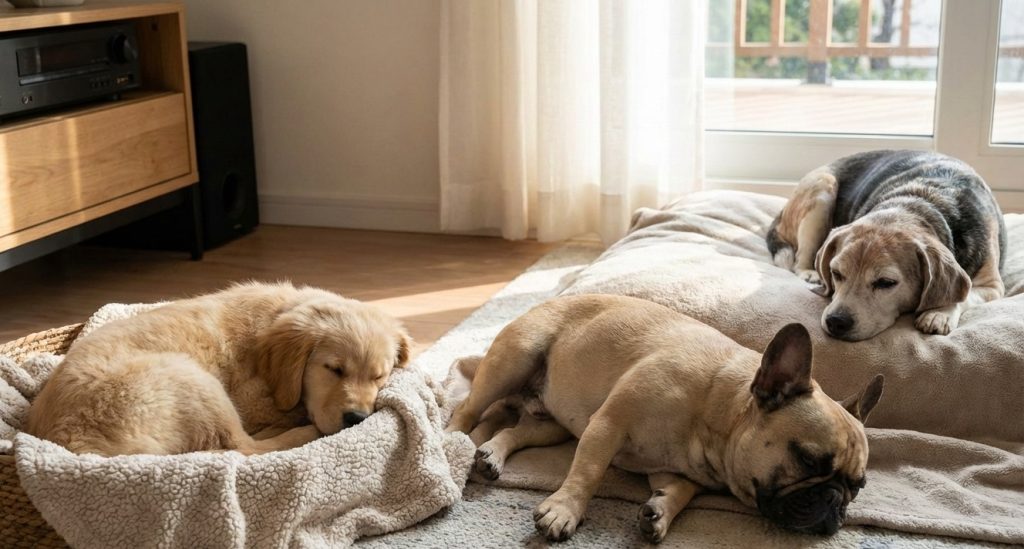
Dogs nap multiple times daily. Puppies nap every couple of hours, while adults take 2–3 naps. Seniors nap whenever they feel like it—kind of like retired folks enjoying their freedom.
Dogs use short naps to recharge. These naps support:
- Memory
- Mood regulation
- Physical recovery
Ever notice your dog nap after sniffing the yard? Mental work tires dogs out fast.
Why Do Dogs Sleep So Much?
Besides the biological need for rest, several environmental and physical factors play a role in how many Z’s your dog catches.
Life Stage
As we discussed, puppies and seniors occupy the high end of the spectrum. Their bodies are either building or breaking down, both of which require immense energy. Growth and aging are the primary drivers of sleep duration.
Breed
Genetics play a massive role. A Greyhound is built for sprinting and then lounging for 20 hours. A Jack Russell Terrier is built for… well, I’m not sure what they’re built for, but it involves never stopping. Breed-specific energy levels dictate how much “recharge” time a dog needs.
Home Life
Is your house a chaotic hub of children and activity? Your dog might sleep less because they don’t want to miss the fun. Conversely, if you live a quiet, sedentary life, your dog will likely follow suit. Dogs are social sleepers and often synchronize their rest with their humans.
Boredom
Dogs nap when they’re bored. Ever seen a dog sigh dramatically before flopping down? Classic boredom nap.
Illness or Depression
Excessive sleep can signal pain or emotional distress. Sudden changes matter.
Which Sleep Behaviours Are Concerning?
Most dog sleep behaviors are totally normal, even the weird ones. Twitching, muffled barking, and “paddling” legs just mean they are dreaming about chasing that neighbor’s cat. However, keep an eye out for these red flags:
- Sudden extreme lethargy
- Trouble waking
- Nighttime pacing
- Whining during sleep
Healthy sleep looks relaxed, not restless.
Signs Your Dog Isn’t Sleeping Enough
Yes, dogs can suffer from sleep deprivation! An underslept dog is a cranky dog. You might notice:
- Hyperactivity.
- Irritability (yes, dogs get cranky too).
- Excessive barking.
- Poor appetite.
- Nighttime pacing
- Increased anxiety
If your dog isn’t getting enough rest, their immune system can weaken, making them more susceptible to infections. 🙂
Factors That Affect Your Dog’s Sleep Quality
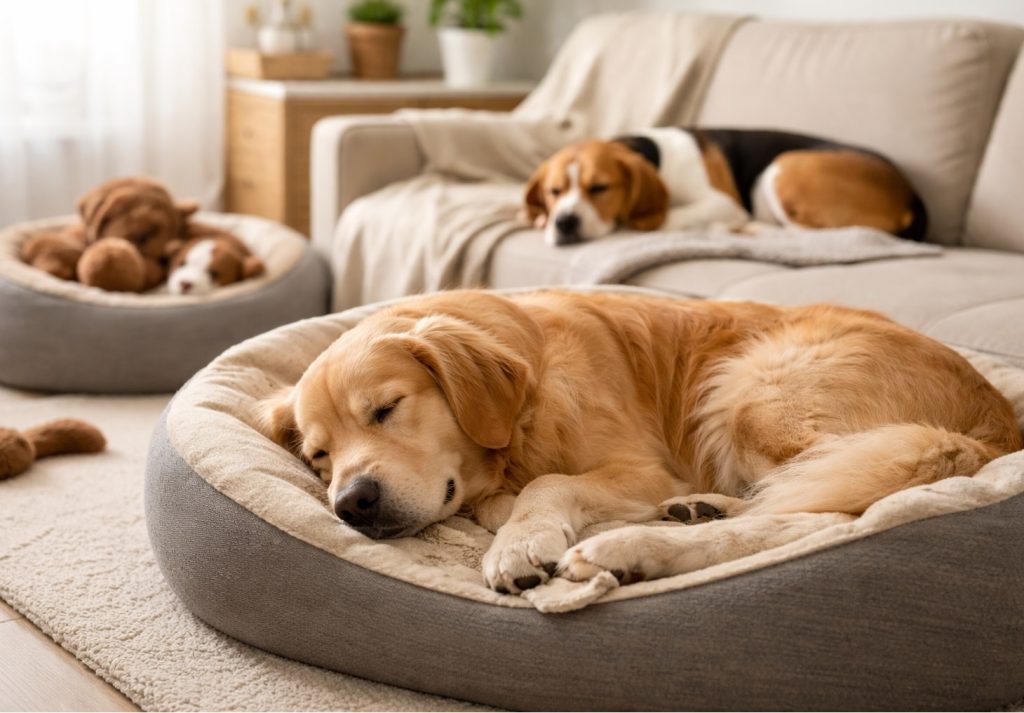
Quantity isn’t everything; quality matters too. Imagine trying to sleep on a cold tile floor versus a memory foam mattress. Your dog notices the difference!
- Diet: Inadequate nourishment interferes with sleep.
- Exercise: Sleep is affected by either too little or too much.
- Environment: Stress and noise lower the quality of sleep.
- Health: Rest is hampered by ailments like anxiety or arthritis.
How to Help Your Dog Sleep Better
Do you want to make sure your dog sleeps as well as possible? You wouldn’t believe how simple it is. The secret ingredient is consistency. Maintain regular routines and offer daily exercise.
Provide mental stimulation; establish a peaceful sleeping area; and give elderly people orthopaedic beds. Little adjustments have a big impact.
Frequently Asked Questions
How much time do dogs spend sleeping at night?
Depending on their age and routine, dogs can sleep for eight to ten hours at night.
How much do dogs sleep per day?
Most dogs sleep 12–14 hours daily, with puppies and seniors needing more.
Why do dogs sleep so close to me?
Because you’re their pack. It’s comfort and security rolled into one.
Why do dogs sleep so much?
Growth, recovery, and boredom all play a role.
Do dogs sleep all night like humans?
Not all the time. For brief intervals, they awaken, but they typically quickly return to sleep.
Do dogs sleep at night?
Indeed, the majority of dogs, particularly those who live indoors, follow human sleep schedules.
Final Words
So, how much do dogs sleep? A lot—sometimes more than you think. Adults balance play and naps, seniors relish their golden sleep, and puppies snooze nonstop. Dogs love sleep, regardless of their breed, size, or lifestyle. And honestly, can you blame them? If I could nap guilt-free 14 hours a day, I’d sign up in a heartbeat. 😉
Keep an eye on your pup’s sleep habits, support their rest with good routines, and enjoy those adorable snores. After all, a happy, well-rested dog makes for a happy home.