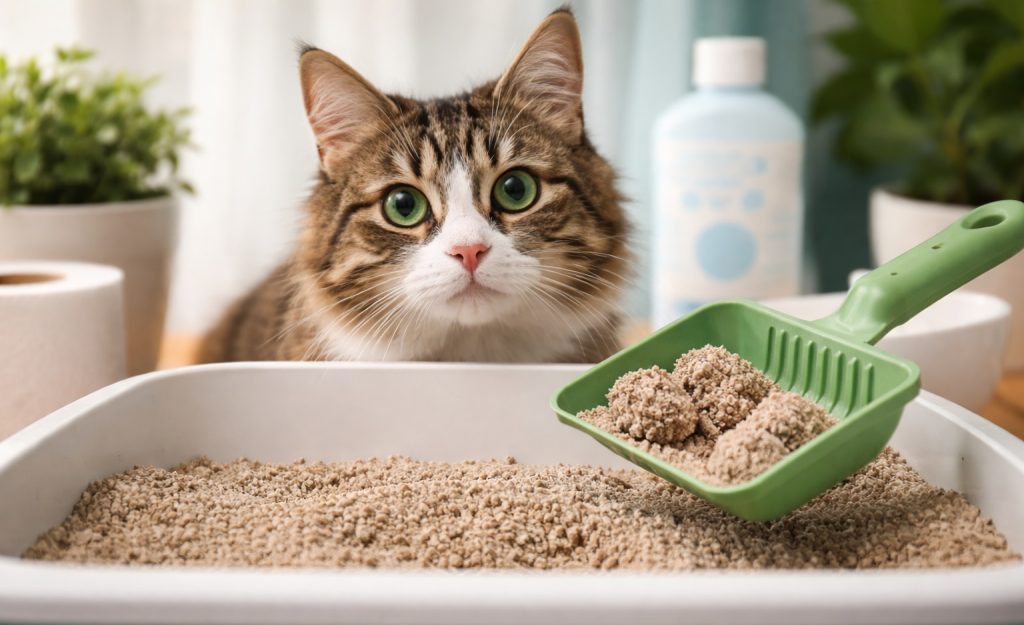
Let’s be real for a second: if you live with a cat, you’ve probably found yourself staring into the litter box like it’s some kind of crystal ball. I know I have. And honestly, it is a crystal ball of sorts — your cat’s poop tells you a ton about their health. So, how often should cats poop? What’s normal, and when should you start worrying?
I’ll admit, I’ve had those moments of panic when my cat skipped a day or left something that looked more like a science experiment than poop. FYI, you’re not alone if you’ve Googled “cat poop frequency” at 2 a.m. 🙂 This article is here to answer that burning question in a friendly, no‑nonsense way. We’ll talk digestion, age differences, weird poop irregularities, and when it’s time to call the vet. Think of this as a chat between fellow cat nerds — with a sprinkle of humor because, let’s face it, poop talk can get awkward.
Understanding Cat Digestion
I call digestion “the magical internal conveyor belt” — food goes in, digestion works its magic, poop comes out, and you scoop it while your cat looks you dead in the eyes like you’re their unpaid intern.
Cat digestion works fast. Food moves through their system in about 10–24 hours, depending on what they eat. Wet food digests faster. Dry food takes longer. Stress basically hits the “pause” button.
If you’ve ever changed their food overnight and suddenly their bowel habits go wild — yep, that’s digestion complaining. I learned that firsthand when I switched my cat to a “premium organic salmon blend” and she punished me by pooping on my pillow. Lesson learned.
How often should cats poop?
Most vets and experienced owners agree that one to two times per day is the gold standard for a healthy adult cat. However, every cat has their own “normal.” My eldest cat, Luna, is a strict once-a-day kind of girl, while my younger tabby acts like he’s trying to set a world record.
Does your cat go every 36 hours instead of every 24? If the consistency looks like a firm brown sausage and they aren’t acting weird, you probably don’t need to panic yet. You really only need to start investigating when their established routine shifts significantly. Consistency in timing and texture actually matters way more than the raw number of trips to the box.
General Guidelines by Age
Just like humans, a cat’s age dictates how their internal plumbing operates. You wouldn’t expect a toddler and a grandparent to have the same bathroom habits, right? The same logic applies to your feline friends.
Kittens
Kittens act like tiny digestive machines. They poop roughly 2–4 times a day. They eat more frequently and their system works fast. If a kitten only poops once per day, it sometimes means they’re dehydrated or constipated.
Adult Cats
Once a cat hits that one-year mark, their metabolism settles into a steady rhythm. Most adult cats settle into a routine of once or twice daily. At this stage, you’ll notice that their diet heavily influences their frequency. Adult cats on high-fiber diets might visit the box more often than those on high-protein, low-residue diets.
Senior Cats
Senior cats often experience slower digestion and reduced activity, which can lead to less frequent bowel movements — sometimes once every 24–36 hours. Occasional delays may be normal, but chronic constipation or straining is not. Older cats are more prone to conditions like arthritis (making litter box visits harder) or megacolon, so any irregularity should be discussed with a vet.
Factors Affecting How Often Cats Poop
Several variables influence how many times your cat leaves you a present. You can’t compare a couch potato cat to a high-energy hunter.
Diet
Diet basically dictates poop law. A cat eating dry kibble produces less frequent, harder poop. A cat eating wet food often poops more often and softer.
- Wet / canned food: triggers more bowel movements
- Dry kibble: lower fiber, risk of constipation
- Raw diets: frequent but smaller stools
- High-fiber diets: great for digestion, but too much = diarrhea
TIP: If you change food, transition slowly over 7–10 days. Trust me, sudden changes equal chaos — emotional and intestinal.
Hydration
Water is the lubricant of the digestive tract. Cats are notoriously bad at drinking enough water because their ancestors evolved to get moisture from their prey. If your cat eats only dry kibble and doesn’t drink much, their stool will become hard, dry, and difficult to pass. Proper hydration keeps the waste moving smoothly through the colon.
Activity Level
An active cat with regular play sessions tends to have a healthier metabolism and more predictable bathroom habits. Sedentary cats may experience slower digestion, which can reduce poop frequency. Encouraging daily playtime helps keep things moving.
Environmental factors
Is the litter box in a loud laundry room? Did you just bring home a new puppy? Stress can shut down a cat’s digestive system or, in some cases, cause a nervous stomach and diarrhea. Cats value their privacy and safety; if they feel threatened while doing their business, they might hold it in, leading to eventual constipation.
General health and health problems
Underlying health issues can significantly affect poop frequency. Constipation, diarrhea, parasites, food intolerances, and chronic conditions like inflammatory bowel disease (IBD) or megacolon all alter bathroom routines. If your cat’s habits change suddenly or persistently, it’s worth consulting a vet.
Improving Your Cat’s Digestive Health
You can actually help your cat maintain a perfect “poop-schedule” with a few simple tweaks. First, prioritize wet food to increase their moisture intake. Most cats find wet food much more biologically appropriate anyway.
Try:
- More hydration
- Slow diet transition
- High-moisture foods
- Regular play
- Fiber supplements (psyllium, pumpkin — vet approved)
- Probiotic treats
- Hairball control formulas
I once added pumpkin without consulting a vet and immediately regretted it. Let’s just say… she pooped like she was trying to break a world record.
Irregularities to look out for
You don’t need to be a scientist to know when something looks “off.” Trust your gut—and your nose.
Going every few days
If your cat only poops every 2–3 days, something’s off. Normal is daily. Longer gaps signal constipation or dehydration.
Overly frequent bowel movements
Pooping 3+ times daily?
Ask:
- Did you change food?
- Stress happening?
- Parasites possible?
- They stole chicken off the counter again?
Cats act chaotic sometimes — but poop chaos deserves attention.
Diarrhea in cats
We’ve all dealt with the “soupy” surprise at 2 AM. Diarrhea is a major red flag because it leads to rapid dehydration. If it lasts more than 24 hours, or if your cat seems lethargic, get them to the vet. It’s often caused by a sudden diet change, but it can also signal serious infections.
Blood in stool
Blood is never normal. It could mean parasites, infections, or something serious.
Something protruding from their behind
Worms, rectal inflammation, or foreign items sometimes peek out. 😬 Never pull anything hanging. Get a vet.
Abnormal Stinkiness
Cat poop smells bad, sure, but if it’s unusually foul, it may signal digestive trouble.
When to See a Veterinarian
Knowing when to worry is the hardest part of being a cat parent. Keep an eye out for these specific “deal-breakers” that require a professional opinion.
Missing 48+ Hours
As mentioned, the 48-hour mark is your “stop” sign. If the box is empty for two days, your cat needs help. Waiting longer just makes the eventual solution more painful and expensive.
Straining
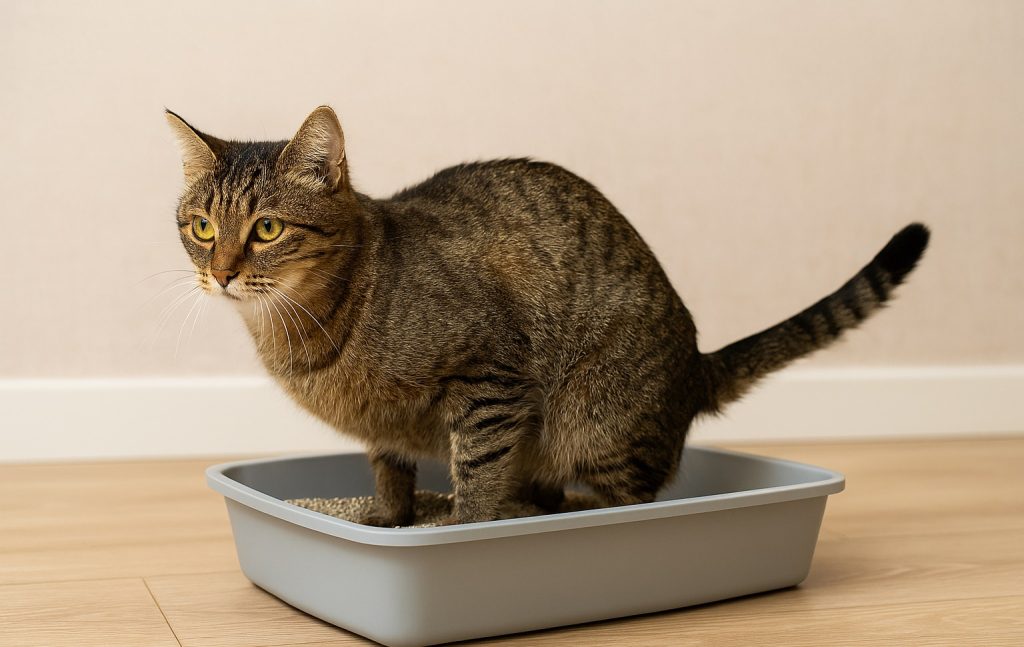
Do you see your cat hunched over in the box, crying out, or straining for minutes with no result? This is a medical emergency, especially for male cats. Straining can look like constipation, but it can also be a urinary blockage, which is life-threatening within hours.
Abnormal Consistency
If the poop is consistently liquid or hard as a marble, the “regular” schedule doesn’t matter. Stool should be firm but pliable, like modeling clay. Anything else suggests a chronic issue with their diet or health.
Color Changes
Normal poop is deep brown. If you see yellow, green, or black, take a photo (yes, really) and show it to your vet. Black, tarry stools are particularly dangerous as they indicate internal bleeding.
Cat Constipation
Chronic constipation often results from a lack of fiber or hydration. If your cat constantly struggles, a vet might prescribe a specific high-fiber diet or a stool softener. Never give your cat human laxatives, as many are toxic to felines.
Cat Diarrhea
Frequent, watery movements will drain your cat’s energy and hydration. If the diarrhea is accompanied by vomiting, you have a “double-ended” emergency on your hands. Vets usually treat this with fluids and bland diets.
Hair in the Cat Stool
Seeing a bit of fur is normal, especially for long-haired breeds. However, if the stool looks like a “fur rope,” your cat is swallowing too much hair during grooming. This can lead to dangerous hairball blockages that stop the entire system.
Foreign Objects
Did your cat eat a hair tie? A piece of tinsel? If you see non-food items in the waste, count yourself lucky they passed it. If you suspect they ate something but don’t see it in the box, keep a very close eye on their appetite and energy levels.
Change in Litter Box Habits
If your perfectly trained cat suddenly starts pooping on the rug, they aren’t being “spiteful.” Inappropriate defecation is a cry for help. They might associate the litter box with the pain of constipation, or they may be dealing with cognitive decline.
How Often Should Cats Pee?
Cats should pee 2–4 times daily. Less could mean dehydration or kidney issues. More could mean diabetes or urinary problems.
Form the Perfect Feeding Plan
Nutrition shapes poop like clay. What you feed becomes what you scoop. It’s true but funny.
Establish mealtimes for regular digestion as part of a great cat poop-healthy diet.
- For balance, combine wet and dry food.
- If constipation is a problem, add fiber.
- Keep an eye on serving sizes to prevent obesity.
I eat wet food in the morning and at night, have a kibble snack in the middle of the day, and keep the water fountain running.
It’s important to maintain balance. Too much wet → diarrhea. Too much dry → constipation. Aim for middle ground.
Frequently Asked Questions
How often do cats poop and pee?
Most cats poop once daily and pee 2–4 times daily.
How often should cats poop a day?
Healthy cats poop once or twice daily.
How often should cats poop on wet food?
Wet food often leads to softer, more regular stools — usually once daily.
After surgery, how frequently do cats poop?
Digestion can be slowed by anesthesia and surgery. Be prepared for delays, but if there is no poop after 48 hours, call the veterinarian.
How often should senior cats poop?
Senior cats may poop every 24–36 hours. Watch for constipation.
Final Words
So, how frequently should cats urinate? In a nutshell, it’s normal to do so once or twice a day. The long answer is that it depends on a number of factors, including age, health, activity, nutrition, and hydration.
Poop is essentially your cat’s health report card. Be mindful of behavior, consistency, and frequency. Trust your instincts and contact the veterinarian if something doesn’t feel right.
The next time you scoop the litter box, keep in mind that you are performing a mini-health check in addition to cleaning up. That makes you a pretty awesome cat parent, in my opinion.