You’ve searched for “How to Bathe a Cat?”. And you’re here now, most likely wondering if you’ve gone insane. I get it. Bathing a cat sounds like something only a daredevil would attempt. But guess what? You can totally do this—and survive with all limbs intact. I’ve bathed my own furball (a sassy tabby named Mochi) more times than I care to admit, and while it’s never a spa day, it doesn’t have to be a horror movie either.
Let’s walk through this together, step by step, with zero fluff and maximum sanity-saving tips.
How to Tell if Your Cat Needs a Bath
Cats are pretty clean by default. They spend a ridiculous amount of time grooming—like, professional-level self-care. So, most of the time, you don’t need to bathe your cat at all.
But sometimes, even the cleanest kitty needs a little help. Keep an eye out for the following symptoms:
- Sticky or oily fur that is difficult for your cat to remove.
- Fleas or skin parasites.
- Strong odors (especially if they got into the trash 🤢).
- Allergies or skin conditions where your vet recommends bathing.
- Elderly or obese cats who can’t groom properly anymore.
If you’re unsure, just remember this: if your cat looks or smells questionable, it’s bath time.
How Often Should You Bathe Your Cat?
This is where common sense prevails. For most healthy, short-haired house cats, the answer is rarely, if ever. You really shouldn’t bathe them more than every 4-6 weeks even if you feel the need. Over-bathing strips their skin and coat of essential oils, leading to dryness and irritation, which defeats the purpose entirely, doesn’t it?
- Long-haired cats: Every 4-6 weeks to help manage mats and tangles.
- Sphynx, a hairless breed, as frequently as once per week.
- Most short-haired cats: When necessary (i.e., when they’re visibly dirty or stinky!).
So IMO, less is more here. Unless your cat decides to dive into a puddle of mystery goo, you’re probably safe skipping bath day.
Should You Bathe Indoor Cats?
IMO? Only if they’re dirty. Indoor cats usually don’t need regular baths unless they’ve gotten into something gross or have health issues.
FYI: Overbathing can strip their natural oils and cause dry skin. So don’t go full spa mode unless it’s necessary.
Prepare for the Bath
Preparation is everything. You wouldn’t go into battle without armour, right?
Gather Supplies
You’ll need:
- Cat-safe shampoo (never use human or dog shampoo!)
- Two towels – one for drying, one for backup.
- A cup or small pitcher for rinsing.
- A brush to detangle fur beforehand.
- Treats. Lots of treats.
Having everything ready will save you from chasing a wet cat around the house mid-bath.
Ready the bath area
A sink or a small wash basin works better than a huge, scary bathtub. A smaller space makes the cat feel more secure and gives them fewer angles to use for escape attempts.
Use lukewarm water
Not hot. Not cold. Just comfortably warm. Cats are picky, and water temperature matters. Test it with your wrist like you would for a baby.
Acclimate your cat
Bring your cat into the bathroom a few minutes early. Let them sniff around and get used to the sounds. Maybe run the water slowly so they realize it’s not a monster.
This step reduces panic and helps your cat feel like they’re in control (even though, let’s be honest, they’re totally not).
Minimize injuries
Trim their nails beforehand. Wear long sleeves. And maybe say a little prayer. 😬
Tire your cat out
Playtime before bath time is genius. A good 15-minute laser chase can turn your feisty feline into a docile noodle. The more tired your cat is, the less fight you’ll face.
How to Bathe a Cat – Step-By-Step
So, you’re ready to make a splash (hopefully not literally). Here’s how to do it without turning your bathroom into a battlefield.
Stay Calm
Your cat will feed off your energy. If you’re panicking, they’ll panic. So channel your inner Zen master.
Assist Your Cat in Adjusting to the Water
Start slowly by lightly moistening their paws with a tiny cup or your hand. Talk quietly. Offer sweets. Make it enjoyable.
Prep Everything Before the Bath
Have your towels, shampoo, and drying station ready. You don’t want to fumble around while your cat plots their escape.
Use Warm Water and Consider Small Tubs
A sink or plastic basin is perfect for small to medium cats. You’ll have better control and less splash radius.
Be Careful While Bathing Your Kitty
Maintain a gentle but firm hold. You don’t want to hurt them, but you absolutely cannot let them get leverage for an escape. Grip the scruff of their neck gently or hold their front paws.
Bathing Process of the Cat
This is the main event. Move quickly, efficiently, and always keep their comfort in mind.
Place your cat in the water
Gently lower your cat into the water. Support their chest and rear with your hands. Don’t dunk them—ease them in slowly.
If your cat starts meowing like they’re being kidnapped, don’t worry—it’s normal drama.
Wet your cat’s body
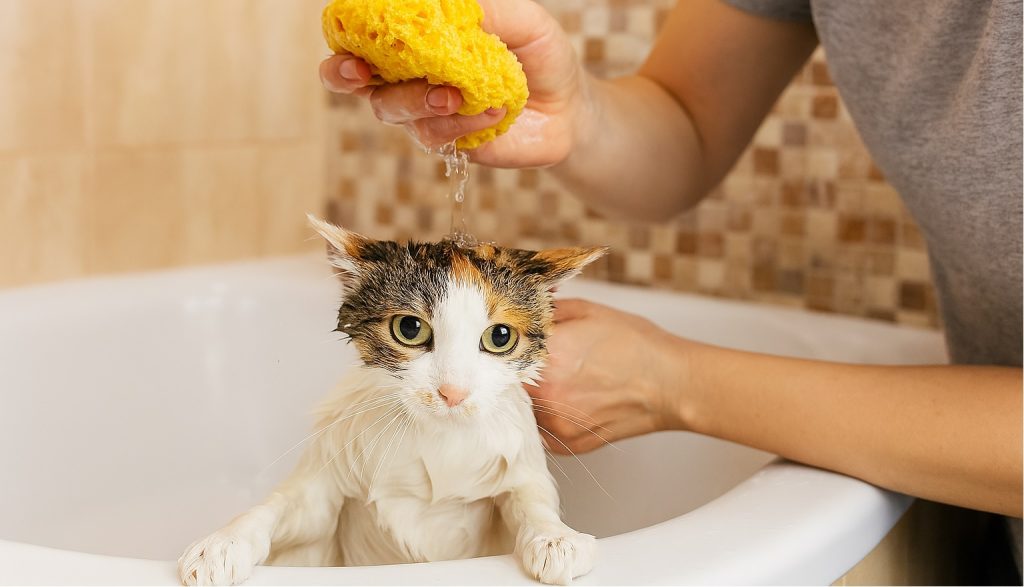
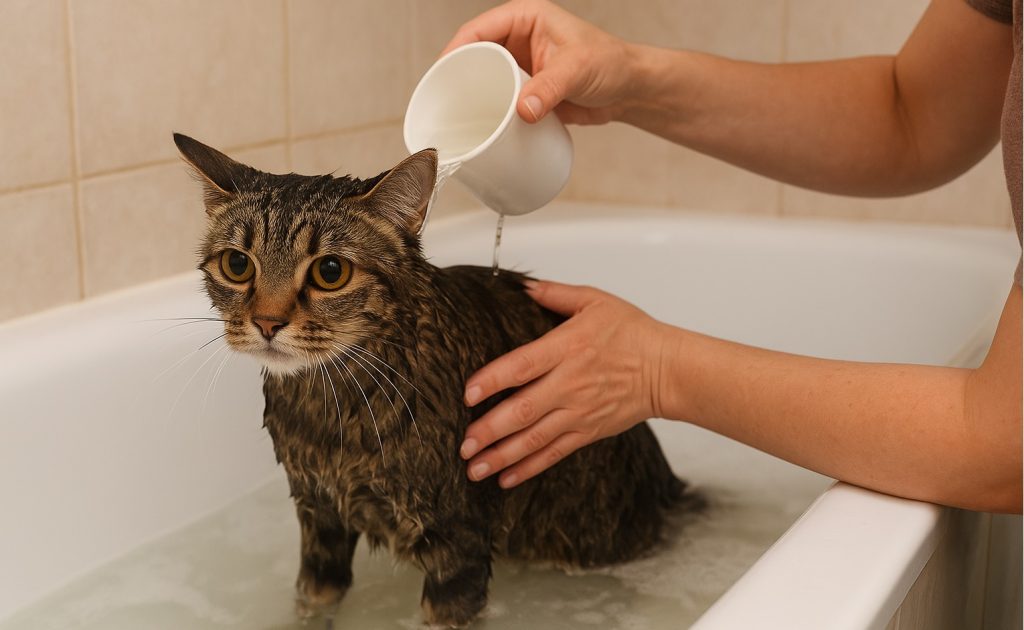
Use the pitcher or a handheld sprayer (if they tolerate it) to wet their coat from the neck down. Do your absolute best to avoid getting water in their eyes or ears (this is where those cotton balls help!).
Apply cat shampoo
Use a small amount of cat shampoo—a little goes a long way. Massage it gently into their fur, talking to them the whole time. (Yes, talk to your cat. They may not understand, but it helps both of you stay calm.)
Rinse thoroughly
This is the most crucial step. Residue left on the skin can cause irritation, making the cat scratch and swallow the shampoo residue. Use that pitcher to pour water over their coat repeatedly until the water runs completely clear and you can’t feel any slickness.
Clean the face
Use a damp washcloth to clean around the eyes, nose, and chin. Avoid their ears completely—no one wants water in their ear canal.
Stop if they panic
If your cat is genuinely panicking—hissing, thrashing violently, or crying uncontrollably—you need to make a judgment call. Sometimes, ending the bath early is the kindest thing you can do, even if they’re still a bit soapy. You save your relationship, and you can try again later.
Aftercare and Drying
The bath is over! Congratulations, you survived! Now, the drying phase is just as important. A cold cat is an unhappy, potentially sick cat.
Towel Dry
Wrap your cat snugly in a towel like a little burrito. Gently pat (don’t rub) their fur dry. You may need a second towel if they’re extra fluffy.
Offer Warmth
Keep your cat in a warm, draft-free room until they are completely dry. Their little bodies lose heat quickly after a bath.
Use a Hairdryer (Optional)
If your cat tolerates it, you can use a low-heat, low-noise dryer. Keep it several inches away and move it constantly. Most cats will give you a “how dare you” face, but some actually don’t mind.
Reward Your Cat
This step is non-negotiable. As soon as they are towel-dried and released, give them their absolute favourite treat—the high-value stuff! Playtime also helps them settle down. They need to associate the end of the bath with something overwhelmingly positive.
Do Cats Need Conditioner?
Not usually. But if your cat has long hair or dry skin, a cat-safe conditioner can help. Just make sure it’s rinse-out and vet-approved.
How to Bathe an Aggressive Cat
Ah, yes, the “I’ll scratch your soul out” type. For these feisty ones:
- Use gloves and long sleeves.
- Have a helper—one holds, one washes.
- Stay gentle but firm. Don’t yell or force; that just escalates things.
- Try calming pheromone sprays like Feliway before the bath.
If your cat is truly aggressive, ask your vet for advice—sometimes sedation or professional grooming is the safer option.
How to Bathe a Cat That Hates Water
Spoiler alert: most cats hate water.
Try this:
- Use a damp cloth instead.
- Try waterless shampoo.
- Use grooming wipes.
- Brush regularly.
Basically, fake the bath. Your cat will thank you.
Is it Cruel to Bathe Cats?
Not if done right. Bathing is fine when necessary and done gently. But forcing frequent baths “just because” isn’t cool.
Do Hairless Cats Need Baths?
Absolutely! Hairless cats, like Sphynx, don’t have fur to absorb natural oils. That means they get greasy fast.
They usually need baths every 1–2 weeks using gentle, moisturising cat shampoo. Keep them warm afterwards—they chill easily.
Tips for Keeping Your Cat Calm
Here are some pro tips that make bath time smoother:
- Start young. Kittens adapt faster than adult cats.
- Use calming scents or pheromone diffusers.
- Keep your voice low and reassuring.
- Make it quick. Don’t prolong the torture.
- Offer treats before, during, and after.
And above all, stay patient. No one wins a battle of wills with a cat.
Should You Bathe a Kitten?
Only if absolutely necessary. Use warm water, gentle shampoo, and keep it quick. Kittens are fragile and easily chilled.
Alternatives If Your Cat Just Won’t Tolerate a Bath
Some cats just refuse—no matter what. If yours turns into a demon at the sight of water, try these alternatives:
Waterless shampoo
These are usually foams or sprays that you work into the coat and then simply brush out. They lift grease and dirt without the need for a full wash.
Grooming wipes
Quick, easy, and cat-approved. Choose unscented, hypoallergenic ones.
Damp cloth
A simple warm, damp cloth works wonders for spot-cleaning. Gentle and stress-free.
Regular brushing
Brushing removes loose fur, spreads natural oils, and keeps your cat clean between baths. It’s also a bonding activity (unless your cat decides to bite the brush).
Can You Use Dog Shampoo on Cats?
Hard no. Dog shampoo can contain ingredients toxic to cats. Always use cat-specific products.
Frequently Asked Questions
Is It Cruel to Bathe Cats?
Not when done gently. Cats dislike it, but if you’re cautious, patient, and only give them a bath when necessary, it’s not cruel.
How to Wash a Cat at Home?
Use lukewarm water, cat-safe shampoo, and a calm environment. Follow the steps above, stay patient, and reward afterwards.
How to Wash a Cat in the Shower?
If your cat doesn’t freak out from running water, you can use a handheld showerhead on a low setting. Just keep it gentle and avoid their head.
How to Bathe a Cat Without Getting Scratched?
Trim claws beforehand, wear long sleeves, stay calm, and keep your movements gentle. Oh, and don’t make sudden splashes—you’ll regret it.
Final Words
Bathing a cat might sound like a nightmare, but with the right approach, it can actually be… tolerable. (Okay, “fun” might be a stretch 😅).
The secret is to be prepared, patient, and optimistic. Make it a calm, loving experience instead of a chaotic one. Reward your cat afterwards, keep things light, and remember—it’s just water. You’ve survived worse, right?
So next time you find yourself wondering how to bathe a cat without drama, take a deep breath, grab your towel, and go for it. You got this—and your cat will forgive you. Eventually.