Let’s be real: bathing your dog can feel like a WWE wrestling match you didn’t sign up for. One minute you’re filling the tub, the next your pup is sprinting through the house like you just suggested tax season came early. Sound familiar? If you’ve ever wondered “How to Bathe Your Dog Calmly?” without turning your bathroom into a splash zone, you’re in the right place.
I’ve been there—wet jeans, shampoo in my hair (not the dog’s), and a canine giving me the stink eye like I betrayed them. Over time, I picked up tricks that turned bath time from chaos into something almost… dare I say… enjoyable. And yes, I’ll share those with you.
So grab a towel (for you, not just the dog), and let’s talk about simple tips for a no-drama wash that actually work.
How to Tell if Your Dog Needs a Bath
You might think this is obvious, but is it? Some people wash their dogs weekly on a schedule, while others wait until the dog is practically a dust bunny. Your nose knows. If you lean in for a cuddle and recoil because your pup smells like old corn chips or wet socks, grab the shampoo.
Visual cues matter too. If their coat looks dull, greasy, or feels weirdly sticky when you pet them, they need a wash. And obviously, if they just rolled in something unidentifiable (but definitely gross) at the park, you have no choice. Don’t overthink it; if you don’t want to hug them because of the grime, it’s time.
How Often Should You Bathe Your Dog?
“How often should I bathe my dog?” is one of those questions everyone asks and nobody wants to answer wrong.
Here’s the simple truth:
- Most dogs do well with a bath every 4–6 weeks.
- Active or outdoor dogs may need more frequent baths.
- Dogs with skin issues may need specialized schedules from your vet.
If your dog looks clean, smells fine, and isn’t itchy, you’re probably good. Over-bathing can dry out their skin—so don’t go shampoo crazy.
Should You Bathe Indoor Dogs?
Just because your dog spends 90% of their life on your sofa doesn’t mean they stay clean. Indoor dogs still accumulate dust, dander, and household grime. Plus, they go outside to do their business, right? Paws track in allergens and dirt regardless of how “indoor” they are.
However, indoor dogs usually require less frequent bathing than outdoor adventurers. You might focus more on paw cleaning and brushing to keep the shedding under control. But yes, even the most pampered indoor pooch needs a full scrub down eventually to keep that coat shiny and healthy.
Prepare for the Bath
Preparation is where you win or lose the battle. If you start the water and then realize you forgot the towel, you are doomed. Panic sets in when you scramble, and your dog feeds off that chaotic energy.
Gather Supplies
Gather everything first, or your dog will plan an escape during your 10-second trip to get the shampoo.
Have everything ready:
- Dog shampoo (not human shampoo—different pH balance).
- Towels (plural, unless you enjoy soggy floors).
- Brush for pre-bath detangling.
- Treats for bribery.
Keeping everything within reach helps you stay calm—and your dog picks up on your energy.
Ready the Bath Area
Choose a spot where your dog feels secure. A tub, a sink (for small dogs), or even a kiddie pool works. Make it:
- Non-slippery
- Quiet
- Comfortable
Avoid loud environments. A vacuum running in the next room? Yeah…that’s basically a horror soundtrack for most dogs.
Use Lukewarm Water
Dogs don’t love boiling water (shocking, I know). Keep the water lukewarm—warm enough to be comfortable, but not hot enough to feel like a spa session.
Acclimate Your Dog
Let them sniff the tub, hear the water, and chill before you start. Ever tried dragging a dog straight into the bath? Yeah, don’t.
Minimize Injuries
Clip those nails! Serious advice here: Trim your dog’s nails a day or two before the bath. If they panic and try to scramble up your arm or out of the tub, long nails will leave you looking like you fought a bobcat. It also helps them get a better grip on the mat, reducing their anxiety.
Tire Your Dog Out
Take your dog for a walk or play fetch before bath time. Not saying you need to wear them out like you’re training for a marathon, but a little exercise helps.
How to Bathe a Dog – Step-By-Step
Okay, the stage is set. You have the supplies, the water is warm, and the dog is (hopefully) tired. The main event is about to begin. Remember, your energy dictates everything.
Stay Calm
Dogs sense your emotions faster than you sense theirs. If you’re stressed, they go into full panic mode. So breathe, smile, and pretend like this is a normal, fun activity—even if deep down you’re hoping you make it out alive.
Assist Your Dog in Adjusting to the Water
Start the water before the dog is in the tub if the sound scares them. Let the loud rushing noise stop, and use a gentle stream. When you put them in, don’t start spraying their face. Start at the paws. Let them feel the wetness slowly. Praise them constantly while you do this.
Prep Everything Before the Bath
Keep shampoo, towels, and treats within reach. You don’t want to leave mid-bath to grab something.
Use Warm Water and Consider Small Tubs
Small and medium dogs often feel safer in tubs that fit them snugly. Warm water adds comfort. I’ve noticed dogs behave better when they feel secure, like the space “hugs” them a bit.
Be Careful While Bathing Your Dog
Wait, do you have a cat too? If you live in a multi-pet household, keep the cat out of the room. Seeing the cat walk by free and dry while they are stuck in the tub drives dogs crazy. And if you are brave enough to bathe a cat (why would you do that?), remember their skin is even more sensitive. But seriously, focus on the dog right now. Don’t multitask with pets during bath time.
Bathing Process of the Dog
Now we are in the thick of it. You have the dog in the tub. Let’s get them clean without causing a meltdown.
Place your Dog in the water
Guide them gently. Don’t plop them in suddenly unless you want emotional revenge later.
Wet your Dog’s body
Start from the back and move toward the neck. Avoid the head for now. Dogs hate water on their faces—unless they’re weirdly fearless (lucky you).
Apply Dog shampoo
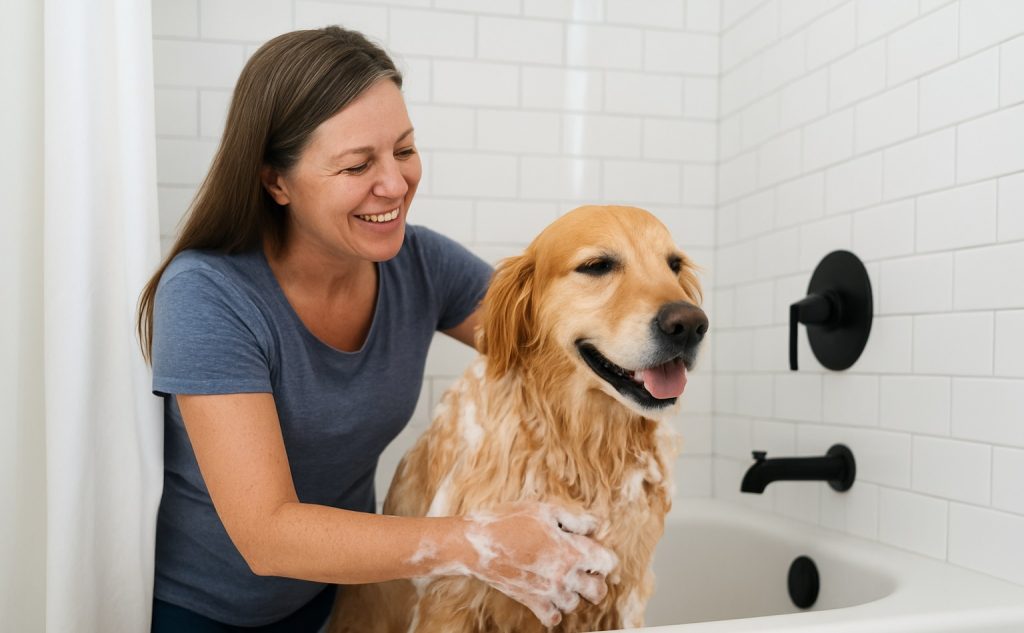
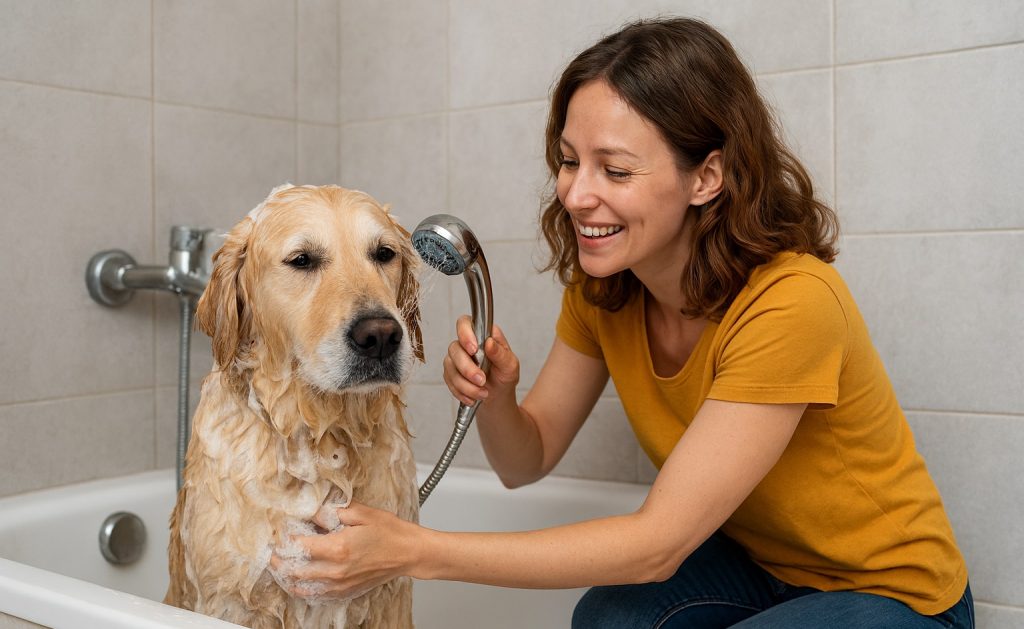
Squeeze a line of shampoo down their back. Massage it in vigorously. You want a good lather. Use your fingers to really work it into the undercoat, armpits, belly, and tail. These are the stink zones. Talk to them while you scrub: “Who’s a good boy? Look at those bubbles!”
Rinse thoroughly
This is the most critical step. You must rinse, rinse, and then rinse again. Shampoo residue causes skin irritation. If you think you are done, rinse one more time. Run your hands through the fur; if it feels slimy, keep rinsing. The water needs to run clear.
Clean the face
Use a damp cloth, no shampoo. Wipe gently around:
- Eyes
- Ears
- Snout
Avoid the temptation to scrub like you’re polishing furniture.
Stop if they panic
If your dog starts thrashing, whining, or showing signs of extreme distress, stop. Take a break. Turn the water off. Sit with them in the tub (dry or not) and calm them down. Forcing them through a panic attack creates a phobia. It is better to have a half-washed dog and try again tomorrow than to traumatize them.
Aftercare and Drying
A calm aftercare routine is just as important as the bath itself.
Towel Dry
Wrap your dog in a towel burrito. This controls shaking—well, kind of. They’ll still shake water everywhere, but you’ll at least be mentally prepared.
Offer Warmth
Wet dogs get cold fast. Keep the bathroom door closed to trap the steam and heat. If it’s winter, ensure the house is warm. Do not let them run outside immediately, or they will roll in the dirt to dry off, and you will cry.
Use a Hairdryer (Optional)
Use low heat and keep it at a distance. Some dogs enjoy it; some look at you like you’re trying to roast them. Adjust accordingly.
Reward Your Dog
The moment they hop out of the tub, throw a party. Give them the “jackpot” treat. Play a quick game with a toy. You want the last memory of the bath to be pure joy. This conditions them to think, “Okay, the bath part sucks, but the after-party is legendary.”
Do Dogs Need Conditioner?
Some do! If your dog has long, curly, or dry fur, conditioner makes detangling easier and keeps the coat soft. Always use dog-specific formulas.
How to Bathe an Aggressive Dog
This is a serious safety issue. If your dog growls, snaps, or bites during baths, you cannot force it.
Try:
- Muzzles (only if needed)
- Professional groomers
- Slow desensitization
- Positive reinforcement
Never force the situation. Safety first.
How to Bathe a Dog That Hates Water
You have to desensitize them. Start slow. Maybe day one is just standing in a dry tub eating chicken. Day two, wet paws. Day three, wet legs.
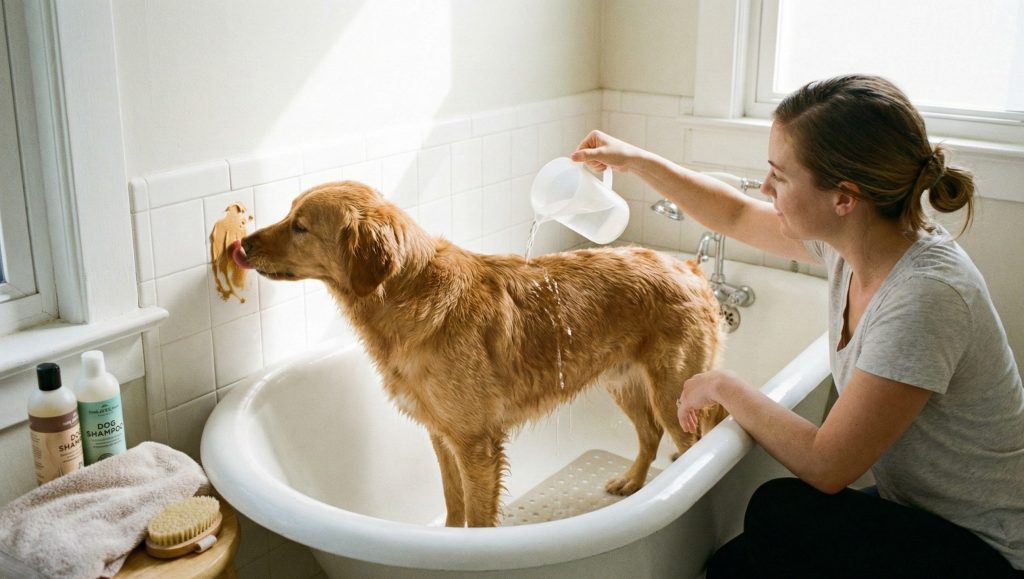
The Peanut Butter Trick: Smear peanut butter on the wall of the tub (or on a silicone licking mat stuck to the wall). It sounds weird, but it works. The dog licks the treat while you wash them. They are so focused on the snack they barely notice the water. It’s a game-changer.
Is it Cruel to Bathe Dogs?
Nope. As long as you use proper products and don’t overdo it, baths are healthy. Cruelty is forcing them when they’re terrified without easing them in.
Do Hairless Dogs Need Baths?
Yes! Hairless dogs often need more frequent bathing, because they don’t have fur absorbing oils. Use gentle products.
Tips for Keeping Your Dog Calm
Here are the best calm-bath tricks:
- Play soothing music during bath time.
- Talk gently—your voice reassures them.
- Keep sessions short to avoid stress.
Ever noticed how dogs relax when you act chill? That’s your secret weapon.
Alternatives If Your Dog Just Won’t Tolerate a Bath
Sometimes, you just can’t do the full tub experience. Maybe you are travelling, or the dog is recovering from surgery. You have options.
Waterless shampoo
These come in foams or sprays. You rub it into the dry coat and towel it off. It lifts dirt and smells surprisingly well. It’s not a deep clean, but it buys you time.
Grooming wipes
Think baby wipes, but for dogs. Great for muddy paws, dirty faces, or a quick “freshen up” after a walk. Keep a pack by the door.
Damp cloth
Just a warm, wet rag can remove surface dust and pollen. It’s non-threatening and gets the top layer of grime off.
Regular brushing
Brushing removes dirt, debris, and loose hair mechanically. If you brush daily, you can delay the actual bath significantly. It also distributes their natural oils, keeping them cleaner naturally.
Frequently Asked Questions
Is It Cruel to Bathe Dogs?
Not if you do it right. Cruelty is ignoring their comfort.
How to Wash a Dog at Home?
Follow the steps above: prep, calm, shampoo, rinse, dry, reward.
How to Wash a Dog in the Shower?
Use a handheld showerhead. Keep water gentle and avoid the face.
How to Bathe a Dog Without Getting Scratched?
Keep your cool, use non-slip mats, and cut your nails beforehand.
Final Words
It doesn’t have to feel like an extreme sport to give your dog a calm bath. You can transform chaos into a calm, even pleasurable routine with the correct preparation, the right mindset, and a few well-placed treats. Don’t forget to remain calm, maintain a positive attitude, and view bath time as a bonding activity rather than a chore. Because your dog can sense your energy, if you maintain your composure, your dog will eventually follow suit.
And hey, if all else fails, there’s always waterless shampoo. 😉
If you want, I can also write the meta description, SEO title variations, or generate a feature image for this topic!