Let’s be real—giving a cat liquid medicine is like trying to convince a toddler to eat broccoli. You know it’s for their own good, but suddenly your sweet little furball turns into a ninja with claws, teeth, and Olympic-level escape skills. Sound familiar? Yeah, I’ve been there too.
If you’ve ever asked yourself “How to give a cat liquid medicine safely?” you’re in the right place. I’ve wrestled with my own cats (sometimes literally) when meds were necessary, and along the way, I picked up some life-saving hacks, vet-approved tricks, and let’s be honest—some sanity savers.
So grab a cup of coffee (or catnip tea if you’re fancy) and let’s break this down step by step.
How to Give Cats Liquid Medicine
Let’s be real—giving a cat liquid medicine is basically a test of your patience, reflexes, and emotional stability. Ever tried to squirt something into a cat’s mouth? Yeah, it’s like trying to brush a tornado. But don’t worry, I’ve been there, and I’ve got your back.
Whether your cat’s dealing with a sneaky infection or some chronic condition, you need to know how to give a cat liquid medicine safely without turning your living room into a war zone. So grab your syringe, channel your inner ninja, and let’s do this.
Steps for Giving Your Cat Liquid Medicine
This is where we break down the mission into five manageable phases. Remember, the goal is to be fast and firm, yet gentle.
Step 1: Your Superpower is Preparation
Prepare everything before you even consider approaching your cat. You will require: • The liquid medication that was prescribed
- An oral syringe, which typically comes with the medication
- Bribery treats (yes, we’re not above that)
- A towel, also known as your cat burrito wrap
Why get ready first? Because chaos is a sixth sense for cats. They will disappear more quickly than your motivation on a Monday if you fumble around.
Step 2: Choose the Right Location
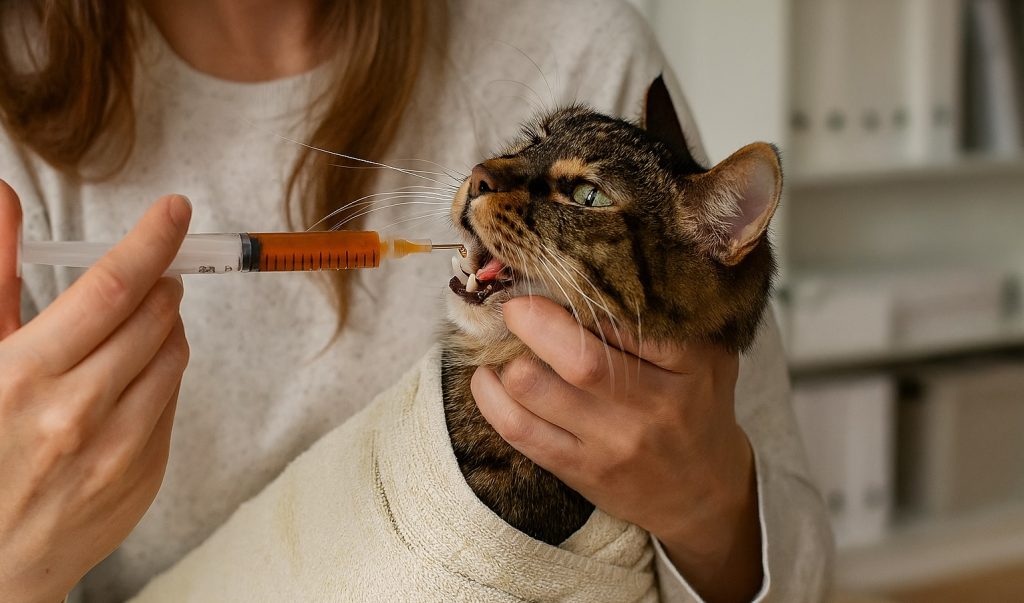
Put your cat on your lap while you sit comfortably. Some cats behave better if you put them on a non-slippery surface like a carpet. If your cat has escape-artist energy, wrap them in a towel (aka the kitty burrito).
Step 3: Gently Secure Your Cat
Hold the syringe in your dominant hand. With the other, gently grasp your cat’s head from above, with your thumb and fingers resting behind their fangs. Tilt their head slightly upward.
Important: Don’t tilt too far back—you don’t want the medicine going down the wrong pipe.
Step 4: Administer the Medicine
Hold the syringe in your dominant hand. With the hand securing your cat’s head, gently cup their face. Do not tilt their head back too far—you want to avoid accidental aspiration (getting the medicine into their lungs). Slowly insert the tip of the syringe into the small gap behind one of their canine teeth, aiming for the side of their mouth.
- Go slow but steady. Dispense the liquid a little at a time, allowing them to swallow.
- Give them time to lick and swallow. Don’t just blast the entire dose in there; you want to ensure it goes down their throat, not all over your shirt.
- A little massage under the chin sometimes encourages swallowing, which is a surprisingly effective trick.
Step 5: Use Positive Reinforcement to Follow Up
Release your cat as soon as the medication is finished and give them the promised reward right away. They can associate the experience with something good, or at least less bad, if they have a favourite toy, a tasty treat, or a good ear scratch. “Ugh, the medicine… but YAY, Churu!” is what you want them to think.
What if My Cat Won’t Take Their Liquid Medication?
Some cats are just… extra. If yours refuses to cooperate, try these tricks:
Practice with Treats
Start by giving your cat treats from the syringe (no meds yet). This builds trust and gets them used to the process.
Use an Alternative
Ask your vet if the medication can be compounded into a flavoured liquid (like chicken or tuna). Some pharmacies even make meds taste like salmon—yep, cat medicine comes in sushi flavour now.
Foods to Hide Cat Liquid Medicine?
If your cat is a master at detecting meds, try mixing the liquid with food. Here are 10 foods that usually work:
- Tuna juice – Strong smell, irresistible taste.
- Chicken broth – Warm and savoury.
- Cream cheese – Thick enough to mask bitterness.
- Wet cat food (pâté) – Classic choice.
- Baby food (meat-only) – Smooth and safe.
- Pumpkin puree – Great texture and fiber boost.
- Plain yoghurt – Tangy and creamy.
- Liver paste – Bold flavour, perfect disguise.
- Sardine mash – Smelly but effective.
- Goat cheese – Soft and rich.
How to Give a Cat Liquid Medication in Food?
Mix the medicine into a small portion of the chosen food. Don’t mix it into a full meal—your cat might not finish it, and then you’re stuck guessing how much they actually got. FYI, always check with your vet before mixing meds with food.

How to Hide the Bitter Taste of Liquid Medicine for Cats?
Some liquid medicines are notoriously bitter (I’m looking at you, Metronidazole!). When you can’t get a compounded flavour, you have to be clever about masking that awful flavour profile.
- Mix with Syrups (Consult Vet!): A common, simple syrup can sometimes cut the bitterness. Always ask your vet first if you can mix their medication with a sweet syrup.
- The “Chase” Method: Give the medicine, and immediately follow up with the most delicious, pungent, high-value treat possible (like a tiny piece of sardine or a lick of Churu). The chase cancels out the memory of the taste.
- Temperature Matters: Some vets suggest that slightly warming (never hot!) or chilling the medicine can slightly reduce the bitter impact. Again, check with your vet for specific drug recommendations.
What if My Cat Starts Foaming at the Mouth?
Don’t panic. Seriously. Foaming is usually a reaction to the taste, not a sign of poisoning. Just make sure your cat swallowed the dose and didn’t spit it out mid-drama. If it happens often, ask your vet for a flavour alternative.
Safety Tips for Giving a Cat Liquid Medication
Safety is paramount. You need to protect your cat from accidental aspiration and protect yourself from an accidental scratch or bite.
- Never force too much at once—you risk choking.
- Don’t tilt the head back too far—aim for a natural position.
- Check expiration dates—expired meds = no good.
- Wash the syringe after each use.
- Always confirm dosage with your vet.
How to Give a Cat Medicine Without Fighting?
Here’s the secret: stay calm and confident. Cats pick up on your energy. If you’re nervous, they’ll go full drama queen. Use treats, soothing voice, and don’t make it a big deal. Sometimes I even hum a little tune to keep things chill.
How to Burrito-Wrap Your Cat to Give Medicine
This technique saves lives (and your skin).
- Lay a towel flat.
- Place your cat in the centre.
- Wrap tightly around their body, leaving only the head out.
- Hold firmly, but gently—like a kitty burrito.
Now you can medicate without the risk of claws.
How to give an aggressive cat liquid medicine?
If your cat is genuinely aggressive—hissing, biting, or seriously lashing out—you need to approach this differently for your safety and theirs. A bite can be a serious medical emergency for you.
- Safety First: Wear gloves if necessary and definitely use the Burrito Wrap method.
- Consult Your Vet: A truly aggressive cat may need medication administered in a different format or may require a vet or vet tech to do it until they are calmer. Your vet might also suggest a mild sedative for the duration of their medication period.
- Use a Helper: Enlist a trusted friend or family member to help secure the cat while you administer the medicine. Two sets of hands are infinitely better than one when dealing with a feisty feline.
Giving a Cat Pills or Capsules
Liquid meds not an option? Pills are a whole other circus. You can:
- Use a pill popper tool.
- Hide in pill pockets or treats.
- Crush and mix with food (if vet-approved).
I once tried hiding a pill in cheese. My cat ate the cheese and spat out the pill like a magician. So yeah, trial and error.
Frequently Asked Questions
Can I mix liquid medicine with milk?
Most cats are lactose intolerant. Stick to safer options like tuna juice.
How frequently should I administer the medication?
Follow your vet’s instructions. Don’t guess or Google it.
What if my cat vomits after taking medicine?
Call your vet. They may change the timing or dosage.
Can I use a dropper in place of a syringe?
Yes, if it’s accurate. Syringes are usually better for dosing.
Is it okay to skip a dose if my cat resists?
Nope. Skipping doses can mess with treatment. Talk to your vet for alternatives.
Final Words
Giving a cat liquid medicine isn’t exactly a walk in the park—but with the right tools, a little patience, and maybe a sense of humour, you can totally handle it. Even if your pet acts as though you’re planning their death, keep in mind that you’re doing this to help them feel better.
Think about tuna juice, cat burritos, and ninja reflexes the next time you’re getting ready for the medicine showdown. You’re capable. 💪🐾
Please share this guide with other cat warriors if you found it useful. I’m always interested in exchanging cat stories, so feel free to message me if you have any tricks of your own. 😸