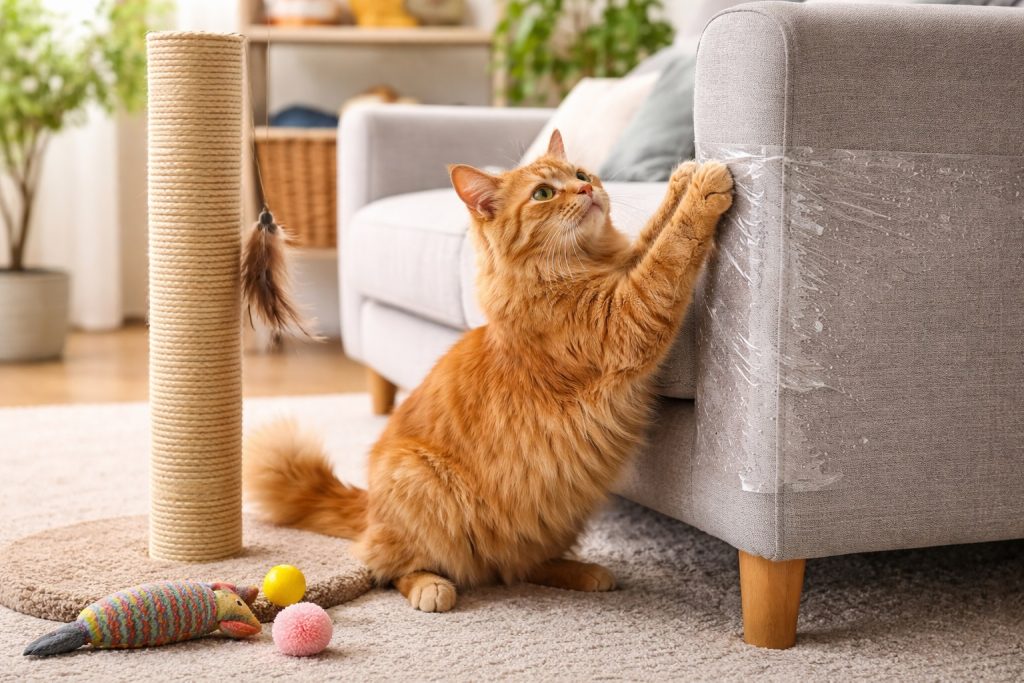
Let’s be real—cats are adorable little fluffballs, but they can also be tiny interior designers with claws. And spoiler alert: their “designs” usually involve shredding your couch like it’s auditioning for a horror movie. If you’ve ever Googled “How to Stop Cats Scratching Furniture?” while glaring at your ruined armchair, you’re not alone.
I’ve been there. My cat once turned my brand‑new sofa into what looked like a post‑apocalyptic prop. I learned the hard way that yelling “Stop!” doesn’t work (cats don’t care, FYI). But with patience, clever tricks, and a few products, you can protect your home and keep your cat happy. Ready? Let’s claw our way through this together.
Why do cats scratch?
Before we start covering your house in double-sided tape, we should understand the “why” behind the behaviour. Cats do not scratch because they hate your taste in interior design. They scratch because their bodies literally demand it. It is a biological necessity, much like eating or sleeping.
Why Do Cats Scratch Furniture?
Cats scratch furniture because:
- They mark territory with scent glands in their paws.
- They maintain their claws by shedding nail sheaths.
- They stretch their muscles and release tension.
- They express stress, boredom, or excitement.
Ever watched your cat scratch in slow-motion, like they’re auditioning for an ad? They feel good doing it. Understanding that helps you create better alternatives.
Why Do Cats Scratch the Floor or Carpet?
Scratching the carpet is another way cats flex their claws and muscles. Plus, the texture feels satisfying. Imagine running your nails across bubble wrap—that’s how carpets feel to them. Unfortunately, it’s less fun when your living room looks like a crime scene.
How to Stop Cats from Scratching the Furniture and Couches
Consistency serves as your best friend when trying to save your furniture. You cannot expect a one-day fix for a behaviour ingrained in their DNA. You need to combine physical deterrents with better options. If you remove the sofa from the equation, you must provide something equally satisfying in its place.
Determine which particular pieces of furniture your cat prefers. Are they obsessed with the corners of the couch or the legs of the dining table? Once you know their favorite spots, you can apply localized solutions. Protecting your home requires a proactive approach rather than a reactive one. Stop waiting for the scratch to happen and start making the furniture unattractive now.
Provide Appealing Scratching Alternatives
Cats choose furniture because it’s available, satisfying, and perfectly positioned. So you need to offer something better. Yes — like cat-Instagram-worthy level better.
Match their style
Cats have preferences. Some like vertical posts, others prefer horizontal pads. Watch your cat’s habits and match their scratching style.
Sturdy and tall
A scratching post must be tall enough for a full stretch — ideally at least 32 inches. If it wobbles, they won’t touch it. Cats avoid flimsy furniture like we avoid chairs with someone’s hair stuck to them.
My recommendation from experience: A heavy-base, sisal-wrapped tower lasts years. Cheap posts? They last one dramatic week.
Preferred materials
Cats generally prefer materials that allow their claws to sink in and “catch.” Sisal rope is the gold standard for many feline enthusiasts because of its durability and texture. Others might prefer corrugated cardboard because it makes a satisfying noise when it shreds.
Some cats even like natural wood or cork. Experiment with different textures until you find the one your cat finds irresistible.
Strategic placement
Don’t hide the scratcher in a corner. Place it near the furniture they target. Cats scratch where they hang out, not in exile.
Place posts:
- Next to the damaged couch
- Near windows or sunny resting spots
- Beside sleeping areas — they stretch right after naps
- In hallways or commonly used spaces
Put one post beside the couch and say, “Here, buddy, scratch THIS instead.” It works shockingly well.
Use Furniture Deterrents
While you introduce the new scratchers, you should make the old ones—your furniture—totally unappealing. Cats are very sensitive to textures and smells. If you make the sofa feel or smell “gross” to them, they will look elsewhere. This creates a “no-go zone” while they learn to love their new posts.
Textural deterrents
Cats dislike sticky or odd textures. Cover the damaged area short-term with:
- Double‑sided tape on couch arms.
- Plastic mats with bumpy textures.
Your cat will touch it once, make a disgusted face, and walk away. You’ll win.
Protective shields
These are clear vinyl shields you stick on couch corners. They protect fabric while you train your cat. I used a set once — my cat tried scratching, heard the “plastic squeak,” and never tried again. I felt like a genius.
Scent repellents
Cats dislike citrus and certain herbal sprays. Use cat‑safe repellents to make furniture less appealing.
Calming pheromones
Products like Feliway diffusers release calming pheromones. They reduce stress scratching. Ever wondered if aromatherapy works for cats? Yep, it does.
Maintain Nail Care and Training
You shouldn’t rely solely on gadgets and sprays. Good old-fashioned maintenance and training play a massive role in how to stop cats scratching furniture. If you keep their “tools” dull and their minds busy, the furniture stays intact. It takes effort, but the payoff is a scratch-free home and a more bonded relationship with your pet.
Regular trims
Trim claws every 2–3 weeks. Shorter nails = less damage.
Use small pet nail clippers — not your rusted nail scissors, please.
If trimming scares you, ask a groomer. Some cats act like you’re attempting surgery over a claw trim. It’s fine.
Positive reinforcement
Never underestimate the power of a bribe. When you see your cat using their scratching post, shower them with praise and treats. You want them to associate the post with “good things happen here.” Cats respond much better to rewards than they do to shouting. Make the scratching post the “VIP lounge” of the house.
Calm redirection
When they scratch furniture, gently redirect them to the post. No yelling—cats ignores lectures. They will learn. Slowly. Like downloading a massive file on old Wi-Fi.
Enrichment
A tired cat is a well-behaved cat. Provide plenty of toys, climbing trees, and interactive play sessions to burn off energy. If your cat spends their day hunting a toy mouse or climbing a tower, they won’t feel the need to take their frustrations out on your ottoman.
Mental stimulation is just as important as physical exercise when it comes to behavior modification.
Homemade spray to stop cats from scratching furniture
If you want a budget-friendly way to protect your chairs, you can whip up a DIY repellent in your kitchen. Most cats find certain household scents totally repulsive, which makes them perfect for redirection.
Ingredients:
- 1 cup water
- 2 tbsp apple cider vinegar
- 10 drops lemon essential oil (cat‑safe alternative: lavender)
Preparation:
- Mix ingredients in a spray bottle.
- Shake well before each use.
Usage:
- Spray lightly on furniture surfaces.
- Avoid over‑soaking—cats hate strong smells, but you don’t want vinegar‑soaked cushions.
- Reapply every few days.
This spray deters scratching without harming your cat. And bonus: your living room smells fresh.
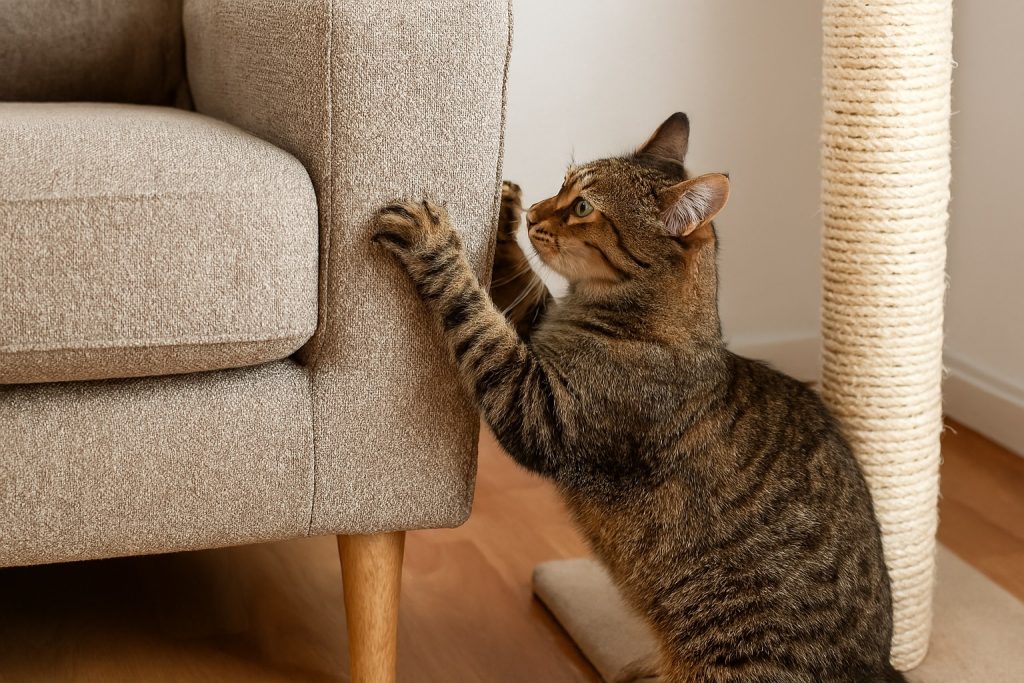
How to Stop Cats from Scratching the Carpet and Flooring
Floor scratching needs horizontal solutions.
Try:
- Flat cardboard scratchers
- Horizontal sisal boards
- Carpet mats made for cats
- Floor-mounted scratching trays
Place them where they already scratch. Reward every success. Sometimes I add catnip. It turns boring cardboard into a nightclub.
What Not to Do When Your Cat Scratches Furniture and Carpeting
Not every “solution” is humane or helpful. Some will hurt your cat, emotionally or physically.
Declawing Your Cat
Declawing is cruel. It’s not a manicure—it’s an amputation. Cats suffer pain, behavioral issues, and long‑term health problems.
Punishing Your Cat
Never:
- Spray them in the face with water
- Hit them
- Yell or startle them
Punishment makes them fear you. You want a cuddly bestie — not a roommate who thinks you’re a psycho villain.
Forcing Your Cat to Use a Scratcher
Never grab your cat’s paws and force them to rub against a scratching post. This feels invasive and scary to a cat. If they have a negative experience with the post, they will avoid it forever. Let them discover the post on their own terms, using catnip or silvervine to entice them if necessary.
Why declawing is not the solution?
Declawing removes part of the bone along with the claw. Imagine losing the tips of your fingers. It’s painful, unnecessary, and banned in many countries. Provide alternatives instead of harming your cat.
How to keep cats calm and stress-free?
A happy cat is usually a less destructive cat. If your cat feels like the king of their castle, they are less likely to act out. Create a “vertical world” for them with cat trees and wall shelves. This allows them to survey their territory from a safe height, which naturally reduces stress.
Routine also helps immensely. Feed them at the same time, play with them at the same time, and give them plenty of affection. If their environment is predictable, their stress levels stay low. When a cat feels safe, the urge to aggressively mark territory via scratching often diminishes on its own.
Frequently Asked Questions
Why does my cat ignore the scratching post?
Because it doesn’t match their style. Try different materials or placements.
Can I train an older cat to stop scratching furniture?
Yes! It takes patience, but even senior cats learn new habits.
Do nail caps of cats work against scratching furniture?
Soft nail caps can protect furniture, but some cats hate them. Test carefully.
Is scratching ever a sign of illness of cats?
Rarely. But if scratching seems obsessive, check with your vet.
How long does it take to stop furniture scratching by a cat?
Most cats get better in a few weeks with regular training.
Final Words
So, what can be done to prevent cats from scratching furniture? Redirect, protect, and care are the easy answers. Cats scratch because it’s natural, not because they hate your decorating skills. Give them alternatives, protect your furniture, and keep them happy.
And hey, when your cat finally chooses the scratcher over your couch, you’ll feel like you won the lottery.