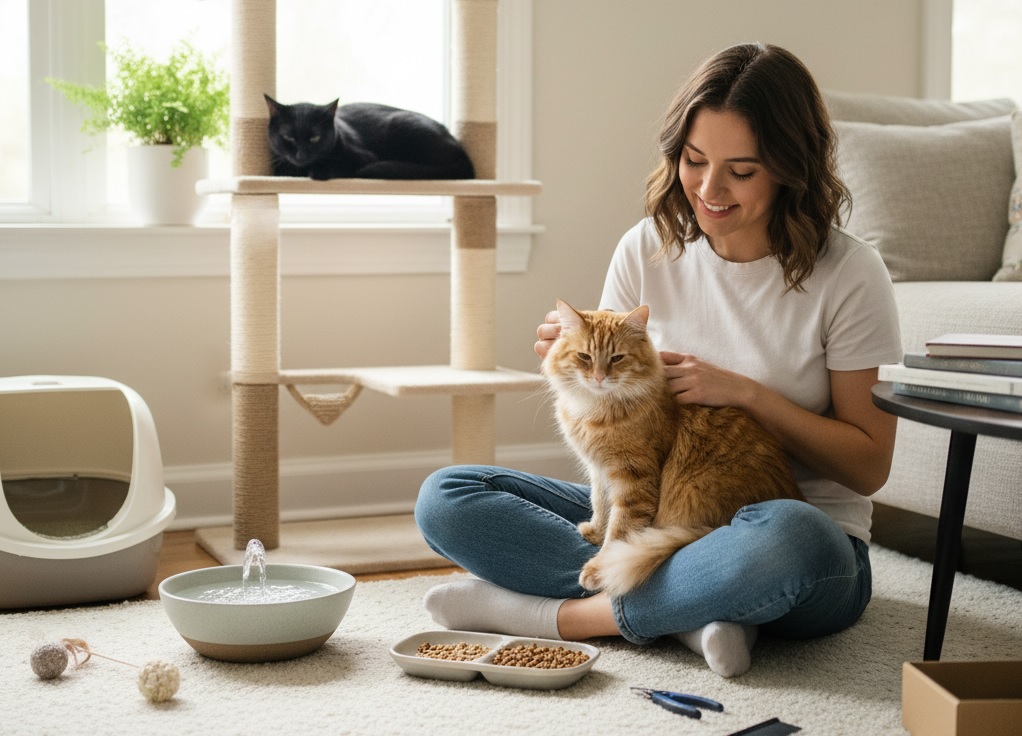
A Brief Synopsis: Don’t worry, I’ve got you covered if you’ve ever Googled “How to take care of a cat step by step?” and found yourself drowning in suggestions. With practical advice, a dash of sass, and no filler, this guide simplifies it like a conversation between cat lovers.
The Fundamentals of Cat Care
You’ve made the decision to bring a feline overlord into your house. Well done! Cats are funny, adorable, and sometimes erratic, but that’s part of their allure, isn’t it?
The deal is this: Although taking care of a cat isn’t difficult, it does call for love, patience, and a little bit of expertise. This guide will take you step-by-step through the entire process, whether you’re a first-time cat owner or simply brushing up.
Establish a Secure and Cozy Environment
Your cat’s home must be perfectly set up if you want them to feel like the king or queen of their castle. Naturally, cats thrive in environments that make them feel secure, comfortable, and in control.
Establish a “Safe Room”
Establish a safe room for your cat when they first arrive; this should be a peaceful area with little noise and little foot traffic. Include some toys, food, water, and a litter box. Let your cat explore at their own pace. Don’t rush it. If they hide under the bed for a day or two, that’s totally fine. Cats like to observe before they trust.
Offer Resting & Hiding Spots
Cats adore napping in warm, enclosed spaces. Ever found your cat chilling inside your laundry basket? Exactly. Provide cat beds, cardboard boxes, or soft blankets in cozy corners. Vertical spaces like cat trees or window perches also make them feel secure and entertained.
Cat-Proof Your Home
Ever seen a cat jump on a counter and knock off your favourite mug just to watch it shatter? Yeah, it’s not personal—they’re just scientists. Keep breakables and toxic stuff (like cleaning products, lilies, or human meds) out of reach. Also, secure windows and balconies because cats are terrible at understanding gravity.
Provide Proper Nutrition and Water
Want your cat to live a long, healthy life? Feed them right. I’ve seen cats go from “meh” to “majestic fluffball” just by switching diets.
Choose High-Quality Food
Not all cat food is created equal. Look for options that list real meat (chicken, fish, or turkey) as the first ingredient. Avoid fillers like corn or soy—they’re basically cat junk food.
Cats are obligate carnivores, meaning they must eat meat. So, those “vegan cat food” trends? Big nope.
Offer a Mix of Wet and Dry Food
Wet food helps with hydration and adds variety. Dry food helps keep their teeth clean (to some extent). IMO, a combo diet works best. Just watch portion sizes—cats are pros at begging for extra treats with those innocent eyes.
Ensure Constant Fresh Water
Cats don’t always drink enough water. Ever noticed them trying to drink from a running tap? They prefer moving water. Invest in a cat water fountain—it keeps water clean, fresh, and way more appealing.
Maintain Grooming and Hygiene
Brush regularly & trim nails
Unless you enjoy vacuuming fur 24/7, grab a brush.
- Long-haired cats need daily grooming.
- Short-haired ones? A few times a week.
- Trim nails every 2–3 weeks. Or prepare for surprise claw attacks.
Clean the litter box daily
Would you want to use a dirty toilet? Didn’t think so.
- Scoop daily, change litter weekly.
- Use unscented litter—some cats hate perfume.
- Keep the box in a quiet, accessible spot.
Bathe infrequently
Cats groom themselves. Like, obsessively. But sometimes, they need help.
- Bathe only if they’re super dirty or smelly.
- Use cat-specific shampoo.
- Prepare for drama. And scratches. Lots of scratches.
Prioritize Health Care
You can feed them the best food and buy them the fanciest beds, but none of it matters if you ignore their health. Prevention is always cheaper than a cure.
Schedule regular vet visits
A yearly checkup keeps your cat’s health in check. For kittens, it’s more frequent until they finish vaccinations. Your vet will track their weight, teeth, and general health—and might even give you a gold star for being a responsible cat parent.
Use parasite control
Fleas, ticks, and worms are gross, and they pose a real threat to your cat’s health. Use vet-approved parasite control year-round.
- Even if your cat is strictly indoors, you can track parasites in on your clothes or shoes.
- Ask your vet about a broad-spectrum preventative that covers multiple parasites.
Spay or neuter
Unless you are a professional, licensed breeder (in which case, you probably don’t need this article, no offence:/), spaying or neutering your cat is essential.
- It reduces the risk of certain cancers and eliminates undesirable behaviours like roaming, spraying, and calling.
- Plus, FYI, we have enough unwanted kittens in the world. Do your part to control the pet population.
Monitor health
Keep an eye on their eating, sleeping, and litter habits. If something changes suddenly, it’s a red flag. Early detection can literally save lives.

Provide Play and Mental Stimulation
Cats may nap 16 hours a day, but when they’re awake, they need action. Without play, they get bored—and bored cats cause chaos.
Schedule Playtime
Even 15–20 minutes of play daily helps. Use wand toys, laser pointers, or catnip mice. Mix it up to keep things fresh. Ever seen your cat go full ninja mode over a feather toy? Pure entertainment 😂
Provide Posts That Are Scratching
Cats naturally stretch, mark their territory, and sharpen their claws by scratching. Put pads or scratching posts in strategic locations to save your couch. Reward your cat when they use them.
Allow for Exploration
Cats love exploring new spaces. Rotate toys, set up window perches, or let them safely explore the yard (supervised, of course). Curiosity keeps their minds sharp and their mood upbeat.
Cat Care: Do’s & Don’ts
Want the fast track to cat parenting success? Here’s a quick-and-dirty list.
Do
- Do offer praise and treats for good behaviour. Positive reinforcement works wonders.
- Do microchip your cat, even if they are indoors only. Accidents happen!
- Do install high-quality window screens if you open your windows, as cats fall surprisingly often.
- Do give them space when they want it. A cat on a lap is a privilege, not a right.
Don’t
- Don’t use ammonia-based cleaners near the litter box. It smells like urine to a cat and might encourage them to go potty elsewhere.
- Don’t feed them table scraps. Many human foods (like onions and garlic) are toxic.
- Don’t declaw your cat. This is a painful, unnecessary surgery that causes lifelong pain and behaviour problems.
Don’t punish or yell at your cat. They won’t understand what they did wrong; they’ll just become fearful of you.
General Cat Care
Make sure your cat always has a place to potty
Litter box access is non-negotiable. One box per cat, plus one extra.
Keep the litter box clean
Scoop daily, replace litter weekly, and wash the box with mild soap. A clean box = a happy cat (and a stink-free home).
Scratching
Provide appropriate materials. Remember, scratching is an instinctive behaviour. You wouldn’t yell at yourself for blinking, would you?
Housing
Cats prefer warm, quiet, and safe spaces. Provide cozy bedding near sunny windows—they love sunbathing.
Health
Keep an eye on their weight. Obesity in cats is a massive health issue. You should be able to feel their ribs easily, but not see them.
Medical care
Vaccines, checkups, and emergency plans—don’t skip them.
Hygiene
Brush, trim, and clean. Your cat will thank you (eventually).
Vaccinations
Core vaccines protect against nasty stuff. Stay updated.
Use a cat carrier in the car
Never, ever transport a cat in a car without a secure carrier. It’s dangerous for them and a huge distraction for you. Sarcasm aside, safety first!
Cat Care Tips for First-Time Owners / Beginners
First-time cat parent? Welcome to the club—you’re officially owned by a cat now 😹
Cats Are Not Easily Adaptive to Change
Cats dislike sudden change. New house? New furniture? Even a new air freshener can throw them off. Introduce changes gradually and keep their routine consistent.
Find a Vet You Can Visit for Your Cat’s Timely Checkups
A good vet is gold. Find one you trust and stick with them. They’ll track your cat’s history and notice patterns you might miss.
Cats Love Quality Playtime as Well
Even lazy cats enjoy a good chase or feather toy session. It’s great for bonding and burns off energy—so they won’t zoom around at 3 a.m. (No promises though 😅).
Frequently Asked Questions
How to take care of a cat step by step for beginners?
Start with basics: food, water, litter box, vet care, and play. Build trust slowly.
How often should I feed my cat?
Twice a day for adults. Kittens need more frequent meals.
Can I bathe my cat?
Yes, but rarely. Use cat-safe shampoo and prepare for drama.
What’s the best litter type?
Unscented clumping litter is a crowd favourite. But test what your cat prefers.
How can I tell if my feline is ill?
Keep an eye out for any changes in behaviour, appetite, or litter habits. If in doubt, give your veterinarian a call.
Final Words
There you have it—your comprehensive, step-by-step guide to cat care. You now have all you need to be a great cat parent, from creating a comfortable environment to figuring out your cat’s enigmatic moods.
And after all this work, what if your cat still ignores you? That adds to the allure. 😉