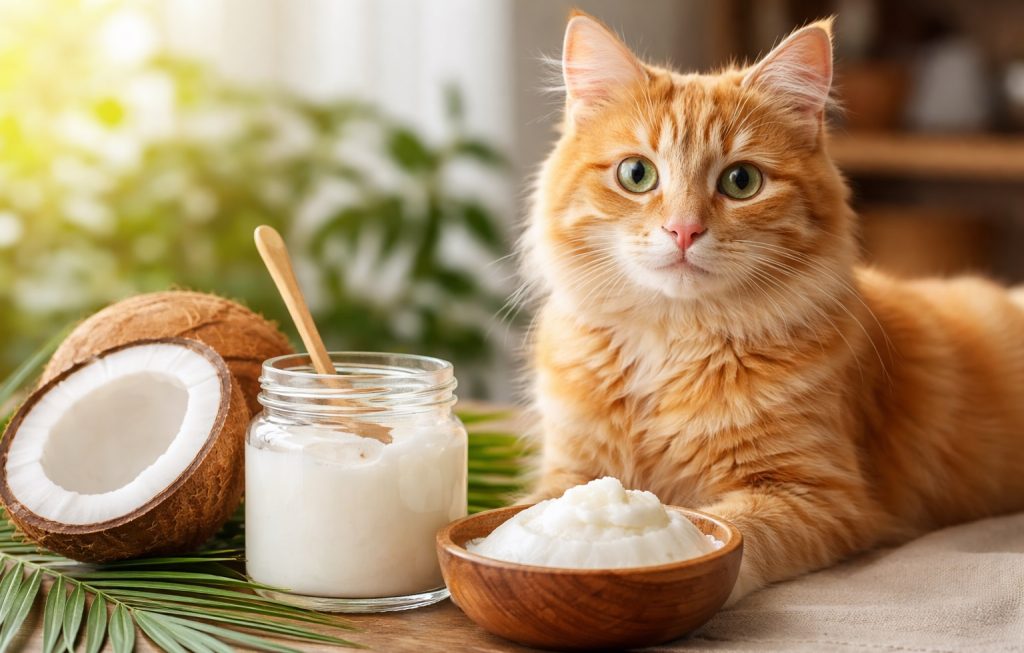
You’re wondering, “Is coconut oil safe for cats?” as you gaze at that jar of coconut oil in your kitchen. Perhaps you’ve heard that it’s a miracle remedy for anything from hairballs to dry skin. Or perhaps you’re in a panic because your cat just licked some off your spoon. I’ve been there, so don’t worry. I’ve done the research so you don’t have to because I’m a cat and natural remedy enthusiast. Together, let’s dissect it in simple terms while sharing a few giggles.
What is coconut oil?
Coconut oil comes from fresh coconut meat. It contains medium-chain triglycerides (MCTs) like lauric acid, which people claim works miracles. Humans use it for hair, skin, cooking, teeth whitening — basically everything except paying taxes.
But for cats, coconut oil works differently. Their digestive systems didn’t evolve around coconuts. Ever seen a cat climb a palm tree in the wild? Exactly.
Is coconut oil good for cats?
Short answer: sometimes, but not always. Coconut oil can help with certain issues like dry skin or hairballs, but it’s not a magic potion. Cats process fats differently than humans, so moderation is key. Ever wondered why your cat gives you that “don’t mess with me” look? Yeah, that’s probably how they’ll feel if you overdo it with coconut oil.
Health Benefits of Coconut Oil for Cats
When used correctly, this tropical oil can solve some of those annoying “cat parent” problems that drive us crazy. Have you ever been woken up at 3:00 AM by the sound of a cat trying to eject a hairball? It’s a sound that haunts dreams. Coconut oil might just be the solution you’re looking for.
Skin and Coat Health
Here’s where coconut oil really comes into its own. Your cat may require some fatty acid support if their fur feels more like a straw broom than a silk cloud. Coconut oil lessens dry skin and enhances coat shine. It relieves flaky, itchy skin brought on by allergies or dry winter air by acting as a natural moisturizer.
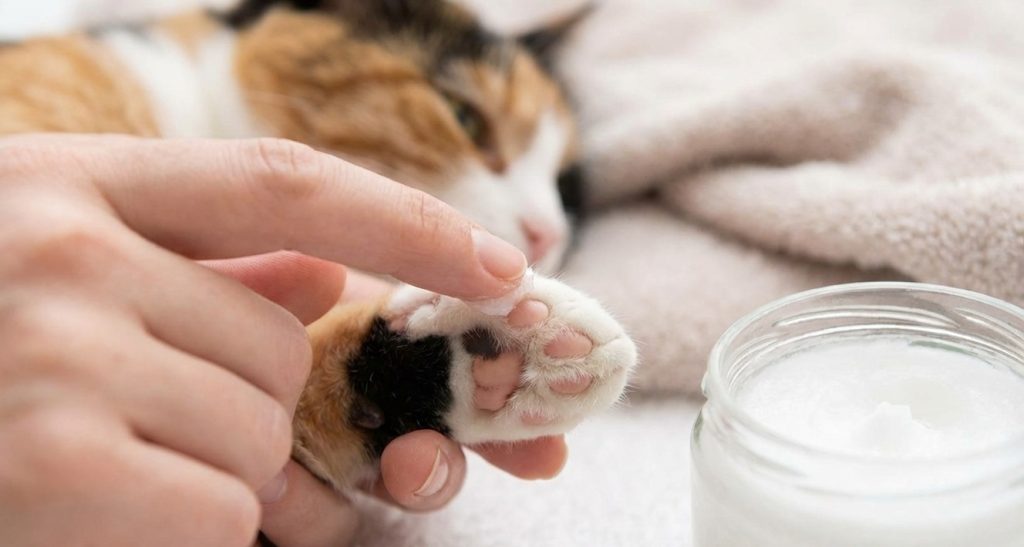
How to apply coconut oil to cats skin
Applying oil to a cat is an art form. You can’t just dump it on them and hope for the best, or you’ll end up with a “grease monkey” lurking in your living room. Follow these steps to keep things clean:
- Rub a tiny amount (about a pea-sized drop) between your palms until it melts.
- Gently rub it through the fur or into the designated dry areas.
- To prevent the oil from clumping, evenly distribute it with a soft brush.
Distract your cat with a treat or a toy for 10 minutes to let the oil soak in before they lick it all off.
Hairball Prevention
Cats groom themselves constantly, and hairballs are the gross result. Coconut oil can act as a mild lubricant, helping fur pass through the digestive tract more easily. Less gagging, less cleanup for you. Win‑win.
Digestive Support
Some cats struggle with constipation or slow digestion. Coconut oil can help food move better through the system.
If you ever asked, “Why is my cat suddenly stressed and avoiding the litter box?” — sometimes simple lubrication helps. But again — tiny amounts only.
Immune & Anti-Inflammatory Support
Coconut oil contains lauric acid, which has antibacterial and anti-inflammatory properties. That means it might give your cat’s immune system a little boost. Think of it as a natural shield, but don’t expect superhero powers.
Potential perks:
- Supports immune defenses
- Mild anti-inflammatory effect
- Helps skin irritation where cats groom excessively
How to Use Coconut Oil for Cats
You have two main methods: topical and oral. Don’t worry — I’ll walk you through both without making you read a coconut science textbook.
Topical
Using coconut oil topically is generally safer than feeding it to them. You can use it to treat:
- Softer fur
- Moisturized skin
- Cracked paw pads
- Minor scrapes
Just remember that whatever you put on your cat, they will eventually lick off. Make sure you’re using pure, organic, virgin coconut oil with no added scents or chemicals. Your cat doesn’t need to smell like a “Tahitian Vanilla” candle.
Oral (Start very small)
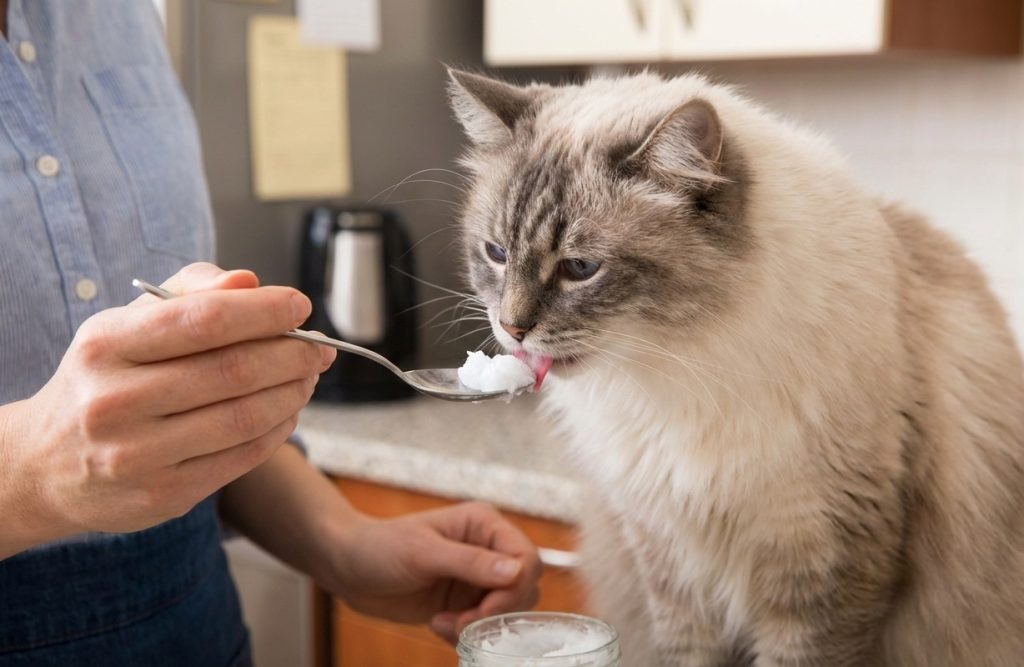
If you decide to feed it to them, you must start with a microscopic dose. I’m talking about the tip of a teaspoon. Mix it into their wet food so they don’t even notice it’s there. Some cats actually love the taste and will lick it right off your finger, but don’t let their enthusiasm fool you into giving them a whole tablespoon.
Risks and Considerations to use Coconut Oil
Before you go full “coconut enthusiast,” we need to talk about the downsides. Cats are delicate creatures disguised as apex predators. Their internal chemistry can be a bit finicky.
Pancreatitis
This is the big scary one. High-fat diets can trigger pancreatitis in cats—a painful inflammation of the pancreas that requires an expensive trip to the vet. If your cat is prone to digestive issues or is already overweight, the high fat content in coconut oil is a significant risk. Always check with your vet before adding a high-fat supplement to their diet.
High in Calories & Weight Gain
Coconut oil is calorie‑dense. A chubby cat doesn’t need extra fat. If your cat already struggles with weight, coconut oil might make things worse.
Digestive Upset
Some cats just can’t handle the oil. It can cause nausea, vomiting, or greasy diarrhea. If you notice your cat looking lethargic or losing their appetite after a dose, stop immediately. Not every “superfood” works for every body.
Not a Cure-All
Coconut oil is not a miracle cure. It won’t replace proper vet care, balanced nutrition, or flea medication. Don’t fall for internet hype.
Type to Use
Only buy Cold-Pressed, Organic, Virgin Coconut Oil. * Avoid “RBD” oil (Refined, Bleached, and Deodorized).
- Check the label for Xylitol—a sweetener that is deadly to pets.
- Glass jars are usually better than plastic to avoid chemical leaching.
Initial Dose
Start with 1/8 of a teaspoon per day. Yes, that is tiny. You want to see how their stomach reacts before you increase the amount. Do this for at least a week before even thinking about giving them more.
Maximum Dose
For an average-sized cat, you should never really exceed 1/2 to 1 teaspoon per day. Even that feels like a lot to me. If your cat is on the smaller side, stick to the lower end of that range.
Application
For skin issues, apply it 2–3 times a week. Doing it every day will just result in a greasy cat and oily stains on your bedsheets. Trust me, washing coconut oil out of a duvet cover is a nightmare you don’t want. 🙂
What to do if your Cat Consumes too much Coconut Oil
If your cat sneaks a big lick from the jar, don’t panic. ), watch for:
- Vomiting
- Diarrhea
- Lethargy
Steps to take:
- Remove access to food temporarily.
- Provide water.
- Call your vet if symptoms last more than 24 hours.
If symptoms persist, call your vet. Better safe than sorry.
Is Coconut Water Safe for Cats?
Coconut water is trendy for humans, but cats don’t need it. It contains natural sugars and electrolytes, which aren’t harmful in tiny amounts but aren’t necessary either. Stick to fresh water for hydration.
Other Coconut Products Cats Can Have
Cats can have tiny amounts of:
- Dried coconut flakes (plain, unsweetened)
- Coconut milk (unsweetened only)
Avoid:
- Sweetened shredded coconut
- Coconut desserts
- Coconut-flavoured snacks made for humans
Cats don’t care about coconut ice cream, even though you probably do.
Alternatives of Coconut Oil for Cats
If you’re looking for the benefits of coconut oil but want something a bit more “cat-friendly,” consider these:
Alternative | Best For | Why it’s great |
Skin, Coat, Joints | High in Omega-3s which cats process better than plant fats. | |
Olive Oil | Constipation | A mild laxative that most cats tolerate well in tiny doses. |
Pumpkin Puree | Digestion/Hairballs | High fiber, low calorie, and very safe for weight management. |
Personally, I think Fish Oil is the superior choice for coat health. Cats are built to eat fish and meat, so their bodies utilize those nutrients much more efficiently than the fats in a coconut.
Frequently Asked Questions
Is coconut oil good for cats skin?
Yes, in small amounts. It can moisturize dry patches and soothe irritation.
Is coconut oil good for cats fur?
It can make fur shinier, but don’t overdo it or your cat will look like they rolled in butter.
Is coconut oil good for cats nose?
A dab can help with dryness, but cats usually handle nose care themselves.
Is coconut oil good for cats teeth?
Nope. Coconut oil doesn’t replace brushing or dental care.
Does coconut oil help with cat fleas?
Although it might temporarily deter fleas, it is not a dependable remedy. Use flea control that has been approved by a veterinarian.
Final Words
Is coconut oil safe for cats, then? Yes, in moderation, is the response. Although it’s not a panacea, coconut oil can help with skin, fur, and hairballs. Always start small, keep an eye out for any negative effects, and seek advice from your veterinarian if in doubt.
Personally, I’ve used coconut oil on my cat’s dry skin, and it worked wonders. But I also learned the hard way that too much leads to messy consequences. IMO, coconut oil is like that friend who’s fun in small doses but exhausting if they stay too long. 😉
Have you tried using coconut oil for your cat’s dry skin before, or are you just looking for a way to stop the hairball madness? Whatever your reason, start small and see how it goes!