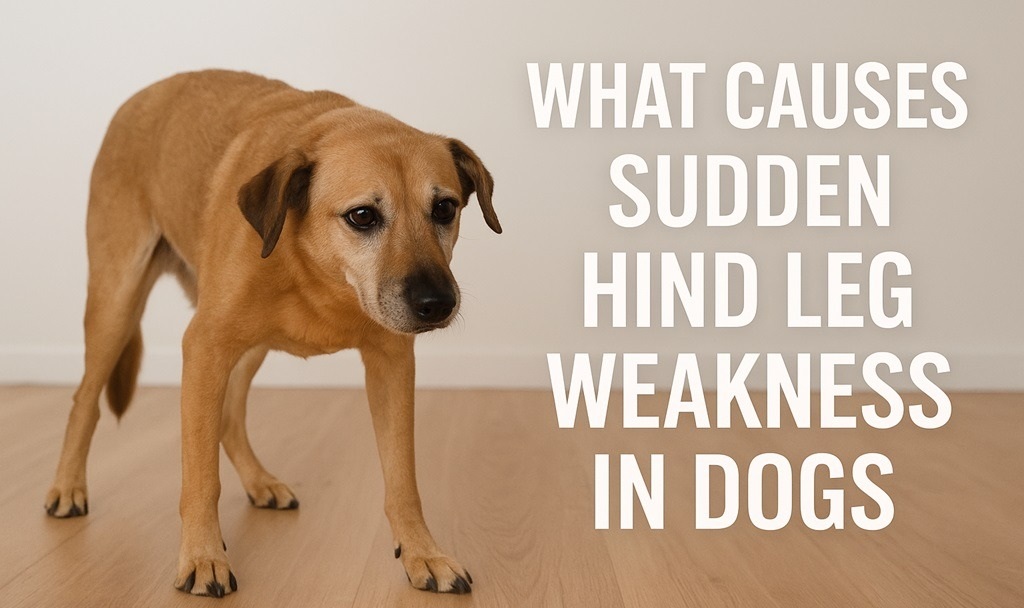
Oh, man, you’re here because you’ve seen that terrifying moment: your dog, your best buddy, suddenly struggles to stand. One minute they’re zooming around, the next their dog back legs weak suddenly, maybe even looking a little wobbly or like their dog back legs weak and shaking. You panic, right? I’ve been there, staring at my own clumsy Great Dane when he had a weird, temporary wobble, and my mind instantly went to the worst-case scenarios. Seeing your dog’s mobility suddenly disappear is gut-wrenching, and it’s totally normal to feel a huge spike of anxiety.
That sudden weakness in a dog’s hindquarters is a big red flag you absolutely cannot ignore. It’s often the first, very obvious sign that something serious is happening inside. We’re not talking about just old-dog stiffness here; we’re talking about an acute loss of function. Today, we’ll walk through the most common, and some of the scariest, reasons why your pup might suddenly lose the use of those powerful back legs. Trust me, understanding the ‘why’ empowers you to act fast.
Symptoms associated with difficulty walking and standing in dogs
You know your dog better than anyone. That’s your superpower. When things go wrong, you notice the subtle shifts before anyone else. But when it comes to the hind legs, some symptoms are practically shouting at you.
You might see your dog dragging their feet or knuckling over, which means they’re walking on the top of their paws, not the pads. Ever had a foot fall asleep? It’s kind of like that, but way worse and totally not funny. You’ll also likely notice a change in their gait—that’s how they walk, FYI—maybe a drunken-looking wobble or an overall weakness that makes them look unstable.
Here are the big, bad signs you should watch for:
- Paresis or Paralysis: Paresis is partial weakness, and paralysis is the total inability to move the legs. If your dog can’t move their legs at all, you need to be in the car headed to the vet right now.
- Shaking or Trembling: The dog back legs weak and shaking symptom is often a sign of pain or extreme muscle fatigue as they try to compensate for the weakness.
- Incontinence: If your dog suddenly can’t control their bladder or bowels, it suggests a problem with the nerves that control those functions, which often share the same path as the nerves for the hind legs.
- Dragging or Scuffing Paws: This is a classic sign of nerve damage, often seen with conditions like Degenerative Myelopathy. They just can’t lift their feet properly.
- Reluctance to Move: They might refuse to go up stairs, jump into the car, or even change positions when lying down.
Orthopedic Issues Leading to Hind Leg Weakness in Dogs
When most people think of wobbly hind legs, they probably jump to arthritis first. And they’re not entirely wrong! But some orthopedic issues are incredibly common culprits, even causing that dramatic dog back legs weak suddenly situation. These problems usually involve the bone structure or the joints themselves, causing pain and instability.
Hip Dysplasia is the one you hear about all the time, especially in bigger breeds like German Shepherds and Labs. Essentially, the hip joint doesn’t fit together correctly, leading to a grinding effect. Over time, this causes significant pain, inflammation, and muscle loss. The weakness creeps up, but a sudden flare-up of pain can certainly make the weakness look acute.
Another huge orthopedic offender is Cruciate Ligament Rupture (the dog version of an ACL tear). The dog is usually running, plants their foot, and pop—sudden, non-weight-bearing lameness. They might only use three legs for a while because that knee is just too unstable and painful to trust. This is one of those times I personally learned how quickly a dog can injure itself just by being, well, a dog.
Causes of sudden hind-end weakness in dogs
This is the serious section, folks. When your dog back legs weak suddenly, like a “five minutes ago they were fine” kind of sudden, the cause usually points toward something neurological, traumatic, or vascular. We have to consider a few immediate, emergency-level scenarios, which is why your first call should always be to your vet.
Traumatic injury
I know, this sounds obvious, but sometimes the trauma isn’t a massive car accident. A nasty fall, a rough-and-tumble play session gone wrong, or a misstep off a deck can cause a fracture, a soft tissue injury, or even a spinal cord contusion. Impact injuries often cause the most immediate and painful weakness. You need to assess your dog for obvious signs of pain or structural damage immediately.
Toxins
Some poisons directly attack the nervous system or muscles. Think about common backyard and garage items. Insecticides, rodent poisons, and even some common human foods (lookin’ at you, Xylitol) can cause a rapid decline in muscle function. If your dog has eaten something questionable, you might see other symptoms like vomiting or drooling, but the sudden weakness is often the most alarming sign. IMO, keeping toxic stuff locked away is non-negotiable.
Neurologic conditions
The spine and the nerves running through it are basically the dog’s central electrical system. When that system gets messed up, the legs are the first to lose power. Spinal cord issues are typically the most common and dramatic cause of sudden hind leg weakness in dogs.
Musculoskeletal conditions
While some muscle issues cause chronic weakness, severe muscle diseases or immune-mediated conditions can cause a rapid, debilitating onset of weakness. These are generally rarer but definitely on the list of potential culprits the vet will investigate.
Heart conditions
Wait, the heart? Yes! A condition called an Aortic Thromboembolism (also called a saddle thrombus) happens when a blood clot lodges at the base of the aorta, blocking blood flow to the hind legs. The legs become suddenly weak, cold, and often excruciatingly painful. This is an extreme emergency and often happens in dogs with severe pre-existing heart disease.
Intervertebral Disc Disease
This is often abbreviated as IVDD, and it’s the poster child for sudden hind leg issues. A disc in your dog’s back acts like a shock absorber. When that disc ruptures or slips (herniates), it presses on the spinal cord. That pressure causes intense pain and can completely shut down the nerve signals to the legs, causing immediate paralysis. Breeds like Dachshunds, Beagles, and Corgis—the ones with the long backs—are incredibly prone to this.
Fibrocartilaginous Stenosis or FCE
FCE is a weird one, often called a “spinal stroke.” Basically, a tiny piece of fibrocartilage (which is typically found inside the discs) breaks off and lodges in an artery supplying the spinal cord, blocking blood flow. It’s non-painful, which is actually one of its defining features, and the weakness is sudden and usually affects one side more than the other. My vet friend once said, “It’s a scary sight, but often the least scary prognosis for sudden paralysis.”
Canine Arthritis
While usually a slow burn, severe flare-ups of Canine Arthritis, especially in the hips or knees, can cause acute pain and a reluctance to bear weight, which might look like sudden hind leg weakness in dogs. The dog’s body is basically saying, “Nope, not moving that joint today.”
Lumbosacral Stenosis
Also known as Cauda Equina Syndrome, this occurs when the nerves at the very end of the spine (the lumbosacral area) become compressed. This condition causes pain, weakness, and can affect the tail and bladder function. It often gets worse with exercise, making the weakness noticeable after activity.
Degenerative Myelopathy
Degenerative Myelopathy (DM) is a progressive, irreversible spinal cord disease. It’s often compared to Multiple Sclerosis in humans. The disease usually starts as a mild, subtle clumsiness, but can progress to significant weakness quickly. German Shepherds, Boxers, and Pembrokes are sadly overrepresented here. This is one of those diagnoses that takes the wind right out of your sails.
Patellar Luxation
This is essentially a kneecap that pops out of place. It’s more common in smaller breeds (think Yorkies and Toy Poodles). The dog will suddenly hold their leg up, skip a few steps, and then it pops back in, and they’re fine. The temporary loss of function looks like sudden weakness. If it happens a lot, it causes chronic weakness and arthritis.
Cancer
Tumors on the spinal cord, nerves, or even in the bones (like osteosarcoma) can cause weakness. The tumor grows, presses on the structures, and boom—sudden neurological deficits appear. Spinal tumors can cause intense pain and rapid, asymmetrical weakness.
Metabolic and Endocrine Factors
Conditions like severe untreated Diabetes or Hypothyroidism can sometimes cause generalized muscle weakness or a condition called polyneuropathy, which affects the peripheral nerves. While typically a slower onset, a metabolic crisis could precipitate a sudden, noticeable downturn.
Common Causes of Back Leg Weakness in Dogs
To wrap up the “why” in a nice, neat, slightly-terrifying bow, here’s a quick list of the most frequent reasons people rush into the vet’s office saying, “Dog back legs weak suddenly!“
The big three culprits for sudden weakness are:
- IVDD (Intervertebral Disc Disease): Sudden onset, usually painful, often leads to full paralysis.
- FCE (Fibrocartilaginous Stenosis): Sudden onset, not painful, usually asymmetrical weakness.
- Acute Orthopedic Injury: Like a fractured bone or a torn ACL/Cruciate ligament—sudden, painful, often a clear history of a specific moment of injury.
Diagnosing Hind Leg Weakness
You’ve rushed to the vet, which is the right call! Now what? Your vet starts detective work, and trust me, they’re looking for clues everywhere. They’ll ask you a million questions—when it started, if it was sudden, if your dog is in pain, etc. Be prepared; they need to know everything.
The physical exam is step one. The vet will test your dog’s reflexes—they pinch the toes to see if the dog pulls their foot back, checking for what’s called a proprioceptive deficit. They’re trying to figure out if the problem is neurological or purely orthopedic. Do they know where their feet are? Can they feel the pinch? These simple tests tell the vet where to look next.
Diagnostic tools often include:
- X-rays: These are great for spotting fractures, severe arthritis, and sometimes disc calcification, but they don’t show the spinal cord itself.
- Blood Work: The vet runs blood panels to rule out metabolic issues, toxins, or systemic infections that could cause muscle weakness.
- Advanced Imaging (MRI/CT): This is the gold standard for diagnosing spinal cord issues like IVDD, FCE, or tumors. If your dog needs this, your vet will likely refer you to a specialty center. I always tell friends: An MRI is expensive, but it gives you the map you need for an accurate diagnosis and treatment plan.
Treatment and Recovery Options for Hind Leg Weakness
The treatment, naturally, depends entirely on the diagnosis. We’re not talking about a one-size-fits-all, magic-bullet cure here. Once the vet figures out why your dog back legs weak and shaking, they’ll develop a tailored plan.
Medications and pain relief
For disc issues (IVDD) that aren’t severe enough for immediate surgery, or for painful arthritis flare-ups, strict crate rest is mandatory. Seriously, they mean strict. Your vet will also prescribe a combination of medications:
- NSAIDs (Non-Steroidal Anti-Inflammatory Drugs): These reduce inflammation and pain.
- Muscle Relaxants: These help ease spasms associated with spinal pain.
- Steroids: Sometimes used carefully to reduce swelling around the spinal cord, especially in acute IVDD cases.
Physical therapy and exercises
Once the initial crisis passes, rehabilitation therapy is crucial for regaining muscle mass and function. A certified canine rehab specialist will use underwater treadmills, therapeutic exercises, and massage. It’s like doggy personal training, but way more serious. This is where the magic of recovery truly happens, slowly and steadily.
Red light therapy
Also known as Photobiomodulation Therapy, this is a non-invasive treatment that uses specific wavelengths of light. It can reduce pain and inflammation and stimulate tissue healing. It’s often used after surgery or for chronic arthritis pain. I use a handheld unit on my dog’s hips; IMO, it truly helps with his stiffness.
Surgery (if applicable)
For severe IVDD, fractures, or certain tumors, surgery becomes the only option to decompress the spinal cord or repair the structural damage. This is a big deal, and the recovery is long, but it often gives the best chance for full or near-full recovery of function.
Mobility aids and supplements
As they recover, or for chronic conditions like DM, mobility aids are lifesavers.
- Wheelchairs/Carts: These give your dog back their freedom and independence when they can’t support their weight.
- Harnesses/Slings: A simple sling allows you to help support their back end while they walk or go potty.
- Joint Supplements: Ingredients like Glucosamine, Chondroitin, and Omega-3 Fatty Acids help support joint health and slow the progression of degenerative diseases.
Preventing Hind Leg Weakness in Dogs
We can’t prevent every weird thing that happens to our dogs (if only!), but we can certainly stack the deck in their favor. Prevention is all about managing their weight and keeping their joints in tip-top shape.
Weight management
Maintaining a lean body weight is the single most important thing you can do for your dog’s joints and spine. Excess weight puts massive strain on the hips, knees, and all those delicate discs in the back. You should be able to easily feel your dog’s ribs without pressing hard.
Regular vet checkups
Catching issues early is huge. Your vet can spot subtle changes in your dog’s gait or muscle tone that you might miss. Regular checkups, especially as your dog gets older, allow for early intervention.
Nutrition and joint support
Feed a high-quality, balanced diet. For dogs prone to joint issues, starting a joint supplement early—even before symptoms appear—is a great preventative measure. Always talk to your vet about which supplements they recommend.
Safe exercise routines
Avoid excessive jumping, especially on and off furniture or in high-impact sports if your dog is a prone breed (long backs, big breeds). Use ramps for cars and stairs. Consistent, moderate exercise like swimming or brisk walking builds muscle strength around the spine and joints, offering a natural form of support.
Frequently asked Questions
What should I do immediately if my dog’s back legs suddenly give out?
Get to the vet immediately. Do not try to treat it at home. Carefully move your dog onto a stretcher or blanket and transport them to the nearest animal hospital. Restrict all movement; do not let them walk or jump. This is a medical emergency.
Can a dog recover from sudden hind leg weakness?
Absolutely! Recovery depends entirely on the cause. Dogs with FCE often recover well with physical therapy, and many dogs with IVDD that receive timely surgery or strict medical management regain full function. Prognosis is excellent for a luxating patella fix, too.
Is it always a spinal injury when the dog back legs weak suddenly?
No, but it’s one of the top contenders. It could be an orthopedic injury (like a torn ACL), a sudden illness, a saddle thrombus (blood clot), or even a severe metabolic issue. Only a thorough vet exam can tell you for sure.
How can I make my home safer for a dog with weak hind legs?
Put down non-slip runners or rugs on all hard floors to prevent slipping, which can cause further injury. Block off stairs, and consider a ramp for access to beds and couches. A comfy, supportive orthopedic bed is also a must.
Final Words
Seeing your dog struggling with sudden hind leg weakness is truly one of the most frightening experiences a pet owner can go through. It immediately makes you feel helpless, but here’s the kicker: you are not. You are the one who noticed, and you are the one who is going to get them help.
Remember, the moment you see that terrifying wobble or the sudden loss of motion, you need to act fast. Don’t waste time second-guessing yourself or trying to Google a magic home cure. Get the diagnosis, trust your vet, and be your dog’s best advocate through the recovery. They depend on you, and I know you won’t let them down. Keep a sense of humor, stay strong, and know that you’ve got this! 🙂