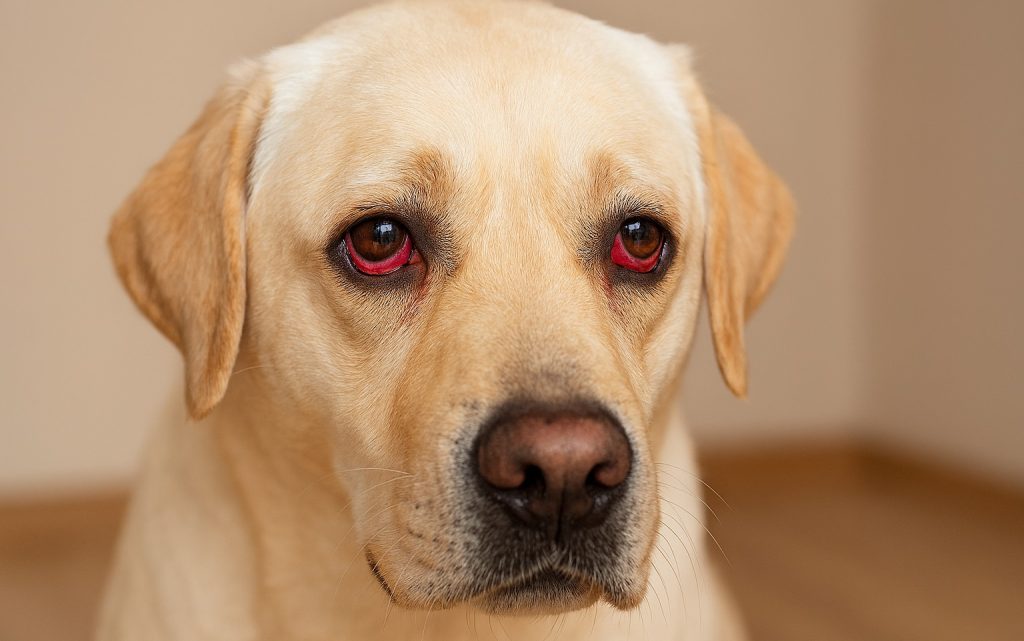
You know that moment when your dog looks up at you with those big, soulful eyes… and suddenly you notice they’re red? Cue the panic. I’ve been there, staring at my pup thinking, “Why are my dog’s eyes red? Did he just binge-watch Netflix all night without me?” Spoiler: it’s usually not because your dog pulled an all-nighter.
Red or bloodshot eyes in dogs can mean a lot of things—from something as simple as irritation to something more serious that needs a vet’s attention ASAP. And because our furry friends can’t exactly tell us, “Hey, my eye hurts,” it’s up to us to figure it out. So let’s break it down together, friend.
Dog Eye Health
Dog eyes work a lot like ours, but they’re way more prone to irritation, allergies, and trauma. I always say dogs are basically toddlers with fur — curious, chaotic, and fully committed to poking their faces into things they absolutely should not.
Healthy dog eyes look:
- Clear
- Bright
- Free of redness
- Free of yellow or green discharge
- Comfortable
When something looks “off,” your dog usually shows it pretty quickly. That redness you’re seeing? It’s not a random decoration. It’s a sign.
Ever wondered why redness happens so fast? Because eyes have tons of tiny blood vessels that get irritated at the slightest provocation. Once they dilate, boom — redness.
What it means if your dog has red or bloodshot eyes
Redness in a dog’s eyes essentially means increased blood flow. Think of it like a traffic jam in the tiny blood vessels of the eye. This congestion can happen on the surface, within the structures, or even behind the eye.
It’s your dog’s way of screaming, “Hey, something’s not right in here!” Red eyes are a symptom, not a diagnosis. The redness points toward inflammation or irritation caused by a long list of potential culprits. Our task is to become a detective and figure out the underlying cause of this unwelcome color change.
Types of Red Eyes in Dogs
Understanding the type of redness helps you understand what’s going on. Don’t worry — I promise to keep this simple and not lecture you like a biology professor.
Episcleral Injection
This redness happens deeper in the eye. You usually see larger blood vessels that look more spread out. It often points to more serious problems like glaucoma or uveitis.
Conjunctival Hyperemia
This is the classic red-eye look — smaller vessels on the surface look bright red. Conjunctivitis often causes this. Basically, your dog gets the dog-version of “pink eye.”
Subconjunctival Hemorrhage
If you ever see bright red bleeding under the surface, your dog might look like they lost a boxing match. It usually points to trauma or a clotting issue.
Corneal Neovascularization
These tiny blood vessels grow onto the cornea (the clear part). They appear when the eye is trying to heal itself but usually signal a chronic problem.
Hyphema
This is actual blood inside the eye. Yes… inside. If you see this, don’t ask questions — call your vet immediately. Trust me.
Causes of Red Eyes in Dogs
The list of potential causes is long, but don’t let it overwhelm you. We’ll break down the major players that contribute to why your dog’s eyes are red.
Bacterial, viral, or allergic conjunctivitis
Ah, the classic pink eye. Conjunctivitis is just inflammation of the conjunctiva. It’s often infectious (bacterial or viral), causing thick discharge and inflammation. But sometimes, it’s just allergies—my dog gets this every spring, and it’s always accompanied by the “itchies.”
Environmental Irritants
Smoke, dust, pollen, or even shampoo can irritate your dog’s eyes. Ever sprayed perfume near your pup? Bad idea.
Infectious diseases
Some systemic infections cause red eyes as a symptom. These include viruses, tickborne diseases, and fungal infections.
Dry Eye Syndrome
Also called Keratoconjunctivitis Sicca (KCS), this happens when your dog doesn’t produce enough tears. Imagine walking around with sandpaper eyes—ouch.
Exposure to irritants
Chlorine, dirt, or even grooming products can irritate your dog’s eyes. I once used a new dog shampoo that smelled like lavender dreams, and my dog hated it so much he rubbed his face on the couch until he looked like he was crying red paint. Lesson learned.
Bleeding or clotting disorders
Sometimes, the redness isn’t local; it’s systemic. If your dog has a problem with clotting, like hemophilia or a reaction to rodenticides, you might see bleeding into the eye (hyphema or subconjunctival hemorrhage).
Eye Injury or Trauma
Dogs run, jump, wrestle, and occasionally headbutt coffee tables. Trauma is one of the most common causes of sudden redness.
Cherry Eye
This is when the gland in the third eyelid pops out. It looks like a red blob in the corner of the eye.
Conjunctivitis
Technically already mentioned, but it’s so common it deserves its own spotlight. Allergies, dryness, or debris can cause this constantly.
Keratoconjunctivitis Sicca (KCS)
Again, this is the official name for Dry Eye Syndrome. It’s a chronic condition, and if your dog has persistently red, uncomfortable eyes, KCS is high on the suspect list. It’s especially common in certain breeds, like Cocker Spaniels.
Entropion
This is when the eyelids roll inward. Eyelashes scratch the cornea, which is about as fun as it sounds. Some dog breeds deal with this genetic issue.
Corneal Ulcers
A corneal ulcer is essentially an open wound on the clear surface of the eye. They’re incredibly painful and cause intense redness around the clear cornea. Imagine having a scrape on your eyeball—yeah, it’s that bad.
Uveitis
This is inflammation inside the eye, and trust me, your dog will act like something is very wrong. Redness here is deeper and more worrisome.
Blepharitis
This inflammation of the eyelids makes the edges look swollen, itchy, and red. It often comes with crusting.
Tumor
While rare, a tumor or mass in or around the eye can cause pressure, irritation, and redness. Any abnormal growth needs prompt investigation.
Glaucoma
Glaucoma is one of the most painful and rapidly blinding conditions an eye can face. It’s caused by excessive pressure inside the eye. The eye often appears red, cloudy, and sometimes enlarged. This is a true emergency.
High Blood Pressure
You’d be surprised how many internal issues show up in the eyes first. High blood pressure can cause blood vessels to burst.
Other eye conditions
The list is long, including things like retinal disease or orbital cellulitis, but the takeaway is this: Redness is a clear signal that the dog’s eye is unhappy. Don’t mess around trying to diagnose rare conditions; leave that to the experts.
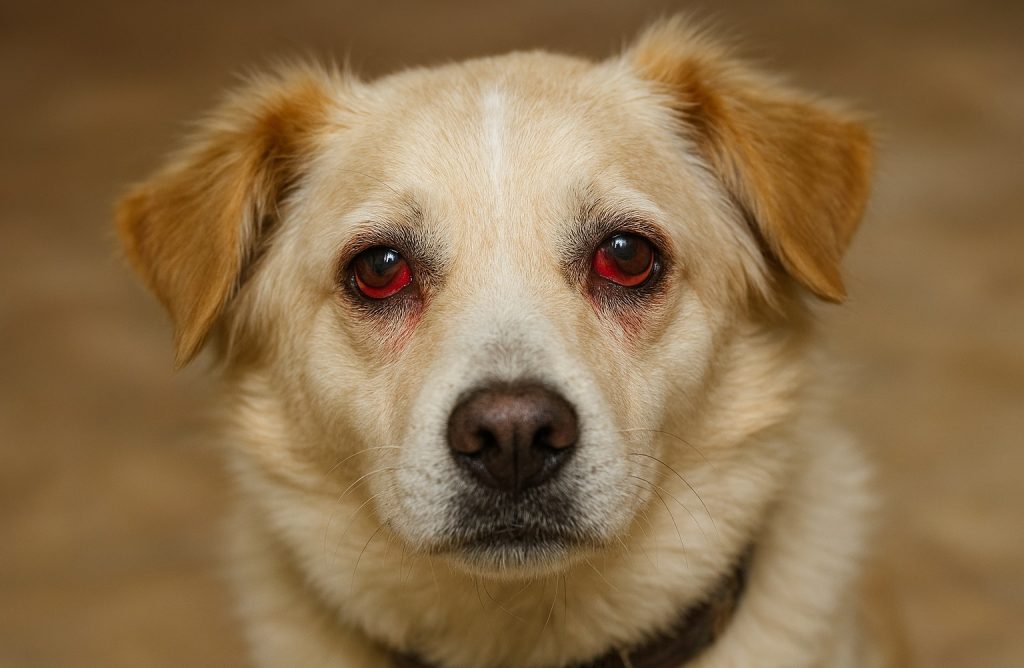
When Is a Red or Bloodshot Eye in My Dog an Emergency?
Great question, and the answer is simple:
If your gut says “this looks bad,” treat it as an emergency.
Here are red flags:
- Sudden redness
- Swelling
- Cloudiness
- Squinting
- Bleeding
- Your dog can’t open the eye
- They paw at the eye nonstop
If you ever see red eyes combined with head shaking, loss of balance, or bleeding inside the eyeball, don’t wait. I’m not trying to scare you… okay maybe a little, but in a helpful way.
What to do if your dog has red or bloodshot eyes
Okay, panic averted, but what’s your immediate game plan? You don’t want to accidentally make things worse. Follow these steps to keep your dog safe and comfortable until professional help arrives.
Step 1: Do not attempt to treat the eye yourself
Seriously, this is not the time for internet remedies or that leftover human eye drop from last year. Don’t put anything in your dog’s eye without a vet’s specific instruction. You could be treating the wrong thing, or worse, causing an ulcer to deteriorate faster.
Step 2: Prevent your dog from rubbing or scratching the eye
The urge to rub an itchy or painful eye is overwhelming. Your job is to stop this. The best way to prevent self-trauma is to immediately place an E-collar (the “cone of shame”) on your dog. If the eye is irritated, this cannot be compromised.
Step 3: Pay Attention to Significant Symptoms
Make a mental list of the main symptoms before you call the veterinarian. This facilitates the veterinarian’s prompt triage of the situation. Consider this:
- Is the eye squinting, which is a serious indication of pain?
- Is there a discharge, and if so, is it thick, green, yellow, or watery?
- Is the entire eye bloodshot, or is the redness confined to a single area?
- When did you initially become aware of it? Was it gradual or abrupt?
Step 4: Immediately contact an emergency clinic or your veterinarian.
Give a detailed description of the symptoms and inquire about their recommendations. Don’t waste time if they ask you to come in. The best thing you can do is to get a professional opinion.
Step 5: Get Your Dog Ready for a Secure Journey
Make the trip to the veterinarian as stress-free as you can. Keep the cone on and make sure your dog is secure. If the eye seems light-sensitive, turn down the lights in the vehicle.
Helping Your Pet Before the Vet Visit
You’ve called the vet and are getting ready to go. What can you do in those crucial moments to help your dog feel better?
Initial Care Steps
Preventing additional harm is the most important thing you can do. Don’t take off your e-collar! You can use a sterile saline solution (such as contact lens solution, not cleaning solution) to gently flush the eye if you suspect a chemical exposure. Avoid touching or attempting to remove any embedded objects.
How to Keep Your Dog Comfortable
Keep lights soft, reduce activity, and offer calm reassurance. If your dog is anything like mine, they’ll try to play fetch while half-blind, so limit the chaos.
How Vets Diagnose the Cause of Red Eyes in Dogs
When you arrive at the clinic, the vet won’t just guess. They take a methodical approach to determining the cause of my dog’s red eyes.
- Complete Eye Exam: They will begin with a comprehensive visual examination, examining the cornea, conjunctiva, and eyelids.
- Schirmer Tear Test (STT): To diagnose KCS (Dry Eye), a small strip of paper is used to measure tear production. It’s quick and necessary.
- Fluorescein Stain Test: An orange dye is applied to the eye. The dye will adhere to any scratches or ulcers and turn green when exposed to blue light. This is the method used to identify ulcers.
- Intraocular Pressure (IOP) Measurement: The pressure inside the eye is measured using a specialized device called a tonometer. Low pressure indicates uveitis, while high pressure indicates glaucoma.
- Additional Tests: Depending on the results, they may also order blood tests to check for systemic causes such as clotting problems or infectious diseases, or they may take a sample (cytology) of the discharge.
Treatment for Red Eyes in Dogs
The most popular treatments are as follows: • Antibiotic eye drops (for bacterial infections); • Anti-inflammatory drops
- Synthetic tears (for dry eyes)
- Steroid drops (never applied to ulcers)
- Pain management;
- Surgery (for tumors, entropion, and cherry eye)
- Medications that lower blood pressure (for glaucoma)
The safest option is selected by your veterinarian. All you have to do is follow the directions and then give treats.
Frequently Asked Questions
Are red eyes an emergency?
Sometimes yes, sometimes no. If your dog shows pain or vision changes, treat it as urgent.
Can I treat my dog’s red eyes at home?
Nope. Don’t risk it. Always consult a vet.
Will red eyes go away on their own?
Minor irritation might, but infections or injuries won’t.
Can allergies cause red eyes in dogs?
Yes, just like humans. Seasonal allergies can make eyes itchy and red.
How can I keep my dog’s eyes from getting red?
Avoid allergens, plan routine veterinary examinations, and shield their eyes while they play.
Final Words
Therefore, keep in mind that it’s more than just a cosmetic problem the next time you find yourself wondering, “Why are my dog’s eyes red?” From minor irritation to a serious illness, it could be anything.
Here’s my IMO: never gamble with your dog’s eyesight. Call the vet, get it checked, and save yourself the worry. And hey, if your dog ends up rocking the cone of shame for a week, just remind them it’s temporary—and maybe snap a few funny pics for Instagram 🙂