
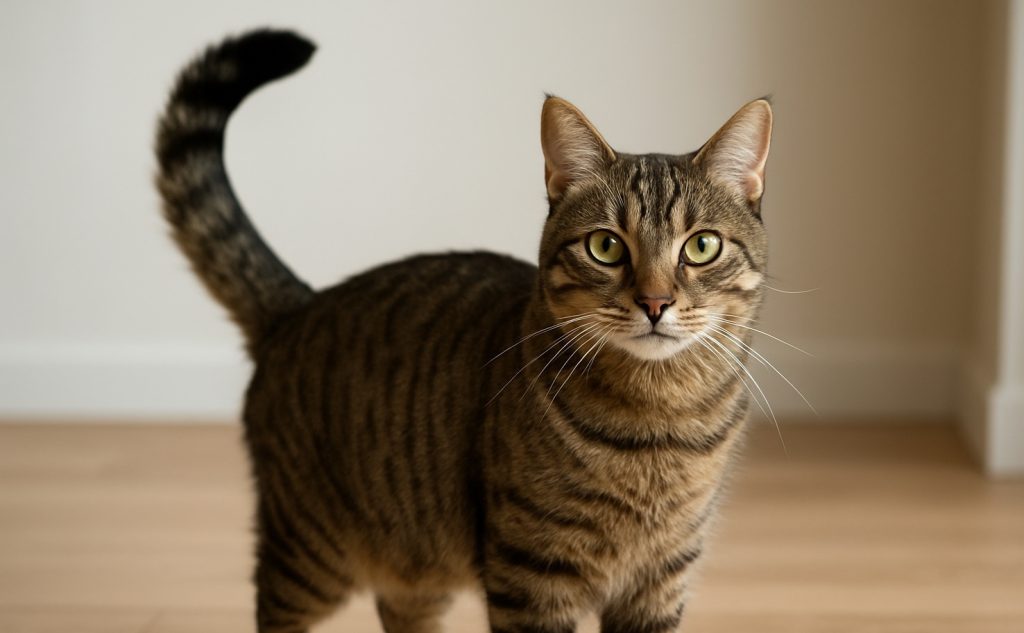
Have you ever noticed how your cat’s tail seems to be living on its own? It wails softly one second, then twitches as if it’s just been told bad news. Why do cats move their tails so much, you might ask? Are they attempting to communicate with you in secret, or is it just a strange occurrence?
Cats move their tails to communicate with you, not just for amusement. Yes, that tail flick has meaning, and you won’t see your cat the same way after you figure out the “language.”
I’ve had cats my whole life, and IMO, understanding their tails feels like unlocking a hidden superpower. So, grab your coffee (or catnip tea — no judgment 😸) and let’s decode the mystery behind that swishy, twitchy, expressive feline appendage.
Why Do Cats Have Tails?
Okay, obvious question, but let’s start here. Cats didn’t just evolve tails for the aesthetic (though they do rock them). Tails have a variety of emotional and utilitarian uses.
What Are Cat Tails Used For?
A cat’s tail is a precise tool designed for agility, balance, and communication, not just a fluffy ornament. Let’s examine some of its most amazing features.
Maintaining Balance
Have you ever seen your cat walk like a tightrope walker across the back of your sofa? The heavy lifting is being done by their tail.
Particularly when a cat jumps, climbs, or lands, the tail serves as a counterbalance. They would most likely resemble awkward toddlers learning to walk without it.
Providing Sensory Feedback
Cats can sense pressure, vibration, and touch thanks to nerve endings scattered throughout their tails. Consider it an additional limb that aids in their perception of their environment.
Have you ever unintentionally stepped on your cat’s tail? (It happens to the best of us, so don’t worry.) That response is a combination of pain and overstimulation, not just rage.
Non-Emotional Movement
Sometimes a tail moves just because it can. similar to how your cat’s tail waggles a little when they’re concentrating on a toy or bug. It’s reflexive coordination, not always emotion.
Dreaming
Yes, cats dream! And yes, their tails can move in their sleep. Your cat is most likely chasing dream mice or reliving their most recent spectacular leap when you notice their tail twitching in the middle of a nap.
Warmth
That cute moment when your cat sleeps and tucks its tail around itself? It’s an automatic blanket move. Cats use their tails for additional insulation and curl up tightly to retain body heat. Clever, huh?
Why It’s Important to Decode a Cat Tail’s Meaning
Look, you need to learn your furball’s tail talk if you want to understand them completely. It serves as their main means of communicating their intentions, feelings, and even medical conditions. Ignoring it would be like attempting to speak with someone who doesn’t speak the same language without a translator. You’ll miss a lot!
Knowing the meaning of your cat’s tail aids you in:
- Prevent scratches and nips: An attack is frequently preceded by a fast-thrashing tail. Believe me.
- Make your relationship stronger: Your cat will feel safe and understood when you suitably react to their cues.
- Assess their degree of comfort: You can tell if they’re content, anxious, or simply bored.
Really, listen. The least you can do for your furry master is this.
Cat Tail Communication
Let’s break down the tail talk. Each movement or position says something specific.
Tail held high with a curve
This is the feline version of a confident strut. Your cat feels happy, secure, and maybe even a little sassy. It’s like saying, “I own this place.”
Tail straight up with a quiver
Ever seen your cat’s tail vibrate like it’s got the zoomies? That’s pure excitement or affection. Some cats even do this when they greet you. It’s adorable and weirdly flattering.
Tail gently swishing from side to side
This one is challenging. It might indicate that your feline is attentive, inquisitive, or a little irritated. Consider it the feline equivalent of tapping your foot while you’re thinking.
Tail low and thrashing rapidly
Uh-oh. This is cat-speak for “back off”. Your cat’s irritated or overstimulated. IMO, it’s best to stop petting and give them space before they go full ninja.
Puffed-up tail (like a bottle brush)
Drama alert! A puffed tail means fear or aggression. Your cat’s trying to look bigger to scare off whatever’s freaking them out. It’s like their version of yelling, “I’m not scared, YOU’RE scared!”
Tail wrapped around itself or tucked low
This is the fetal position. Your cat feels anxious, cold, or just wants to be left alone. Respect the mood.
Tail wrapped around you
Cue the “aww.” This is a sign of affection and trust. It’s like a hug, but cooler because it’s from a cat.
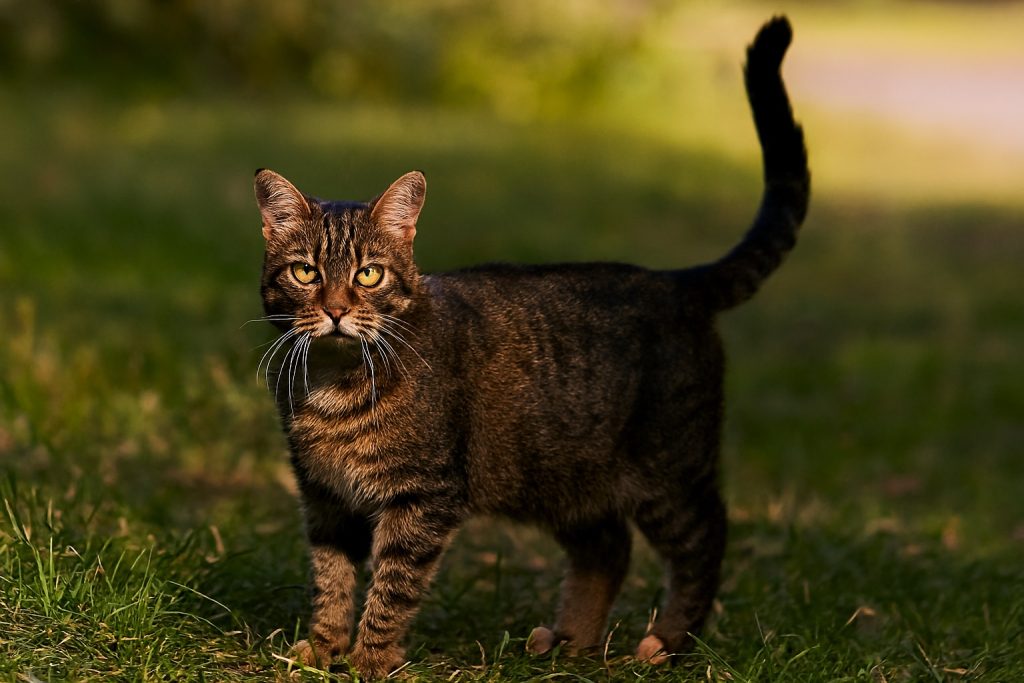
Why Do Cats Wag Their Tails? Is There a Language?
Here’s where things get interesting. Dogs wag their tails when happy, but cats? Not so simple.
A cat’s tail wagging can indicate a variety of emotions, including curiosity, annoyance, excitement, and even love. The context is crucial.
Let’s break down some popular wag styles.
Thrashing Tail Movements
This isn’t a cheerful wag. It’s frustration, irritation, or overstimulation. If your cat’s tail is thrashing while you pet them, take the hint. They’re finished.
Twitching the End of the Tail
Usually, a slight twitch at the tip indicates mild excitement or curiosity.
Your cat may be taking in new information or watching something fascinating. It resembles their “thinking face.”
Swishing Tails
Playfulness or hunting mode can be indicated by swishing. Your cat is in predator mode if they waggle their tail while pursuing a toy. If you don’t want to be the victim, don’t interrupt.
Tail Quivers
If your cat’s tail trembles upright near you, it’s a sign of affection (and possibly excitement).
In some cases, cats also do a similar motion when marking territory. But if it’s around you, it’s usually the love kind, not the “mine” kind. 😉
Why Do Cats Wrap Their Tails Around You?
Isn’t this one of the cutest things cats can do? Your cat is essentially claiming you when they wrap their tail around your arm, shoulder, or leg. It’s a profound expression of trust and love. They consider you a member of their family, their inner circle.
This gesture is frequently likened to a human handshake or hug. They are literally reaching out to you. Additionally, it strengthens that bond by transferring their scent onto you. Enjoy the fact that you were selected the next time your cat does this!
Why Do Cats Move Their Tails While Sleeping?
You’re observing the dream zone if you’ve ever seen your cat’s tail flick or twitch while they’re asleep.
Cats enter REM sleep, where their brains stay active, and that includes tail movement.
Sometimes it’s dream-chasing, but other times, the tail reacts to external sounds or sensations even when they’re half-asleep.
Kind of like when you twitch in your sleep after dreaming about falling — except your cat looks 100% cooler doing it.
Do Cats Control Their Tails?
Good question! The majority of the time, yes. Because of their intricate anatomy and neural connections, cats have remarkable control over their tails.
Anatomy of the Cat Tail
About 10 percent of a cat’s total bones are found in its tail, which has 19 to 23 vertebrae. It is extremely sensitive and flexible due to its abundance of muscles, tendons, and nerves.
Voluntary Movement
Cats can intentionally move their tails to balance or convey feelings. That tail flick was deliberate, then.
Involuntary Movement
But some movements are automatic, particularly when you’re sleeping or reacting reflexively (e.g., flinching from touch).
Therefore, some twitches just happen on autopilot, even though cats can control their tails most of the time.
Frequently Asked Questions
When I pet my cat, why does he wag his tail?
He’s telling you he’s had enough. Light wagging means “meh, okay,” but strong flicks mean “stop, human.”
Why do cats move their tails when sitting?
They’re either focused, irritated, or just being dramatic. Cats love a good tail flick for emphasis.
Why do cats’ tails puff up when playing?
Play can mimic hunting or fighting behaviour. A puffed tail may show excitement rather than fear.
Why does my cat wag his tail when I talk to him?
They’re reacting to your voice. It could mean curiosity, annoyance, or affection. Cats are complex, okay?
Do cats move their tails on purpose?
Yes. Most tail movements are intentional and communicative. Your cat’s basically texting you with their tail.
Final Words
So, why do cats move their tails? Because they’re expressive, sensitive, and slightly dramatic creatures. You can strengthen your relationship with your cat and prevent misunderstandings (and scratches) by learning to read their body language, particularly their tail talk.
Don’t dismiss your cat’s tail flicking the next time. Listen carefully. “I love you,” “Leave me alone,” or “Feed me, peasant” are some possible phrases they are using. You’ll be one step closer to comprehending your enigmatic roommate in any case. 😼
Do you want to see how well you can read tails in person? Keep an eye on your feline during various interactions and moods. You’ll be shocked at how much they’re “talking” without actually saying anything.



Pingback: Do Cats Control Their Tails? Feline Secrets Revealed!