Ever caught your dog curling up next to you, turning around, and plopping their bum right in your direction like it’s the most natural thing in the world? Yeah… same here. The first time my dog did it, I laughed, then wondered if I’d somehow offended him. If you’ve Googled Why do Dogs Sleep with their Bum Facing You?, trust me—you’re not alone, and you’re definitely not being disrespected.
Let’s talk dog logic, real-life behavior, and a little canine psychology. I’ll break this down like we’re chatting on the couch while your dog snores behind us. FYI, dogs have reasons for everything—even the weird stuff. 🙂
Reasons Why Dogs Sleep with Their Bum Facing You
Dogs don’t randomly flop down and hope for the best. They choose sleep positions based on instinct, comfort, trust, and habit. When your dog turns their back—or bum—toward you, they actually send a strong message. And no, it’s not rude.
Supreme Trust
Your dog exposes their most vulnerable side when they sleep. When they face away from you, they trust you completely. Dogs protect their face and vital organs first. When your dog points their rear at you, they believe you’ve got their back—literally. That level of trust doesn’t happen overnight.
Ever notice how your dog stays alert around strangers but relaxes fully around you? That’s trust in action.
“Back-to-Back” Protection
Dogs evolved with pack instincts. In the wild, dogs and wolves sleep back-to-back to guard each other. When your dog sleeps with their bum facing you, they treat you like a trusted pack member. They watch one direction, and they assume you’ll handle the other.
IMO, that’s teamwork at its finest—even if it looks funny.
Scent Sharing and Bonding
Dogs communicate through scent more than anything else. Your dog shares and absorbs your scent when they press close and turn their rear toward you.
This behavior strengthens emotional bonds. Dogs often sleep this way with people they love the most. Your dog basically says, “Yep, you’re my human.”
Physical Comfort
Let’s be honest—sleep positions come down to comfort. Sometimes, it’s not that deep. Your dog might just find this position comfy. Think of it like us choosing the “weird but cozy” side of the bed.
Temperature Regulation
Dogs are like little furry radiators. If they sleep face-to-face with you, the combined heat from your breath and theirs can become overwhelming. By turning around, they manage their internal body temperature more effectively. They get the warmth of your body against their back without the stuffy feeling of breathing in your recycled air.
Facing away from you
If your dog faces away from you but doesn’t necessarily touch you, don’t take it personally. This position often indicates that your dog is confident and independent. They feel secure enough in their environment to look toward the door or the window. They aren’t ignoring you; they are simply taking the “watchman” role seriously.
Side sleeper
Side sleepers love stability. Dogs often turn their back or rear toward you to anchor themselves. This position keeps muscles relaxed and joints supported. Older dogs especially love it. Comfort rules bedtime.
The donut
Curled up in a tight ball, bum facing out — this position protects their vital organs while keeping them cozy.
They don’t like ventral contact
Some dogs dislike chest-to-chest contact. They prefer side or back alignment. Dogs still crave closeness without full-body contact. Turning their bum toward you gives them space and comfort.
Respect their boundaries, and they’ll trust you more.
They want to be left alone
Yes, dogs sometimes need “me time.” Facing away signals they want space but still trust you enough to stay nearby.
It’s their most comfortable position
Sometimes we overthink things. Your dog might sleep with their bum facing you simply because it feels good. Just like you might prefer sleeping on your left side or with one leg out of the covers, dogs have personal preferences. If they’ve found a “sweet spot” in the mattress, they’re going to stay there regardless of which way they’re pointing.
They’re marking their territory
Dogs mark territory through scent glands near the tail. Sleeping close spreads scent naturally. Your dog may mark you as “mine” without lifting a leg—thankfully. Yes, you belong to your dog now.
To avoid eye contact
Direct eye contact can feel intense for dogs. Facing away helps them shut down mentally and physically.
It’s just a habit
Sometimes, there’s no grand explanation. Dogs are creatures of habit, and this might just be their go-to snooze style.
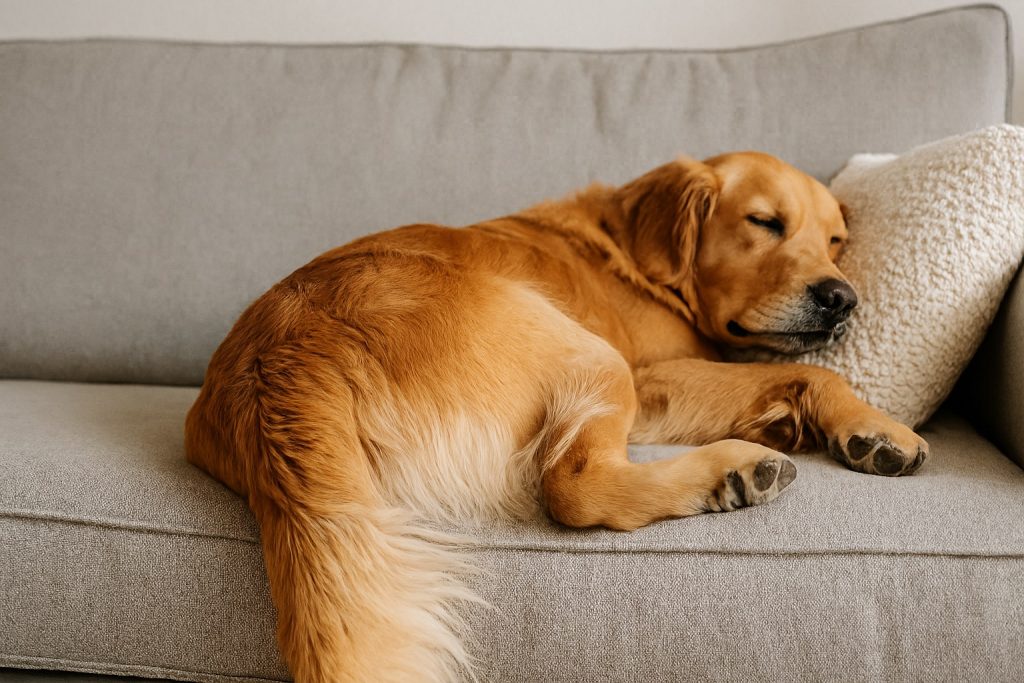
Exploring different dog sleeping positions
Understanding your dog’s “sleep language” can be a game-changer. Every pose tells a story about their mood and health. Ever wondered what those other weird positions mean?
The Ball Pose
As mentioned earlier, the ball pose (or donut) is the ultimate “protection” stance. It mimics how dogs sleep in the wild to shield their throat and belly. If your dog sleeps like this often, they might be a bit of a “worry-wart,” or they might just really like being cozy.
The Side Sleeper
Side sleepers feel relaxed and confident. Dogs expose their belly slightly while keeping limbs loose. They trust their surroundings completely.
The Cuddler Bug
Does your dog insist on sleeping right on top of you? The “Cuddler Bug” wants maximum physical affection. This is common in “velcro dogs” who thrive on constant reassurance and contact. It’s adorable, though it can make it hard to reach your phone on the nightstand.
The Superman
This is my personal favorite. The dog lies on their belly with their front paws stretched forward and back paws stretched behind. This usually means your dog is ready for action. They are taking a “power nap” and want to be able to jump up the second they hear a bag of chips opening.
The Belly up
Exposed tummy, legs in the air. The ultimate sign of trust. Dogs expose their most vulnerable areas when they feel completely safe. It’s adorable—and slightly ridiculous.
The Burrower
Dogs who love blankets or pillows. They burrow for warmth and security. Dogs seek warmth, security, and your scent. They love cozy chaos.
The Lion’s Pose
In this pose, the dog sleeps with their head on top of their paws. It’s a resting but alert position. They aren’t in a deep sleep; they are just “resting their eyes.” If you move, they will likely be up and following you within seconds.
Back to Back
Sleeping pressed against you, bum facing out. Classic pack behavior. Dogs share warmth, trust, and security. This position explains the bum-facing mystery perfectly.
Dog Sleeping Behavior
Have you ever watched your dog sleep and wondered if they’re actually possessed? Between the twitching and the weird noises, dog sleep can be a real show.
Barking
Yes, dogs bark in their sleep. They’re probably dreaming about chasing squirrels.
Snoring
Some dogs snore like freight trains. It’s normal, but check for breathing issues if it’s excessive.
Running Movement
Ever seen your dog’s legs twitch mid-nap? They’re dreaming of running — probably faster than they actually do IRL.
Digging
Dogs dig imaginary beds before sleeping. This instinct comes from wild ancestors. Your carpet forgives them.
Circling
Dogs circle to find comfort and flatten surfaces. This ritual feels soothing and familiar. Let them spin.
Factors influencing your dog’s sleeping position
Your dog’s choice of position isn’t just about psychology; biology and environment play a huge role too.
Environmental Aspects
The quality of the bed, lighting, noise, and room temperature all matter. Dogs constantly change positions to make themselves more comfortable. Small changes affect sleep big-time.
Health-related factors
Sometimes, a change in sleeping position can signal a problem. Watch your dog if they start sleeping in an unfamiliar, uncomfortable manner. Certain positions, such as the donut, may be uncomfortable for people with arthritis or joint pain. If they seem restless or can’t get comfortable, a trip to the vet is a smart move. FYI, older dogs often need orthopedic beds to help them sleep better.
How Much Do Dogs Sleep?
Dogs sleep a lot — anywhere from 12 to 14 hours a day. Puppies and older dogs may snooze even more. Dogs balance bursts of energy with deep rest. Honestly, they’ve cracked the life code.
How Can You Help Your Dog Get Better Sleep?
We all want our pups to be well-rested. A grumpy dog is no fun for anyone!
- Provide a comfortable bed suited to their size.
- Keep the room at a moderate temperature.
- Maintain a consistent routine.
- Ensure they get enough exercise during the day.
Small changes create huge comfort gains.
Frequently Asked Questions
Why does my dog sleep at my feet instead of next to me?
Because they wish to remain near you without crowding you..
When dogs sleep, why do they press against you?
It’s how they connect and feel safe.
Why does my dog sleep against me?
Because you’re their safe space.
Why does my dog lay on my side of the bed when I get up?
They claim your spot because it smells like you.
Dogs sleep with their backs to you, but why?
It’s about instinct, comfort, and trust.
Why does my dog always sleep with his back to me?
Sometimes all they want is room. Don’t worry about it.
Final Words
Why, then, do dogs sleep with their behinds to you? Because they love you, they trust you, and occasionally they simply find it comfortable. Sure, it might not be the most glamorous view, but it’s one of the sweetest signs of loyalty you’ll ever get.
Next time your pup plops down with their rear end in your direction, smile. It’s their quirky way of saying: “You’re my person.” And honestly, isn’t that worth a little bum-in-face moment?