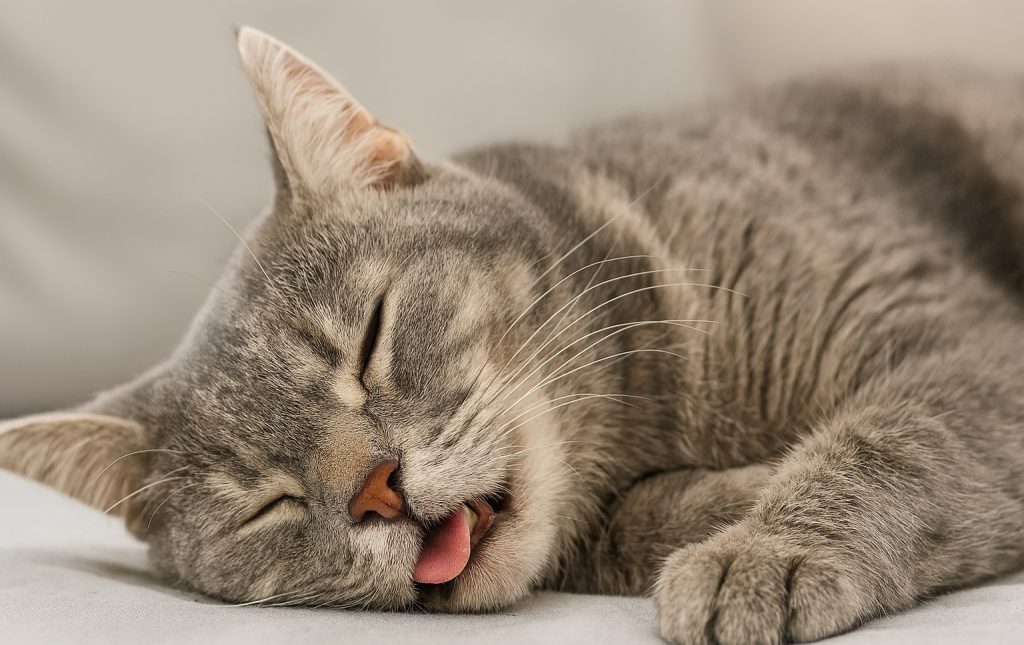
Ever woken up in the middle of the night thinking someone started a chainsaw in your bedroom—only to realize it’s your cat snoring like a tiny lumberjack? 😴 Yeah, same here. I remember the first time my tabby, Luna, let out a snore so loud I thought she was choking. Spoiler: she was just deep in dreamland, probably chasing imaginary mice.
So, why does my cat snore? Is it normal? Should I be worried? Or is she just being her quirky, adorable self? Together, fellow feline lover, let’s dissect it. Let’s discuss the fascinating realm of feline snoozes while sipping coffee (or catnip tea, if you’re feeling particularly upscale).
Why Do Cats Snore?
Snoring happens when airflow gets partially blocked while your cat is asleep. That’s it. Pretty simple, right? But what causes the blockage can vary: a stuffy nose, a weird sleeping position, or even breed-related quirks.
Think of it like when you fall asleep with your head at a strange angle and suddenly you’re snoring loud enough to wake yourself up. Cats are no different—sometimes their adorable little faces just… collapse in on themselves when they nap.
But here’s the kicker: cats don’t snore as often as humans or even dogs. So, if you notice it happening a lot, it’s worth paying attention.
Why Do Cats Snore So Loudly?
Okay, but why does it sometimes sound like your cat is auditioning for a tractor engine? Loud snoring typically occurs when the airway blockage is larger or worsened by the way they sleep.
For example:
- A cat that is overweight and has excess neck fat may snore more loudly.
- Cats with flat faces (like Persians) naturally have smaller airways, so the sound is amplified.
- Respiratory issues, like congestion, can turn a soft purr-snore into a full-blown nighttime concert.
Fun fact: Some cats actually startle themselves awake from their own snores. Ever seen that? It’s hilarious—until you realize it might mean their airway is struggling.
What Happens When My Cat Snores?
When your cat starts to snore, they’ve hit the ultimate relaxation point. You know that deep, almost comatose sleep where they’re curled up in a perfect cinnamon roll? That’s when the magic—the noisy, nasal magic—happens.
Snoring is a deep sleep phenomenon where the pharyngeal muscles are completely relaxed. We’re talking about the tissues in the back of the throat. When the air tries to pass over them, it creates turbulence. That unique sound is the result of this turbulence. The speed of the inhaled air is crucial; the faster it rushes, the more violently the soft tissues vibrate against each other. It’s an involuntary action, and your cat is completely oblivious to the ruckus it’s causing!
Common Causes / Reasons of Cat Snoring
Let’s get into the nitty-gritty. These are the usual suspects behind your cat’s nightly symphony.
Upper Respiratory Infection
Cats catch colds too. If your kitty’s snoring comes with sneezing, watery eyes, or a runny nose, she might be battling a respiratory infection.
Watch for:
- Labored breathing
- Nasal discharge
- Lethargy
Obesity
We all adore a chonky cat, so don’t pass judgment. However, being overweight can put pressure on the airways, increasing the likelihood of snoring.
FYI: It’s worth discussing a diet plan with your veterinarian because overweight cats are also susceptible to other health problems.
Allergies
Your cat’s nose and throat may become irritated by dust, pollen, smoke, or even scented candles. Their airways may swell as a result of allergies, causing snoring.
Signs include:
Sleeping/Body Position
Have you ever watched your cat sleep with one leg up in the air and her head upside down? Although that position may be comfortable, snoring may result from airflow restriction.
Masses or Growths
This one is a little frightening. Snoring can be brought on by obstructions in the nasal passages, such as polyps, tumours, or cysts.
If snoring is new or worsening, get it checked out.
Abscessed Tooth
A bad tooth can cause inflammation in the sinuses, leading to snoring. If your cat’s breath smells like death and she’s snoring, bingo.
Hypothyroidism
Though uncommon in cats, it is still feasible. Weight gain and lethargy brought on by low thyroid levels can exacerbate snoring.
Fluid Accumulation
Fluid accumulation in the lungs or airways can be brought on by illnesses like heart disease. Call the veterinarian if your cat’s snoring is accompanied by coughing or exhaustion.
Breed Characteristics
Flat-faced breeds (Persians, Himalayans, Exotic Shorthairs) naturally snore more. Their anatomy makes them prone to airway restriction.
Why?
- Short nasal passages
- Narrow nostrils
- Elongated soft palates
Obstructions
Sometimes, it’s something simple—like a blade of grass stuck in the nose. Other times, it’s more serious. Either way, obstructions = snoring.

Cat Snoring and Brachycephalic Airway Obstruction Syndrome (BAOS)
Let’s talk more about those flat-faced friends. The structure that makes Persian or Himalayan cats so unique also sets them up for a condition called Brachycephalic Airway Obstruction Syndrome (BAOS). It’s a fancy term for a constellation of breathing issues these breeds frequently have.
BAOS means their upper airways are functionally narrowed in a few ways: they can have smaller nostrils, an overly long soft palate (the floppy bit that vibrates), or a narrowed windpipe. This means they are practically always fighting for breath, and when they relax and sleep, the fight gets noisier.
Cat breeds that are prone to BAOS include:
- Persian
- Himalayan
- Exotic Shorthair
- Burmese (though less common)
Symptoms of BAOS:
If you own one of these breeds, keep an eye out for more than just the snore. These signs suggest the airway obstruction is significant:
- Strenuous, noisy breathing even when awake or resting.
- Exercise intolerance (they get tired very quickly).
- Reverse sneezing or gagging, especially when excited or stressed.
- Blue-tinged gums (a severe emergency sign of a lack of oxygen).
If your cat’s snoring sounds like Darth Vader, and she’s one of these breeds, BAOS might be the culprit. How To Stop a Cat from Snoring.
How To Stop a Cat from Snoring
Alright, so what can you actually do? Although it is impossible to stop all cats from snoring, the following advice may help:
- Weight management: Play and a healthy diet will help your cat maintain a healthy weight.
- Clean environment: Cut back on smoke, dust, and scented items.
- Humidifier: Cats with congestion can breathe more easily thanks to moist air.
- Examine sleeping positions: Encourage your cat to switch up their sleeping habits if they snore more in particular positions (I know, easier said than done).
- Frequent veterinary examinations: Eliminate any underlying conditions.
IMO, the humidifier hack is underrated. I tried it with Milo, and not only did it help his snoring, but my skin loved it too. Win-win. 🙂
When Should I Be Concerned About My Cat Snoring?
Let’s be honest—most snoring is harmless. Sometimes, though, it’s an indication of something more serious.
Red flags include:
- Abrupt onset of snoring;
- Snoring combined with coughing or wheezing;
- Behavioural or appetite changes;
- Difficulty breathing while awake;
- Swelling or discharge in the nose
Don’t wait if your cat’s snoring turns from adorable to alarming. It’s better to be safe than sorry.
When Should I See My Vet?
Rule of thumb: If your gut says something’s wrong, trust it. Cats are masters at hiding illness, so snoring might be one of the few clues they give you.
See a veterinarian if your cat has persistent, bothersome snoring; has trouble breathing even when awake; exhibits symptoms of an infection (discharge, fever, appetite loss); or if the snoring began abruptly and hasn’t subsided.
I mean, it’s better safe than sorry.
Frequently Asked Questions
Is my cat’s nightly snoring normal?
Usually, yes. Especially if she’s always snoring and seems healthy otherwise. But if it’s new or intense, get it checked.
Can cat snoring be cured?
Depends on the cause. Surgery (rarely), infection treatment, or weight loss can all be beneficial. But some cats just snore. 🤷
Does age make cats snore more?
It can. Older cats may have relaxed muscles or develop health issues that lead to snoring.
Can humidifiers help cat snoring?
Absolutely. Dry air can irritate the nasal passages. A humidifier might be your cat’s new best friend.
Is cat snoring dangerous?
Not always. But if it’s paired with other symptoms, it could signal a problem. Trust your gut—and your vet.
Final Words
So, why does my cat snore? Turns out, it could be anything from a quirky sleeping position to a legit health issue. Most of the time, it’s nothing to worry about. But if your cat starts snoring like a foghorn and seems off, don’t ignore it.
I’ve learned to embrace Luna’s snoring—it’s part of her charm. But I also keep an eye (and ear) out for changes. Because let’s face it, our cats are more than pets—they’re family. And family deserves the best care, even if they snore like tiny dragons.
Got a snoring cat story? Or a tip that worked wonders? Drop it in the comments or share it with your fellow cat lovers. Let’s keep our furry friends happy, healthy, and slightly less noisy at night. 😉