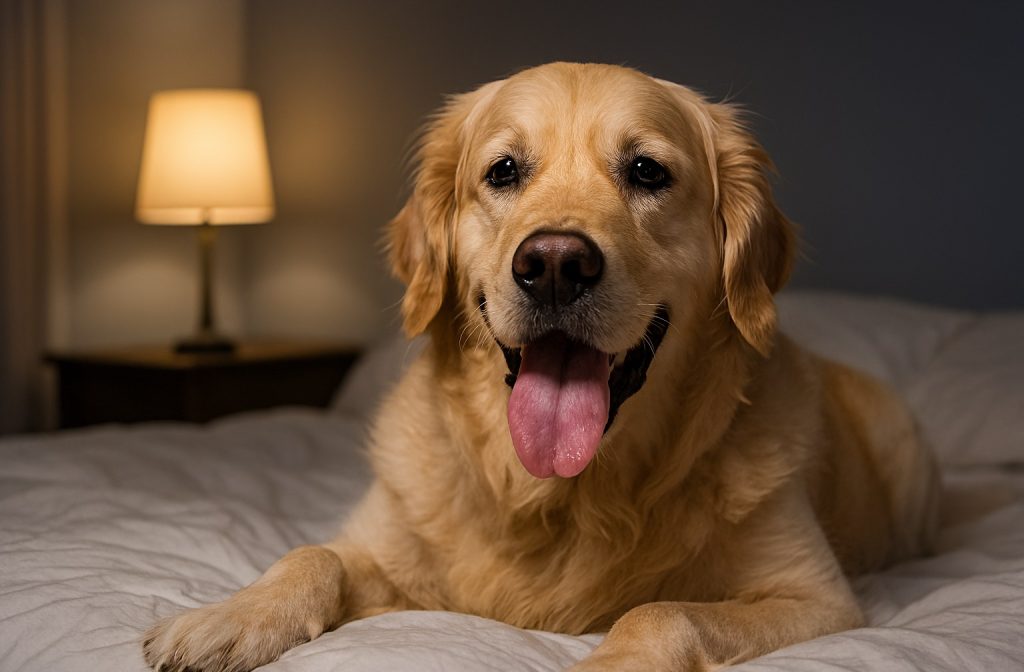
After a long day, you’re lying in bed and about to fall asleep when all of a sudden you hear your dog panting as if they’ve just finished a marathon. Except… they didn’t. They’re just lying there, staring at you with those big eyes, tongue out, breathing heavy. And now you’re wide awake, wondering: “Why is my dog panting at night?”
I’ve been there. My Labrador used to pant so much at night that I thought he was auditioning for a horror movie soundtrack. It’s stressful, confusing, and honestly a little annoying when you’re trying to sleep. But here’s the deal: nighttime panting isn’t always “just a dog thing.” Sometimes it’s harmless, but other times it’s a flashing neon sign that something’s wrong.
So, let’s break it down—causes, risks, and how to help fast. And yes, I’ll keep it conversational, because nobody wants a boring lecture when they’re worried about their pup.
Why does my dog pant and seem restless at night?
Panting works like your dog’s built-in cooling system. They don’t sweat like us (unless you count those tiny paw pads), so panting helps regulate body temperature, releases stress, and boosts oxygen flow.
But here’s the catch: When panting happens at night — especially when your dog isn’t hot or physically active — something else might be going on.
Signs of Panting in Dogs
Normal panting is usually slow, relaxed, and rhythmic. It stops when the dog calms down or cools off. Abnormal, concerning panting looks (and sounds) different.
- Rapid breathing with tongue out
- Excessive drooling (like they just saw a cheeseburger)
- Restlessness—pacing, whining, or scratching at doors
- Difficulty settling down even when the environment is calm
- Unusual noises—wheezing, coughing, or gagging
Ever noticed your dog panting while you’re sweating buckets in summer? That’s normal. But panting at night, when the house is cool and quiet, deserves a closer look.
Common cause of nighttime panting?
The causes of nighttime panting range from “totally harmless, you’re an overprotective pet parent” to “get to the ER now.” Let’s dive into the usual suspects. I’m including a little anecdotal evidence here because, well, my dogs have been through all of them.
Pain or Discomfort
Dogs don’t text us “Hey, my back hurts.” They pant. Pain from arthritis, injuries, or even dental issues can trigger nighttime panting. If your dog pants and shifts positions constantly, pain might be the culprit.
Anxiety or Stress
Thunderstorms, fireworks, or even separation anxiety can make dogs pant like crazy. My dog once panted through an entire Fourth of July—poor guy thought the world was ending. Nighttime anxiety is common, especially if your pup hates being alone.
Heat/Environment
Dogs regulate body temperature through panting. If your room feels like a sauna, your dog will pant. Even a cozy blanket can make them overheat. Pro tip: check the thermostat before panicking.
Canine Cognitive Disorder (Dog Dementia)
This endocrine (hormonal) disorder is caused by the overproduction of cortisol by the adrenal glands. It’s more common in older dogs.
- The tell: One of the hallmark symptoms is excessive thirst and urination (polydipsia and polyuria), often leading to a dog who pants at night and is drinking lots of water.
- Other signs include a pot-belly appearance, thin skin, and loss of muscle mass. If you see this pattern, your vet needs to run some blood work—they’re the real heroes here.
Cushing’s Disease
This endocrine condition causes too much cortisol — the stress hormone. Nighttime panting becomes a frequent symptom.
Other symptoms:
- Constant hunger
- Big round tummy
- Drinking and peeing a lot
- Hair thinning
If your dog looks like a fluffy potato with mood swings, ask your vet about this one.
Heart/Respiratory Issues
Okay, now we’re getting to the serious stuff, but don’t panic! Congestive Heart Failure (CHF) and other respiratory diseases (like laryngeal paralysis or chronic bronchitis) can cause nighttime panting.
- The tell: Panting due to these issues is often a sign the body is not getting enough oxygen. The dog is struggling to breathe efficiently.
- This kind of panting is usually labored, persistent, and may include a wet-sounding cough (often described as a ‘goose honk’ cough). Difficulty breathing, especially when resting or sleeping, is a major sign that you need immediate professional help.
When to See a Vet Immediately
Look, I’m a big fan of home remedies and waiting things out, but certain symptoms are a screaming siren saying: STOP. Call your veterinarian or the nearest emergency animal hospital right now. Contact your vet urgently if you see:
Breathing Difficulties
This is the non-negotiable one. If the panting looks like a full-blown struggle—the chest movements are exaggerated, they are extending their head and neck, or they look generally distressed—you have an emergency.
Pale, blue, or brick-red gums
Check their gums. Gently lift their lip and press your finger against their gum. It should turn white briefly and then pink up again in less than two seconds.
- Blue/Purple (Cyanosis): Severe lack of oxygen. This is life-threatening.
- Brick-Red: Often a sign of severe heatstroke or other systemic issues.
Excessive drooling or reluctance to move/eat/drink.
A dog that is panting rapidly and won’t move might be in severe pain or experiencing heatstroke. A sudden reluctance to drink can lead to rapid dehydration.
Tongue turning blue, grey, or purple, indicating oxygen deprivation.
I know I already mentioned blue gums, but seriously, if the tongue is anything but a healthy pink (or black/spotted, if that’s their natural colour), you have zero time to waste.
Signs of Heatstroke
Rapid, frantic panting that won’t stop, glazed eyes, high body temperature, vomiting, and wobbly movements. Heatstroke kills incredibly quickly.
Other Health Symptoms
Vomiting, diarrhea, collapse, or sudden weakness coupled with the panting. These compound symptoms indicate a major systemic problem.
Sudden Injury or Illness
If your dog was fine yesterday and today they’re suddenly pacing and panting, something acute (sudden) has happened. Don’t wait for it to get better.
What should I do if my dog pants at night?
So, you’re pretty sure it’s not a panic-button emergency, but you still need to help your dog settle down. Before you call the vet, try this three-step action plan: Cooling, Calming, and Comfort.
Cooling
Offer fresh water, turn on a fan, or move them to a cooler spot. Try:
- A fan near their bed
- A cooling mat
- Fresh water all night
- Moving their bed away from the radiators
Avoid thick blankets unless the room feels cold.
Calm
Reduce stress—no loud noises, no chaos. Sometimes soft music helps. Ideas:
- Soothing background noise (TV or fan)
- Night-light for anxious dogs
- Short cuddle session before bed
Yes, cuddles count as therapy. Science can fight me on that. 😌
Comfort
Give them a safe, cozy space. My dog loves his crate with a blanket (but not too warm). Make bedtime feel safe.
- Keep their bed close to you
- Give their favorite toy
- Provide a quiet corner if they prefer space
Pain-free positions matter. Some dogs even prefer orthopaedic beds — a tiny luxury throne for your royal pet.
Routine
Dogs thrive on routine. Regular bedtime rituals can reduce anxiety. Keep bedtime:
- At the same time
- Same place
- Same wind-down activities
A predictable night = a calmer mind.
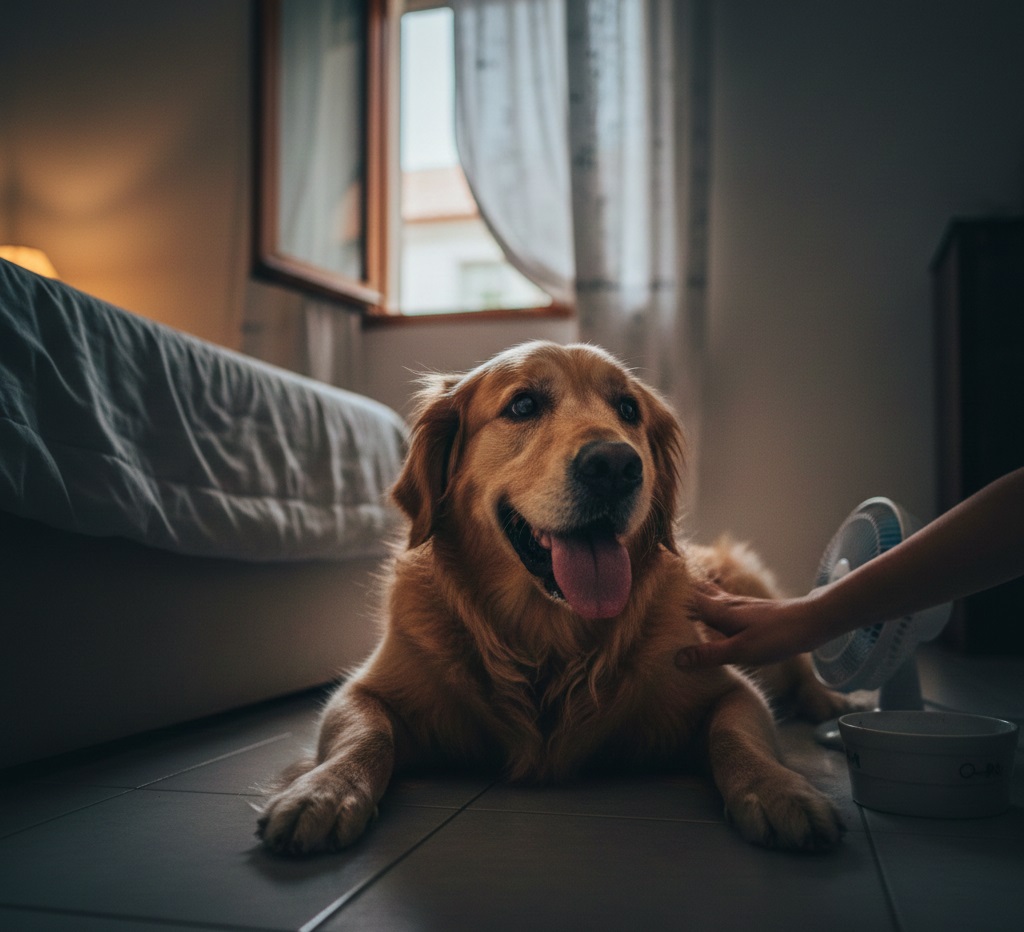
How to calm a panting dog?
The best way to calm a panting dog is to address the underlying trigger. If you’ve cooled them down and ruled out an emergency, the next step is often mental.
✔ Offer water
✔ Turn on a fan or AC
✔ Check for signs of pain
✔ Speak in a soft, reassuring voice
✔ Take short nighttime potty break — maybe they just need to pee
✔ Try gentle chest/ear rubs
Don’t shout or discipline panting. They’re uncomfortable, not naughty.
If anxiety seems to rule the night:
- Use calming pheromone sprays
- Try weighted blankets made for pets
- Ask your vet about anxiety medication or supplements
Pro tip: A little warm chamomile tea helps some dogs relax. (Not kidding.)
How will my vet diagnose my dog’s nighttime panting?
If the problem persists, your vet is your next stop. They won’t just look at your dog and say, “Yep, it’s the thing.” They use a systematic approach to rule things out.
- Ask about history. When did panting start? Any triggers?
- Conduct tests. checks of the heart, lungs, temperature, and pain.
- Conduct tests. X-rays, ultrasounds, or blood work if necessary.
- Make treatment recommendations. Depending on the reason, cooling techniques, pain medication, or anxiety support.
Frequently Asked Questions
Are there health problems that could cause my dog to pant at night?
Yes—heart disease, respiratory issues, pain, anxiety, or hormonal disorders like Cushing’s.
Why is a female dog panting at night?
H Panting may be brought on by heat cycles, hormonal changes, or pregnancy. Consult a veterinarian first.
Why is my dog panting while resting?
Panting at rest often signals discomfort, pain, or illness.
Why do dogs panting at night and drink lots of water?
Panting and excessive thirst may indicate kidney problems, diabetes, or Cushing’s disease.
Why is my dog panting while he sleeps at night?
Pain, breathing problems, or even vivid dreams could be the cause of panting while you sleep. See your veterinarian if it occurs frequently.
Final Words
So why does my dog pant at night? Heat, excitement, or dreams are examples of harmless situations. In other cases, it’s a warning sign of severe health issues, pain, or anxiety. Observing, providing comfort, and acting quickly when necessary are crucial.
Remember: dogs don’t pant at night just to annoy us (though it feels that way at 2 a.m.). They’re trying to tell us something. Listen, respond, and don’t hesitate to call your vet if things feel off.
Ultimately, your dog depends on you to stand up for them. Nothing, in my opinion, compares to the assurance that you’re making every effort to keep your pet secure, comfortable, and content.