If you share your home with a feline, you know that your life revolves around their subtle daily routines. You notice when they eat, when they sleep on your keyboard, and yes, when their bathroom schedule goes completely off the rails. So, when you clean the litter box and realize it’s been a couple of days since you last scooped a deposit, panic sets in. You find yourself asking: Why Is My Cat Not Pooping?
As someone who has kept cats for over 15 years—and spent way more time than I care to admit inspecting litter boxes—I can tell you that a sudden halt in bowel movements is one of the most stressful things a cat parent can face. My tuxedo cat, Jasper, once went nearly three days without leaving a single droppings-based clue in his box. What followed was a mix of frantic late-night research, a panicked vet visit, and a quick lesson in feline GI tracts.
If you are currently asking yourself Why Is My Cat Not Pooping?, don’t jump straight to the worst-case scenario. Constipation in cats is common, highly treatable, and often easily fixable with a few tweaks to their diet and routine. Let’s break down what’s going on inside your cat’s stomach and how to get things moving smoothly again.
Normal Feline Digestion: How Often Should a Cat Poop?
Before we analyze why things are backed up, let’s set a baseline for what normal looks like. A lot of first-time owners ask me how often do cats poop, and the answer isn’t identical for every feline.
Generally speaking, an adult cat should poop once or twice a day. So, how often should a cat poop at a bare minimum? Once every 24 to 36 hours is standard. If your cat strays into the 48-hour territory without producing anything, you are officially in constipation country.
| Cat Age / Type | Expected Frequency | Common Litter Box Output |
| Kittens | 2–4 times per day | Small, soft, frequent deposits |
| Adult Cats | 1–2 times per day | Deep brown, firm, log-shaped |
| Senior Cats | Once every 24–36 hours | Slightly drier, smaller firm logs |
If your adult cat goes beyond 48 hours without producing a stool, it’s time to start asking Why Is My Cat Not Pooping? and investigating the root causes.
Recognizing the Signs of Feline Constipation
Constipation isn’t just about an empty litter box. Cats are absolute masters at hiding discomfort, but their body language in and around the box usually gives them away.
When asking Why Is My Cat Not Pooping?, look out for these common warning signs:
-
Straining in the litter box: Your cat squats for long periods, pushes, or even cries out in frustration. (Careful here: straining can also signal a life-threatening urinary blockage, especially in male cats. If no urine comes out either, go to an emergency vet immediately.)
-
Small, dry, pebble-like stools: If they do manage to pass something, it looks like hard little rocks rather than healthy logs.
-
Frequent visits without results: Entering and exiting the box repeatedly without doing anything.
-
Abdominal tenderness: A tight, hard belly that they don’t want you touching.
-
Lethargy and loss of appetite: Feeling backed up makes anyone cranky, and cats are no exception.
FYI, if your cat is dropping hard little pellets outside the box, they aren’t trying to spite your carpet choices. They associate the litter box with the pain of straining and are trying to find a more comfortable location to relieve themselves.
Why Is My Cat Not Pooping? The Top Underlying Causes
When I worked through Jasper’s digestive strike, my vet handed me a list of potential culprits. Feline constipation rarely happens out of nowhere; it’s usually triggered by one (or a combination) of the following issues.
1. Chronic Dehydration
This is the single biggest culprit in feline constipation. Cats evolved as desert animals and naturally have a low thirst drive. If they eat purely dry kibble and drink minimal water, their colon pulls moisture directly out of their waste to keep the rest of their body hydrated. The result? Hard, dry stool that feels like cement trying to pass through a pipe.
2. Hairballs and Grooming Overload
Cats spend up to half their waking hours grooming. All that swallowed hair usually passes through the digestive tract without issue. However, during heavy shedding seasons, ingested fur can bind with fecal matter inside the colon, forming a dense, unyielding mass.
3. Dietary Factors and Lack of Fiber
A diet lacking adequate insoluble and soluble fiber can slow intestinal motility. Conversely, a sudden diet change can upset their gut microflora, causing everything to grind to a halt.
4. Lack of Physical Activity
Lazy cats have lazy colons. Exercise stimulates natural intestinal peristalsis (the wave-like muscle contractions that push waste through the body). If your cat spends 23 hours a day lounging on a heating pad, their digestive tract is going to match that slow energy.
5. Stress and Litter Box Anxiety
Cats are sensitive creatures. A new home, a new baby, a louder vacuum cleaner, or even switching from unscented to scented clay litter can stress your cat out enough to make them hold their poop in.
6. Ingested Foreign Objects
Cats love string, rubber bands, hair ties, and tinsel. If they swallow something non-digestible, it can create a partial or full intestinal obstruction. If you suspect an obstruction, asking Why Is My Cat Not Pooping? becomes a matter of urgent veterinary intervention.
At-Home Remedies to Get Things Moving
If your cat hasn’t pooped in 24 to 36 hours but is otherwise acting normal, eating, and playing, you can try a few safe home remedies to encourage a bowel movement.
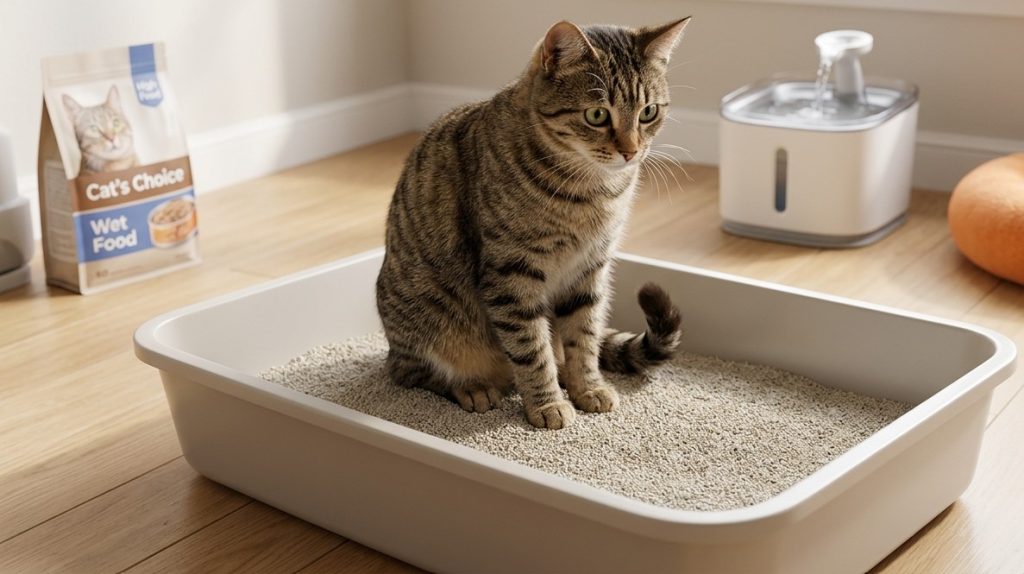
Upgrade Their Hydration (The Wet Food + Fountain Fix)
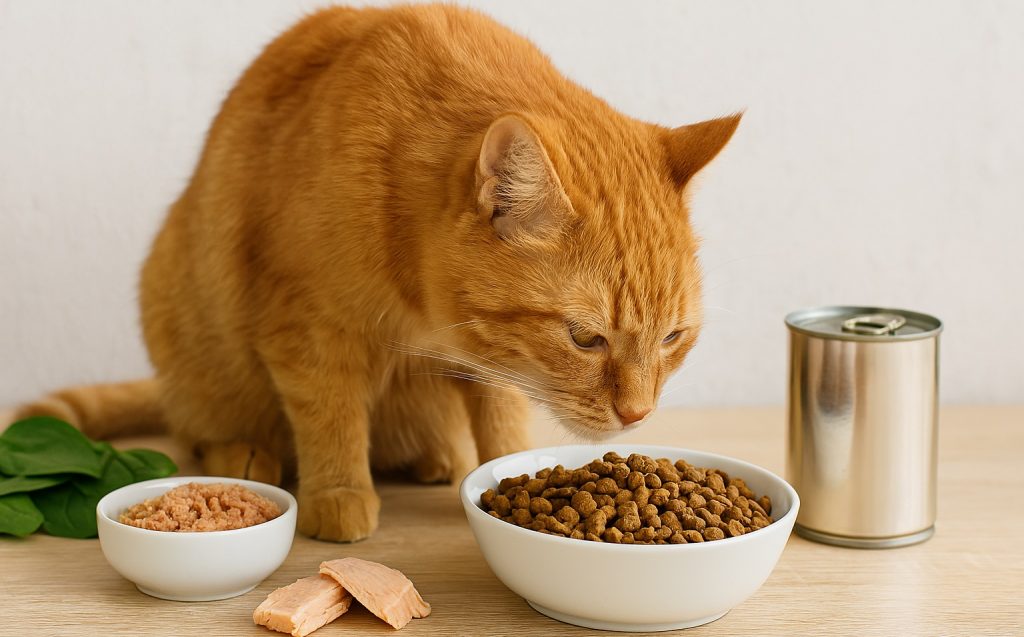
If you are feeding a dry-kibble-only diet, switch a portions of their daily intake to high-moisture canned wet food. You can also mix a small spoonful of warm water directly into their food to create a slurry.
To encourage more drinking throughout the day, drop the static water bowl and invest in a quality stainless steel stream pump like the [PetSafe Drinkwell Stainless Steel Cat Water Fountain]. Cats love running water, and this simple addition dramatically increases daily fluid intake.
Add Pumpkin Puree or Fiber
Plain, 100% pure pumpkin puree (NOT pumpkin pie mix) is a brilliant natural remedy. Pumpkin is packed with soluble fiber and moisture, which softens stool and gently stimulates bowel movements. Add 1/2 teaspoon of pure pumpkin to their wet food once or twice daily.
Alternatively, you can use unflavored psyllium husk powder, such as [NutraFiber Pet Fiber Supplement], mixed thoroughly into canned food.
Use a Hairball Remedy Gel
If grooming fur is the main barrier, a flavored petroleum-based hairball lubricant helps coat swallowed fur and unblock the GI pipeline. Products like [Laxatone Hairball Lubricant Gel for Cats] taste like maple or tuna, making them easy to dab on your cat’s paw so they lick it off naturally.
Increase Daily Playtime
Get your cat moving! 10 to 15 minutes of vigorous interactive play with a feather wand or laser pointer gets the blood pumping and encourages natural colonic contractions. Interactive devices like the [Catit Senses Circuit Toy] keep them moving even when you’re busy at work.
When to See the Vet immediately
While at-home remedies are great for mild cases, feline constipation can escalate into megacolon—a serious condition where the colon stretches out, loses its muscle tone, and can no longer push waste out on its own.
Do not wait if you observe any of these red flags:
-
Your cat hasn’t pooped in over 48 to 72 hours.
-
They are vomiting, lethargic, or completely refusing food.
-
They vocalize or cry out in pain when you touch their abdomen.
-
You notice blood or clear mucus around their rear end.
-
They are straining continuously with zero output (rule out urinary blockage first!).
When you visit the clinic, your vet may perform abdominal X-rays to see how backed up the colon is. Treatments can range from subcutaneous fluid therapy and prescribed stool softeners (like Lactulose) to warm-water enemas administered under professional supervision.
A Warning From Experience: Never, ever give your cat human laxatives, mineral oil, or over-the-counter human enemas (like Fleet). Fleet enemas contain sodium phosphate, which is toxic to cats and can be fatal within hours.
Long-Term Prevention: Keeping the Litter Box Active
Once you solve the immediate question of Why Is My Cat Not Pooping?, your focus must shift to long-term preventative maintenance. Over my 15 years of cat ownership, I’ve found that consistency in routine is the secret to smooth digestion.
Here is my daily maintenance checklist for healthy feline digestion:
-
Maintain High Moisture Intake: Feed canned wet food daily, or add bone broth formulated specifically for pets to their dry kibble.
-
Keep the Litter Box Pristine: Cats hate dirty bathrooms. Scoop daily and wash the box completely once a month using an unscented soap.
-
Provide Proper Bedding & Stress Relief: Chronic stress tightens muscles throughout the body. Provide a cozy sanctuary like the [Best Friends by Sheri Calming Donut Pet Bed] where your cat can completely relax.
-
Regular Grooming: Brush your cat twice a week (or daily for long-haired breeds) using a slicker brush to catch loose hair before your cat swallows it.
Frequently Asked Questions (FAQs)
1. Why Is My Cat Not Pooping after taking medicine or having surgery?
Anesthesia slows down the entire gastrointestinal tract, and many post-surgery pain medications (especially opioids) cause constipation as a side effect. Additionally, your cat likely fasted before surgery. If they haven’t pooped within 48 hours after returning home from the clinic, contact your veterinarian for advice.
2. Can I give my cat olive oil to help them poop?
IMO, olive oil is not an ideal solution. While a few drops might act as a mild lubricant, too much causes diarrhea and stomach upset. Furthermore, olive oil is pure fat, which can trigger pancreatitis in sensitive cats. Stick to pumpkin puree or dedicated veterinary lubricants instead.
3. How long can a cat go without pooping before it becomes an emergency?
A cat can safely go 24 to 36 hours without a bowel movement. Once it reaches 48 hours, it becomes a concern. If 72 hours pass without any output, it is officially a medical emergency that requires immediate professional evaluation.
4. Why Is My Cat Not Pooping but still eating and playing normally?
In the early stages of mild constipation or mild dehydration, cats often continue eating and playing as usual. Their body hasn’t reached the point of severe discomfort yet. However, this is the absolute best time to intervene with extra hydration and pumpkin puree before they become lethargic and lose their appetite.
5. Why Is My Cat Not Pooping in the litter box, but doing it on the floor instead?
When a cat experiences painful straining while trying to poop, they form a mental association between that pain and the litter box itself. They think, “The box hurt me, so I’ll try this rug instead.” Once you solve the underlying constipation, re-train them gently by keeping the litter box extra clean and using an attractive litter additive.
Final Words
Realizing that your fur baby isn’t going to the bathroom is stressful, but asking Why Is My Cat Not Pooping? early on is the best thing you can do for their health. Most cases stem from simple dehydration, hairballs, or a lack of dietary fiber, all of which are easy to fix at home with wet food, extra water, and a bit of playtime 🙂
Keep a close eye on their litter box routine, stay proactive with their hydration, and never hesitate to call your vet if things seem off. With a few thoughtful adjustments, your cat will be back on their regular daily schedule in no time!