
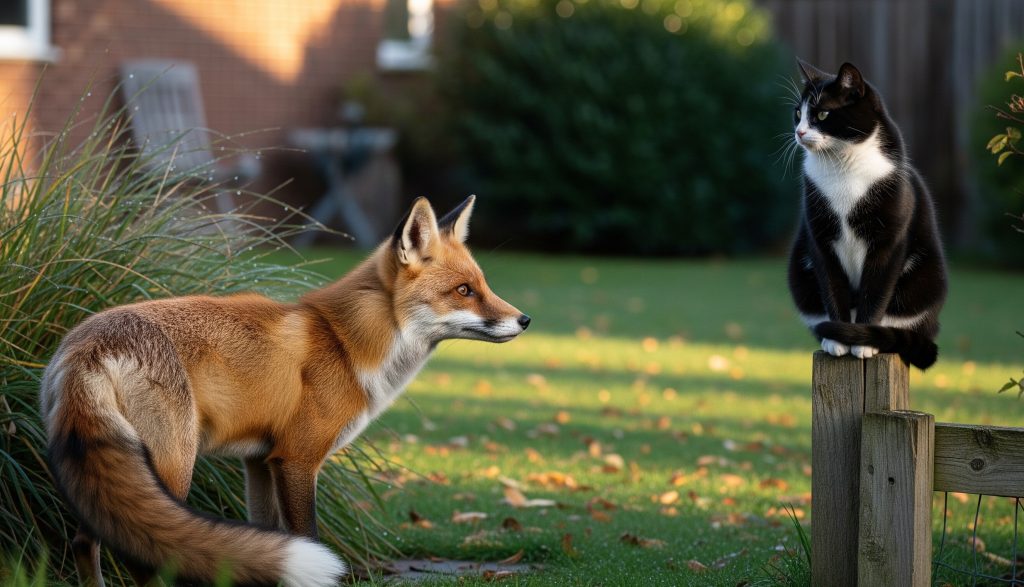
Picture this: it’s 11 PM, you’re sipping tea by the window, and your cat is outside on their nightly “patrol.” Suddenly, a bush rustles. Out steps a fox, tail high, looking like it owns the place. Now, your heart skips a beat. Do foxes actually attack cats, or is this just another urban legend like Bigfoot?
Short answer: It can happen — but it’s rare. That’s why this guide, Do Foxes Eat Cats? Protecting Your Cat from Wildlife, is here to give you the facts, some eyebrow-raising real-life stories, and solid tips to keep your kitty safe.
And yes, I’ve been there. My cat once had a 3 AM standoff with a fox in our driveway. (Spoiler: the fox ran, the cat stayed, and I lost three years off my life.)
What do Foxes Eat?🦊
Let’s kick this off with a simple truth bomb—foxes are not picky eaters. They’re the dumpster-divers of the animal kingdom. I mean, if it smells edible, there’s a good chance a fox has tried it at least once.
So, what’s usually on their dinner menu? Small mammals like rabbits, rodents, and squirrels; Birds, eggs, and occasionally reptiles; Insects (yep, crunchy snacks galore); Fruits, berries, and mushrooms; Garbage, pet food, and compost (because who needs fine dining).
FYI, foxes are omnivores, which means they’ll munch on whatever they can find. But does that include cats? Hold that thought—we’re getting there 😉
Fox Behavior 🕵️♀️
Foxes are naturally shy and super clever. They’re solitary hunters, and they mostly go about their business at night. They’re also surprisingly territorial, so they mark their areas with their scent. This is their way of saying, “Hey, this is my turf, so back off.”
When they do cross paths with something they see as a threat or a potential meal, they rely on speed and stealth. However, a full-grown cat is a bit bigger than their usual dinner plans. So, while they might be opportunistic, they aren’t looking to get into a big fight.
Cat Behavior 🐱
Our cats, on the other hand, often think they’re miniature panthers. They’re natural predators, but their usual prey is much smaller than they too. You’ll see them batting at toys, chasing moths, and, if you’re lucky, bringing you a “present” from outside. Bless their little murderous hearts.
Cats are also pretty territorial. They defend their turf with confidence, whether it’s the living room couch or the backyard. My cat, Whiskers, once squared off against a squirrel twice her size. The squirrel lost. True story.
Cats and Foxes May Come Across Each Other From Time to Time 🐾
It’s not unusual for cats and foxes to meet, especially in suburban or rural areas. Both are active at dawn and dusk (that’s “crepuscular” for the science fans). They also share hunting grounds, which sometimes brings them nose-to-nose.
Real-life case: In 2022, a UK family’s CCTV caught a fox and their cat meeting in the backyard. The fox approached, the cat stood its ground, and after a tense 10 seconds, the fox turned tail and left. Moral? Most encounters end without injury.
Myth or Reality? Do Foxes Attack and Eat Cats?
Here’s the reality check: fox attacks on cats are rare. Studies in urban areas show that most foxes avoid cats unless desperate for food. Cats are often too big, too strong, or simply too much trouble.
That said, small kittens, elderly cats, or sick cats are more vulnerable. A healthy adult cat with sharp claws and fast reflexes is a tough opponent.
Do Cats Ever Attack Foxes? 🐈
You bet they do! Remember my cat Whiskers and the squirrel? Cats are fierce defenders of their territory and themselves. They’re not afraid to put up a fight.
A cat will hiss, arch its back, and make itself look bigger. They’ll also scratch and bite if they feel cornered. Most foxes, being the smarty-pants animals they are, will just decide it’s not worth the trouble and peace out.
I’ve read countless stories online where a cat has chased a fox out of their yard. Our felines, for all their cuddliness, are tough. Don’t underestimate them.
Do They Compete for the Same Prey? 🎯
They can. Both hunt small mammals, birds, and sometimes raid bins for scraps. If food is scarce, competition can bring them into closer contact. But usually, they just avoid each other and stick to their own hunting spots.
Risk of Attack ⚠️
While a full-on attack is rare, it’s not zero. We want to be proactive, not reactive, when it comes to our beloved pets.
Factors that Increase the Risk of an Attack:
- Tiny cats or kittens wandering alone
- Injured or weak cats are unable to defend themselves
- Food scarcity for foxes
- Territorial disputes (especially during mating season)
Factors that Decrease the Risk of an Attack:
- Healthy, full-grown cats
- Presence of humans or dogs nearby
- Availability of easier prey or food sources
- Cats are trained to avoid wild animals
Impact of Season, Territory, and Food Availability
The time of year can also play a role. During the spring, when foxes are raising their young, they have to work harder to find food. This can make them more aggressive and willing to take risks. A fox protecting its den from a cat is also a possibility. It’s all about context, folks.
Minimizing the Risk of an Attack
- Feed your cat indoors.
- Don’t leave garbage or compost uncovered.
- Install motion-sensitive lights near entryways.
- Keep nighttime cat adventures to a minimum.
How to Keep Your Cat Safe from Foxes! 🏡
This is the big one. How can we, as responsible pet parents, keep our cats safe? Protecting your cat from wildlife doesn’t have to be a full-time job, but it does require some smart habits.
- Don’t leave food outside. I know, it’s tempting to leave a bowl of kibble on the back porch. Don’t. You’re essentially ringing the dinner bell for every fox in a five-mile radius.
- Secure your yard. Check for any holes in your fence. Foxes can squeeze into surprisingly small spaces.
- Keep your cat indoors at night. Foxes are nocturnal, so this is the simplest and most effective solution. My Whiskers is an indoor cat, and frankly, she seems happier and healthier for it.
- Try a catio. This is a fantastic option for giving your cat outdoor time without the risks. A catio (a “cat patio,” get it?) is an enclosed space where your cat can enjoy the fresh air safely.

How to Deter Foxes but Not Cats from Your Garden? 🚫
This is a tricky one, but it’s doable. You don’t want to make your cat scared of its yard, but you also want to send the message to the local foxes that they aren’t welcome.
- Use motion-activated sprinklers. Foxes hate being sprayed with water. Your cat might not love it either, but they’ll learn to avoid the area. You can strategically place them to protect a specific area of your yard.
- Try ultrasonic devices. These emit a high-frequency sound that humans and cats can’t hear, but foxes find irritating. They’re a humane way to say, “Hey, go bother someone else.”
- Use predator urine. This is a bit gross, but it works. The scent of a bigger predator like a wolf or a coyote can scare off a fox. Just be sure to find a brand that’s safe for pets.
Should I Let My Cat Outside If I Know There Are Foxes Around?
If your cat is healthy, large, and street-smart, the risk is low but not zero. For kittens, elderly cats, or cats with health issues, keep them indoors when fox activity is high.
But here’s the golden rule: If in doubt, keep your feline friend indoors at night. That’s when foxes get bold—and when accidents are more likely.
Can Cats Infect Diseases from Foxes? 🦠
Yes, unfortunately, they can. Foxes can carry parasites like fleas, ticks, and worms, as well as diseases like mange. These can be passed indirectly through shared areas or prey, even without direct contact.
This is another reason to keep your cat away from foxes. The best way to protect your pet is to keep their vaccinations up to date and to minimize their exposure to wild animals.
What to Do If a Human Encounters a Fox 😬
They’re usually more scared of you than you are of them.
Keep Your Distance
Give the fox space. Don’t try to scare it by yelling or running at it. This can make them feel cornered and more aggressive.
Make Noise
If the fox is being a bother or getting too close, you can try to make some noise. Clap your hands, or speak in a loud, strong voice. This usually surprises them enough to send them on their way.
Remove Attractants
No food, no reason for them to hang around. Remove attractants like pet food, fallen fruit, or unsecured trash cans. A fox with no reason to be there won’t be there.
Protect Your Assets
Verify your fences and secure any possible den locations, such as under decks or sheds. As a result, they will find it harder to establish a home in your yard.
Contact Authorities
It’s time to bring in the experts if a fox shows signs of illness, aggression, or unusual boldness. The wildlife or animal control organization in your area can evaluate the situation and take the proper action.
Frequently Asked Questions ❔
Do Cats Get Hunted by Foxes?
Rarely, only when the cat is weak and they are starving.
Are Foxes Scared of Cats?
Most are. Healthy adult cats often intimidate foxes.
Can a Fox Kill a Small Kitten?
Yes, sadly, kittens are vulnerable to many predators, including foxes.
Do Foxes Eat Cat Food?
Absolutely. Pet food left outside is like a free buffet for them.
Will a Fox Attack During the Day?
Although it is uncommon, foxes that are active during the day may be feeding their young or looking for food.
Final Words 🐾
Foxes and cats can share the same environment without drama — most of the time. Fox attacks on cats are rare, but knowing the risks helps you protect your furry friend.
Wildlife and domestic pets can share space, but it takes a bit of effort. Install those sprinklers, lock up the kibble, and consider a cozy catio for ultimate feline luxury.
And hey—whether you’re Team Fox or Team Cat, we can all agree on one thing: nature is wild… literally. 😉