
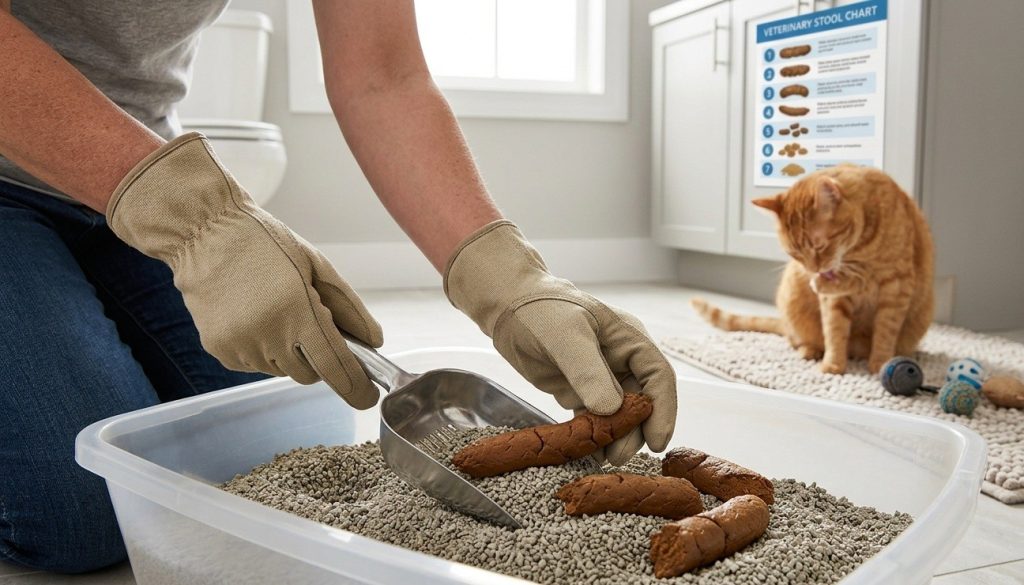
If someone had told 22-year-old me that I would one day spend five minutes staring intently into a plastic box full of clay granules holding a plastic scoop, I would have laughed. Yet, here we are. Fast forward 15 years, three rescue cats, and a very patient dog later, and I can tell you that monitoring litter box deposits is one of the most reliable daily health checks you can perform for your feline companion.
Cats are absolute masters at hiding illness. In the wild, showing vulnerability makes an animal a target, so your sweet indoor hunter will happily pretend everything is fine even when their gut is in total rebellion. That brings us to a fundamental question every responsible pet owner eventually asks: what does healthy cat poop look like?
Understanding your cat’s digestive output isn’t just about avoiding a messy carpet incident—it is a window into their hydration levels, dietary health, stress, and internal organs. Let’s break down everything you need to know about cat stool health, from color and consistency to when it’s time to pick up the phone and call your vet.
The Litter Box Scorecard: Color, Shape, and Consistency
When you clean the litter box, you aren’t just doing chores; you’re running a quick health screening. Healthy feline digestive output follows a fairly consistent blueprint.
The Ideal Target: What You Want to See
So, what does healthy cat poop look like in an ideal world?
A healthy cat stool should be:
-
Color: Deep, rich brown (like milk chocolate or logwood).
-
Shape: Log-shaped, divided into small segments, about the size of a couple of adult fingers.
-
Texture/Consistency: Firm yet pliable. It should feel like fresh playdough when scooped. It shouldn’t leave a greasy residue on the litter or crumble into dry dust.
-
Coating: Free of clear mucus, blood streaks, or excess moisture.
-
Odor: Mildly unpleasant (it is waste, after all), but not so pungent that it clears out your entire living room within seconds.
IMO, keeping a mental note of your cat’s baseline normal is key, because what is normal for a 14-year-old indoor senior might look slightly different from a 1-year-old active Bengal 🙂
Decoding the Color Spectrum
The color of your cat’s stool is heavily influenced by their diet, bile production, and how quickly food moves through their gastrointestinal tract. Here is a breakdown of what different shades mean:
| Stool Color | Potential Meaning | Immediate Action Plan |
| Deep Brown | Ideal digestive balance and healthy bile flow. | Maintain current diet and routine. |
| Black or Tarry (Melena) | Digested blood from the upper GI tract (stomach or small intestine). | Emergency Vet Visit: Could indicate ulcers or internal bleeding. |
| Bright Red Streaks | Fresh blood from the lower GI tract (colon or rectum). | Call vet if persistent; monitor for straining or parasites. |
| Yellow or Orange | Rapid transit time, liver issues, or gallbladder dysfunction. | Schedule a check-up if it lasts more than 24–48 hours. |
| Pale Grey or Clay-like | Lack of bile output; potential liver or pancreatic blockade. | Prompt veterinary consultation required. |
| White Flecks/Rice-like | Presence of intestinal parasites (like tapeworms). | De-worming treatment prescribed by your vet. |
Shape and Consistency: The Feline Scale
Veterinarians often use a numerical 1-to-7 scale to evaluate stool quality, where 1 represents hard, dry pellets and 7 represents pure liquid.
-
Type 1–2 (Hard & Dry): Your cat is likely dehydrated or suffering from sluggish intestinal motility. The stool forms small, dark marbles that drop hard onto the litter.
-
Type 3–4 (Ideal): Smooth, pliable logs that leave minimal residue when picked up. This is exactly what healthy cat poop looks like day in and day out.
-
Type 5–6 (Soft & Formless): Mushy piles that lack clear structure. This points to dietary indiscretion, sudden food changes, or mild stress.
-
Type 7 (Liquid Diarrhea): Watery puddles without solid pieces. This requires close attention, as small cat bodies dehydrate fast.
Common Causes of Abnormal Cat Stool
When your cat’s digestive output shifts away from the ideal brown log, identifying the underlying trigger is your next step. Through my years with my domestic shorthair, Milo—who has a stomach so sensitive a single stolen piece of cheese can trigger a mini catastrophe—I’ve learned that gut disruptions usually stem from a few primary categories:
Primary Feline Digestive Triggers:
Dietary: Sudden food changes, low fiber intake, or hidden protein allergies.
Medical & Parasitic: Roundworms, Giardia, Inflammatory Bowel Disease (IBD), or early-stage kidney disease.
Environmental: Moving home, introducing new pets, or keeping a dirty litter box.
Physical: Hairball build-up, foreign object ingestion, dehydration, or chronic megacolon.
-
Dietary Changes: Changing food brands without a 7-to-10-day transition period is the number one cause of loose stools.
-
Dehydration: Cats have a low natural thirst drive because their wild ancestors derived water from prey. Dry kibble diets without adequate water intake lead to hard, painful stool.
-
Parasites & Infections: Microscopic protozoa like Giardia or worms can inflame the intestinal lining, causing foul-smelling, bloody diarrhea.
-
Stress and Anxiety: A house move, a new baby, or even rearranging furniture can trigger feline stress colitis.
-
Hairballs: When cats groom, swallowed hair can mix with stool in the colon, creating hard, fibrous blockages.
Troublesome Litter Box Behaviors: Constipation & Straining
Observation goes beyond looking at what is inside the box—you also need to observe how your cat acts while inside it.
Why Is My Cat Not Pooping?
If you notice your cat visiting the box, sniffing around, and walking away without leaving anything behind for more than 24 to 36 hours, you need to ask yourself: why is my cat not pooping?
Constipation in cats is surprisingly common, especially as they age. When waste stays in the colon too long, the body continuously absorbs moisture from it, turning the stool into a dense, concrete-like mass.
Common reasons include:
-
Severe systemic dehydration (often linked to early kidney disease)
-
Ingested foreign objects (string, hairbands, or feathers)
-
Joint pain or arthritis, making it painful to squat properly
-
Pelvic injuries from past trauma
If you are currently wondering why is my cat not pooping, check their water bowl first, but don’t let more than 48 hours pass without consulting a professional.
Cat Straining to Poop vs. Urinary Blockage
Here is a critical warning every cat owner must know by heart: a cat straining to poop often looks identical to a cat struggling to pass urine.
A male cat with a urethral obstruction will squat in the box, strain, vocalize, and pump their tail—symptoms almost identical to constipation. A urinary blockage is a life-threatening emergency that can become fatal within 24 to 48 hours.
If you see your cat straining to poop, inspect the box immediately. If there is no urine present, do not wait to see if things clear up. Take them to an emergency vet right away.
Proven Solutions and Treatments for Better Digestion
Once your vet rules out major underlying medical issues, home management plays a massive role in maintaining healthy digestion.
1. Boost Moisture Consumption
The simplest way to fix hard stool is to increase water intake.
-
Switch to Wet Food: High-moisture canned foods (containing 75-80% water) are far superior for colon health compared to dry kibble (which contains around 10% water).
-
Install Water Fountains: Cats naturally prefer running water. A stainless steel pet fountain encourages frequent drinking.
-
Add Bone Broth: Pouring a tablespoon of unsalted, onion-free chicken or beef bone broth over their meals adds hydration and flavor.
2. Introduce Dietary Fiber
Fiber acts as a bowel regulator. It softens hard stool and adds bulk to loose stool.
-
Plain Canned Pumpkin: A half-teaspoon of 100% pure pumpkin puree (not pumpkin pie mix!) mixed into canned food twice daily works wonders.
-
Psyllium Husk: A tiny pinch of unflavored psyllium powder can help draw moisture into the colon.
3. Probiotics and Digestive Enzymes
Feline-specific probiotics help rebalance gut flora after antibiotic treatments or digestive upsets. Products containing strains like Enterococcus faecium help support firm, well-formed stools.
Prevention Strategies & Recommended Litter Box Supplies
Maintaining digestive health requires a combination of good diet and the right litter box setup.
Food and Supplement Selection
Investing in high-grade, highly digestible protein sources reduces overall waste volume and keeps stool firm. Look for foods that prioritize real meat over heavy grain fillers like corn and soy.
For cats prone to hairballs or constipation, specialized fiber formulas or hairball remedies containing gentle lubricants help move swallowed fur smoothly through the digestive tract before it can create a blockage.
Optimizing the Litter Box Environment
Cats are particular creatures. If their box is dirty, difficult to access, or placed near a noisy appliance, they may hold their bowel movements, leading to dry, painful stool.
-
Box Count Rule: The gold standard rule is one box per cat, plus one extra (e.g., 3 boxes for a 2-cat household).
-
Uncovered vs. Covered: Most cats prefer open-top boxes where they have clear sightlines and ventilation.
-
Litter Selection: Unscented, fine-grained clumping litter is gentlest on sensitive paws. Avoid heavily fragranced litters that can cause respiratory or behavioral avoidance.
When to Visit the Vet: Warning Signs You Can’t Ignore
While an occasional off-day in the litter box isn’t an immediate cause for alarm, certain symptoms demand swift professional intervention.
Schedule an appointment immediately if you notice:
-
Duration: Diarrhea or constipation lasting longer than 48 hours.
-
Accompanying Symptoms: Lethargy, fever, loss of appetite, or persistent vomiting alongside stool changes.
-
Severe Stool Alterations: Completely black, tarry stool or large amounts of bright red blood.
-
Behavioral Distress: Crying, howling, or intense discomfort while trying to eliminate.
FYI: Always bring a fresh stool sample (less than 12 hours old, kept cool) to your vet visit. It saves time and allows your vet to run an immediate fecal float test for parasites :/
Frequently Asked Questions
1. How often should a healthy cat poop?
Most adult cats eliminate once or twice a day. However, some healthy cats may go once every 24 to 36 hours, depending on their diet, age, and activity level. Consistency in their routine is more important than exact timing.
2. Why is my cat’s poop suddenly smelling so much worse than usual?
Extremely foul-smelling stool often indicates poor nutrient absorption, a sudden change in diet, or intestinal parasites like Giardia and Coccidia. High-protein diets can also produce stronger odors, but sudden dramatic odor changes warrant a quick check-up.
3. Can stress cause loose stool in cats?
Yes. Cats are sensitive to environmental disruptions. Changes like house moves, boarding, veterinary visits, or adding a new pet can trigger stress colitis, resulting in soft stools or mucus in the litter box.
4. Is it safe to give my cat over-the-counter human laxatives?
No. Never give your cat human laxatives without direct veterinary approval. Many human medications contain ingredients or dosage levels that are toxic to felines. Stick to vet-approved solutions like pure pumpkin or prescribed stool softeners.
5. What does healthy cat poop look like when fed a wet food vs. dry food diet?
Cats fed exclusively wet food often produce smaller, slightly softer, and less frequent stools because their bodies absorb and utilize the moisture more efficiently. Kibble-fed cats often produce larger, drier stools due to higher fiber and carbohydrate fillers.
Final Words on Feline Digestive Health
Paying attention to what your cat leaves behind in the litter box might not be the most glamorous part of pet parenthood, but it is one of the most effective ways to safeguard their health.
Knowing what healthy cat poop looks like gives you an essential benchmark for your cat’s wellness. Keep an eye out for consistency, ensure plenty of fresh water is available, feed balanced, high-quality meals, and don’t hesitate to reach out to your veterinarian when something looks off. Your cat might not thank you for monitoring their bathroom habits, but their long-term health and comfort will reflect your care!









