Most dog ramps should slope between 18 and 30 degrees for safe, comfortable use.
I have designed and tested ramps for dogs with mobility issues and for everyday home use. This guide explains precisely how steep a dog ramp should be, why slope matters, and how to choose or build the right ramp for your dog’s size, age, and health. Read on for clear rules, safe angle ranges, measuring tips, and practical examples to help your dog climb with confidence.
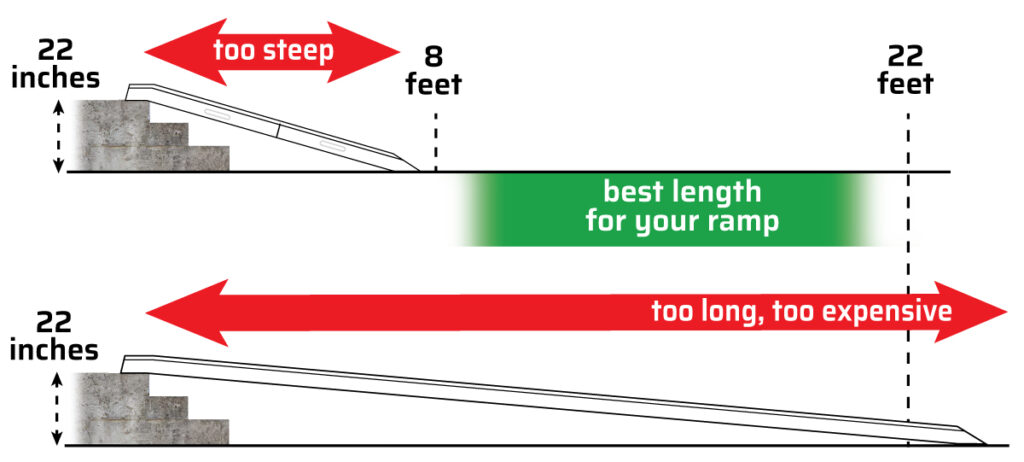
Source: handiramp.com
Why ramp angle matters for dogs
The steepness of a ramp affects comfort, safety, and long‑term joint health. A ramp that is too steep forces dogs to hop or strain. A ramp that is too shallow takes more space and can be tiring for older dogs.
How steep a dog ramp should be determines traction needs, step length, and the risk of slipping or falling. Choosing the right slope helps dogs keep natural gait and reduces stress on hips and knees. In practice, angle matters as much as surface and training.
Recommended steepness by dog size, age, and condition
Different dogs need different angles. Use these ranges as a starting point for how steep a dog ramp should be.
- Small, healthy adults: Aim for 18 to 25 degrees. This is comfortable for most small breeds.
- Medium to large adults: Aim for 18 to 22 degrees. Larger dogs need a gentler slope to protect joints.
- Senior dogs or those with arthritis: Aim for 10 to 18 degrees. The gentlest slope reduces joint strain.
- Puppies and recovering dogs after surgery: Aim for 10 to 18 degrees and consult your vet before use.
- Dogs with neurological issues or severe weakness: 8 to 12 degrees, combined with close supervision.
Practical tip: if you must choose one safe standard for general home use, 18–20 degrees balances space and safety. This answers the question of how steep a dog ramp should be for most situations.
How to measure ramp angle and calculate ramp length
Measure the height first. Height is the vertical distance from the ground to the platform or bed. Then use a simple formula to get length and angle.
- To compute ramp length for a target angle: length = height / sin(angle in degrees). For home use, convert angle to a rise-to-run rule of thumb.
- Common rise-to-run approximations:
- 18 degrees ≈ 1:3 slope (one inch rise per three inches run)
- 20 degrees ≈ 1:2.75 slope
- 25 degrees ≈ 1:2.25 slope
- Use a smartphone inclinometer app or a carpentry level with an angle finder for accuracy.
Example: For a couch 18 inches high and a target of 18 degrees, the ramp length should be about 54 inches. This method ensures the ramp meets your chosen answer to how steep a dog ramp should be.
Source: reddit.com
Surface, traction, and safety features
Steepness is only part of the safety story. Surface and hardware make the ramp usable.
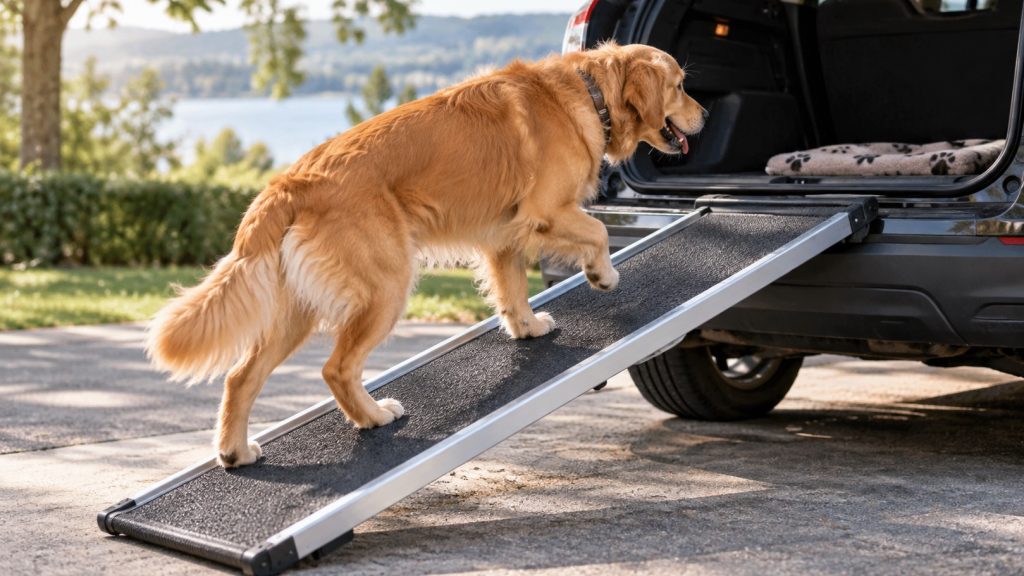
- Traction surface: Use non‑slip carpeting, rubber matting, or textured grip tape. This prevents slipping on both ascent and descent.
- Edges and guardrails: Add low rails for nervous dogs to feel safe. Guardrails also prevent paws from slipping off the edge.
- Secure base: The ramp must not slide. Add rubber feet or anchored mounting to the platform.
- Folding and locking: If the ramp folds, ensure solid locks. Loose hinges can change how steep a dog ramp should be in practice.
- Weight capacity: Check that the ramp supports your dog’s full weight plus any extra load.
From my experience, a secure, grippy surface often matters more than shaving a few degrees off the slope. A 20‑degree ramp with great traction is usually safer than an 15‑degree ramp with slick surface.

Source: amazon.com
Building versus buying a dog ramp
Consider space, budget, and your DIY skill when deciding how steep a dog ramp should be for your home.
- Buying: Prefab ramps list angle, length, and weight capacity. Choose models that let you adjust angle or length. Measure height first.
- Building: Use plywood, framing lumber, and non‑slip surfacing. Exact measurements let you create a ramp that matches your dog’s needs.
- Adjustable ramps: Telescoping or hinged ramps let you change steepness. These are good if dogs of different ages use the same ramp.
- Portability: Lightweight ramps may trade off stability. Ensure your portable ramp still meets the target angle for safe use.
Personal note: I once built an 18‑degree ramp for a senior Labrador. The dog regained confidence within days because the ramp’s angle matched his strength and the surface had good grip.

Source: sch.id
Training, testing, and troubleshooting
A properly angled ramp still needs training. Dogs may hesitate even on the correct slope.
- Start flat: Place the ramp at a shallower angle or lay it flat for early sessions. Use treats and praise to encourage use.
- Short sessions: Keep training brief and positive. Let the dog explore at its own pace.
- Observe gait: Watch for limping, slipping, or refusal. If your dog strains, recheck how steep a dog ramp should be and lower the angle.
- Troubleshooting slips: Add more traction, slow the dog with treats, or reduce the slope. If issues persist, consult your veterinarian.
From testing multiple ramps, patience matters. Most dogs learn to use a properly pitched ramp within a few days with gentle encouragement.

Source: remedi-cool.com
Frequently Asked Questions of How steep should a dog ramp be?
What is the safest angle for a senior dog?
Aim for 10 to 18 degrees for senior dogs. The lower slope reduces joint strain and makes climbing easier.
Can a puppy use a steep ramp?
Puppies should have gentler slopes, typically 10 to 18 degrees. They have short legs and less coordination.
Is an 30‑degree ramp too steep for most dogs?
Yes, a 30‑degree ramp is steep for most dogs and increases the risk of slipping or joint stress. Keep ramps below 25 degrees for general use.
How do I adjust a ramp if my dog refuses to use it?
Lower the angle, improve traction, and use treats and praise. Short, calm training sessions help most dogs gain confidence.
Should I consult a vet about ramp angle?
Yes, consult your veterinarian for dogs with arthritis, hip dysplasia, or after surgery to confirm how steep a dog ramp should be for medical recovery.
Conclusion
Choosing how steep a dog ramp should be comes down to your dog’s size, age, health, and the ramp’s surface. For most dogs, 18 to 22 degrees is a safe starting point; senior or recovering dogs need gentler slopes. Measure height, compute length, secure traction, and train your dog with patience. Act now: measure your platform, pick the right angle, and make your home safer for your dog. Share your results or questions below and subscribe for more practical pet mobility tips.