As an Amazon Associate, I earn from qualifying purchases.
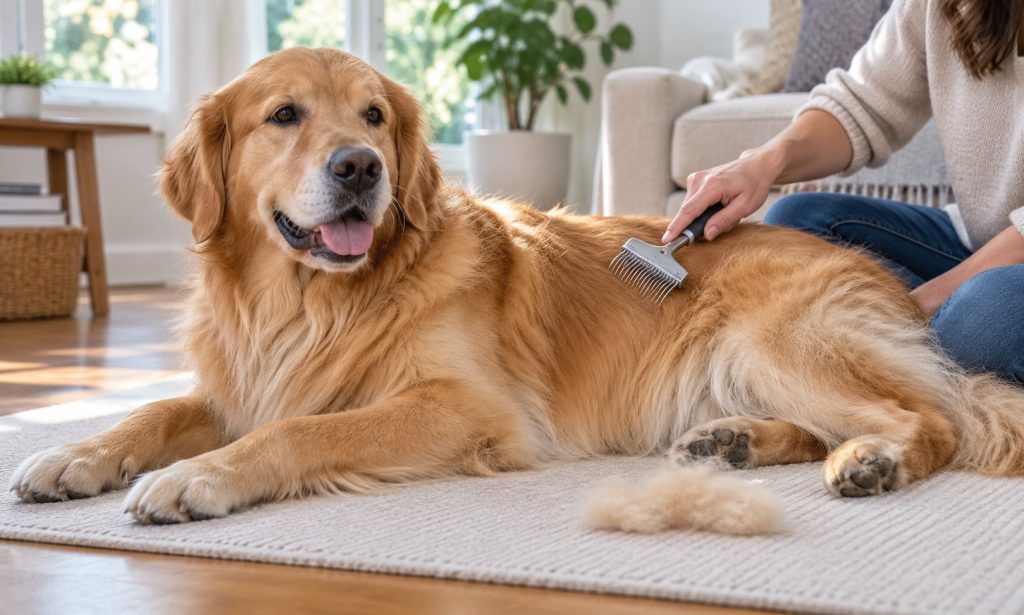
A double-coated dog can leave soft tufts on the floor even when the outer coat looks neatly brushed. The challenge is reaching loose undercoat without turning an ordinary grooming session into pulling, scratching, or repeated passes over the same patch. The best deshedding tool for double coat dogs depends on coat length, density, tangles, and how confidently you handle the tool. A pin rake and a blade-style dematting comb may look similar, but they do different jobs. This guide compares seven options for managing loose undercoat, with clear limits for each. The recommendations come from product information and grooming guidance, rather than personal testing. You will also find a practical buying guide and a gentle starting routine. The aim is to collect shedding fur while preserving a comfortable, healthy coat—not to remove every hair a tool can catch.
Quick Picks
For routine loose-undercoat care, start by comparing the FURminator Grooming Rake and JW GripSoft Double Row Rake. Choose a blade-style option only when its instructions and your dog’s coat justify that approach. Dense matting, sore skin, and unexplained bald patches need professional assessment.
| Product | Best For | Key Advantage | Buy | |
|---|---|---|---|---|
| FURminator Grooming Rake | Routine thick-undercoat care | Rotating metal teeth | View on Amazon | Jump to Review |
| JW GripSoft Double Row Undercoat Rake | Owners prioritizing handle control | Round-tipped teeth and grip | View on Amazon | Jump to Review |
| Safari Double Row Undercoat Rake with Rotating Pins | Dense medium-to-long coats | Double rows of rotating pins | View on Amazon | Jump to Review |
| Safari Single Row Undercoat Rake | Simple section-by-section grooming | Single-row rake layout | View on Amazon | Jump to Review |
| Maxpower Planet Double-Sided Undercoat Rake | Owners needing a two-sided comb | Extra-wide double-sided format | View on Amazon | Jump to Review |
| GoPets Deshedding and Dematting Comb | Targeted tangles plus loose undercoat | Different tooth densities | View on Amazon | Jump to Review |
| Pat Your Pet Deshedding Brush and Metal Comb Combo | A two-tool grooming setup | Brush plus separate metal comb | View on Amazon | Jump to Review |
Best Deshedding Tool for Double Coat Dogs: Product Reviews
1. FURminator Grooming Rake

What We Like
- Rotating metal teeth
- Designed for thick undercoats
- Dedicated rake format
- Manufacturer use guidance
What We Don’t Like
- Different from the brand’s shedding edge
- Dense mats still need professional care
For an owner building a basic double-coat grooming kit, the FURminator Grooming Rake is a sensible starting point. Its manufacturer describes rotating metal teeth intended to remove loose undercoat and detangle dense fur with less tugging. That gives it a distinct role alongside a finishing comb or ordinary brush. It is also important to identify the product correctly: this is the grooming rake, not the FURminator stainless-steel undercoat deshedding edge sold in separate short- and long-hair versions. Those tools have different instructions and should not be treated as interchangeable. I would consider this rake when your dog’s coat has loose, fluffy undercoat that remains after light surface brushing. Begin in a manageable section where you can see the coat and feel how freely the teeth move, rather than starting with a dense knot behind an ear.
The rotating teeth are a useful design feature, but they do not make forceful grooming appropriate. Follow the maker’s directions, use light contact, and stop when resistance or discomfort appears. FURminator’s guidance makes session length dependent on the individual coat; a suggested interval should never become a requirement to continue brushing an uncomfortable dog. This model suits regular maintenance better than an attempt to resolve neglected, tightly compacted fur in one sitting. Compared with the cutting-style combs later in this guide, its appeal is the straightforward rake approach. You may still need a separate comb to check smaller areas and locate tangles. Keep the tool clean, inspect the teeth before use, and move between sections instead of repeatedly working one spot. A comfortable dog and a manageable coat matter more than producing a dramatic pile of removed hair.
My Recommendation
My first comparison choice for routine thick-undercoat maintenance. Select a different tool only for a specific coat need, and get groomer advice if the rake meets persistent resistance.
2. JW GripSoft Double Row Undercoat Rake

What We Like
- Two rows of round-tipped teeth
- Non-slip handle surface
- Undercoat-focused design
- Assorted color options
What We Don’t Like
- Regular teeth need coat matching
- Not for forcing through tight knots
Handle control deserves attention when you are brushing a large dog with dense fur, and that is where the JW GripSoft Double Row Undercoat Rake becomes interesting. Petmate describes a non-slip, ergonomic handle and two rows of round-tipped teeth designed to lift loose undercoat. The double-row layout offers a different contact pattern from a single-row rake, while the rounded tips make the intended grooming approach clear. This is the regular-teeth double-row model being compared, rather than the brand’s short-teeth single-row alternative. I would shortlist it for a household that wants a straightforward rake for regular coat maintenance and finds a shaped handle easier to hold. The handle does not establish suitability by itself, however. Tooth reach still has to match your dog’s coat, and your first few gentle passes should tell you whether the tool moves freely.
Its strongest use case is collecting already loose hair from the underlayer, with careful attention to lightly tangled areas. The manufacturer also describes loosening light matting, but that should not be interpreted as permission to pull through tight mats close to the skin. A firmly attached knot requires a different assessment and often professional help. Compared with the FURminator rake, the most useful buying distinction is the grip and double-row tooth arrangement; there is no supported head-to-head measurement showing that one removes more hair. Color may vary, so choose this for its design rather than expecting a specific handle color. Work in small sections on a comfortable dog and pause to clear collected fur from the teeth. If the head repeatedly catches, reassess the angle, coat preparation, and whether another grooming method is needed. A non-slip handle helps control the tool; it cannot replace a light hand.
My Recommendation
Choose the JW double-row rake when a shaped, non-slip handle suits your grip. Match the regular teeth to the actual coat rather than buying solely because your dog sheds heavily.
3. Safari Double Row Undercoat Rake with Rotating Pins

What We Like
- Two-row pin arrangement
- Rotating-pin design
- Targets thick undercoats
- Separate from cutting combs
What We Don’t Like
- Broad contact needs careful placement
- Wrong tooth reach can snag
Dense medium-to-long fur often calls for a tool that can reach beneath the outer coat, and Safari’s Double Row Undercoat Rake with Rotating Pins is aimed at that job. Coastal Pet identifies the rotating-pin version as a distinct product within its rake range. That distinction matters because the company also makes other single- and double-row rakes. Here, the combination of two rows and rotating pins is the reason to compare it with the JW and FURminator options. I would consider it for an owner managing substantial loose undercoat who prefers a pin-based tool over a blade-style dematting comb. Before ordering, compare the pictured configuration and product name with the linked listing. A familiar brand name alone does not ensure you have selected the intended rotating-pin model or the right format for your dog’s coat.
The practical tradeoff is contact area and tooth reach. A two-row head can feel different from a simpler single-row layout, especially around curves, smaller sections, and sensitive areas. Start where the coat is easy to separate and keep your strokes controlled. You are looking for loose fur that releases comfortably, not trying to make the pins travel through a resistant knot. Coastal Pet positions the tool for undercoat management, but actual results depend on preparation, hair length, and technique. I would pair it with a suitable finishing comb to check whether sections remain tangled after raking. That extra step can be more informative than immediately making another pass. If the coat is compacted against the skin, consult a groomer before using any rake. For regular dense-coat care, this option offers a clear design alternative without relying on unsupported claims of faster grooming or superior hair removal.
My Recommendation
A useful alternative for dense medium-to-long coats when rotating pins appeal to you. Prefer the single-row Safari below if a simpler contact pattern gives you better control.
4. Safari Single Row Undercoat Rake

What We Like
- Uncomplicated single-row head
- Purpose-built undercoat tool
- Easy configuration to identify
- Useful alternative to two rows
What We Don’t Like
- One format cannot suit every coat
- Not a tight-mat removal solution
Sometimes the easier purchase is the simpler one, which is why the Safari Single Row Undercoat Rake belongs in this comparison. Its linked identity is the single-row model, not the rotating-pin double-row version reviewed above. The single-row arrangement gives you a clear starting point if you prefer a less complex contact pattern while working through separated sections of fur. Coastal Pet positions its undercoat rakes for removing loose hair and managing tangles in suitable coats. I would compare this model when your priority is regular maintenance and you do not need a cutting-style comb. It may also suit an owner who wants to learn how a basic rake behaves before choosing a more elaborate head. The relevant question is whether its teeth reach the loose undercoat comfortably, rather than how many rows another product offers.
The limitation is that a straightforward design still needs careful matching and technique. A single row is not automatically gentler on every dog, and more passes can undo any handling advantage if you repeatedly work an irritated patch. Lift and separate the coat as appropriate, then use short, light strokes in the direction recommended for the tool. Watch the dog’s response and check the skin when you part the fur. This rake should help with loose undercoat; it should not be used to pry apart a hard mat sitting close to the body. Compared with the double-row Safari, I see it as a simpler handling alternative rather than a lesser version. Owners who already have an effective rake may gain little from buying both. Choose the configuration that moves through your dog’s coat predictably, and add a finishing comb when you need to inspect smaller areas or check for remaining tangles.
My Recommendation
Pick this for a simple single-row approach to suitable undercoat. Buy one well-matched rake first rather than assuming you need both Safari configurations.
5. Maxpower Planet Double-Sided Undercoat Rake

What We Like
- Two grooming sides
- Extra-wide working format
- Undercoat-focused listing
- Distinct from ordinary surface brushes
What We Don’t Like
- Blade-style technique needs caution
- Wide head limits precision
A two-sided tool can be convenient when you want different grooming surfaces in one handheld format. The Maxpower Planet listing identifies an extra-wide, double-sided undercoat rake for dogs and cats, making its intended job more specific than an ordinary surface brush. This guide compares the gray, extra-wide version. I would consider it for an owner with suitable longer, dense fur who is comfortable learning the correct approach for a dematting-style rake. Its broad head is a handling feature, not proof that it will finish every coat faster. I also would not turn the listing’s headline shedding percentage into a promised household result. The amount of loose fur, coat condition, and brushing method vary too much for that to be a useful personal guarantee.
The main decision is whether you actually need this style of tool. Rounded contact points on a dematting rake do not remove the need to understand any cutting edges and keep pressure light. For uncomplicated seasonal shedding, a pin rake may provide the simpler route. If you choose the Maxpower, follow the supplied instructions, begin with a small separated section, and stop if the tool pulls or your dog becomes uncomfortable. An extra-wide head deserves particular care around narrow areas, folds, and bony points. Do not use it to force your way through a knot you cannot safely separate from the skin. Compared with the Safari and JW options, I would buy this because its two-sided format suits a specific grooming task, not merely because its name includes deshedding. Regular comb checks and careful coat preparation remain essential, and a professional groomer is the better choice for dense, extensive matting.
My Recommendation
Consider it when a two-sided dematting-style format is appropriate for your coat and skill level. For loose-undercoat maintenance alone, begin by comparing the pin rakes.
6. GoPets Deshedding and Dematting Comb

What We Like
- Two tooth-density options
- Rounded tooth ends
- Stainless-steel cutting edges
- Shaped silicone handle
What We Don’t Like
- Can cut hair while dematting
- Requires deliberate light technique
When tangles and loose undercoat appear together, GoPets offers a more task-specific alternative to a plain rake. Its official dematting-comb description distinguishes the lower-density side for mats and tangles from the higher-density side for thinning and deshedding. The manufacturer also describes rounded tooth ends, stainless-steel cutting edges, and a silicone handle. Those details explain why this is not simply another ordinary brush. I would consider it for an owner who understands the difference between releasing loose undercoat and cutting through a tangle. The presence of cutting edges is particularly important for double coats: a tool can change the hair it passes through, even when its outer tips look rounded. If your goal is only routine shedding control, there may be no reason to choose this more involved approach over a suitable pin rake.
The handle and two densities give you options, but selecting the correct side and controlling contact remain your responsibilities. Work only where you can see and separate the coat, follow the current instructions, and avoid treating persistent resistance as something to overcome with strength. Manufacturer descriptions of easier dematting are not evidence that severe mats can be removed safely at home. Close-to-skin tangles, irritated patches, and a dog that struggles during grooming are reasons to involve a professional. Compared with the Maxpower tool, the clearest verified distinction is GoPets’ stated division of tasks between its two densities and its handle design. I would not rank the two by speed or comfort without a reliable comparative test. This comb makes sense when its specific functions match a manageable grooming need. It is a less straightforward first purchase when all you need is a gentle routine for collecting already loose seasonal undercoat.
My Recommendation
Choose GoPets for a defined, manageable tangle-and-undercoat task with proper instruction. Prefer a pin rake for uncomplicated shedding when cutting hair is unnecessary.
7. Pat Your Pet Deshedding Brush and Metal Comb Combo

What We Like
- Two-tool bundle
- Separate metal comb
- Deshedding-focused brush
- Useful section-checking workflow
What We Don’t Like
- More pieces to store
- Each tool needs its own technique
A separate comb can be useful after raking, and the Pat Your Pet combo packages those two stages together. The selected listing identifies a deshedding brush and metal comb grooming combination. That is the configuration being discussed here, rather than assuming every Pat Your Pet brush listing includes the same pieces. The appeal is a workflow: use the appropriate brush on loose undercoat, then use the comb carefully to check separated sections for remaining tangles. A comb meeting resistance gives you a reason to stop and examine the fur instead of repeatedly brushing the entire area. I would compare this bundle if you are starting from scratch and want both tool types. If a suitable metal comb is already in your grooming kit, a standalone rake may be the more sensible purchase.
The bundle format does not mean both pieces should be used equally on every coat or during every session. Read the supplied instructions for the exact brush and comb, inspect their working surfaces, and make sure you understand how each contacts the fur. A comb should help assess and maintain a manageable coat; it should not be driven through a tight knot because the brush failed to release it. For a heavily shedding dog, you can work in small areas and take breaks before the session becomes tiring. Compared with the single-purpose rakes in this guide, the combination offers convenience while adding another piece to clean and store. Its value depends on whether you need the separate comb and will use it deliberately. Store the comb where its teeth will not bend, clear trapped hair after use, and reassess your routine if checking the coat becomes uncomfortable or repeatedly catches in the same sections.
My Recommendation
A practical bundle when you need both a deshedding brush and a checking comb. Owners with an established kit should compare a standalone rake first.
How to Choose
Identify the coat beneath the outer hair
A double coat can be short or long. Look at both the outer layer and soft undercoat, and ask a groomer to identify the coat if you are uncertain. Tooth reach, tool shape, and the actual grooming task matter more than breed labels alone.
Separate pin rakes from cutting combs
Pin-based rakes primarily work through the coat to release loose hair. Dematting-style combs can use cutting edges to pass through tangles. They require different handling. Do not buy the most aggressive-looking tool simply because your dog is shedding heavily.
Start with preparation and light pressure
Inspect the skin, separate manageable sections, and remove easily handled tangles before the coat becomes compacted. Follow the exact tool’s directions. VCA notes that tangles should be addressed before bathing because a bath can make them harder to remove.
Know when to stop
Stop for pulling, skin redness, discomfort, or resistance that you cannot readily explain. Tight mats, sores, bald patches, and sudden changes in shedding need professional advice. Raking more forcefully is not a reliable way to solve them.
Build a realistic routine
Frequency depends on the coat and season. Short, comfortable sessions are easier to maintain than an occasional marathon. Clear trapped fur from the tool, inspect its teeth, and collect loose hair from the grooming area. Brushing manages normal shedding; it does not stop the coat cycle.
For a shorter coat, compare our short-hair deshedding guide. If collecting released fur is your main concern, see our dog grooming vacuum comparison.
Frequently Asked Questions
Is a rake the same as a deshedding blade?
No. Pin rakes and cutting-edge shedding or dematting tools have different contact surfaces and instructions. Identify the exact design before using it on a double coat.
Can I use these tools on a short double coat?
Possibly, but tooth reach and tool suitability still matter. Our short-hair guide focuses more on surface-grooming options; this guide concentrates on reaching loose undercoat.
Should I brush until no more hair comes out?
No. Stop based on the dog’s comfort and coat condition. Repeated passes can irritate skin or damage hair even when a tool continues collecting fur.
Can I remove severe mats at home with a rake?
A tight mat near the skin is a professional grooming problem. Do not pull through it or try to cut it blindly with a comb or scissors.
Does deshedding replace bathing or veterinary care?
No. It is one part of coat care. Follow breed-appropriate bathing guidance and seek veterinary advice for skin problems or abnormal hair loss.
Final Verdict
For regular loose-undercoat care, compare the FURminator Grooming Rake and JW GripSoft first. Safari offers useful single- and double-row alternatives. The Maxpower and GoPets formats need a more deliberate decision about dematting-style work, while Pat Your Pet suits owners who also need a checking comb. Choose for comfortable contact and a clear grooming task, rather than the biggest pile of removed fur.