
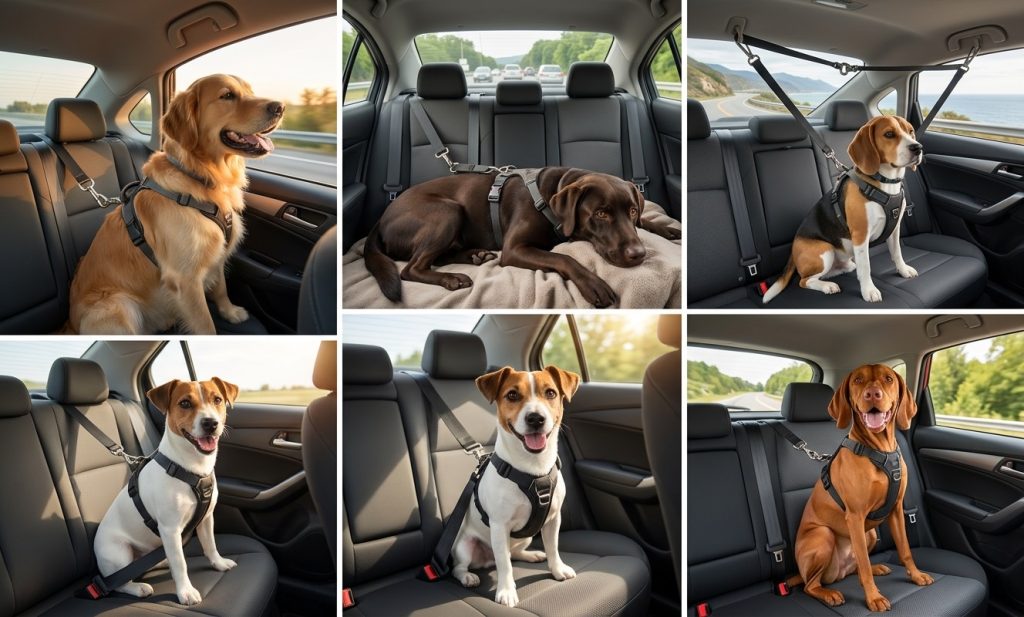
There is nothing quite like loading up the SUV on a crisp Saturday morning, cueing up a good playlist, and seeing a furry face grinning at you in the rearview mirror. Road trips with our dogs make for the absolute best memories. But let’s be honest for a second: driving with a 60-pound furry co-pilot who thinks it is their personal duty to stick their head into your lap every time you hit a bump isn’t just distracting—it can get dangerous fast.
If you have ever had to slam on your brakes on I-95 because a squirrel darted across the road, you know that heart-in-your-throat feeling as your gear shoots forward off the passenger seat. Now imagine that happening to your dog. That single thought was what finally pushed me to rethink pet travel safety years ago. Finding the best dog seat belt for road trips isn’t just about avoiding a traffic ticket; it is about keeping your whole family whole on the open highway.
Navigating the sea of pet car safety gear can feel overwhelming, especially when every package claims to be “crash-tested” or “heavy-duty.” Let’s break down how to choose the right dog seat belt for road trips, what actually keeps your pup secure, and how to skip the marketing hype so you can focus on enjoying the drive.
Why Standard Seat Belts Aren’t Built for Dogs
To understand why specialized canine restraints are necessary, we have to look at how vehicle safety systems are designed. Human seat belts are engineered for bipedal bodies with specific anatomical anchor points—specifically our shoulders and hips. A regular three-point seat belt assumes a human torso will stay upright during an impact.
Dogs, obviously, come in different shapes, sizes, and centers of gravity. If you simply wrap a standard human belt around a dog, or let them sit freely on the bench seat, any sudden stop at 55 mph transforms them into an unrestrained force.
The Physics of a Sudden Stop
It takes surprisingly little speed to cause severe injury. In a front-end crash at just 30 mph, an unrestrained 10-pound dog generates roughly 300 pounds of projectile force. A 70-pound Golden Retriever in that same scenario exerts more than 2,000 pounds of force.
That isn’t just dangerous for your pet; it poses a massive risk to human passengers as well. A restraint keeps your dog anchored in their designated spot, absorbing momentum gradually rather than abruptly hitting the dashboard or seat back.
Preventing Driver Distraction
Let’s step away from worst-case crash scenarios and talk about daily driving realities. According to traffic safety studies, driving with an unrestrained pet is one of the leading sources of non-digital driver distraction.
Whether your pup likes to climb onto your center console, nudge your elbow while you are merging onto a busy interstate, or try to climb into the footwell, a few seconds of split attention can lead to an avoidable fender bender. A reliable seat belt sets clear boundaries: your dog stays safely in the back seat while you keep your eyes on the road.
Understanding the Types of Dog Seat Belts
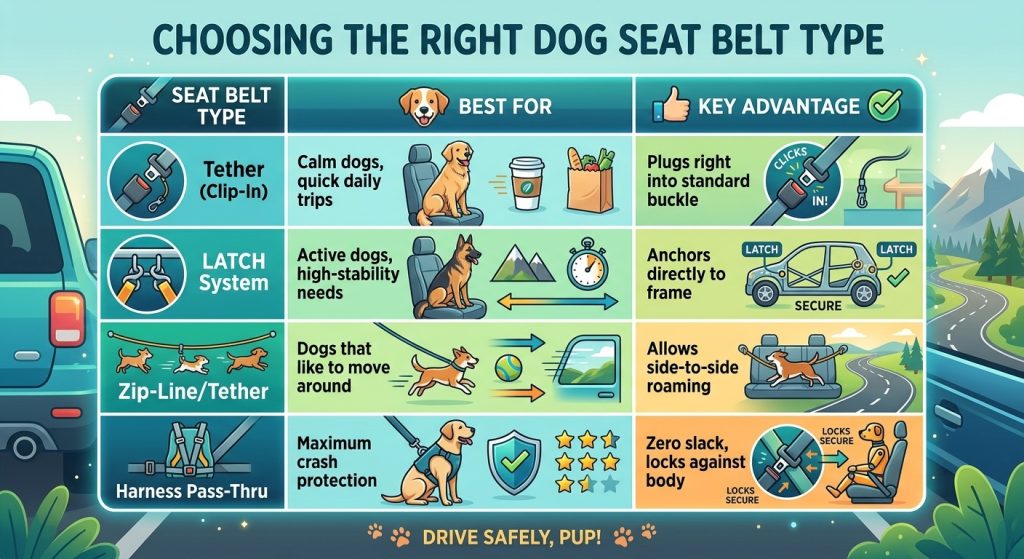
When you start browsing for restraints, you will quickly realize that “dog seat belt” is a broad term. Different styles offer varying levels of movement, security, and installation methods. Knowing how these designs work is the first step when figuring out how to choose the right dog seat belt for road trips.
Direct Tether Seat Belts
This is the most common style you will encounter. One end clips securely to your dog’s back harness, while the other end features a standard seat belt tongue that clicks directly into your vehicle’s existing buckle receiver.
-
Pros: Exceptionally easy to swap between different cars; quick to click in and out.
-
Cons: Some clever dogs accidentally step on the buckle release button mid-trip, popping themselves free.
LATCH / Isofix Anchor Belts
Instead of using the seat belt buckle on the bench, LATCH-style restraints hook directly into the lower child safety seat anchors welded into your car’s frame (located in the crease between the seat back and bottom cushion).
-
Pros: Cannot be accidentally unbuckled by a dog’s paw; rock-solid attachment directly to the vehicle chassis.
-
Cons: Takes a minute longer to install; requires a car manufactured after 2002 equipped with child LATCH points.
Zip-Line or Overhead Systems
Overhead systems involve a strap stretched tightly between two rear handle grips or ceiling anchors. A tether runs from the line down to your dog’s harness, allowing them to slide back and forth across the rear seat.
-
Pros: Great for restless dogs who cannot sit still in one spot for long stretches.
-
Cons: Provides minimal impact protection during a collision because the line allows significant forward travel distance. Imo, these are better suited for keeping a dog in the back than providing true collision safety.
Direct Seat Belt Pass-Through Harnesses
Some heavy-duty travel harnesses skip tethers entirely. Instead, you slide the actual vehicle seat belt straight through reinforced webbing loops built into the back of the harness itself, then buckle the car’s belt as normal.
-
Pros: Holds the dog closest to the seat cushion, minimizing forward momentum during sudden stops.
-
Cons: Restricts movement heavily; your dog can lie down or sit up, but cannot pace across the seat.
What to Look for in Dog Seat Belt for Road Trips
Not all car restraints are constructed equal. When evaluating your options, you want to inspect materials, hardware, and safety testing standards closely. Here is what to look for in dog seat belt for road trips to ensure you are buying gear that actually works under stress.
1. Independent Crash Testing
Anyone can label a strap “heavy-duty” or “road-trip ready.” What you really want to see is evidence of independent dynamic crash testing. Look for products tested at specialized facilities using rules similar to child safety seat standards (such as the Federal Motor Vehicle Safety Standard 213).
True safety gear is evaluated using weighted test dummies (often referred to as “crash test dogs”) to verify that seams, stitching, and metal hardware hold together under high impact loads without tearing or failing.
2. Metal Hardware Over Plastic
Never rely on plastic side-release buckles or cheap zinc clips for vehicle restraint. In a high-speed collision, plastic buckles can snap instantly under load.
Look for hardware made from high-tensile materials:
-
All-metal carabiners with screw-lock or auto-locking gates.
-
Stamped steel or aluminum hardware rated for strength (often listed in kilonewtons or pounds of force capacity).
-
Heavy-duty swivel attachments that spin 360 degrees to prevent the tether from twisting into knots as your dog turns around.
3. Reinforced Webbing and Stitching
Inspect the fabric strap itself. Thick, high-density nylon webbing—similar to the strength of human seat belts—is essential. Look for box-stitching or “X-stitching” patterns at connection points where the fabric meets metal clips. This reinforced pattern distributes force evenly across the fabric so it won’t tear apart under sudden strain.
4. Adjustable Tether Length
Every vehicle interior is laid out differently, and every dog has a unique body frame. An adjustable tether length allows you to fine-tune how much freedom your dog has.
Ideally, the tether should be short enough to keep your dog’s head from hitting the front seat back or windshield in a stop, but long enough for them to sit, stand, and lie down comfortably. If your dog is standing on the seat and has enough slack to jump down into the floorwell, the tether is too long.
The Golden Rule: Harness vs. Collar Attachment
If you take only one piece of advice from this guide, let it be this: NEVER attach a car seat belt or tether to your dog’s neck collar.
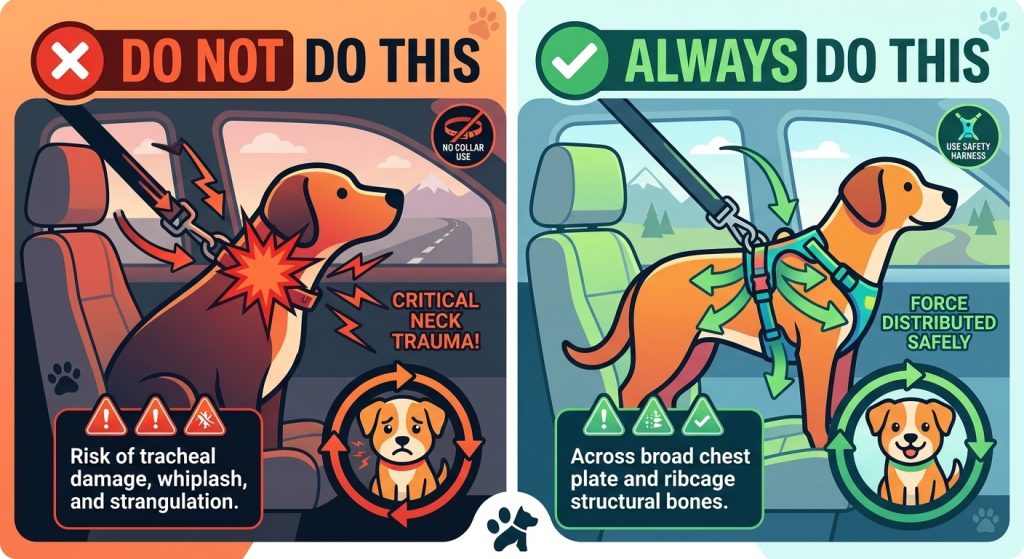
Think about what happens in a sudden stop. If the tether is attached to a standard flat collar or martingale, all the force of your dog’s moving body weight is instantly concentrated on their trachea and neck vertebrae. This can cause severe tracheal collapse, neck fractures, or choking.
Always pair a seat belt tether with a well-fitted, broad-chested travel harness. A proper harness distributes deceleration forces across the strongest parts of your dog’s body—their chest plate and ribcage—protecting delicate soft tissue and neck structures from injury.
How Often Should You Use or Replace Dog Seat Belt for Road Trips?
A seat belt isn’t a “buy it once and forget about it for fifteen years” item. Vehicle gear ages due to physical wear, environmental exposure, and material stress. Knowing how often should you use or replace dog seat belt for road trips is key to keeping your setup safe over the long haul.
Frequency of Use: Every Single Trip
The short answer for frequency is simple: use it on every single drive, regardless of distance.
It is tempting to skip buckling up your dog when you are just running two miles down the road to pick up coffee or visit a local park. However, statistical traffic data shows that the vast majority of vehicular accidents occur within 25 miles of home at lower speeds. Making seat belt attachment part of your non-negotiable loading routine—just like clicking your own belt—ensures your dog is protected every time wheels turn.
Inspection Routine and Lifespan
How long a seat belt lasts depends on wear, climate, and how often you travel. Give your safety gear a thorough check every couple of months using this checklist:
-
Fraying and Wear: Check the edges of the nylon webbing for fuzzing, cuts, or thinned areas where fabric has rubbed against seat seams.
-
Chew Damage: Dogs love to chew when bored or anxious on road trips. Even a single deep chew mark weakens nylon strength by up to 75%. If your dog leaves teeth marks on the strap, replace it immediately.
-
Hardware Function: Test all carabiners, clips, and buckle tongues. Springs should snap back crisply, and locking gates should turn smoothly without sticking.
-
Sun/UV Degradation: Sun exposure through car windows breaks down synthetic fibers over time, making them brittle. If the strap fabric feels stiff, faded, or crunchy, it is time for a fresh replacement.
Crucial Safety Note: If your car is involved in a moderate to severe accident, replace your dog’s seat belt harness and tether right away—even if there is no visible damage. Just like human seat belts and child safety seats, the intense forces stretched the fibers and stressed the internal structure of the hardware. Don’t risk reusing post-collision gear.
Practical Tips for Stress-Free Road Trips with Dogs
Having the right safety equipment is only half the battle; getting your dog accustomed to using it comfortably is the other. If your dog has spent years freely roaming the back seat, being anchored in place can feel strange at first.
Acclimate Before the Big Trip
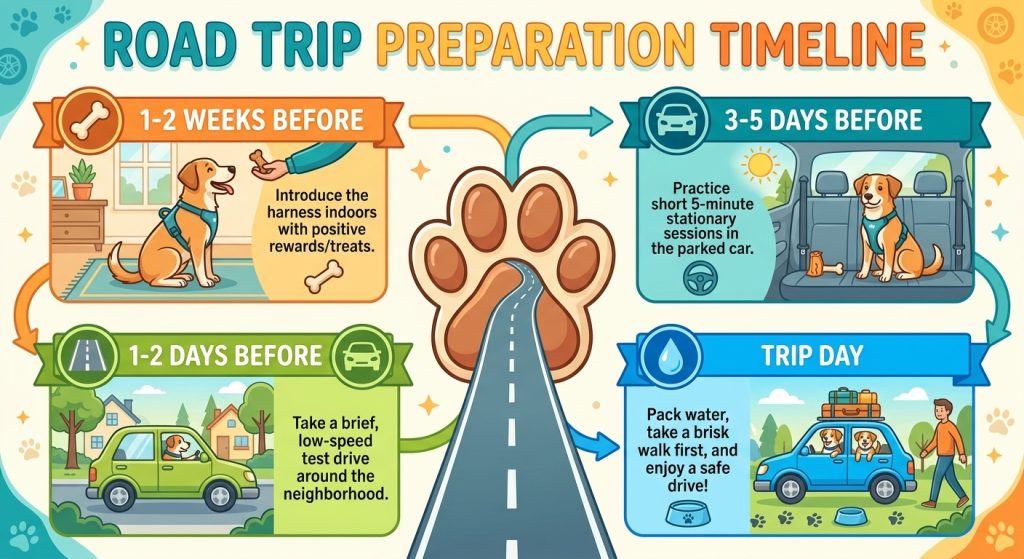
Don’t wait until the morning of an 8-hour drive across state lines to strap your dog into a brand-new harness for the first time. Start small:
-
Let them wear the harness around the house for short periods while giving them treats.
-
Next, attach the harness to the seat belt while parked in the driveway for a few minutes.
-
Take a few brief, 5-minute drives around your neighborhood, rewarding them for sitting or lying down calmly.
Gradual exposure prevents your dog from associating their new restraint system with frustration or anxiety.
Managing Motion Sickness and Restlessness
Some dogs fidget in car seats not because they dislike the restraint, but because they are feeling nauseous. Car sickness is surprisingly common, especially in younger dogs whose inner ear balance mechanisms are still developing.
To help keep nausea at bay:
-
Position their restraint on the center seat or driver-side rear seat so they can look straight ahead out the front windshield rather than watching side windows blur past.
-
Keep air flowing freely around their space using air vents or cracking a window slightly (though not far enough for them to stick their head out!).
-
Avoid feeding a large meal within two to three hours of hitting the highway.
Schedule Regular Stretch Breaks
Even with the best dog seat belt for road trips, staying in one position for hours gets tiring for your dog’s muscles. Plan to stop every 2 to 3 hours at a safe rest area or park.
Unclip their tether, let them stretch their legs, drink fresh water, and take a quick potty break. It burns off excess energy and makes them far more likely to nap peacefully during the next stretch of driving.
When to Visit a Vet or Professional Trainer
While a seat belt solves physical restraint needs, car travel can sometimes bring up underlying behavioral or medical concerns that require professional insight.
Severe Car Anxiety or Motion Sickness
If your dog drools excessively, pants uncontrollably, vomits every time they enter a moving vehicle, or panics when restrained despite gradual training, consult your veterinarian. They can prescribe short-term anti-nausea medications, mild sedatives, or calming supplements tailored specifically to your dog’s weight and health history.
Post-Accident Medical Checks
If you are ever involved in a car crash with your dog on board, schedule a veterinary examination as soon as possible—even if your pet appears completely uninjured on the surface.
Dogs are master communicators when happy, but they naturally hide pain when stressed or adrenaline-fueled. A thorough vet check ensures there are no internal bruises, muscle strains, or hidden injuries caused by impact forces.
Alternatives to Dog Seat Belts
While seat belt tethers and specialized harnesses are fantastic solutions for many households, they aren’t the only way to secure a dog for travel. Depending on your vehicle setup and your dog’s temperament, another method might suit your lifestyle better.
Heavy-Duty Travel Crates
For maximum crash protection, many experts prefer impact-tested aluminum or plastic travel crates anchored directly to the cargo tie-downs of an SUV, truck bed, or station wagon.
-
Best For: Working dogs, high-energy pups, or multi-dog households.
-
Considerations: Requires substantial cargo space and a larger budget, but offers exceptional all-around protection from shifting luggage and side impacts.
Rear-Seat Cargo Barriers
Metal or heavy-duty mesh barriers divide the back seat or trunk area from the main passenger cabin, creating a dedicated zone for your dog to move around in.
-
Best For: Very large breeds (like Mastiffs or Great Danes) who struggle with standard harnesses.
-
Considerations: Keeps dogs out of the front seat, but doesn’t prevent them from tumbling inside their cargo space during sudden stops unless paired with individual restraints.
Frequently Asked Questions (FAQs)
Are dog seat belts mandatory by law in the USA?
Laws vary by state. While not every US state explicitly requires a “seat belt” for pets, many states (such as New Jersey, Rhode Island, and Hawaii) have strict laws prohibiting unrestrained animals in vehicles under general distracted driving or animal welfare statutes. Additionally, police officers in almost any state can issue citations for negligent driving if an unrestrained dog interferes with your ability to operate the vehicle safely.
Can I use a human seat belt to secure my dog’s harness?
You can, provided your dog’s harness features dedicated seat belt pass-through loops designed for that purpose. However, simply wrapping a standard three-point human seat belt around a dog or through a regular walking harness handle rarely holds them securely and often slips out of position during travel.
How tight should my dog’s travel harness be?
The harness should fit snugly around their chest and torso without restricting breathing or chafing their skin. A reliable rule of thumb is the “two-finger test”: you should be able to slide two fingers comfortably underneath any strap on the harness, but no more.
Is it okay to let my dog stick their head out the car window if they are buckled in?
It is best to avoid this. Even if your dog is securely buckled so they cannot jump out, letting them put their head out the window exposes their eyes, ears, and throat to airborne road debris, rocks, insects, and harsh wind pressure. Crack the window open 2 to 3 inches so they can smell the breeze safely without putting their face directly in the airstream.
What is the safest location in the vehicle for a dog?
The back seat is the safest spot for dogs, just as it is for young children. Never place a dog in the front passenger seat if the vehicle’s airbag system is active; a deploying airbag can cause catastrophic injuries to a dog during an impact. If your vehicle lacks a back seat (such as a two-seater pickup truck), ensure the passenger airbag is manually turned off before traveling with a restrained dog.
Final Words
Road trips with our dogs are among the absolute highlights of pet ownership. Taking a few extra minutes to select proper, crash-tested restraint gear ensures that every journey you take together is as safe as it is memorable.
Focus on finding a well-fitted travel harness, choose metal hardware over plastic, and anchor your co-pilot securely in the back seat every time you head out. Once your dog gets used to their new seat belt setup, you can both settle in, relax, and enjoy every mile of the open road ahead. Happy travels!









