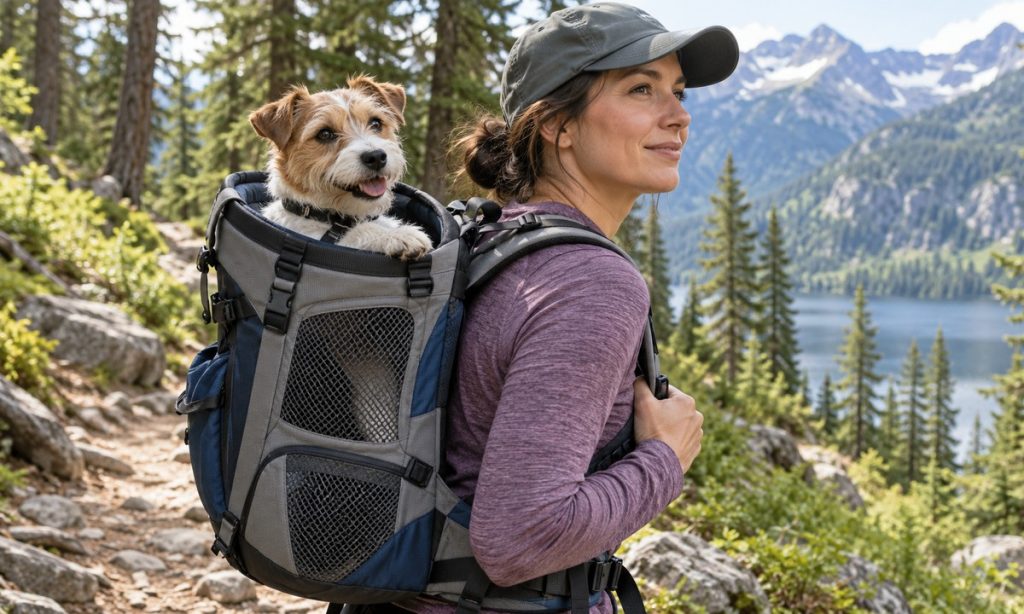
A dog backpack carrier can make a trail accessible when a small dog tires, a route includes rough ground, or your companion needs a lift for part of the outing. The best choice depends on fit and support, not just the carrier’s advertised weight limit. A good match should hold your dog securely, allow airflow, distribute weight reasonably for you, and suit the length and terrain of your hike.
We compared seven backpack-style carriers, including lightweight bags, daypack designs, and structured options with a hip belt or frame. We prioritized manufacturer sizing information, carrying support, ventilation, access, and the trade-offs owners should check. Always confirm current limits for the exact model and size. Introduce the carrier gradually, try it on a short walk first, and let your dog walk and rest whenever appropriate.
Planning a day outside? Pair a properly fitted carrier with a portable water option such as our hiking dog water bottle guide.
Quick Picks
| Product | Best For | Key Advantage | ||
|---|---|---|---|---|
| K9 Sport Sack Plus 2 | Day hikes with small and medium dogs | Removable storage with supportive back and shoulder padding | View on Amazon | Jump to Review |
| PetAmi 4-Way Entry Dog Backpack Carrier | Small dogs and frequent access | Multiple entry points and an airline-oriented soft carrier design | View on Amazon | Jump to Review |
| K9 Sport Sack Kolossus | Larger dogs and gear-heavy outings | Convertible large-capacity gear-pack design | View on Amazon | Jump to Review |
| Kurgo G-Train Dog Carrier Backpack | Hiking plus everyday carry | Daypack storage, mesh top, and protective base | View on Amazon | Jump to Review |
| Ruffwear Hitch Hiker Dog Backpack Carrier | Supported carries for trail sections | Integrated harness and adjustable hip belt; manufacturer lists up to 40 pounds | View on Amazon | Jump to Review |
| K9 Sport Sack Air 2 | Lightweight, ventilated carry | Breathable side mesh and back-length sizing | View on Amazon | Jump to Review |
| K9 Sport Sack Knavigate | Longer hikes with more structured support | Internal frame and padded hip belt; manufacturer lists up to 50 pounds | View on Amazon | Jump to Review |
How to Choose a Dog Backpack Carrier for Hiking
Measure your dog’s back length, chest or girth, and weight, then check the exact carrier size chart. A carrier that is too short can force an uncomfortable posture; one that is too loose may let the dog shift. Consider whether you need a light pack for a short carry or a framed carrier with a hip belt for heavier loads. Check mesh placement, zippers, safety tether, base support, and how the dog’s legs and body are held. The wearer’s torso length and strength matter too. Begin with brief indoor sessions, then test on a short, level walk. Stop if either of you is uncomfortable, and do not exceed the stated limit.
Best Dog Backpack Carriers for Hiking
1. K9 Sport Sack Plus 2

What We Like
- Removable storage pockets
- Thicker shoulder straps and padded back
- Several back-length size ranges
- Top-loading backpack carry
What We Don’t Like
- Dog must fit its specific size range
- Not designed for every dog’s posture or hiking duration
The Plus 2 is a backpack-style carrier for people who want to bring a smaller dog along on day hikes and outings. K9 Sport Sack lists several size ranges based on the dog’s collar-to-tail length, so measuring is more useful than guessing from breed or weight. The model also has removable storage and padded shoulder straps and back support, details that can help you organize small essentials and manage the pack on a walk. Review the opening and the dog’s supported position before buying. A carrier should let the dog sit or stand naturally enough for the intended use, with the legs and body positioned as the manufacturer describes. Start with a short indoor fit session and check for rubbing or stress.
A dog backpack is not automatically comfortable just because the dog fits by weight. Back length, chest shape, body condition, and willingness to ride affect fit, while the person carrying the pack needs shoulder and hip support appropriate to the load. Confirm current sizing and weight limits for this exact Plus 2 model, and avoid extending a hike simply because the dog is in the carrier. Watch for panting, restlessness, overheating, or repeated attempts to get out. The removable storage adds utility, but heavy gear can shift the balance and pull the pack away from your back. Keep the load light, secure the safety tether as instructed, and take frequent breaks. This is most appealing for shorter outings with a dog who has been introduced to the carrier gradually. Fit the pack while the dog is calm and check for pressure, secure restraint, and free airflow before starting a trail.
My Recommendation
Before a longer outing, confirm carrier fit, keep the combined load within your limits, and take breaks to check your dog’s posture, airflow, comfort, and willingness to continue; shorten the route if needed.Choose the Plus 2 if you want a day-hike carrier with storage and padded support for a dog that fits its length chart. Measure carefully, train gradually, and keep both dog and human load comfortable. For longer hikes or heavier dogs, compare frame-supported models.
2. PetAmi 4-Way Entry Dog Backpack Carrier

What We Like
- Four-way entry design
- Soft backpack format
- Airline-oriented listing
- Accessible openings for loading
What We Don’t Like
- Confirm airline rules separately
- Soft structure may be less supportive on rough hikes
The PetAmi backpack is marketed as a four-way entry carrier with an airline-oriented design. Multiple openings can make loading a small dog easier, particularly if the dog is hesitant to step into a top-only opening. The soft-sided format may also suit owners who want a carrier for neighborhood walks, travel, and short trail sections rather than a large framed hiking pack. For hiking, prioritize the actual fit and carrying comfort over an airline claim: measure your dog, check its seated posture inside the bag, and confirm that the carrier keeps the face unobstructed while providing airflow. The openings should secure fully, and the safety tether should attach to a properly fitted harness rather than a collar.
Airline approval is not universal, because each airline sets its own cabin and carrier rules. Confirm current dimensions and policies before travel. A soft pet backpack may not provide the same torso support, load distribution, or trail stability as a purpose-built hiking carrier. Check the base support and shoulder padding, then test it with a light load on level ground. If the dog slumps, twists, or cannot settle, it is not a good hiking fit even if the carrier can be worn as a backpack. Ensure mesh panels are clear and do not block airflow with clothing or gear. This is a versatile small-dog carrier candidate, but owners planning long, uneven hikes may prefer a carrier designed around frame support and a hiking harness. Fit the pack while the dog is calm and check for pressure, secure restraint, and free airflow before starting a trail.
My Recommendation
Before a longer outing, confirm carrier fit, keep the combined load within your limits, and take breaks to check your dog’s posture, airflow, comfort, and willingness to continue; shorten the route if needed.PetAmi is best for a small dog and an owner who values entry access and a soft travel-friendly bag. Treat airline suitability as something to verify with the carrier and airline. For rugged trails, check support, stability, ventilation, and the dog’s posture before choosing it.
3. K9 Sport Sack Kolossus

What We Like
- Large-dog backpack carrier category
- Convertible gear-pack design
- More storage potential than basic carriers
- Multiple larger size options
What We Don’t Like
- Greater pack size can increase carrying strain
- Check exact capacity and dog-size limit
The Kolossus is K9 Sport Sack’s larger carrier for owners who need more room and want a bag that can also carry gear. The product line is presented as a convertible pack with substantial storage, which can be helpful on longer outings when you need to organize water, waste bags, and a few essentials. It is important to separate cargo capacity from dog capacity: adding more gear increases the weight on your back, even when the dog remains within its stated limit. Check the current model’s size chart and supported weight range before ordering, then compare the dog’s collar-to-tail length and chest fit. The carrier should hold the dog in the manufacturer’s intended position without allowing the body to sag or rotate.
A larger dog and a larger pack can become tiring quickly, especially on steep or uneven trails. Do not interpret the carrier’s storage volume as a reason to overload it; keep necessary gear minimal and balance it around the dog. Confirm how the harness, safety tether, and frame or support elements work together, and inspect stitching and fasteners before each hike. Give the dog a gradual training period and begin with a short route close to home. Stop if the dog shows distress or overheating, and remember that a carrier does not make a dog suited for every trail. This model is a better match for owners who need a larger pack system, but its size and load call for thoughtful fitting and realistic distance planning. Fit the pack while the dog is calm and check for pressure, secure restraint, and free airflow before starting a trail.
My Recommendation
Before a longer outing, confirm carrier fit, keep the combined load within your limits, and take breaks to check your dog’s posture, airflow, comfort, and willingness to continue; shorten the route if needed.Consider the Kolossus when you need a large-dog carrier with added gear capacity and your dog falls within the exact size chart. Keep the combined load conservative and test it on short walks. If you value less bulk, choose a simpler carrier with a closer match to your hiking needs.
4. Kurgo G-Train Dog Carrier Backpack

What We Like
- Daypack-style storage
- Mesh top opening
- Protective Armorsole bottom per manufacturer
- Useful carry format beyond the trail
What We Don’t Like
- Check dog fit and weight limit for the exact size
- More pockets can tempt owners to carry excess gear
The Kurgo G-Train has the profile of a daypack, so it can appeal if you want one bag for short hikes and regular outings. Manufacturer information highlights a zip-open mesh top, storage pockets, and an Armorsole bottom designed to resist water and dirt. Those details can be useful when the carrier rests on the ground at a trailhead or park, while a mesh opening can help maintain airflow. Compare the dog’s measurements with the specific size chart and check the interior dimensions; the bag should not force the dog into a cramped or twisted position. Make sure the dog can enter and exit calmly, and use the included safety features according to the instructions.
A feature-rich backpack can become heavy when you fill every pocket. Keep your dog’s load and your gear within the manufacturer’s limits, and make sure the pack remains stable while walking. Confirm the current carrier weight capacity and test the base, zipper, and tether before heading onto a trail. The mesh top aids ventilation, but it does not guarantee adequate cooling in hot or humid weather. Avoid carrying a dog longer than it can comfortably tolerate, and take breaks to let the dog walk when safe. The G-Train is a practical option for owners who also want everyday storage, but it may be more bag than needed for a short, simple hike. Check fit and loaded balance before committing to a long route. Fit the pack while the dog is calm and check for pressure, secure restraint, and free airflow before starting a trail.
My Recommendation
Before a longer outing, confirm carrier fit, keep the combined load within your limits, and take breaks to check your dog’s posture, airflow, comfort, and willingness to continue; shorten the route if needed.The G-Train suits owners who want a hiking carrier that also works like a daypack. Its storage and protective base are useful, but carry only essential gear and verify the exact dog capacity. Test fit, airflow, and balance on a short walk before using it on a longer trail.
5. Ruffwear Hitch Hiker Dog Backpack Carrier

What We Like
- Integrated harness design
- Adjustable hip belt for load support
- Manufacturer lists dogs up to 40 pounds
- Dual-locking zippers and mesh airflow
What We Don’t Like
- Dog must fit the torso and girth measurements
- The carry may not suit every dog or person
The Ruffwear Hitch Hiker is designed around carrying a dog during hiking, with an integrated harness and an adjustable hip belt to help support the load. The manufacturer lists a maximum dog weight of 40 pounds, but weight is only the first check: the correct size depends on the dog’s measurements and the carrier’s fit. The product also has dual-locking zippers and mesh panels, features that can help secure the dog and provide airflow when used correctly. This model may be useful for trail sections where a dog needs a lift, while allowing the owner to carry the dog close to the body. Review Ruffwear’s sizing chart and instructions before purchase, and test the carrier at home with the dog calm and supported.
An integrated harness does not mean every dog will accept being carried. The dog must be able to settle in the intended position, and the wearer must be comfortable with the weight and balance. Do not exceed the 40-pound manufacturer limit, and remember that added gear increases the total load. Make sure the zipper locks are closed and the fit does not press on the dog’s chest or restrict breathing. Mesh is not a substitute for managing heat; take breaks and check the dog often. A carrier can also change how you move on rocky or steep terrain, so practice on flat ground first. The Hitch Hiker is a serious hiking option, but use it only after confirming fit for both dog and human. Fit the pack while the dog is calm and check for pressure, secure restraint, and free airflow before starting a trail.
My Recommendation
Before a longer outing, confirm carrier fit, keep the combined load within your limits, and take breaks to check your dog’s posture, airflow, comfort, and willingness to continue; shorten the route if needed.Choose the Hitch Hiker if you want a hike-oriented carry with an integrated harness and hip belt, and your dog is within Ruffwear’s stated limit and size chart. Practice before the trail, keep the load manageable, and monitor comfort and temperature throughout the outing.
6. K9 Sport Sack Air 2

What We Like
- Breathable mesh panels
- Multiple sizes based on back length
- Sternum strap support
- Lightweight backpack-style design
What We Don’t Like
- Small-to-medium size range may exclude larger dogs
- Less frame support than expedition-style packs
The Air 2 is a simpler backpack carrier with breathable side mesh and multiple size options based on a dog’s back length. K9 Sport Sack lists sizes that cover a range of roughly 9 to 22 inches, so measure from the base of the neck to the base of the tail and use the brand’s current chart. Mesh panels can support airflow, while a sternum strap helps stabilize the shoulder straps as you walk. This kind of pack may suit short hikes and outings when a small or medium dog needs a lift over a rough section. Check how the legs and chest are supported, and make sure the dog’s face remains clear and the pack stays snug without pinching.
The Air 2 is not a framed expedition carrier, and the lighter design may not provide the same structure for heavier loads or longer routes. Confirm the exact size and weight limits for the product version you are considering; the ASIN in this roundup is a large size but may still not fit every large dog. A dog’s willingness and posture are as important as the numeric measurement. Train gradually indoors, then take a brief walk before trying a trail. Watch for shoulder rubbing, overheating, or attempts to escape. Keep the pack light and avoid using it as a substitute for a dog’s normal exercise. This is a useful uncomplicated choice when its simpler support and sizing match the dog and the expected outing. Fit the pack while the dog is calm and check for pressure, secure restraint, and free airflow before starting a trail.
My Recommendation
Before a longer outing, confirm carrier fit, keep the combined load within your limits, and take breaks to check your dog’s posture, airflow, comfort, and willingness to continue; shorten the route if needed.The Air 2 is a sensible option for a dog within its back-length chart when you want breathable mesh and a lighter pack. Its simpler support is best for shorter carries. If your dog is heavier or you expect long hikes, compare a framed carrier with a hip belt.
7. K9 Sport Sack Knavigate

What We Like
- Internal-frame support
- Padded hip belt for load distribution
- Manufacturer lists dogs up to 50 pounds
- Designed for larger dog-carrying needs
What We Don’t Like
- More structure adds bulk
- Fit and training remain essential
The Knavigate is the most structured K9 Sport Sack option in this selection, with an internal frame and padded hip belt for carrying support. The manufacturer lists a maximum dog weight of 50 pounds. That ceiling does not mean every 50-pound dog will fit comfortably, so use the current size chart and measure collar-to-tail length, torso, and girth. The frame can help transfer some load toward the hips and keep the pack shape stable, which may appeal to owners planning longer hikes or carrying a heavier small-to-medium dog. Check the dog’s supported position and secure attachment points, then practice with the pack empty before adding the dog. Add only the essentials and keep the combined load manageable.
Structured support can improve carrying stability, but it also makes the pack bulkier and does not eliminate strain. The wearer needs to be comfortable with the dog’s weight, the trail, and the pack’s fit. Verify the exact model’s dimensions and included supports, and make sure the dog can breathe, remain balanced, and exit safely. A maximum listed weight is a product limit, not a comfort guarantee. Train in short sessions and stop if the dog resists, pants heavily, or shifts repeatedly. Weather, terrain, and the dog’s health can all affect whether a carry is appropriate. This carrier is designed for greater support, but it still requires a careful fit and realistic plans for distance, breaks, and hydration. Fit the pack while the dog is calm and check for pressure, secure restraint, and free airflow before starting a trail.
My Recommendation
Before a longer outing, confirm carrier fit, keep the combined load within your limits, and take breaks to check your dog’s posture, airflow, comfort, and willingness to continue; shorten the route if needed.Consider the Knavigate if you want an internal-frame carrier with a hip belt and your dog fits the manufacturer’s size chart and 50-pound limit. Its structure may help on longer routes, but the pack is bulkier. Test loaded balance and your dog’s comfort before a hike.
Final Verdict
For short hikes with a smaller dog, the K9 Sport Sack Plus 2 or Air 2 may suit owners who want a lighter backpack. The Kurgo G-Train adds daypack utility, while the Ruffwear Hitch Hiker and K9 Knavigate offer more support for heavier carries within their stated limits. The Kolossus is designed for larger carrying needs and added gear storage; PetAmi is a soft, accessible option for small dogs but may be less suited to rugged routes. Match the carrier to the dog’s measurements, train slowly, and keep the combined load and conditions manageable.
Frequently Asked Questions
How do I measure my dog for a backpack carrier?
Follow the carrier maker’s chart. Common measurements include back length from the base of the neck to the base of the tail, chest girth, and weight. Do not use breed alone to choose a size.
What weight limit should I follow?
Follow the limit for the exact model and size. A carrier’s maximum is not a promise that every dog at that weight will fit comfortably. The carrier also adds load for the person wearing it.
Are dog backpacks safe for hiking?
They can be appropriate when the carrier fits, the dog is comfortable, the temperature is suitable, and the owner follows the manufacturer’s instructions. Introduce the pack gradually, check for distress, and take breaks.
Should a dog ride in a backpack for an entire hike?
Not automatically. Plan for the dog to walk when it is safe and comfortable, and use the carrier for appropriate sections. Duration depends on the dog, carrier, weather, terrain, and the wearer’s ability.
Can I carry a 50-pound dog in a backpack?
Only if a specific carrier is rated for that weight and your dog fits its size chart. Even then, confirm that the wearer can safely carry the combined load and practice before attempting a trail.
As an Amazon Associate, PetAdvisorPro may earn from qualifying purchases.