
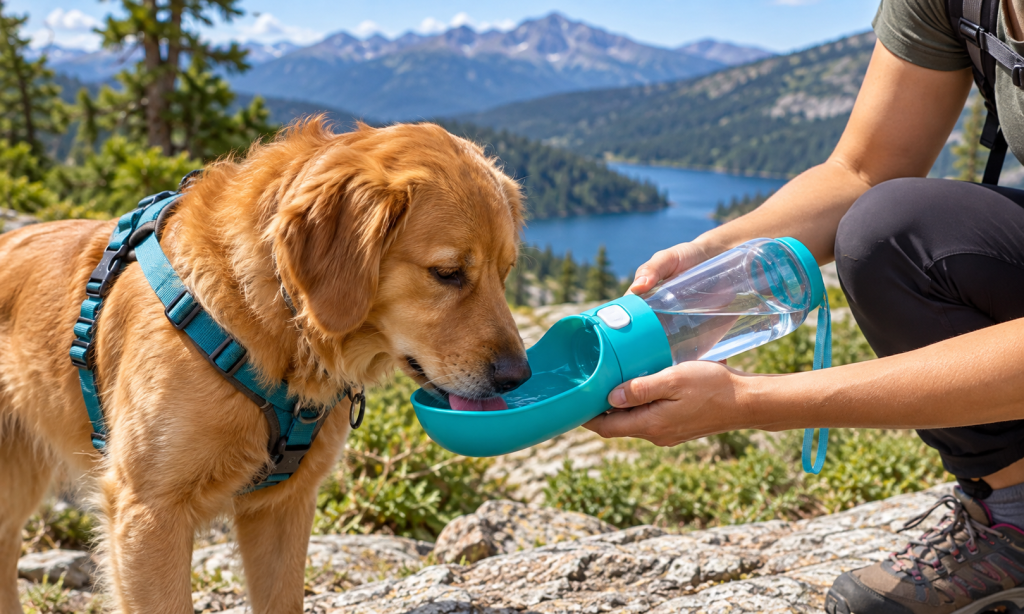
A dog that happily trots through the first mile of a hike can become very interested in water once the trail gets warm, steep, or exposed. That is where a good portable bottle earns its place in your pack. The best portable dog water bottle for hiking should make water easy to offer, easy for your dog to drink, and practical to carry without turning every hydration stop into a small unpacking project.
There is no single bottle size or design that suits every dog. A 12-ounce dispenser can be wonderfully convenient for a small dog on a short trail, yet completely inadequate as the only water supply for a large, active dog on a long summer hike. I compared these options with that reality in mind: capacity, drinking design, portability, water control, cleaning, and the kind of outing each bottle makes sense for. The goal is not to crown every feature as a benefit. It is to help you choose a bottle that fits your dog, your route, and the way you actually hike.
Affiliate disclosure: PetAdvisorPro may earn a commission from qualifying purchases made through Amazon links on this page, at no additional cost to you.
Quick Picks: Portable Dog Water Bottles for Hiking
| Product | Best For | Key Advantage | Buy | |
|---|---|---|---|---|
| Springer Dog Water Bottle 22 oz | Everyday day hikes | Attached squeeze-to-fill bowl | View on Amazon | Jump to Review |
| PupFlask Large Dog Water Bottle | Large dogs and longer outings | Higher-capacity stainless-steel bottle | View on Amazon | Jump to Review |
| MalsiPree Dog Water Bottle | Short hikes and compact packing | One-hand dispensing with built-in trough | View on Amazon | Jump to Review |
| Cibaabo Dog Water Bottle with Food Container | Water plus treats in one setup | Integrated food compartment | View on Amazon | Jump to Review |
| lesotc 77 oz Dog Travel Water Bottle | Multiple dogs and high water needs | Very large stated capacity | View on Amazon | Jump to Review |
| WePet Foldable Dog Water Bottle 12 oz | Small dogs and light outings | Foldable drinking trough | View on Amazon | Jump to Review |
| Kalimdor Dog Water Bottle | Walks and lighter hikes | One-hand water control | View on Amazon | Jump to Review |
1. Springer Dog Water Bottle 22 oz

The Springer 22-ounce bottle addresses one of the most annoying little problems on a hike: stopping, finding a bowl, pouring water, and then deciding what to do with whatever your dog leaves behind. Its attached bowl is built into the bottle, so you squeeze the body to bring water up into the drinking area. When your dog finishes, releasing the squeeze allows unused water to move back into the bottle. That design can reduce waste when you are carrying a limited supply, and it also means there is no separate collapsible bowl to lose in the bottom of your pack. The 22-ounce capacity sits in a useful middle ground. It carries noticeably more than compact 10- or 12-ounce dispensers while remaining easier to manage than a large travel reservoir. The manufacturer also describes the bottle as BPA-free and top-rack dishwasher-safe. For everyday use, those details matter because trail gear that is awkward to clean tends to become gear you reach for less often.
The tradeoff is that the attached bowl gives the Springer a broader profile than a plain cylindrical bottle, and 22 ounces is still not a huge water reserve for a big dog in hot weather. Think about the bottle as a convenient serving system, not a guarantee that you are carrying enough water for every route. If you have a Labrador-sized dog, hike for several hours, or regularly travel where refills are uncertain, you may need additional water in your pack. For moderate day hikes, though, this design is appealing because the practical benefit is immediate: fewer loose pieces and quick drinking stops. It also fits naturally into road-trip routines because the bottle is designed with cup-holder use in mind. Owners of small and medium dogs may find the capacity especially manageable. Owners of large, thirsty dogs can still benefit from the drinking design, but should plan their total water supply separately rather than relying on bottle size alone.
What We Like
- Attached bowl keeps the drinking setup in one piece.
- Squeeze-and-release design can return unused water to the bottle.
- 22-ounce capacity balances portability with useful volume.
- Top-rack dishwasher cleaning can simplify routine care.
- Cup-holder-friendly format is convenient for trailhead drives.
What We Don’t Like
- The attached bowl is bulkier than a plain bottle.
- One bottle may not hold enough for a large dog on a long, hot hike.
My Recommendation
I like the Springer concept for regular day hikes because it removes a step from hydration breaks without pushing you into an oversized bottle. If your dog is a heavy drinker or your route has no dependable refill points, I would pair this convenience with extra water rather than asking 22 ounces to cover the entire outing.
2. PupFlask Large Dog Water Bottle

PupFlask makes more sense when your first question is “Will I have enough water?” rather than “What is the smallest bottle I can carry?” The 27-ounce version associated with this pick offers more capacity than compact dispensers, and the line is built around a stainless-steel bottle with an integrated drinking component. That combination is attractive for medium and large dogs because a bigger reservoir means fewer moments spent wondering whether you should ration the next drink. Stainless steel also gives the bottle a more substantial construction than lightweight plastic bodies, which some owners prefer for gear that moves repeatedly between a vehicle, backpack, and trail. The integrated drinking setup keeps you from needing a completely separate bowl at every stop. On a practical level, that is the feature-to-benefit connection that matters: you carry more water while still keeping the serving process relatively self-contained. For owners who hike with a larger dog, those extra ounces can be more valuable than saving a little pack space.
More capacity and a stainless-steel body also mean more weight and bulk, especially after the bottle is filled. You will notice that difference more on a steep climb than you will in a product photo. If you hike with a small dog, stay close to reliable water sources, or mostly take short one-hour outings, the larger format may simply be unnecessary. The PupFlask is therefore better viewed as a capacity-oriented choice than an ultralight one. It suits households that would rather carry a little more at the start than risk running short later. It can also be useful for road travel, where pack weight matters less and having a substantial dog-water supply in the vehicle is convenient. Before choosing it, compare your dog’s drinking needs with your usual hike length and climate. A larger bottle is not automatically safer if the route requires more water than it holds, but it gives owners of bigger dogs a more realistic starting point than a tiny dispenser.
What We Like
- 27-ounce option gives larger dogs more useful capacity.
- Stainless-steel bottle body offers an alternative to all-plastic designs.
- Integrated drinking setup reduces separate trail gear.
- Well matched to longer outings and larger breeds.
- Capacity-first design is useful when refill access is limited.
What We Don’t Like
- Heavier and bulkier than compact dispensers.
- More bottle than many small dogs need for short outings.
My Recommendation
I would lean toward the PupFlask for a larger dog or a longer outing where carrying more water matters more than minimizing every ounce in your pack. For a small dog on short, well-supported trails, I would choose a lighter bottle and enjoy the saved space.
3. MalsiPree Dog Water Bottle
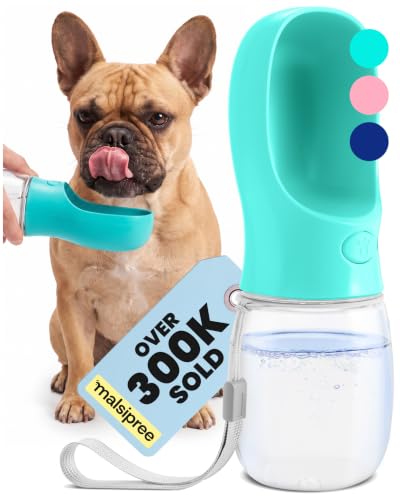
The MalsiPree is built for the owner who values a compact bottle and wants to manage a water break with one hand. Its 12-ounce reservoir feeds an integrated drinking trough, so you do not need to stop and unfold a separate bowl. That is particularly useful when your other hand is already occupied with a leash, trekking pole, or backpack strap. The control mechanism lets you dispense water into the trough, while the locking and sealing design is intended to help limit unwanted leaks. In real trail terms, the benefit is speed and simplicity. You can keep the bottle accessible in a small daypack or carry setup, offer a quick drink, and continue without spreading several pieces of gear on the ground. The narrow drinking area will suit many dogs, although individual dogs can have preferences about bowl shape. Its compact size is also easy to understand at a glance: this is a portable option first, not a large hydration reservoir.
That 12-ounce capacity is the main limitation, and it should influence where you use the bottle. A small dog on a cool, short route may be well matched to it, while a large dog working hard in warm weather can go through a small water supply quickly. For that reason, I would not choose the MalsiPree as the only water source for a long or remote hike unless you have dependable refill access and have planned accordingly. The plastic construction keeps the format relatively simple, but owners specifically looking for a stainless-steel bottle will prefer another design. One-hand controls are also worth learning before you reach the trail. Practice filling the trough, locking the control, and handling leftover water at home so the process feels natural when your dog is thirsty. Used within its limits, the MalsiPree is less about maximum capacity and more about making frequent, quick hydration stops easy during lighter adventures.
What We Like
- Compact 12-ounce format is easy to pack.
- Built-in trough removes the need for a separate bowl.
- One-hand operation is useful when managing a leash.
- Locking design is intended to help control leaks.
- Good fit for short outings and smaller dogs.
What We Don’t Like
- Limited capacity for large dogs or extended hikes.
- Plastic construction may not suit owners who prefer stainless steel.
My Recommendation
I would choose the MalsiPree for short hikes, travel stops, and everyday walks where compact gear is more useful than a large reservoir. If you are heading out with a big dog or expecting heat and sustained exercise, I would carry substantially more water than this bottle holds.
4. Cibaabo Dog Water Bottle with Food Container

Cibaabo takes an all-in-one approach by combining a portable water dispenser with a separate compartment for food or treats. If you already carry rewards for recall practice, trail manners, or a snack break, that extra storage can reduce the number of small containers floating around your pack. The listed water capacity is 300 milliliters, a little over 10 fluid ounces, so the bottle is clearly designed around convenience rather than a large water reserve. Water flows into the integrated drinking area through the control mechanism, and unused water can be directed back rather than automatically thrown away. The design also uses a sealing element intended to reduce leakage. For a small dog on a short outing, this can be a tidy setup: water, a drinking surface, and treats are organized in one unit. That is a meaningful practical advantage if your hiking style involves frequent training stops or if you use the same bottle for parks, road trips, and neighborhood adventures.
The food compartment does not change the most important limitation: the water reservoir is modest. On a demanding hike, convenience should never distract you from how much water your dog actually needs. I would treat this as a short-outing bottle or a secondary serving bottle when additional water is carried elsewhere. The extra compartment also creates another part that needs regular cleaning, especially if you use oily or crumbly treats. That is not a deal-breaker, but it is part of owning an all-in-one design. Owners who want the highest water capacity for the least complicated setup will be better served by a dedicated bottle. Owners who routinely carry treats and appreciate organized gear may find the Cibaabo more useful. It is especially sensible for smaller dogs, training walks, easy trails, and travel days where refills are nearby. For remote hiking, I would prioritize water volume first and treat storage second.
What We Like
- Combines water and food/treat storage in one setup.
- Integrated drinking area reduces loose accessories.
- Water-return function can help reduce waste.
- Compact design is practical for travel and short outings.
- Useful for owners who reward dogs during training on the trail.
What We Don’t Like
- Modest water capacity limits its role on longer hikes.
- Food compartment adds another piece that needs cleaning.
My Recommendation
I would pick the Cibaabo when organization matters and you routinely bring both water and treats. It is a clever compact setup, but I would not let the convenience of the food compartment persuade me to carry too little water on a longer or hotter trail.
5. lesotc 77 oz Dog Travel Water Bottle
The lesotc 77-ounce model solves a very different problem from the compact bottles in this guide: it is designed for situations where carrying a lot of water is more important than keeping your dog gear small. That can make sense for multiple dogs, large breeds, camping, long drives, or trail days where reliable refill points are scarce. A reservoir this size gives you much more flexibility than a 10- or 12-ounce dispenser, particularly if your dog drinks heavily. It can also work well as a shared base supply at a campsite or trailhead, with a smaller serving bottle used during short excursions. The practical benefit is not subtle. More capacity means less dependence on finding water along the route. That matters because natural water sources are not automatically safe or dependable, and conditions can change. If your normal outings involve a vehicle, family members sharing gear, or more than one dog, the extra volume can be easier to justify than it would be for a solo ultralight hiker.
The limitation is weight. Seventy-seven fluid ounces of water alone weighs roughly 4.8 pounds, before the container itself is counted. On foot, that is a substantial addition to a pack. This is why “largest capacity” should not be confused with “best for everyone.” A person walking a two-mile shaded loop with one small dog would be carrying far more bottle than necessary. A household camping with two large dogs may see the same capacity as reassuring. I would decide based on your actual water plan rather than the impressive number on the listing. Consider who will carry it, how far you will travel, whether you can refill safely, and whether a large reservoir plus a smaller drinking vessel would be more convenient than repeatedly handling the full container. For high-demand situations, the lesotc offers a useful amount of water. For ordinary short hikes, its bulk is the price you pay for capacity you may never use.
What We Like
- Very large stated capacity compared with compact bottles.
- Useful for multiple dogs and larger breeds.
- Reduces dependence on frequent refill opportunities.
- Practical as a camping or trailhead water supply.
- Capacity can be valuable on longer, water-scarce outings.
What We Don’t Like
- A full bottle adds significant weight to your gear.
- Too bulky for many short or ultralight hikes.
My Recommendation
I would reserve this high-capacity option for the situations that justify it: multiple dogs, camping, large breeds, long travel days, or routes with limited refill opportunities. For an ordinary short hike, I would rather carry a smaller bottle and avoid several pounds of unnecessary water weight.
6. WePet Foldable Dog Water Bottle 12 oz

The WePet 12-ounce bottle is aimed at hikers who want a compact water carrier without giving up an attached drinking surface. Its foldable trough is the key idea. Instead of a fixed bowl taking up the same amount of space all day, the drinking section folds against the bottle when it is not being used. That can make the shape easier to fit into a small bag or carry during a neighborhood walk. When your dog needs water, the trough opens to create a more obvious drinking area. For small and medium dogs, that balance between portability and a built-in bowl can be appealing. You are not carrying a separate dish, and you are not asking your dog to drink directly from a narrow bottle opening. The 12-ounce capacity also keeps the overall setup relatively light when full. If your outings are brief and you value gear that disappears neatly into a daypack, the folding concept has a clear practical purpose rather than being a feature added simply for novelty.
As with the MalsiPree, capacity is the boundary you need to respect. Twelve ounces is convenient to carry because it is only twelve ounces; the same fact makes it a poor sole supply for many large dogs or long, strenuous hikes. The folding trough also introduces a moving part that should be rinsed and checked regularly so dirt, hair, and trail debris do not accumulate around the drinking area. I would consider this bottle most suitable for small dogs, shorter hikes, everyday walks, and travel situations where additional water is easy to obtain. If your dog is reluctant to drink from narrow troughs, the fold-out shape may be more inviting than some compact dispensers, but drinking preference varies by dog. Before relying on any new bottle outdoors, offer it at home first. A portable bottle is only useful if your dog is comfortable drinking from it when thirsty.
What We Like
- Foldable trough helps keep the bottle compact between stops.
- Built-in drinking surface means no separate bowl is required.
- 12-ounce capacity keeps the filled bottle relatively light.
- Useful for small dogs, walks, and shorter hikes.
- Simple format works well for travel-day hydration stops.
What We Don’t Like
- Not enough capacity to be the only water source for many long hikes.
- Folding drinking area needs regular cleaning around moving surfaces.
My Recommendation
I would consider the WePet when compact storage and a built-in trough matter more than carrying a large water reserve. It makes the most sense for smaller dogs and shorter outings. For a large dog or a long summer hike, I would step up in capacity or carry backup water.
7. Kalimdor Dog Water Bottle
Kalimdor follows the familiar one-hand dispenser format: an integrated drinking trough, a control for releasing water, and a design intended to let you manage leftover water rather than automatically dumping it. That combination is useful when you are holding a leash and want to offer a quick drink without setting up a separate bowl. For walks and lighter hikes, this style of bottle can make hydration feel less disruptive. You stop, dispense what your dog is likely to drink, recover unused water when the mechanism allows, and continue. The built-in trough also keeps the essential drinking pieces together, which is helpful if you prefer a simple grab-and-go kit. Compared with carrying a standard bottle plus a collapsible bowl, the advantage is convenience rather than magic: fewer pieces and faster access. That can matter with an impatient dog, on a narrow trail where you do not want to spread gear around, or during travel stops when you only have a few minutes.
The main question is whether this compact dispenser format matches your dog’s water needs. For longer hikes, hot conditions, or a large active dog, you should plan additional capacity rather than assuming one portable bottle will be enough. The integrated trough also has a fixed shape, and dogs differ in how readily they drink from narrow portable bowls. Try it at home before making it your trail setup. I also pay attention to locks and seals on any bottle that will share a backpack with electronics or food; no portable container should be treated as permission to skip sensible packing. Keep it upright when practical and separate liquids from items that cannot get wet. Within those limits, the Kalimdor makes sense for owners who prioritize one-hand operation and compact convenience. It is best viewed as an easy serving bottle for day-to-day outings, not as a substitute for thoughtful hydration planning on demanding trails.
What We Like
- One-hand dispensing is convenient while holding a leash.
- Integrated trough keeps the drinking setup together.
- Water-control design can help reduce unnecessary waste.
- Compact format works well for walks and lighter hikes.
- Simple grab-and-go concept suits travel stops.
What We Don’t Like
- Compact capacity may require backup water on longer outings.
- Some dogs may prefer a wider drinking bowl.
My Recommendation
I would choose the Kalimdor for walks and lighter day hikes when quick one-hand water breaks are the priority. If you are planning a remote or strenuous route, I would treat it as the serving bottle and carry enough additional water to match your dog’s needs and the conditions.
How to Choose a Dog Water Bottle for Hiking
Start With Capacity, Not Convenience
A clever dispenser is useful only if you bring enough water. Consider your dog’s size, activity level, weather, trail difficulty, hike duration, and safe refill opportunities. Small bottles are excellent serving tools, but they should not tempt you to underpack water. When conditions are hot or strenuous, plan conservatively and watch your dog for signs that the outing is becoming too demanding.
Match the Drinking Area to Your Dog
Some dogs readily drink from a narrow trough; others are happier with a broader bowl. If possible, introduce the bottle at home before hiking. That gives your dog time to learn the drinking setup and gives you time to learn the controls without a thirsty animal waiting beside you.
Think About One-Hand Operation
If you normally hike with your dog leashed, one-hand dispensing can be genuinely helpful. A lock, button, or squeeze mechanism should be easy enough to operate without turning a water break into a juggling exercise. Practice matters here, especially with bottles that return unused water to the reservoir.
Consider Cleaning and Pack Space
Built-in troughs and food compartments reduce loose gear, but they also create surfaces that need cleaning. Choose a design you are willing to wash thoroughly after regular use. Pack shape matters too: a wide attached bowl may be wonderfully convenient on the trail but less efficient inside a tightly organized backpack.
Do Not Depend on Unknown Natural Water Sources
A stream or pond on a map should not automatically become your dog’s hydration plan. Water availability and quality can vary, and natural sources may contain biological or chemical hazards. Carry an appropriate supply and follow local guidance for the area you are visiting. If you are concerned about your dog’s hydration, heat tolerance, or ability to handle strenuous exercise, discuss the planned activity with your veterinarian.
Frequently Asked Questions
What size portable dog water bottle is best for hiking?
There is no universal size. Small dogs on short, cool hikes may be well served by a compact bottle, while large dogs, warm weather, long distances, and limited refill access call for substantially more water. Choose total capacity around the dog and route rather than the convenience of the bottle alone.
Is a built-in bowl better than a separate collapsible bowl?
A built-in bowl is faster and gives you one less item to carry. A separate collapsible bowl can be wider, easier for some dogs to drink from, and lets you pair the bowl with whatever water container size you prefer. The better setup is the one your dog will comfortably use and you will reliably carry.
Can I use a human water bottle for my dog while hiking?
Yes, provided you have a clean, practical way for your dog to drink from the water you carry. Many owners pair a standard bottle or hydration reservoir with a collapsible dog bowl. Purpose-built dog bottles mainly add convenience through integrated troughs and water-control mechanisms.
Should I let my dog drink from streams on the trail?
Do not assume an untreated natural water source is safe simply because it looks clear. Conditions vary by location and season, and contamination may not be visible. Carry water and follow local veterinary, park, or public-health guidance about natural sources in the area.
How do I keep a portable dog water bottle clean?
Follow the manufacturer’s cleaning instructions for the specific bottle. Rinse drinking surfaces after use, wash areas where saliva and debris collect, and allow components to dry thoroughly before storage. Bottles with folds, seals, or food compartments deserve extra attention because residue can hide around those areas.
Final Verdict
The best portable dog water bottle for hiking is not necessarily the largest bottle or the one with the most features. It is the one that fits your dog’s drinking needs and your normal trail routine. The Springer offers a practical middle ground for everyday hikes, PupFlask emphasizes more capacity, compact dispensers such as MalsiPree, WePet, and Kalimdor favor easy carrying, Cibaabo adds treat storage, and the 77-ounce lesotc serves a very different high-capacity role.
Whichever design you choose, treat the bottle as one part of your hydration plan. Bring enough water for the conditions, introduce the drinking setup before a serious hike, and adjust your plans when heat, distance, terrain, or your dog’s behavior tells you the day is becoming more demanding. Good trail gear should make caring for your dog easier—not encourage you to stretch a limited water supply farther than it should go.