Affiliate disclosure: PetAdvisorPro may earn from qualifying purchases through links in this article. Product availability and specifications can change; confirm current details before buying.
Intelligent dogs do not all enjoy the same kind of challenge. Some prefer lifting and sliding pieces, others like movement, and some stay engaged longest with a fillable food toy. The seven products below have been matched to verified Amazon listings so you can compare distinct enrichment styles rather than assuming the most complicated puzzle is automatically the best choice.
Quick Picks
| Product | Best For | Key Advantage | Buy | |
|---|---|---|---|---|
| PETSTA Dog Puzzle Toy | a beginner treat-search game | Verified Amazon listing and a distinct enrichment style | View on Amazon | Jump to Review |
| Nina Ottosson Dog Brick | dogs ready for a multi-action puzzle | Verified Amazon listing and a distinct enrichment style | View on Amazon | Jump to Review |
| Nina Ottosson Dog Tornado | a rotating search challenge | Verified Amazon listing and a distinct enrichment style | View on Amazon | Jump to Review |
| Nina Ottosson Dog Casino | experienced dogs that enjoy multi-step games | Verified Amazon listing and a distinct enrichment style | View on Amazon | Jump to Review |
| TRIXIE Flip Board Dog Activity | variety in a compact Level 2 board | Verified Amazon listing and a distinct enrichment style | View on Amazon | Jump to Review |
| KONG Wobbler | dogs motivated by movement and kibble | Verified Amazon listing and a distinct enrichment style | View on Amazon | Jump to Review |
| WEST PAW Toppl | fillable and freezable food enrichment | Verified Amazon listing and a distinct enrichment style | View on Amazon | Jump to Review |
How to Choose a Puzzle Toy for an Intelligent Dog
Start with your dog’s puzzle experience, size, chewing style, food motivation, and frustration tolerance. A successful puzzle should be challenging enough to hold attention but achievable enough that the dog keeps trying calmly. Use part of a normal meal when practical, supervise new toys, inspect them for damage, and follow the current manufacturer instructions for size, cleaning, and use.
1. PETSTA Dog Puzzle Toy
Best for a beginner treat-search game
Product Description
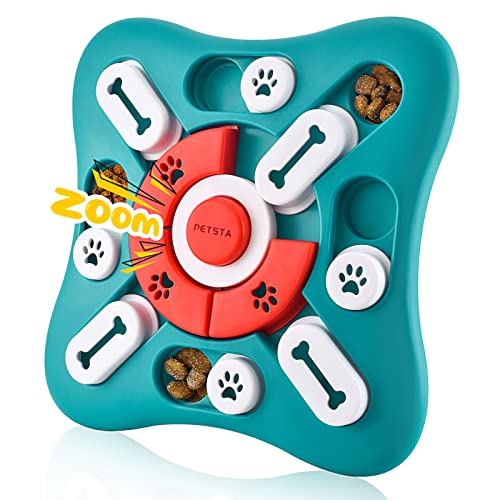
PETSTA’s treat-dispensing puzzle is a practical starting point for dogs that are new to problem-solving games. Instead of giving a full meal in a bowl, you can place a measured portion of kibble or small treats in the covered areas and let your dog work out how to reach them. That simple change turns food into an activity that uses sniffing, pawing, and persistence. I would start with only a few easy-to-find rewards and keep the first session short, because success is more useful than making a beginner struggle. The broad puzzle-board format also lets you watch how your dog approaches a task: some dogs lead with their nose, others use a paw, and some try to pick up the entire board. That observation helps you decide whether to increase difficulty or choose a different enrichment style. It is especially useful for owners who want a structured indoor activity without moving parts that travel across the room.
The trade-off is that a puzzle board is an enrichment tool, not a chew toy. A determined chewer may stop solving and begin biting the pieces, so this is best introduced with you nearby and stored away after the session. Match the current Amazon listing and manufacturer guidance to your dog’s size and behavior before use, and inspect the toy for damage each time. Food puzzles can also add calories quickly if every compartment is filled with extra treats; using part of the dog’s normal meal is often the easier way to control intake. Clean food-contact areas according to the maker’s current directions, particularly after moist foods. For a clever dog, do not assume the hardest setup is automatically best. Repeating an achievable pattern can build confidence before you make the game more complicated. I recommend this PETSTA option most strongly for owners who want an accessible first puzzle and are willing to supervise, adjust the setup, and stop the session if the dog becomes frustrated or starts chewing.
What We Like
- Provides a clearly defined enrichment or feeding activity.
- Can be introduced gradually to match the dog’s confidence.
- Encourages owners to observe problem-solving preferences.
- Adds variety to a broader enrichment routine.
What We Don’t Like
- Not every puzzle style suits every dog.
- Supervision and routine inspection are still necessary.
My Recommendation
Choose this option when a beginner treat-search game matches how your dog naturally plays and searches for food. Start easy, supervise the first sessions, and move to a simpler format if frustration or chewing replaces problem solving.
2. Nina Ottosson Dog Brick
Best for dogs ready for a multi-action puzzle

Product Description
The Outward Hound Nina Ottosson Dog Brick is a more involved choice for dogs that already understand the basic idea of searching for hidden food. Its appeal is variety: the dog has to investigate different areas of the board rather than repeat one identical movement for every reward. That makes it a useful progression when a simple treat scatter or beginner puzzle is solved almost immediately. I like this type of design for dogs that enjoy alternating between nose work and paw work, because the session can feel less repetitive than a single-action dispenser. Begin by making several rewards obvious and allowing the dog to discover what movement opens access. Once the pattern is understood, you can make later sessions more challenging without turning every meal into a test. The board format also keeps the activity in one defined place, which can be convenient indoors when you do not want kibble rolling under furniture.
This puzzle still needs active supervision. Outward Hound’s own safety guidance for puzzle toys emphasizes teaching the dog how the game works, watching use, checking for damage, and storing the toy after play rather than allowing chewing. That matters for intelligent dogs that solve with their mouth as aggressively as they solve with their nose. The Dog Brick also should not be selected simply because it is labeled as an intermediate challenge; individual dogs vary widely in frustration tolerance and previous puzzle experience. If your dog freezes, paws frantically, or starts biting components, simplify the setup and help create an easier success. Use appropriately sized dry treats or kibble, account for those calories, and follow current cleaning instructions. For owners who want a recognizable step up from a basic puzzle, this is one of the more versatile formats in the group. I would choose it for a dog that has already shown patience with food puzzles and enjoys learning more than one action during a supervised session.
What We Like
- Provides a clearly defined enrichment or feeding activity.
- Can be introduced gradually to match the dog’s confidence.
- Encourages owners to observe problem-solving preferences.
- Adds variety to a broader enrichment routine.
What We Don’t Like
- Not every puzzle style suits every dog.
- Supervision and routine inspection are still necessary.
My Recommendation
Choose this option when dogs ready for a multi-action puzzle matches how your dog naturally plays and searches for food. Start easy, supervise the first sessions, and move to a simpler format if frustration or chewing replaces problem solving.
3. Nina Ottosson Dog Tornado
Best for a rotating search challenge

Product Description
The Nina Ottosson Dog Tornado changes the problem-solving pattern by asking a dog to work with rotating sections. That motion can be appealing to a dog that quickly understands flat lids or sliding compartments and needs a different kind of cause-and-effect challenge. Rather than filling every possible location on day one, I would place a few rewards where they are relatively easy to discover and let the dog learn that moving a layer changes what becomes accessible. This creates a clear connection between action and reward without overwhelming a new user. The rotating format can also encourage a dog to switch between sniffing, nudging, and pawing, which makes the activity useful for mental enrichment on days when outdoor exercise is limited. It is not a replacement for walks, training, social interaction, or rest, but it can make a measured portion of food more interesting. Owners can also observe whether their dog enjoys manipulating objects or prefers simpler nose-led games.
The main limitation is that a smart dog can still become a destructive dog when frustrated. Treat this as a supervised puzzle rather than something to leave on the floor all day. Check the current manufacturer directions, inspect the moving sections, and remove the toy if the dog starts biting instead of rotating or searching. Difficulty should be adjusted to the individual rather than to an assumption that an “intelligent” dog always needs maximum complexity. Some dogs enjoy repeating a known sequence; others lose interest once they understand it. Keep sessions brief enough that the dog finishes while still engaged, and use part of a normal meal when possible to avoid adding unnecessary treat calories. Cleaning matters because crumbs can collect around moving food-contact areas, so follow the current care directions after use. I recommend the Dog Tornado for dogs that already solve basic boards confidently and seem motivated by movement. If your dog prefers sniffing without manipulating parts, a snuffle mat or simpler dispenser may be a better fit.
What We Like
- Provides a clearly defined enrichment or feeding activity.
- Can be introduced gradually to match the dog’s confidence.
- Encourages owners to observe problem-solving preferences.
- Adds variety to a broader enrichment routine.
What We Don’t Like
- Not every puzzle style suits every dog.
- Supervision and routine inspection are still necessary.
My Recommendation
Choose this option when a rotating search challenge matches how your dog naturally plays and searches for food. Start easy, supervise the first sessions, and move to a simpler format if frustration or chewing replaces problem solving.
4. Nina Ottosson Dog Casino
Best for experienced dogs that enjoy multi-step games

Product Description
The Nina Ottosson Dog Casino is the option I would look at when a dog has already shown that simple food puzzles are genuinely enjoyable rather than merely tolerated. Its multi-step style asks for more persistence and sequencing than a basic hidden-treat board, which can extend a session for dogs that otherwise finish beginner puzzles very quickly. Introduce the mechanisms gradually instead of loading every hiding place and expecting the dog to understand the full sequence immediately. A useful first session is one in which the dog learns a single relationship between moving a component and finding food. Later sessions can add complexity after that action becomes familiar. This approach keeps the activity rewarding and gives the owner a better view of how the dog learns. The larger board-style format is also suited to deliberate indoor enrichment where you can sit nearby, guide only when necessary, and stop before frustration takes over. For food-motivated dogs, using measured kibble can make practice part of the daily feeding routine.
Higher difficulty also creates the biggest caution. A dog that cannot see a path to the reward may begin scratching, lifting, or chewing the puzzle rather than solving it. Supervise every introduction, follow the manufacturer’s current safety guidance, and put the game away when the session ends. This is not an unattended chew and it should not be treated as a guaranteed cure for boredom, anxiety, or destructive behavior. Check pieces and surfaces for damage before reuse and clean food-contact areas as directed. I also would not choose the Casino solely because your dog is described as intelligent; prior puzzle experience and frustration tolerance matter more than a label. If the dog repeatedly needs human intervention, moving back to an easier puzzle can produce a better enrichment experience. For a practiced problem solver that enjoys manipulating components and remains calm when a reward takes time, however, this format offers a meaningful step up. It is best for owners who enjoy participating in the learning process rather than simply filling a toy and walking away.
What We Like
- Provides a clearly defined enrichment or feeding activity.
- Can be introduced gradually to match the dog’s confidence.
- Encourages owners to observe problem-solving preferences.
- Adds variety to a broader enrichment routine.
What We Don’t Like
- Not every puzzle style suits every dog.
- Supervision and routine inspection are still necessary.
My Recommendation
Choose this option when experienced dogs that enjoy multi-step games matches how your dog naturally plays and searches for food. Start easy, supervise the first sessions, and move to a simpler format if frustration or chewing replaces problem solving.
5. TRIXIE Flip Board Dog Activity
Best for variety in a compact Level 2 board
Product Description
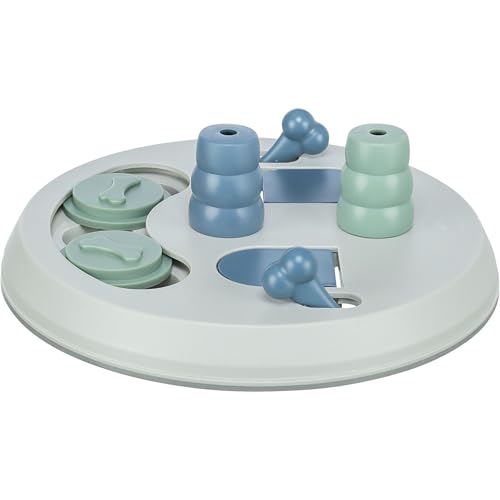
The TRIXIE Flip Board gives dogs several small problem-solving actions in a compact food-puzzle format. That variety is useful when you are still learning which movements your dog naturally prefers. One dog may quickly understand a lid but hesitate at a slider, while another may use its nose for everything. I would introduce the easiest food location first, let the dog discover the relationship between movement and reward, and then add other sections as confidence grows. This is more productive than repeatedly showing the complete solution, because the dog still gets to make choices and solve the task. The board can be used with small treats or a measured portion of suitable kibble, making it possible to turn part of a normal meal into a short enrichment session. For owners with limited indoor space, a tabletop-style puzzle can also be easier to manage than a dispenser that rolls or bounces around the room.
The Flip Board is not designed to satisfy heavy chewing, and that distinction should guide how it is used. Stay close enough to interrupt if your dog switches from manipulating the puzzle to biting or trying to carry components away. Check the current TRIXIE instructions for cleaning, sizing, and safe use, and inspect the board before each session. A Level 2 label is helpful for comparison but does not guarantee that every dog will find the same actions easy or difficult. If your dog becomes frantic, reduce the number of active sections and create an easier win. If the board is solved instantly, you can vary reward placement rather than adding unnecessary food. I recommend this model for owners who want several puzzle actions without moving immediately to a large advanced board. It is particularly useful as a supervised learning tool for a dog that has outgrown very simple treat searches but still benefits from clear, achievable steps.
What We Like
- Provides a clearly defined enrichment or feeding activity.
- Can be introduced gradually to match the dog’s confidence.
- Encourages owners to observe problem-solving preferences.
- Adds variety to a broader enrichment routine.
What We Don’t Like
- Not every puzzle style suits every dog.
- Supervision and routine inspection are still necessary.
My Recommendation
Choose this option when variety in a compact Level 2 board matches how your dog naturally plays and searches for food. Start easy, supervise the first sessions, and move to a simpler format if frustration or chewing replaces problem solving.
6. KONG Wobbler
Best for dogs motivated by movement and kibble

Product Description
The KONG Wobbler takes a different approach from flat puzzle boards. Instead of uncovering compartments, the dog interacts with a freestanding treat dispenser that moves when pushed and releases food through its opening. That cause-and-effect action can be a strong match for dogs that enjoy physical interaction and lose interest in carefully lifting small puzzle pieces. I like this style when an owner wants to slow down part of a dry-food meal while adding movement to the feeding routine. Start in an open area where the toy has room to wobble without hitting breakable objects, and use a measured amount of appropriately sized kibble. The dog can then learn that nudging the Wobbler changes its position and may release food. Because the reward is intermittent, the activity encourages persistence without requiring the owner to reset a compartment after every successful action. It also offers a noticeably different experience from the board puzzles in this roundup.
Movement and noise are the main trade-offs. A cautious dog may dislike a toy that rocks back toward the body or makes sound against a hard floor, while a powerful dog may try to grab and chew it instead of nudging it. Introduce the Wobbler while you are present and use a surface and location that are safe for both the dog and household items. Follow KONG’s current size and use guidance, inspect the product for wear, and remove it if your dog damages it. This is an interactive feeder, not a substitute for exercise or training, and it should not be relied on as an unattended solution for separation-related behavior. Food released during play still counts toward daily intake. I recommend the Wobbler for food-motivated dogs that enjoy pushing objects and for owners who want a more active feeding puzzle. Dogs that are sound-sensitive, easily startled, or inclined to crush toys may be better served by a stationary puzzle or sniffing activity.
What We Like
- Provides a clearly defined enrichment or feeding activity.
- Can be introduced gradually to match the dog’s confidence.
- Encourages owners to observe problem-solving preferences.
- Adds variety to a broader enrichment routine.
What We Don’t Like
- Not every puzzle style suits every dog.
- Supervision and routine inspection are still necessary.
My Recommendation
Choose this option when dogs motivated by movement and kibble matches how your dog naturally plays and searches for food. Start easy, supervise the first sessions, and move to a simpler format if frustration or chewing replaces problem solving.
7. WEST PAW Toppl
Best for fillable and freezable food enrichment
Product Description
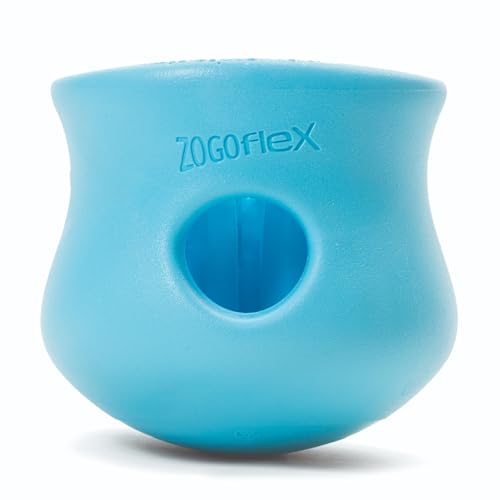
The WEST PAW Toppl is less about opening compartments and more about working food out of a fillable enrichment toy. That makes it a useful alternative for intelligent dogs that enjoy licking, nosing, and manipulating food but do not necessarily like traditional puzzle boards. The current Amazon listing identifies this Toppl as an interactive treat-dispensing puzzle that can hold kibble and treats and is designed for enrichment. I would begin with an easy filling that your dog already eats comfortably, leaving enough accessible that the dog understands the task. As the dog becomes familiar with the shape, owners can vary how food is presented while staying within the manufacturer’s current instructions. A fillable format can be especially practical when you want a calmer, stationary enrichment session rather than a toy that rolls across the room. It also gives owners a way to portion part of a meal into a longer activity instead of adding a separate pile of treats.
The Toppl still needs to be matched to the individual dog. No enrichment toy should be assumed indestructible, and dogs that focus on chewing the object rather than accessing food require close supervision and regular inspection. Choose the appropriate current size and configuration for your dog, follow WEST PAW’s care directions, and remove a damaged toy. If you use moist or frozen dog-appropriate food, hygiene becomes particularly important; wash the toy thoroughly and do not leave perishable filling sitting out. Calorie control also matters because rich fillings can turn a useful activity into a substantial extra meal. I recommend this option for dogs that prefer licking and food extraction to flipping puzzle pieces, as well as owners who want an enrichment tool that feels different from the other board-style picks here. For a dog that needs a complex sequence of mechanical actions, the Dog Casino or another multi-step board may provide a more demanding challenge.
What We Like
- Provides a clearly defined enrichment or feeding activity.
- Can be introduced gradually to match the dog’s confidence.
- Encourages owners to observe problem-solving preferences.
- Adds variety to a broader enrichment routine.
What We Don’t Like
- Not every puzzle style suits every dog.
- Supervision and routine inspection are still necessary.
My Recommendation
Choose this option when fillable and freezable food enrichment matches how your dog naturally plays and searches for food. Start easy, supervise the first sessions, and move to a simpler format if frustration or chewing replaces problem solving.
Safety and Use
Puzzle toys are enrichment tools, not guaranteed solutions for boredom, anxiety, destructive behavior, or separation distress. Supervise introductions, remove damaged products, and stop if your dog begins chewing components rather than solving the activity. Count food used in puzzles toward the daily feeding plan.
Frequently Asked Questions
Are harder puzzle toys always better for intelligent dogs?
No. The useful difficulty is one your dog can solve without excessive frustration. Increase complexity gradually.
Can I leave my dog alone with a puzzle toy?
Only if the manufacturer permits it and you have repeatedly observed safe use. Many puzzle boards are intended for supervised sessions.
Can puzzle toys replace walks?
No. They can add mental enrichment, but dogs still need appropriate physical activity, training, social interaction, and rest.
Should I use treats or regular kibble?
Either may work if appropriate for your dog. Using part of a measured meal can make calorie control easier.
What if my dog chews the puzzle instead of solving it?
End the session and choose a more suitable activity. Inspect the toy for damage before any later use.
Final Verdict
For intelligent dogs, the best puzzle is the one that fits the way the individual dog likes to work. Board puzzles such as the Dog Brick, Tornado, Casino, and Flip Board emphasize manipulation; the Wobbler adds movement; PETSTA offers an accessible entry point; and the Toppl focuses on food extraction. Match the format to your dog, introduce it gradually, and supervise use.