
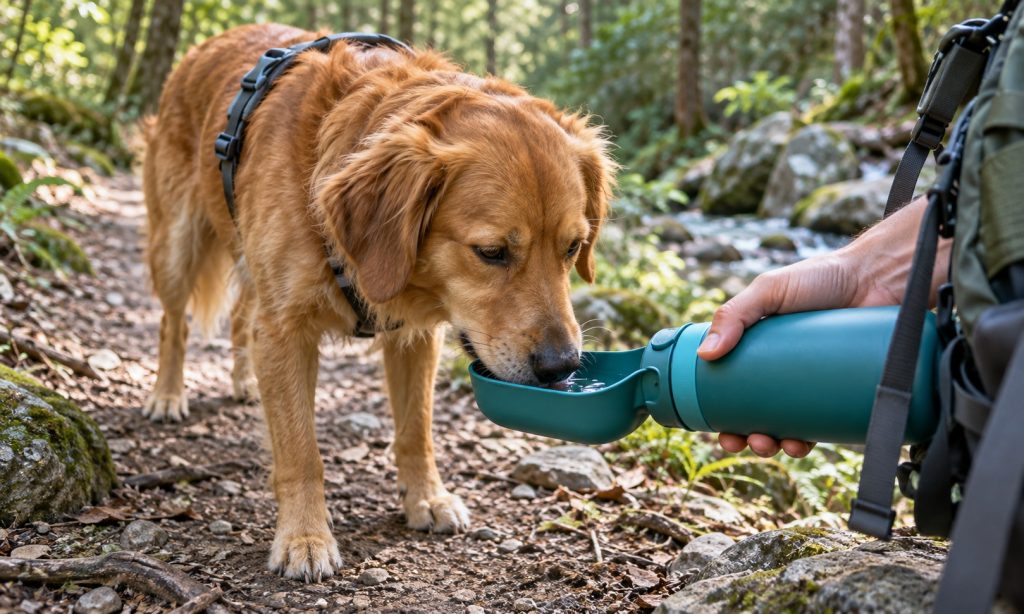
A water bottle that works for a quick neighborhood walk may be awkward on a long trail. It could leak in your pack, be difficult to open with one hand, or offer too little water for a thirsty dog. Choosing the right portable dog water bottle for hiking means matching the design to your dog and the kind of trips you take.
There is no single best portable dog water bottle for hiking for every dog. The right choice should make it easy to carry clean water, offer it without a fuss, and keep the rest of your gear dry. Here’s what to consider before your next trail day.
Start With Your Dog and Your Route
Before comparing bottle styles, consider the hike itself. A short, shaded walk near home calls for less water than a longer outing in warm weather. A small dog may drink less at a time than a large, active dog, but size alone does not determine how much water to bring. Your dog’s pace, the temperature, terrain, and access to safe refill points all matter.
Bring water for your dog rather than assuming a trail will have a usable source. The American Veterinary Medical Association advises bringing enough water for both you and your pet in warm weather, and the American Kennel Club recommends carrying a supply when fresh drinking water may not be available.
If your route is long or conditions are hot, plan extra water and breaks. Dogs can become overheated during exercise, and a bottle is only one part of preparation. Check the forecast, choose a suitable route, and be ready to shorten the hike if your dog seems uncomfortable.
Choose a Bottle Style That Fits Your Routine
Portable dog water bottles usually fall into a few basic styles. Each can work well in the right situation.
Bottle with an attached drinking trough
This style has a cup or trough built into the bottle. You release water into it, let your dog drink, and may be able to return unused water to the reservoir. It’s convenient when you want a compact setup and quick water breaks.
Check whether the trough gives your dog enough room to drink comfortably. A narrow drinking area may be frustrating for a broad-muzzled dog, while a large trough can add bulk.
Bottle with an attached bowl
Some bottles come with a fold-out or detachable bowl. This can offer a more familiar drinking surface, especially for dogs that hesitate to drink from an unusual shape. The tradeoff is that the bowl may take longer to set up or clean.
Regular bottle and separate collapsible bowl
A standard water bottle paired with a collapsible bowl is a flexible option. You can use a bowl your dog already knows, and you can replace either part separately if it wears out. The extra piece takes space, so check how it packs with your other gear.
What to Look for in a Portable Dog Water Bottle for Hiking
When deciding how to choose the right portable dog water bottle for hiking, focus on the details that affect use on the trail.
Capacity and carrying weight
Capacity should suit the trip, but a larger bottle also means more weight to carry when full. Think about how much water your dog may need between safe refill points, and how much you’re willing to carry. If your dog carries a pack, ask your veterinarian whether carrying extra weight is appropriate for them—especially if your dog is young, older, or has health concerns.
Avoid relying on a bottle’s advertised capacity alone. Consider whether the trough or bowl holds enough water for your dog to drink comfortably, and whether the water is easy to dispense in small amounts.
Leak resistance and closure
A bottle that leaks can soak food, maps, clothing, or other supplies. Look for a secure closure and a design that can be locked or sealed for transport. Before a hike, fill it at home, close it, and carry it in the position you expect to use. This simple check can reveal a loose cap or awkward valve before it becomes a trail problem.
One-handed use
You may need to hold a leash, steady your dog, or manage a pack while offering water. A bottle that opens and dispenses easily can make breaks simpler. Practice using it at home first. If it takes two hands and a complicated sequence, it may not be the best portable dog water bottle for hiking with an energetic dog.
Materials and durability
Choose a bottle that feels sturdy enough for the conditions you expect. Check the manufacturer’s care and material information, especially if the bottle will be exposed to heat or repeated use. Look for cracks, loose parts, damaged seals, or surfaces that are difficult to clean.
Cleaning and drying
Water containers need regular cleaning. A bottle with narrow channels, hard-to-reach corners, or a trough that does not detach may be harder to wash thoroughly. Consider whether the parts are easy to rinse and dry after the hike. If the bottle retains odors or develops residue despite cleaning, replace it.
Attachment and storage
A clip or strap can make a bottle easier to reach, but it should attach securely and not swing into your dog or snag on brush. If you prefer keeping water inside your pack, prioritize a reliable seal and a shape that fits your usual storage space.
How Much Water Should You Bring?
There isn’t one amount that suits every dog and every hike. Water needs depend on factors such as your dog’s size, activity level, the weather, and the route. Bring enough for the planned outing and extra when conditions or refill access are uncertain. If your dog has a medical condition or a veterinarian has given specific hydration instructions, follow that advice.
Offer water during breaks and watch how your dog responds. Don’t wait until your dog seems exhausted to stop. If your dog refuses water, seems unusually tired, pants heavily, or acts unwell, move to a safe place, stop exercising, and contact a veterinarian for guidance. For severe or rapidly worsening signs, seek urgent veterinary care.
Don’t Rely on Streams or Puddles for Drinking Water
A stream may look clean, but appearance alone cannot show whether water is safe. The CDC advises that untreated water from lakes, rivers, springs, and ponds can carry germs, and that water from natural sources should be treated before drinking. Dogs can also get Giardia by drinking from a contaminated creek, pond, or other water source.
Bring water from a source you trust, and use the bottle to make it available during the hike. A filter made for human backpacking does not automatically mean the water is safe for your dog; check the filter’s specifications and follow its instructions. When in doubt, use water you brought with you.
How Often Should You Use or Replace a Portable Dog Water Bottle?
Offer water at regular rest stops and whenever your dog appears thirsty. The right timing depends on the weather, exertion, and your dog. A bottle makes water convenient, but it does not replace watching your dog and adjusting the hike to their condition.
There is no universal replacement schedule for every portable bottle. Clean it after use and inspect it regularly. Replace it if it develops cracks, a persistent odor, a damaged seal, or parts that no longer work properly. Follow the manufacturer’s cleaning and care instructions, and don’t keep using a bottle that you cannot clean effectively.
Common Mistakes to Avoid
- Choosing only by capacity: A large bottle may be too heavy or bulky for your typical hikes.
- Skipping a practice run: A dog may need time to get used to a built-in trough or unfamiliar bowl.
- Assuming water is available on the trail: Refill stations may be closed, empty, or unsuitable for pets.
- Ignoring leaks: Test the filled bottle before packing it.
- Forgetting cleaning: Residue and odor can build up in hard-to-reach parts.
- Letting a dog drink untreated water: Bring a safe supply and limit access to questionable sources.
Five Frequently Asked Questions
Is a bottle with a built-in bowl better than a regular bottle?
It depends on your dog and your routine. A built-in trough is compact and quick to use. A separate collapsible bowl may be more comfortable for a dog that prefers a familiar shape.
Should I bring a separate bowl?
Consider one if your dog does not drink comfortably from the bottle’s trough, if you hike with more than one dog, or if you want a bowl that is easy to replace independently.
Can my dog drink from a stream during a hike?
It’s safer to provide water you brought or water treated according to appropriate guidance. Untreated natural water can contain germs, including Giardia.
How do I know whether a bottle is the right size?
Think about your dog’s size and drinking comfort, the duration and conditions of your usual hike, and how much weight you can carry. Test the bottle with your dog before relying on it outdoors.
When should I replace the bottle?
Replace it when it is cracked, leaking, persistently smelly, difficult to clean, or no longer closes securely. Check the manufacturer’s care instructions for any material-specific guidance.
Final Words
The best portable dog water bottle for hiking is one you can carry, clean, and use comfortably while keeping your dog supplied with safe drinking water. Compare capacity, weight, leak resistance, ease of use, and cleaning before you decide. Try it with your dog at home, then bring enough water for the route and conditions. That preparation makes trail breaks simpler and helps you focus on the hike together.
Image note: The links above point to source pages, not embedded JPEG files. Download the full-size image from its page and check the current license and attribution requirements before publishing; free-to-use terms do not remove every possible reuse restriction.









