
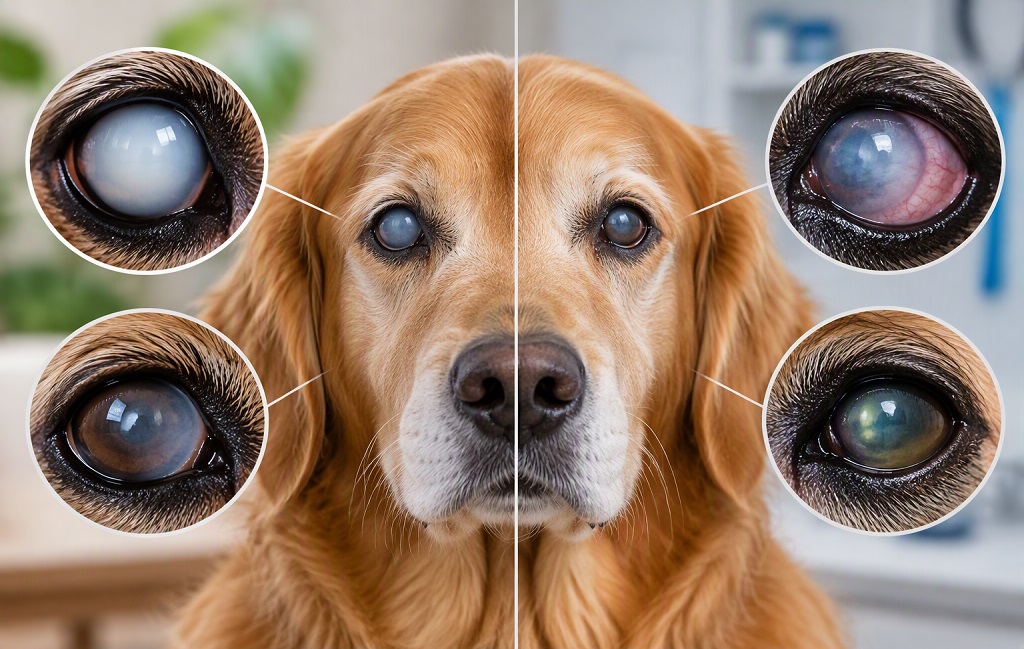
Have you ever looked into your dog’s eyes and noticed a strange blue, gray, or milky-white haze? It can be worrying, especially when your dog seems perfectly happy and is still following you around the house. Naturally, you want to know what’s happening before a minor-looking change becomes a serious problem.
Understanding cataracts vs other causes of cloudy eyes in dogs is important because not every cloudy eye means cataracts, and not every cloudy eye is harmless. Some changes are associated with aging, while others may indicate inflammation, injury, increased eye pressure, or a condition that threatens vision.
If you’ve been wondering, “Why are my dog’s eyes cloudy?” this guide explains the most common dog cloudy eye causes, how veterinarians distinguish them, and when to seek help. The goal is simple: help you recognize the warning signs without attempting to diagnose your dog’s eyes at home.
What Do Cloudy Eyes in Dogs Look Like?
Cloudiness can appear in different parts of the eye, and its appearance offers clues about the possible cause.
You might notice:
- A bluish-gray haze behind the pupil.
- A white or milky area inside the eye.
- A blue or cloudy appearance over the clear front surface.
- Redness, excessive tearing, or discharge alongside cloudiness.
- A change in your dog’s ability to navigate familiar surroundings.
The distinction between the lens and the cornea matters. The lens sits behind the pupil and focuses light onto the retina. The cornea is the transparent outer surface covering the front of the eye.
Cataracts develop in the lens. Conditions such as corneal edema affect the cornea, while glaucoma and uveitis can produce cloudiness through other mechanisms.
The important point: Cataracts vs other causes of cloudy eyes in dogs cannot be reliably distinguished by color alone. A veterinary eye examination is needed to identify the affected structure and determine whether treatment is urgent.
Cataracts in Dogs: Causes, Signs, and Treatment
What Are Cataracts in Dogs?
A cataract is an opacity within the normally transparent lens of the eye. Instead of allowing light to pass through clearly, the affected lens scatters or blocks some of that light.
Small cataracts may have little effect on vision. Larger or more advanced cataracts can significantly impair sight and may eventually cause blindness.
According to the American College of Veterinary Ophthalmologists (ACVO), cataracts can develop because of inherited factors, diabetes, injury, inflammation, or other underlying conditions. Diabetes is a particularly important risk factor in dogs. Source: ACVO
Common Signs of Cataracts
Watch for these possible symptoms:
- White, gray, or opaque areas visible within the pupil.
- Difficulty finding toys or treats.
- Hesitation around stairs or unfamiliar objects.
- Reduced confidence in dim lighting.
- Bumping into furniture or other obstacles.
- Changes in eye appearance over time.
Dogs often adapt remarkably well to reduced vision, especially in familiar environments. Consequently, a dog may continue eating, playing, and greeting family members even when sight is deteriorating.
What Causes Cataracts?
Several factors can contribute to cataracts in dogs:
Genetics: Some breeds have an inherited predisposition to developing cataracts.
Diabetes: Changes associated with high blood sugar can cause cataracts to develop rapidly in some diabetic dogs.
Eye injury: Trauma can damage the lens and lead to cataract formation.
Inflammation: Certain inflammatory eye conditions can damage the lens or contribute to cataract development.
Age-related changes: Cataracts can occur in older dogs, but cataracts are not the same as normal age-related nuclear sclerosis.
Can Cataracts Be Treated?
Cataract treatment depends on the extent of the opacity, the dog’s overall health, and the condition of the rest of the eye.
Cataract surgery, usually involving removal of the cloudy lens, can restore functional vision in suitable dogs. A veterinary ophthalmologist must evaluate whether surgery is appropriate.
Medication may be prescribed to manage associated inflammation or other complications, but there is no proven eye drop, supplement, or home remedy that removes an established cataract. Source: ACVO
Early evaluation is valuable because untreated cataracts can be associated with complications, including inflammation and glaucoma.
Other Dog Cloudy Eye Causes You Should Know
When comparing cataracts vs other causes of cloudy eyes in dogs, it helps to understand that cloudiness may originate from different structures inside or on the surface of the eye.
1. Nuclear Sclerosis: A Common Age-Related Change
Nuclear sclerosis, also called lenticular sclerosis, occurs as lens fibers become more densely packed with age.
It typically creates a blue-gray or translucent haze in the center of the lens. Unlike a significant cataract, nuclear sclerosis usually does not cause substantial vision loss.
This condition commonly becomes noticeable in senior dogs. Your dog may still recognize family members, follow familiar routines, and navigate the house reasonably well.
However, nuclear sclerosis cannot be reliably confirmed just by looking at your dog’s eyes. It can coexist with cataracts, so a veterinary examination is worthwhile even when the change appears age-related.
2. Corneal Edema: Cloudiness on the Eye’s Surface
Corneal edema develops when excess fluid accumulates in the cornea, causing the normally clear surface to appear hazy, blue, or cloudy.
Possible underlying causes include inflammation, injury, damage to the cornea, and glaucoma.
Unlike a cataract, which affects the lens behind the pupil, corneal edema changes the appearance of the eye’s front surface.
The urgency depends on the underlying problem. A cloudy cornea accompanied by redness, squinting, pain, or sudden vision changes needs urgent veterinary assessment.
3. Glaucoma: An Eye Emergency
Glaucoma occurs when pressure inside the eye becomes abnormally high, potentially damaging the optic nerve and causing permanent vision loss.
Possible signs include:
- A cloudy or bluish cornea.
- Redness of the eye.
- Squinting or obvious discomfort.
- An enlarged-looking eye.
- Changes in pupil size or responsiveness.
- Sudden deterioration in vision.
Glaucoma is particularly concerning because vision can be lost quickly in some cases. Do not wait for the eye to become visibly worse before seeking help.
If glaucoma is suspected, seek emergency veterinary care. Prompt diagnosis and treatment are essential to protect vision and relieve pain.
4. Uveitis: Inflammation Inside the Eye
Uveitis is inflammation affecting structures within the eye. It can cause pain, redness, light sensitivity, and cloudiness of the fluid inside the eye.
Possible causes include injury, infection, immune-mediated disease, and inflammation associated with other eye conditions.
Uveitis may also lead to secondary glaucoma if inflammation interferes with normal fluid drainage.
A veterinarian must identify the underlying cause and select appropriate treatment. Using the wrong eye medication can be harmful, so avoid experimenting with leftover prescriptions.
5. Corneal Ulcers and Eye Injuries
A corneal ulcer is damage to the cornea’s surface. It may occur following a scratch, irritation, foreign material, or another underlying eye problem.
Signs may include:
- Squinting or keeping the eye closed.
- Frequent tearing.
- Rubbing the face against furniture or with a paw.
- Redness and sensitivity to light.
- A cloudy, blue, or irregular-looking area on the cornea.
Corneal ulcers can worsen without appropriate treatment. Some are relatively superficial, while deeper ulcers can threaten the eye itself.
If your dog develops these symptoms, arrange urgent veterinary assessment rather than waiting to see whether the cloudiness disappears.
6. Other Possible Causes
Scarring, certain infections, abnormal tissue growth, and breed-associated eye conditions may also affect eye clarity.
Dry eye disease can damage the corneal surface and contribute to irritation, discharge, and secondary corneal changes. Some conditions produce cloudiness indirectly rather than by affecting the lens itself.
Because the possibilities overlap, the safest approach to cataracts vs other causes of cloudy eyes in dogs is to have a veterinarian examine the eye rather than rely on photographs or internet comparisons.
Cataracts vs Other Causes of Cloudy Eyes in Dogs: Key Differences
The following table summarizes common patterns. These are clues, not diagnostic rules.
| Condition | Typical appearance | Possible symptoms | Urgency |
|---|---|---|---|
| Cataracts | White or opaque area within the lens | Reduced vision, bumping into objects | Prompt veterinary appointment |
| Nuclear sclerosis | Bluish-gray haze in the central lens | Usually little vision impairment | Routine evaluation if gradual and symptom-free |
| Corneal edema | Blue or cloudy front surface | Variable; may include pain or redness | Urgent if new or sudden |
| Glaucoma | Cloudy cornea, sometimes enlarged eye | Pain, redness, vision loss | Emergency |
| Uveitis | Cloudy appearance inside the eye | Redness, pain, light sensitivity | Urgent, often same day |
| Corneal ulcer | Hazy or irregular corneal surface | Squinting, tearing, rubbing | Urgent, often same day |
The key distinction is the location of the cloudiness, the symptoms that accompany it, and the findings on examination. Appearance alone is not enough to determine the cause.
Young Dog Cloudy Eye Suddenly: What Should You Do?
A young dog cloudy eye suddenly developing is not something to dismiss as normal aging.
Possible explanations include a corneal injury, ulcer, inflammation, infection, glaucoma, or a rapidly developing cataract. The exact cause depends on the dog’s age, medical history, examination findings, and associated symptoms.
If you notice sudden cloudiness:
- Contact your veterinarian immediately and request a same-day assessment.
- Prevent your dog from rubbing or scratching the affected eye.
- Keep your dog away from rough play, branches, and other potential hazards.
- Do not apply human eye drops or leftover veterinary medication unless a veterinarian specifically directs you to do so.
- If the eye is very painful, red, enlarged, or vision has suddenly deteriorated, go to an emergency veterinary hospital.
Do not wait overnight simply because your dog is still eating or behaving normally. Eye problems can progress even when the rest of the dog appears perfectly fine.
Old Dog Cloudy Eye Suddenly: Is It Just Aging?
An old dog cloudy eye suddenly appearing can understandably raise concerns about cataracts or age-related nuclear sclerosis.
Nuclear sclerosis usually develops gradually. Therefore, a sudden change should not automatically be attributed to age.
An older dog may develop glaucoma, a corneal problem, inflammation, an injury, or a cataract-related complication. Senior dogs can also have more than one eye condition at the same time.
If the change is sudden, contact your veterinarian for a same-day assessment. If your dog shows severe pain, marked redness, an enlarged eye, or sudden vision loss, seek emergency care.
For gradual, symptom-free cloudiness, schedule an examination to establish whether the change is nuclear sclerosis, cataracts, or another condition. Routine senior-dog checkups are especially useful for monitoring eye health over time.
Can Cloudy Eyes in Dogs Be Cured?
The answer to “Can cloudy eyes in dogs be cured?” depends on the cause.
- Cataracts: Surgery can restore functional vision in suitable dogs. Medication does not dissolve an established cataract.
- Nuclear sclerosis: Usually requires no treatment because it is an age-related lens change rather than a cataract.
- Corneal edema: May improve when the underlying cause is treated, although some cases involve lasting damage.
- Glaucoma: Requires urgent, cause-specific treatment. Lost vision may not be recoverable.
- Uveitis: Treatment depends on the underlying cause and may involve prescription medication and monitoring.
- Corneal ulcers: Many can heal with appropriate veterinary treatment, but deeper ulcers can be serious.
A cloudy eye does not automatically mean your dog will become blind. Equally, it is unsafe to assume that a condition is harmless because your dog can still see.
How Veterinarians Diagnose Cloudy Eyes
A veterinary examination helps identify which part of the eye is affected and whether the condition is painful or threatens vision.
Depending on the findings, the veterinarian may:
- Examine the eye with a focused light and magnification.
- Use specialized instruments to evaluate the lens and other internal structures.
- Apply fluorescein dye to check for corneal ulcers.
- Measure intraocular pressure to investigate glaucoma.
- Assess pupil responses and vision.
- Perform additional tests for inflammation or underlying disease.
- Recommend blood testing, particularly when diabetes or another systemic condition is suspected.
- Refer the dog to a veterinary ophthalmologist for specialized assessment.
These tests help distinguish cataracts vs other causes of cloudy eyes in dogs more reliably than visual inspection alone.
Treatment, Recovery, and Prevention
Follow the Treatment Plan
Treatment must match the diagnosis. Depending on the condition, it may involve prescription eye medication, pain relief, surgery, monitoring, or management of an underlying disease.
For cataract surgery, follow-up care can involve frequent eye drops, activity restrictions, protective equipment, and repeated examinations. Ask the veterinary team what recovery will require before deciding whether surgery is appropriate.
Make Home Life Safer
If your dog’s vision is reduced, keep furniture and food bowls in predictable locations, supervise stairs, and use a leash in unfamiliar surroundings. Speak before approaching a dog with impaired vision so you do not startle them.
A protective cone may help prevent eye rubbing when prescribed or recommended by your veterinarian. Choose a suitable product for safe protection, not as a treatment for the underlying disease.
Support General Eye Health
You cannot prevent every eye condition, but you can take practical steps:
- Arrange regular veterinary checkups.
- Seek assessment for new eye changes.
- Keep your dog away from avoidable eye injuries.
- Follow veterinary advice for diabetes and other chronic conditions.
- Avoid unprescribed eye drops, supplements marketed as cataract cures, and home remedies.
If you use Amazon affiliate links in pet-care content, keep recommendations relevant and evidence-based. No consumer product should be presented as a substitute for veterinary diagnosis or treatment.
When to Visit a Vet: Warning Signs You Should Never Ignore
Contact your veterinarian promptly if you notice a new cloudy appearance, even when your dog seems comfortable.
Seek same-day assessment for sudden cloudiness, redness, squinting, excessive tearing, eye rubbing, or a noticeable change in vision. Go to an emergency veterinary hospital if your dog has severe eye pain, a rapidly enlarging or bulging-looking eye, or sudden substantial vision loss.
If you suspect a chemical exposure or penetrating eye injury, seek emergency veterinary guidance immediately. Do not delay care while attempting home treatment.
When it comes to cataracts vs other causes of cloudy eyes in dogs, early assessment can make a meaningful difference in protecting comfort and, when possible, vision.
Frequently Asked Questions
1. Can you tell the difference between cataracts and nuclear sclerosis at home?
Not reliably. Cataracts may create white or opaque areas, while nuclear sclerosis often produces a bluish-gray haze. However, their appearances overlap, and a veterinary eye examination is needed to distinguish them.
2. Are cloudy eyes in dogs always a sign of blindness?
No. Nuclear sclerosis often causes minimal vision impairment, and small cataracts may not significantly affect sight. Other causes, including glaucoma and severe corneal disease, can threaten vision. The diagnosis determines the risk.
3. Why did my dog’s eye suddenly turn cloudy?
Possible causes include corneal edema, an ulcer or injury, glaucoma, inflammation, or a rapidly developing cataract. Sudden cloudiness needs same-day veterinary assessment because some causes are emergencies.
4. Can eye drops cure cataracts in dogs?
No proven eye drops can remove an established cataract. Veterinarians may prescribe medication to control inflammation or other complications, while cataract surgery may be an option for suitable dogs.
5. Should I worry if my senior dog’s eyes are turning blue?
A gradual blue-gray haze can be nuclear sclerosis, a common age-related change. However, a new or sudden change, redness, squinting, or vision problems should not be dismissed as aging. Arrange a veterinary examination to confirm the cause.
Final Words
Understanding cataracts vs other causes of cloudy eyes in dogs starts with recognizing that cloudiness is a symptom, not a diagnosis.
Cataracts affect the lens and may impair vision. Nuclear sclerosis is a common age-related change that usually has a much smaller effect on sight. Corneal edema, glaucoma, uveitis, and corneal ulcers can produce similar appearances but may require very different treatments.
If you are asking, “Why are my dog’s eyes cloudy?” pay attention to how quickly the change appeared and whether your dog shows pain, redness, tearing, or difficulty seeing. Sudden changes deserve same-day veterinary assessment, and signs of severe pain or acute glaucoma warrant emergency care.
Your dog depends on you to notice changes that they cannot explain. A timely examination is far more useful than guessing at the cause—and it gives your veterinarian the best opportunity to protect your dog’s comfort and vision.









