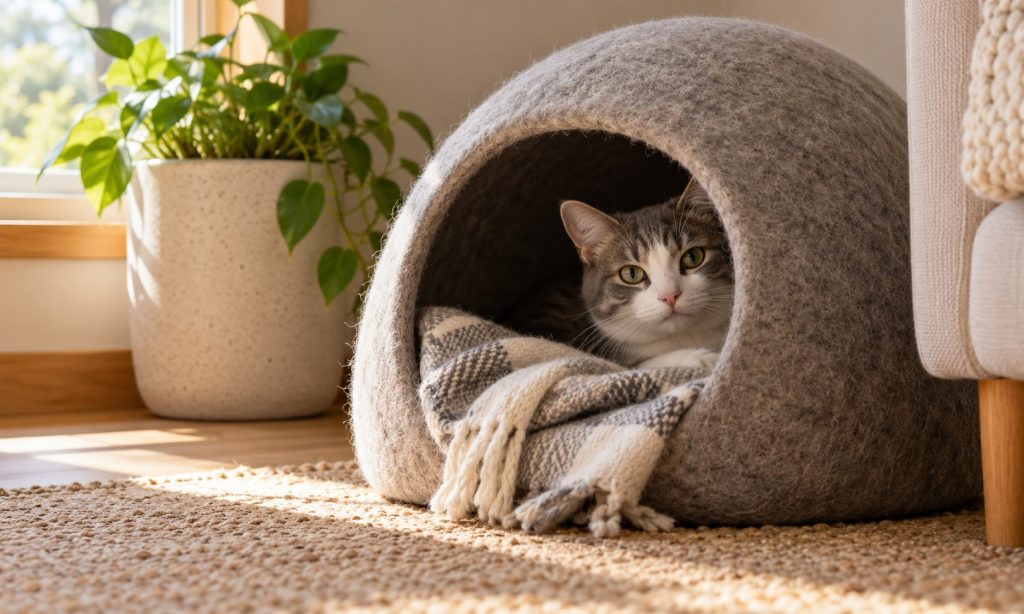
A cat that likes to retreat under a table or behind a sofa may appreciate a predictable hiding place. A cave-style bed offers a covered space, but not every shy cat wants an enclosed bed. Some prefer an open box, a carrier, or a quiet perch. If you are deciding what to look for in cat cave for shy cats, pay attention to your cat’s existing hiding habits first. Consider the entrance, interior size, airflow, materials, cleaning, and where the cave will sit. A best cat cave for shy cats is not automatically the darkest or most enclosed option. It is a safe, accessible retreat your cat can choose to use. This guide explains how to choose a cave bed, introduce it without pressure, and recognize when hiding may need more attention.
Why a shy cat may value a hiding place
Hiding is a normal feline behavior. A covered or partially enclosed space can help a cat rest while reducing exposure to activity around the home. Veterinary feline-environment guidance includes access to a safe place where a cat can retreat. A cave bed may serve that purpose for some cats, but it is one option among boxes, open carriers, covered shelves, and other resting spots.
A hiding spot should let the cat feel protected without trapping it. Place it where the cat can rest undisturbed and leave when ready. In homes with multiple pets, ensure other animals cannot block the entrance. Keep food, water, and litter accessible nearby, but do not put them directly inside the bed.
For a look at the separate commercial roundup, see the existing cat cave guide for shy cats. This article focuses on selection criteria and home setup rather than choosing products.
What to look for in cat cave for shy cats
What to look for in cat cave for shy cats begins with observation. Note where your cat currently hides, how enclosed the space feels, and whether the cat prefers to see the room. The right cave should meet those preferences while staying stable, cleanable, and safe.
Choose an opening that matches your cat’s comfort
Some shy cats settle in a deep, dark cave. Others prefer an opening that lets them watch the room. Compare a fully enclosed dome with a hooded bed that has a wider entrance. Your cat’s behavior gives better guidance than the cave’s appearance. A cat that rests beside an open carrier may dislike a narrow tunnel entrance.
What to look for in cat cave for shy cats also includes an exit the cat can use easily. A single opening can feel secure to one cat but restrictive to another. Consider whether the entrance stays open or collapses inward. Avoid designs that close around the cat or make it difficult to leave quickly.
Measure the interior and entry height
Measure the space where the cave will sit and compare it with your cat’s resting posture. A curled cat may need less floor area than one that stretches out. The interior should allow a comfortable turn and a relaxed lie-down. A cave that is too small may go unused, even if its outside dimensions look generous.
Check the entrance height and width, especially for kittens, senior cats, or cats with mobility limits. A low, wide entry may be easier than a small round opening. Look for a base that stays level when the cat steps inside. A cave that tips or slides may startle a cautious cat.
Consider the structure and materials
Cat caves may use felt, fleece, fabric, foam, or woven materials. The best choice depends on your home and your cat’s response to texture. Inspect seams, edges, and zippers. Avoid exposed wire, loose ties, detachable pieces, or any part that could catch claws or be chewed off.
What to look for in cat cave for shy cats includes a structure that holds its shape. A sagging roof can touch the cat unexpectedly. A firm shell may feel safe but could be uncomfortable on a hard floor without a removable cushion. Check that the base does not collapse when your cat leans against the sides.
Check airflow and temperature
An enclosed bed can hold warmth. That may be comfortable in a cool room, but too much insulation can feel stuffy in a warm home. Look for adequate ventilation and avoid placing the cave beside a heater, fireplace, or direct afternoon sun. Keep an open resting option available so your cat can choose a cooler spot.
Do not use heated bedding inside a cave unless the product is designed and approved for that use. Follow all safety directions. The cat should always be able to leave the warm area freely. If your cat has a health condition that affects temperature regulation, ask a veterinarian before adding heat.
Think about cleaning and everyday care
Check whether the cushion or cover can be removed. Read the cleaning instructions before buying. A cave that cannot be cleaned easily may hold fur, dust, and odors. Some materials can be spot-cleaned, while others require gentle machine washing. Dry all components fully before putting them back together.
What to look for in cat cave for shy cats includes a care routine you can maintain. Inspect the bed for loose threads, damaged seams, crushed padding, or chewed material. A removable blanket can protect the interior, provided it does not block the entrance or shift under your cat.
Select a calm, accessible location
Place the cave in a low-traffic area where your cat already feels secure. Avoid putting it beside a noisy washer, a frequently used doorway, or a spot where children or other pets may startle the cat. Keep the route to the entrance clear. The cave should not be hidden so deeply that you cannot check on your cat when needed.
A shy cat may want a retreat close to people but out of reach. Others prefer a quiet room. Observe where the cat chooses to rest and place the cave nearby. Give more than one resting option across the home. In a multi-cat household, make sure each cat has access to its own safe places.
How to choose the right cat cave for shy cats
How to choose the right cat cave for shy cats is easier when you test the setup before expecting the cat to use it. Start with the cat’s current preferences, then compare the entrance, size, materials, and location. If you are unsure, an open box with a familiar blanket can help you learn whether your cat likes a covered retreat.
Set the cave on a stable floor and leave its opening unobstructed. Add a familiar washable blanket or bedding that already carries the cat’s scent. Let the cat investigate voluntarily. You can place a treat nearby, but do not lure the cat deep inside and then close or move the cave.
Some caregivers report that a cave is ignored until its cushion is removed or the bed is moved to a favored spot. Others find that their cat prefers an open bed. These are individual experiences, not guarantees. A new bed is optional enrichment; your cat does not need to use it for the setup to be successful.
Use the cave as a choice, not a hiding trap
A safe retreat gives a cat control. Do not reach inside to pull a shy cat out unless there is an urgent safety concern. Avoid placing the cave where visitors, children, or another pet can block its exit. If you need to move the cat, use calm handling and a carrier when appropriate.
A cave bed is not a substitute for addressing a frightening environment. Reduce sudden noise where possible, keep routines predictable, and allow the cat to approach people on its own terms. Never punish a cat for hiding. If the cat wants a more open view, provide a covered spot with a wide entrance instead.
Set up the space around the cave
What to look for in cat cave for shy cats includes the surrounding area, not just the bed itself. Keep the approach clear and choose a corner where the cat can see approaching people. Avoid narrow dead ends if the cat becomes more comfortable when it can leave in more than one direction. A quiet, predictable space is often easier to use than a busy hallway.
Keep the retreat calm and familiar
What to look for in cat cave for shy cats may change when household routines change. During visitors, a move, or renovation, preserve the cave’s location if possible. Familiar bedding can help the spot remain recognizable. Avoid repeatedly moving the cave to make the cat more visible or to encourage interaction.
If children live in the home, explain that the cave is the cat’s private area. People should not reach inside, make loud noises at the entrance, or block the way out. Give other pets their own resting locations. A shy cat can then choose distance without having to compete for one protected spot.
What to look for in cat cave for shy cats also includes practical safety around the floor. Keep cords, plastic bags, and small objects away from the entrance. Place the cave where it cannot fall from a shelf or be tipped by a door. If the cat likes a raised hideout, use stable furniture made for that purpose and provide an easy route up and down.
How to choose the right cat cave for shy cats is partly a process of watching and adjusting. Notice whether the cat enters, how long it stays, and whether it leaves calmly. Do not judge success by whether the cat sleeps there every day. A retreat is useful when the cat has a safe choice, even if it uses that choice occasionally.
How often should you use or replace a cat cave for shy cats?
There is no schedule for making a cat use a cave. Leave it available as one of several resting choices, and let the cat decide when to enter. A new cave can stay in place for several weeks while the cat explores it. If the cat avoids it, try a different location or return to an open bed.
How often should you replace cat cave for shy cats? Replace it when the structure collapses, the base becomes unstable, seams open, or the material cannot be cleaned. Also replace it if there are sharp edges, exposed filling, persistent odor, or damage from chewing. Check the care label and inspect the cave during routine cleaning.
Wash removable covers as needed and according to their care instructions. Use a pet-safe, unscented cleaning approach when possible, and rinse thoroughly. Strong fragrance can make a familiar resting space less appealing. Allow every part to dry completely before returning it to the cat’s area.
When hiding deserves closer attention
A shy cat may hide more during visitors, a move, or other changes. Give the cat a quiet retreat and time to adjust. However, sudden or persistent hiding can also accompany discomfort or illness. Notice appetite, drinking, litter box use, movement, and social behavior along with resting habits.
Contact a veterinarian if hiding is new, intensifies, or appears with changes in eating, grooming, elimination, or mobility. A cave can provide a comfortable place, but it cannot diagnose or treat the reason a cat withdraws. Share the timing and other changes you have observed.
Frequently asked questions
These answers cover common questions about cat caves, hiding, and safe placement.
Do shy cats need a cat cave?
No. What to look for in cat cave for shy cats includes a stable base and adequate airflow. A cave is one possible retreat. A box, open carrier, covered perch, or quiet bed may suit your cat better. Provide choice and observe which spaces the cat uses.
Should a cat cave have one entrance or two?
There is no single best design for every cat. Some cats prefer a more enclosed space; others want a broad opening or more than one route. Choose based on your cat’s behavior.
How can I encourage my cat to try a cave bed?
Place it near a familiar resting spot and add familiar bedding. Let the cat explore at its own pace. Do not push or place the cat inside.
Is it normal for a cat to ignore a new cave?
Yes. Cats may prefer an existing spot or need time to investigate. Try a quieter location or leave the cave open. It is also fine if the cat never chooses it.
When should I replace a cat cave?
Replace it when the structure is unstable, fabric is damaged, filling is exposed, or cleaning cannot remove odor or soil. Inspect the cave regularly.
Final words
What to look for in cat cave for shy cats is a combination of your cat’s preferences and practical safety. Check the entrance, interior space, structure, airflow, cleaning needs, and room placement. How to choose the right cat cave for shy cats also means allowing your cat to accept or reject the space without pressure. A best cat cave for shy cats should function as a voluntary retreat, not a place where the cat is shut away. Replace damaged bedding, keep other safe resting options available, and contact a veterinarian about sudden or persistent behavior changes.