A travel water bottle can make it easier to offer your cat water away from home, but the drinking surface matters as much as the container. Some designs have a built-in trough. Others dispense into a small bowl or use a valve that the cat must learn to lick. If you are deciding how to choose the right travel water bottle for cats, think about how your cat drinks at home, how long you travel, and how easily you can clean the bottle. A best travel water bottle for cats should be simple to operate, secure against leaks, and familiar enough for your cat to accept. This guide covers capacity, materials, cleaning, practice, and safe use. A bottle is only useful when your cat can access the water comfortably and you can offer it at the right time.
Why bring a separate water bottle for a cat?
A dedicated bottle lets you carry water for a trip and offer it during safe breaks. Some bottles include an attached drinking tray. Others work with a removable or collapsible bowl. A few use a small tube or valve. These designs differ in how the cat reaches the water, how much can be poured at once, and how much cleaning they require.
A portable bottle is not a substitute for a secure carrier or a travel plan. Cats riding in a car should remain safely contained while the vehicle is moving. Offer water when you are stopped in a secure place, and avoid opening a carrier near traffic or unfamiliar animals. For carrier basics, see the published cat carrier guide for air travel. Many carrier principles, such as familiar bedding and secure containment, also matter on road trips.
Caregivers often describe bringing a familiar bowl because their cat recognizes it. Others use an attached bowl to reduce loose items. These are personal experiences, not evidence that one design works for every cat. A new drinking surface may be ignored at first, so practice at home before relying on it during a journey.
How to choose the right travel water bottle for cats
How to choose the right travel water bottle for cats starts with your cat’s drinking style and your own travel routine. Consider the drinking surface, capacity, leak control, materials, and cleaning. A simple design that your cat already understands may be more useful than an elaborate one.
Choose a drinking surface your cat accepts
Observe how your cat drinks at home. Does the cat prefer a wide, shallow dish, a narrow bowl, or a familiar water source? A built-in trough may suit a cat that likes a shallow surface. A separate collapsible bowl may feel more familiar if the cat already uses a bowl. A ball-valve bottle requires the cat to learn a different motion.
How to choose the right travel water bottle for cats includes checking whether your cat can reach the water without awkwardly bending or pressing its face against a narrow edge. A trough should be wide enough for the cat’s muzzle. The rim should be smooth. Avoid designs that force the cat to lick a valve if it has not already learned that method.
Compare capacity with trip length and storage
Think about how much water you need to carry and where the bottle will fit. A small container takes less room but may need refilling. A larger bottle adds weight and can be awkward in a carrier bag. Match capacity to trip length, weather, the number of pets, and access to clean water at stops.
Do not treat a bottle’s capacity as a required amount your cat must drink. Cats vary in intake, and stress can change whether a cat chooses to drink. Follow your veterinarian’s advice if your cat has a health condition or a prescribed fluid plan. Never force water into a cat’s mouth during travel.
Look for leak control and easy dispensing
A reliable lock or sealing mechanism can help prevent leaks inside a travel bag. Check how the bottle opens, locks, and releases water. Some designs let water flow into a tray with a button. Others require tilting or squeezing. You should be able to operate it without startling the cat or spilling most of the water.
Test the bottle over a sink before packing it. Fill it, close the cap, turn it on its side, and gently shake it. Check whether the lock stays in place. A small amount of moisture around a valve may be normal for some designs, but steady leaking is not. Do not carry a bottle with a damaged seal.
Check materials, edges, and durability
Look for a food-contact surface that is smooth and easy to rinse. Inspect plastic or metal for cracks, burrs, rough seams, or coating that can chip. A handle or strap can make the bottle easier to carry, but it should not create loose loops that could catch on a carrier door. The bottle should close securely when packed.
How to choose the right travel water bottle for cats also includes thinking about durability. Repeated drops can damage a cap or dispensing button. A sturdy body and replaceable seal can extend useful life. Avoid adding unapproved cleaning chemicals or storing water for long periods in a bottle that is not designed for that use.
Make cleaning straightforward
Check whether the bottle opening is wide enough for a brush or hand. Narrow channels, valves, and hinges can trap saliva or residue. Removable parts can make cleaning easier, but they also need to fit back securely. Follow the maker’s cleaning instructions and allow every piece to dry fully.
A dishwasher-safe label can be helpful, but check whether it applies to the whole bottle or only certain parts. Avoid abrasive brushes that scratch the drinking surface. If the bottle develops an odor, film, or discoloration that remains after washing, replace it. Clean water and a clean drinking surface matter more than a complicated feature.
Consider portability and handling
The bottle should fit the bag or carrier area where you plan to store it. A wrist strap can be convenient during breaks. A detachable bowl can be useful if you want to serve water separately. Check that attachments do not rattle loudly or snag on fabric. A quiet, simple setup may be easier for a cautious cat.
Test the bottle while seated beside your cat. Make sure the button or valve does not require two hands if you expect to hold a leash or carrier door. If the bottle is awkward to operate, you may spill water or leave the cat waiting. Practice before the travel day so both of you know what to expect.
Prepare your cat before a trip
How to choose the right travel water bottle for cats is only part of preparation. Let the cat see and smell the bottle at home. Offer water from its drinking surface during a calm moment. Keep the familiar bowl available so the cat can choose. Repeat this gently over several days if the cat is uncertain.
If the cat drinks from the bottle, reward calm interest. If the cat walks away, do not chase or hold it near the water. Return to a familiar dish and try again later. The goal is to make the device familiar, not to train the cat under pressure.
Before leaving, fill the bottle with fresh water and check the seal. Pack a familiar bowl if space allows. For long or air trips, discuss timing and feeding with your veterinarian. Review the travel carrier and route, too. The site’s guide to traveling with a cat can help you think through whether the trip suits your cat.
Practice and troubleshoot before leaving
How to choose the right travel water bottle for cats includes testing it before a trip. Set the bottle beside your cat’s regular bowl. Let the cat inspect it without pressure. Try offering a small amount of water from the travel surface during a relaxed time.
If your cat refuses the bottle
How to choose the right travel water bottle for cats may involve changing the drinking surface. If the cat avoids a valve, try the attached tray or a familiar bowl. Do not withhold the home bowl to encourage use. Keep practice sessions brief and stop if your cat seems stressed.
How to choose the right travel water bottle for cats also means considering the bottle’s sound and motion. A clicking button or sudden pour can startle a cautious cat. Operate it away from the cat first, then offer water calmly. Give the cat time to sniff and investigate.
If the cat continues to prefer its regular dish, bring that dish when practical. Familiarity can matter more than convenience. How to choose the right travel water bottle for cats includes planning for what your cat will actually use, not simply what packs smallest.
Use the bottle safely during travel
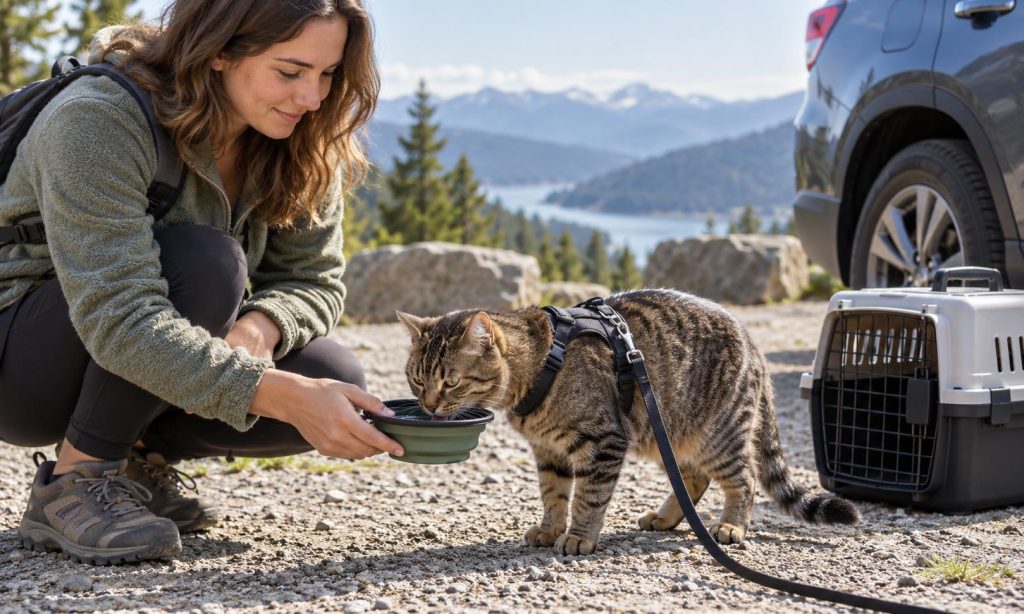
In a car, keep the cat secured in its carrier while driving. Offer water only after parking in a safe, enclosed location. If the cat is harness-trained, use a secure environment and follow your veterinarian’s travel advice. Do not open a carrier next to a road or in a crowded rest area.
Use clean water and avoid sharing the drinking surface between animals without washing it. Pour a small amount at a time so unused water can be discarded rather than returned to the reservoir. Wipe the tray after use. Close the bottle before placing it back in a bag.
Cats may not drink during a stressful outing. Do not force drinking or offer unfamiliar additives. If your cat has a medical condition, a history of dehydration, or a veterinarian-directed fluid plan, ask the veterinary team how to manage water during travel. Seek prompt veterinary advice for concerning signs of illness.
How often should you use or replace a travel water bottle for cats?
Use a travel water bottle whenever it fits the trip and your cat accepts its drinking surface. It does not need to replace your cat’s home water dish. For short outings, you may carry it without offering water unless a safe stop is available. For longer trips, follow veterinary guidance and plan suitable breaks.
How often should you replace a travel water bottle for cats? Replace it when the body cracks, the cap no longer seals, a valve sticks, the tray becomes rough, or the locking feature fails. Replace soft seals if they wear out and the maker offers compatible parts. Do not rely on a bottle that leaks into a carrier or bag.
Wash the bottle after each use, especially the drinking area and removable parts. Let it dry completely before closing it for storage. Inspect the bottle regularly for residue, odor, mold, worn seals, and sharp edges. Follow the care label for cleaning frequency and method.
Common mistakes to avoid
Do not wait until the travel day to introduce a new bottle. Do not assume every cat will drink from a valve or narrow trough. A bottle with a clever mechanism is not useful if your cat avoids it.
Do not leave a filled bottle loose where it can roll or leak. Do not return used water to the reservoir. Avoid opening a carrier while the car is moving or while the cat is near an unsecured exit. Do not rely on a bottle as the only part of a travel hydration plan for a cat with special medical needs.
Do not judge the product solely by capacity. Consider cleaning, handling, familiar drinking posture, and how easily it fits your travel bag. Simple checks at home can prevent avoidable frustration on the road.
Frequently asked questions
These answers cover common questions about portable cat water bottles and trip preparation.
Do cats drink from travel water bottles?
Some do, while others prefer a familiar bowl. Introduce the bottle at home and let your cat try it voluntarily before depending on it during travel.
Should I use a bottle with a ball valve for my cat?
Only if your cat can use it comfortably. A valve works differently from a bowl. Test it at home and keep a familiar drinking option available.
Can I offer water while the car is moving?
Keep the cat safely secured while driving. Offer water after stopping in a secure location. Do not open a carrier near traffic or an unsecured exit.
How do I keep a travel water bottle clean?
Wash the bottle and drinking surface after use. Clean removable parts as directed, rinse thoroughly, and let everything dry before storage.
When should I replace a cat travel bottle?
Replace it when it cracks, leaks, develops persistent odor, has rough edges, or its cap, seal, or valve no longer works reliably.
Final words
How to choose the right travel water bottle for cats comes down to your cat’s drinking habits, a familiar surface, leak control, capacity, and cleaning. Practice at home before the trip and keep your cat secured during travel. Offer water only when you can do so safely. A best travel water bottle for cats is a clean, dependable tool your cat can use comfortably. Replace worn parts promptly, and ask your veterinarian about travel plans if your cat has special hydration needs.