A leash can add a new way for some cats to explore, but it also adds decisions about fit, control, training, and surroundings. If you are deciding what to look for in cat leash for outdoor adventures, begin with a properly fitted cat harness, then choose a leash that is light enough for your cat and easy for you to manage. Cats should not be walked by attaching a leash to a collar, and a leash cannot make an unfamiliar or crowded place safe. This guide explains how to match leash length and hardware to the outing, introduce equipment gradually, and recognize when a cat is uncomfortable. A supervised outdoor walk is optional enrichment, not a goal every cat needs to meet. For related walking-equipment details, see the Best Cat Leash for Outdoor Adventures guide; your cat’s temperament and safety should set the pace.
Start with a secure harness
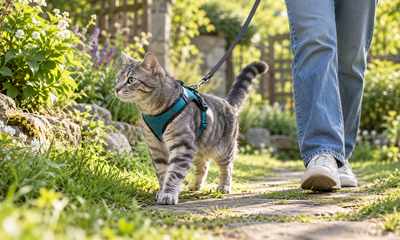
A leash attaches to a harness, not to a cat’s neck collar. Cats can back out of loose or poorly shaped harnesses, especially when startled. Before comparing leash features, check the harness fit around the chest and shoulders, the adjustment range, the connection point, and whether it stays secure when your cat moves. You should be able to fit a finger or two under straps without letting the harness rotate or slip over the shoulders.
Fit varies by body shape. Check neck and chest measurements against the maker’s sizing chart, then inspect the harness while your cat stands, sits, and turns. A harness that restricts shoulder movement, rubs the skin, or shifts toward the throat is not a good fit. For fit and walking setup, read this guide to the Best Cat Harness for Walking.
What to look for in cat leash for outdoor adventures
A practical leash should be predictable, comfortable to hold, and compatible with the harness attachment. When deciding what to look for in cat leash for outdoor adventures, consider the cat’s size and training stage, the location, and whether you can keep the line away from hazards. Do not choose by length alone.
Choose a manageable length
A shorter standard leash offers closer control in a driveway, on a sidewalk, or near a building entrance. A longer line can give a confident, trained cat more room in a quiet open area, but extra length can tangle around plants, furniture, or your legs. Avoid retractable designs for a cat that is new to leash walking: sudden movement can extend the line quickly, and the handle can be difficult to control if the cat bolts.
For a first outing, choosing what to look for in cat leash for outdoor adventures includes thinking about distance from traffic, dogs, and other distractions. There is no universal best length. Start with a shorter fixed leash during indoor practice, then reassess in a controlled outdoor area. Keep enough slack for normal movement without letting the leash drag or wrap around the cat. A leash should give you control without pulling continuously on the harness.
Check width, weight, and feel
A bulky leash can be uncomfortable for a small cat and may pull on the harness when it hangs. Choose a lightweight line that feels sturdy enough for your cat’s size and activity. The handle should be comfortable in your hand and easy to grip when you need to shorten the distance. If the material is stiff, rough, or noisy, your cat may notice it during indoor practice.
Another part of what to look for in cat leash for outdoor adventures is whether you can shorten the line smoothly without jerking. The goal is not to use a strong tug. A leash is a boundary and a safety connection, while you guide movement with calm body positioning and rewards. If you find yourself needing force to control the cat, pause the outing and work on training in a quieter space.
Inspect the clasp and connection
When checking what to look for in cat leash for outdoor adventures, inspect the clasp with the harness attached and test that it closes securely. Look for a clasp that is easy to operate but closes securely, with no sharp edges or loose parts. Check that the clasp fits the harness ring and does not rotate into an awkward position. Small clips can be hard to manipulate with gloves or cold hands, while a heavy clip may pull on a lightweight harness. Inspect the stitching, webbing, and swivel before each walk.
A quick-release feature can be helpful if the leash catches, but it should not open during ordinary movement. Do not attach the leash to a breakaway collar. A breakaway collar is designed to release if it catches, which is different from a harness connection intended for walking.
Matching the leash to the outing
The place you visit changes what to look for in cat leash for outdoor adventures: crowded trails call for closer control than a quiet enclosed garden. Think about where you plan to go before you leave home. A quiet enclosed courtyard, a secure catio, or a low-traffic garden is easier to manage than a busy trail or street. Dogs, traffic, loud machinery, wildlife, and sudden crowds can frighten a cat. Even a cat that walks calmly indoors may freeze or try to escape outdoors.
For a hike or longer outing, plan breaks, shade, water, and a carrier or backpack that lets the cat retreat. A leash should not be used to pull a tired or frightened cat along. A cat backpack for hiking can provide a familiar retreat when the cat is already comfortable with its carrier. It is not a substitute for supervision or a secure harness.
Local rules vary. Check whether cats must be restrained and whether a particular park allows them. Keep the leash in hand and stay away from roads, unfamiliar dogs, and areas where the line could catch. A leash does not eliminate risks from weather, parasites, plants, or encounters with other animals.
Train indoors before the first walk
A gradual practice routine is part of what to look for in cat leash for outdoor adventures because equipment only helps when the cat accepts it. Let your cat inspect the harness and leash at home. Pair brief, calm contact with treats or play. Once the harness fits, let your cat wear it for a short supervised period indoors. Add the leash after the cat moves comfortably in the harness. Keep the leash slack and let the cat choose a direction within a safe room. A few minutes of calm practice is more useful than keeping the equipment on until the cat is overwhelmed.
Some owners describe a cat that accepts a harness indoors but becomes frightened outside; others report that gradual practice makes walks easier over time. Those personal reports vary and do not predict what your cat will do. Treat them as a reminder to start with very short sessions and allow your cat to opt out.
Increase practice time slowly. Stop if your cat crouches, struggles, hides, pants, vocalizes, or tries repeatedly to escape. Some cats freeze at first, while others never enjoy the harness. Do not drag, chase, or restrain a cat to make a walk happen. If distress continues, return to indoor enrichment or a secure enclosure instead.
For the first outdoor session, choose a quiet, enclosed area close to home. Keep the outing short and let the cat set the pace. Carry a secure carrier so you have a safe way to return indoors. Keep identification current, and make sure the harness remains correctly fitted throughout the session.
Safety checks before every adventure
Before leaving, check the leash for fraying, weak seams, sticky clasps, or corrosion. Recheck the harness fit and confirm the clasp is fully closed. Plan for what to look for in cat leash for outdoor adventures before leaving: an intact clasp, secure harness fit, a safe route, water, and a carrier for outings beyond the yard. Bring water and a carrier for outings beyond the immediate yard. Avoid hot pavement, extreme weather, and places where a startled cat could reach a road or hide in an inaccessible area.
If your cat slips out of a harness, do not run after it or yank the leash. Keep your voice calm, reduce movement, and use familiar food or the carrier if it is safe to do so. Plan for prevention by fitting equipment correctly and practicing indoors. Microchip identification can help reunite a lost pet with its household, but it does not replace direct supervision.
When outdoor leash walks may not suit your cat
A leash walk is not right for every cat. A fearful cat, a cat that panics around noises, or one that resists handling may be safer with window perches, interactive play, a secure enclosure, or carrier training. The phrase what to look for in cat leash for outdoor adventures should not distract from the more important question: does your cat feel safe enough to participate?
Talk with your veterinarian before outdoor excursions if your cat has a health concern that could affect stamina or exposure. Ask about routine preventive care and local risks. This advice helps you plan, but a veterinarian can tailor recommendations to your cat and location.
Frequently Asked Questions
1. Should I attach a leash to a cat collar?
No. Attach a leash to a properly fitted walking harness. A collar can place pressure on the neck, and cats may slip out when startled.
2. What leash length is best for a cat?
Start with a fixed leash that lets you keep close control. A longer leash may suit a confident, trained cat in a quiet open area, but it can tangle more easily.
3. Can every cat learn to walk on a leash?
No. Some cats enjoy supervised walks, while others find the harness or outdoor setting stressful. Introduce equipment gradually and stop if your cat shows persistent distress.
4. Can I use a retractable leash for a cat?
A retractable leash can extend suddenly and may be harder to control. A fixed leash is usually simpler for early training and close supervision.
5. What should I do if my cat backs out of the harness?
Stay calm, avoid pulling, and focus on preventing the escape from reaching a road or hazard. Once safe, end the outing and reassess the harness fit before trying again.
Final Words
Choose a leash only after confirming that the harness fits securely and your cat accepts it. What to look for in cat leash for outdoor adventures includes manageable length, lightweight material, secure hardware, and a setting you can supervise. Start indoors, take short outings, and stop when your cat is uncomfortable. For some cats, the best adventure is a screened window or secure enclosure. Follow your cat’s cues and keep safety ahead of distance or duration. For a related guide, see Best Cat Leash for Outdoor Adventures.