Summer comfort is not a one-bed solution. Some cats seek tile or a shaded floor, while others settle on a soft surface close to their people. People searching for the Best Cooling Cat Bed for Summer usually want a comfortable place to rest, but a cooling bed is only one part of a safe warm-weather setup. If you are learning how to choose the right cooling cat bed for summer, look at how your cat already rests, how warm the room becomes, and whether the bed stays comfortable without supervision. Cooling beds vary in surface, thickness, size, cleaning method, and how they feel against a cat’s coat. A mat that sounds useful on a label may be ignored if it is too firm, slippery, small, or placed in a busy spot. This guide explains how to compare those practical details, introduce a cooling surface, and care for it through the season. A cooling bed can add a resting option, but it cannot replace water, shade, ventilation, or veterinary care when a cat appears unwell.
What a cooling cat bed can and cannot do
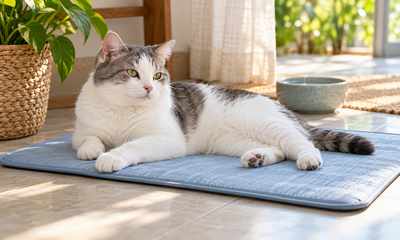
A cooling bed offers a surface that may feel cooler than a plush or insulated bed. Some designs rely on breathable fabric or a gel-filled insert; others use an elevated mesh surface that allows air to move below the cat. The exact feel depends on materials, room temperature, airflow, and whether your cat chooses to lie on it.
A cooling bed is not an air conditioner and should not be treated as protection from dangerous heat. Keep fresh water available, provide a shaded resting area, and maintain a comfortable indoor environment. If your cat seems distressed by heat or becomes unusually weak or unresponsive, contact a veterinarian promptly. Do not rely on a bed to manage a medical emergency.
How to choose the right cooling cat bed for summer
If you are deciding how to choose the right cooling cat bed for summer, first note the warmest places your cat can access and where it already chooses to nap. Start with the place where your cat naps and the temperatures in that part of your home. How to choose the right cooling cat bed for summer depends on fit, surface feel, stability, care needs, and your cat’s willingness to use it. Compare those details before considering special features.
Match the size to your cat’s resting position
A useful step in how to choose the right cooling cat bed for summer is measuring the area your cat uses when stretched out, then compare it with the usable sleeping surface. A curled sleeper may accept a compact mat, while a long cat that stretches across the floor needs more room. Check whether raised edges reduce the flat area. The bed should not force the cat into a cramped position.
If your cat shares a home with other pets, consider separate resting spots. A bed that fits one cat may not work as a shared surface. Keep the cooling bed where the cat can leave easily, rather than wedging it between furniture or in a narrow passage.
Consider surface, texture, and firmness
How to choose the right cooling cat bed for summer also depends on what your cat finds comfortable. Cats vary in what they find comfortable. A smooth cooling surface may feel unfamiliar to a cat that prefers fleece or a thick cushion. Mesh can feel airy but may not appeal to a cat that dislikes a taut surface. A gel insert may feel cool to the touch, yet some cats prefer a towel or thin cover between themselves and the material.
When learning how to choose the right cooling cat bed for summer, prioritize a surface that your cat will approach and use. Avoid forcing the cat to lie down on a new bed. If a design allows a washable cover, check that the cover does not block the intended airflow or cooling effect.
Check construction and stability
When deciding how to choose the right cooling cat bed for summer, inspect seams, corners, and any enclosed insert. The surface should not have sharp edges, loose pieces, or accessible filling that a cat could chew. If the design has legs or a raised frame, confirm that it does not wobble when your cat steps on or off. A stable bed matters for kittens, older cats, and pets with limited mobility.
Look at the bed from the cat’s point of view. Can your cat step onto it without jumping? Does it slide across tile? Can the cat turn around without a frame blocking the way? These everyday details often matter more than extra features.
Review cooling method and care instructions
Part of how to choose the right cooling cat bed for summer is understanding the cooling method and how the bed should be cleaned. Read how the bed works and how it should be cleaned. Some mats use a pressure-activated gel that does not require refrigeration; others use fabric or mesh to support airflow. Do not assume a bed needs ice, a freezer, or water unless its instructions say so. Avoid modifying or cutting a sealed mat, because that can expose contents.
Check whether the cover is removable, whether the whole bed can be wiped clean, and how long it needs to dry. Hair, dust, and spills collect on resting surfaces. A bed that is difficult to clean may be less practical during daily use, especially if the cat sheds heavily or has accidents.
What to look for in cooling cat bed for summer
A checklist can make it easier to compare cooling surfaces without overvaluing marketing language. For what to look for in cooling cat bed for summer, focus on clear specifications and routine use.
- Usable dimensions: Check the flat resting area, not only the outside measurement.
- Cat-safe construction: Look for intact seams, enclosed fill, and no loose parts or exposed gel.
- Comfort: Consider texture, firmness, raised edges, and whether your cat can enter and exit easily.
- Stable placement: Choose a surface that stays put on the floor and does not tip when stepped on.
- Cleaning: Confirm how to remove fur, wipe the surface, wash a cover, and dry the bed completely.
- Use limitations: Follow temperature, weight, and care guidance supplied with the bed.
One useful lesson in how to choose the right cooling cat bed for summer is that the coldest-feeling surface may not be the most comfortable. Do not assume the coldest-feeling surface will be the most comfortable. A bed can feel cool in your hand but remain unused because of texture, scent, size, or location. The best cooling cat bed for summer is a practical resting option your cat can choose freely. For a comparison of common cooling-bed formats, see our Best Cooling Cat Bed for Summer guide. If your cat needs a more cushioned resting surface for comfort, our guide to beds for senior cats covers supportive bedding considerations.
Where to place a cooling bed
Choose a shaded, quiet place with enough room for your cat to turn around. Avoid direct sun through a window, hot balconies, or spots next to appliances that release heat. Keep the bed away from litter and food areas unless your cat already prefers to nap nearby. Easy access matters: a cat should be able to leave the surface whenever it wants.
If you use a fan or air conditioner, place the bed where airflow is comfortable rather than blowing directly at the cat. Keep water within easy reach, but far enough from the bed to prevent spills. When deciding how to choose the right cooling cat bed for summer, offer more than one resting option, such as a cool floor and a familiar soft bed, so your cat can choose based on the room and its own preference.
How to introduce a new cooling bed
Set the bed near a familiar resting spot and let your cat investigate it. A familiar blanket or a favorite toy nearby may help, as long as it does not cover the cooling surface. Avoid putting the cat on the bed or blocking its exit. Reward curiosity with calm attention or a treat placed near the bed.
Some cat owners report that their cats ignore cooling mats and choose a cardboard box, a bare floor, or the packaging instead. These individual stories are not proof that all cats dislike cooling beds, but they illustrate why choice matters. If your cat avoids the bed, try a quieter location or a different texture. If it still goes unused, keep it as an optional surface or choose another way to make a cool resting area.
How often should you use or replace cooling cat bed for summer
Let your cat decide when to rest on the bed. You can leave an intact cooling bed available during warm weather if the instructions permit it, but do not confine a cat to it or use it instead of a comfortable room temperature. Check it regularly for leaks, punctures, flattened areas, torn fabric, loose seams, or changes in surface feel.
There is no universal replacement calendar. Replace the bed when it is damaged, cannot be cleaned properly, or no longer stays stable and comfortable. Follow any lifespan guidance from the manufacturer, especially for gel-filled or electrical designs. If the bed has an unusual odor or visible residue, remove it from use until it is cleaned according to its instructions.
When to contact a veterinarian
A cooling bed can support comfort, but it cannot diagnose or treat overheating. If your cat appears acutely distressed, has trouble breathing, collapses, or becomes difficult to rouse, seek urgent veterinary guidance. Move the cat to a cooler place while arranging help, and follow the veterinary team’s instructions.
Cats with health conditions, short noses, advanced age, or limited mobility may need an individualized plan for hot weather. Ask your veterinarian how to keep your cat comfortable at home. A bed should fit into that plan, not replace it.
Frequently Asked Questions
1. Do cooling beds work for every cat?
No. Cats differ in their preferred textures and resting places. Offer a cooling bed as an option and let your cat decide whether to use it.
2. Can I put a cat cooling bed in the freezer?
Only if the bed’s care instructions specifically allow it. Do not freeze or alter a sealed mat based on a guess.
3. Can a cooling bed prevent heatstroke?
No. It is not a substitute for shade, water, a comfortable indoor temperature, or veterinary care when a cat shows signs of distress.
4. How do I clean a cooling cat bed?
Follow its care label. Some surfaces can be wiped, while others have removable covers. Let cleaned parts dry fully before use.
5. When should I replace a cooling cat bed?
Replace it if it leaks, tears, develops loose seams, becomes unstable, or cannot be cleaned. Follow any product-specific lifespan guidance.
Final Words
How to choose the right cooling cat bed for summer comes down to a few practical checks: the surface should fit your cat’s body, feel acceptable, stay stable, and be simple to clean. How to choose the right cooling cat bed for summer means offering a useful option while keeping water, shade, airflow, and veterinary guidance in view. Introduce the bed without pressure and watch how your cat uses the room. If the bed is ignored, your cat may simply prefer another comfortable place. Keep the choice open and replace damaged bedding promptly. If you also want to explore the phrase Best Cooling Cat Bed for Summer, use the linked comparison to understand common surface styles.